
This article is general information, not veterinary advice. If your pet seems unwell, is in pain or may have eaten something harmful, contact your vet or an animal poison control line right away. Read our vet disclaimer.
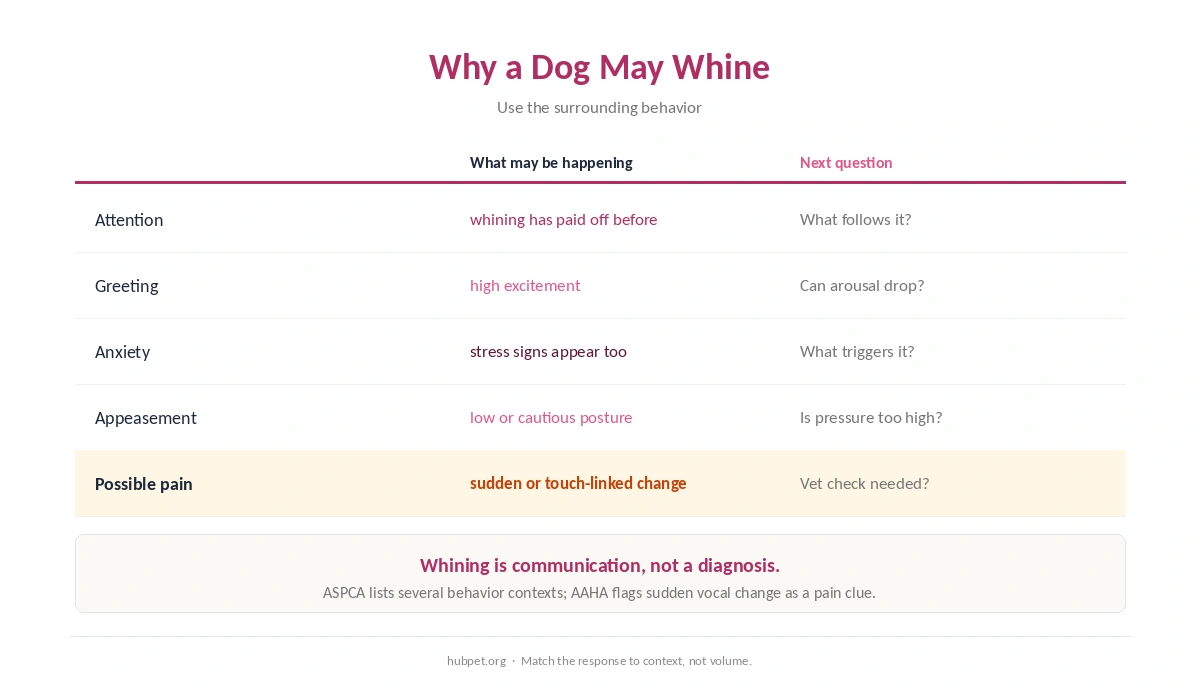
Why dogs whine when they want something has no single answer. ASPCA behavior guidance lists attention seeking, excitement, anxiety, and appeasement among common contexts, while AAHA notes that a sudden increase in whining can also signal pain.
Why Dogs Whine When They Want Something: Read the Context First
If whining reliably brings eye contact, talking, food, play, access, or movement, the behavior can become effective communication. The ASPCA specifically notes that attention-seeking whining may persist when people unintentionally reinforce it. Closeness-seeking behavior can overlap, but the sound alone does not tell you the motive. A useful companion behavior page is how to Respond Calmly to Attention-Seeking Behavior.
Excitement can look different from worry. A dog may whine during greetings, before a walk, or while waiting for an activity. By contrast, anxious whining may appear with pacing, circling, licking, or other signs of distress. Separation-related distress needs a different plan from simple demand behavior. The phrase why dogs whine when they want something fits some excited or learned requests, but it does not explain every case.
Why Dogs Whine When They Want Something and How Reinforcement Matters
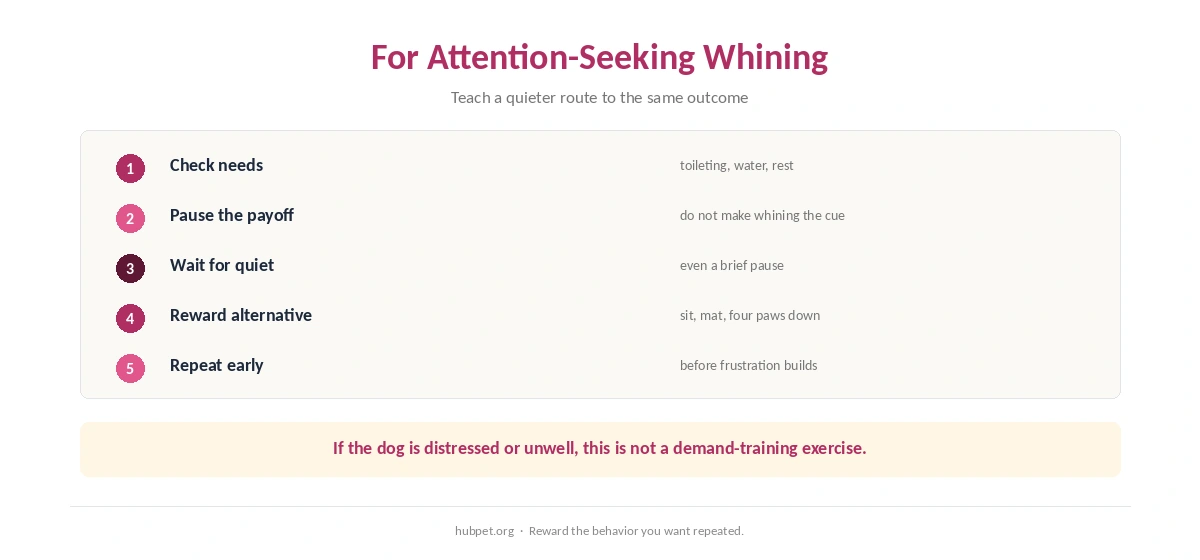
For attention-seeking whining, the ASPCA recommends making quiet behavior a more reliable route to attention and rewards. That fits the reward-based principles in our positive reinforcement guide and the alternative-behavior approach in our redirection guide. This is why dogs whine when they want something in some households: the sound has repeatedly opened access to a valued outcome. For a related behavior guide, see why Dogs Lick People.
- Check the immediate need first. Make sure the dog has reasonable access to toileting, water, rest, and normal care before treating the sound as a training issue.
- Identify the trigger. Note what happens just before the whining and what consequence follows it.
- Pause the payoff for demand whining. If the need is already met, avoid making whining the direct cue for attention or access.
- Reward a clear alternative. Reinforce a brief quiet pause, four paws on the floor, a mat behavior, or another simple response.
- Ask before frustration builds. Cue the alternative while the dog can still think, then reinforce it.
- Lower difficulty for anxious whining. Increase distance, shorten the event, or change the setup instead of insisting on silence.
If food requests are part of the pattern, the begging guide shows how reinforcement can maintain persistent asking. If vocal behavior is broader than whining, compare excessive barking with reward-based quiet training rather than using punishment. Keep the same rule across contexts: reinforce the alternative behavior you want to see again.
Why Dogs Whine When They Want Something Is Sometimes the Wrong Question
A sudden behavior change deserves a health check. AAHA’s 2024 pain guidance lists unusual whining or whimpering as a possible pain sign, especially when it increases suddenly or happens during touch or lifting. Our pain-signs guide explains other changes that matter.
Fear also changes what the dog can learn in the moment. If whining comes with avoidance, trembling, escape attempts, or difficulty recovering, focus on reducing pressure. Confidence-building guidance can help, while common training mistakes explains why correcting the symptom can miss the cause. However, “why dogs whine when they want something” is the wrong frame when the dog is showing fear or cannot recover.
When to Get Professional Help
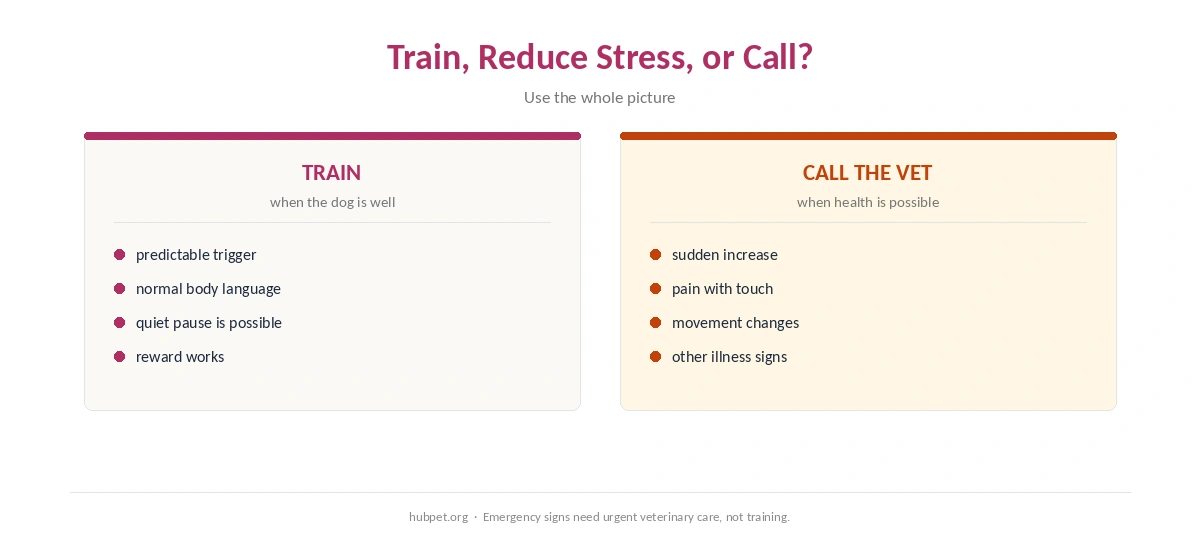
Contact your veterinarian if whining appears suddenly, is linked to touch or movement, or comes with other signs of illness or pain. AAHA’s 2024 guidance supports treating sudden vocalization as a possible pain clue. For breathing difficulty, collapse, ongoing seizures, severe bleeding, poisoning, or blocked urine flow, use the emergency signs guide and seek urgent veterinary care.
For persistent anxiety, separation-related distress, aggression, or a pattern that is getting worse, ask your veterinarian about a qualified reward-based behavior professional. AVSAB’s current position supports reward-based methods for dog training and behavior modification. Keep practice manageable with short training sessions and a weekly practice checklist.
How We Research
HubPet reviewed guidance on October 11, 2026. We used the ASPCA guide to whining, AAHA’s 2024 pain-sign guidance, and AVSAB’s humane training position. Our process is on How We Research.
ASPCA guidance notes that attention-seeking whining can continue when eye contact, talking, touching, food, or access follows the sound. Reward a quiet alternative instead.
No. First check context and normal needs. Sudden or unusual whining can be associated with pain, anxiety, or another problem that should not be treated as simple demand behavior.
Yes. Reinforce a specific alternative such as a brief quiet pause, sitting, or going to a mat before giving the wanted attention or access.
Excitement and learned anticipation can contribute. Train calm behavior around the pre-walk routine before the dog reaches a high level of arousal.
AAHA advises taking sudden increases in whining seriously, especially with touch, movement, appetite, posture, or activity changes. Seek veterinary advice if you are concerned.
Why Dogs Whine When They Want Something: Bottom Line
Why dogs whine when they want something depends on what happens before and after the sound. Attention, excitement, anxiety, and discomfort can produce similar vocalization. Check context first, reinforce a quieter alternative when the dog is well, and involve a veterinarian when the pattern is sudden or concerning.