
This article is general information, not veterinary advice. If your pet seems unwell, is in pain or may have eaten something harmful, contact your vet or an animal poison control line right away. Read our vet disclaimer.
How to teach a dog quiet on command is easiest when you reward the pause in barking instead of trying to overpower the noise. AVSAB’s 2021 humane-training position recommends reward-based methods for all dog training and behavior modification. Dogs Trust guidance accessed in 2026 also advises rewarding quiet behavior and addressing the reason the dog is barking.
A quiet cue is not a way to suppress every bark. Dogs bark for different reasons, including alerting, excitement, frustration, fear, or learned attention-seeking. First make the training setup easy enough that the dog can pause. Then mark that silence and reward it.
How to Teach a Dog Quiet on Command Step by Step
Begin away from the hardest trigger. If barking at the front door is the problem, the door-barking guide explains why the doorway can be too intense for a first lesson. Practice the training mechanics in a calmer setting using the reward-based foundation in positive reinforcement training.
- Wait for a brief natural pause in barking instead of shouting over the dog.
- Mark the pause with a calm word or click and give a reward immediately.
- Repeat until the dog starts offering pauses predictably in that easy setup.
- Say your chosen quiet cue just before the pause you can already predict.
- Reward the silence, then gradually ask for a slightly longer quiet period.
- Practice around mild versions of the real trigger before trying the hardest version.
In practice, how to teach a dog quiet on command starts with reinforcing a pause the dog can already offer. Dogs Trust guidance accessed in 2026 says dogs repeat behavior that works and recommends rewarding them when they are quiet. VCA barking guidance accessed in 2026 similarly advises reinforcing calm, quiet behavior. The training message is simple: silence earns something useful, while yelling is not the cue.

How to Teach a Dog Quiet on Command Around Real Triggers
Another part of how to teach a dog quiet on command is keeping the trigger below the dog’s limit. Once the dog understands the cue in an easy setting, add the trigger at lower intensity. For visitors, combine the quiet cue with the management ideas in the greeting guide or a familiar settle-on-a-mat behavior. If the dog cannot respond, increase distance or reduce the trigger instead of repeating “quiet” more loudly.
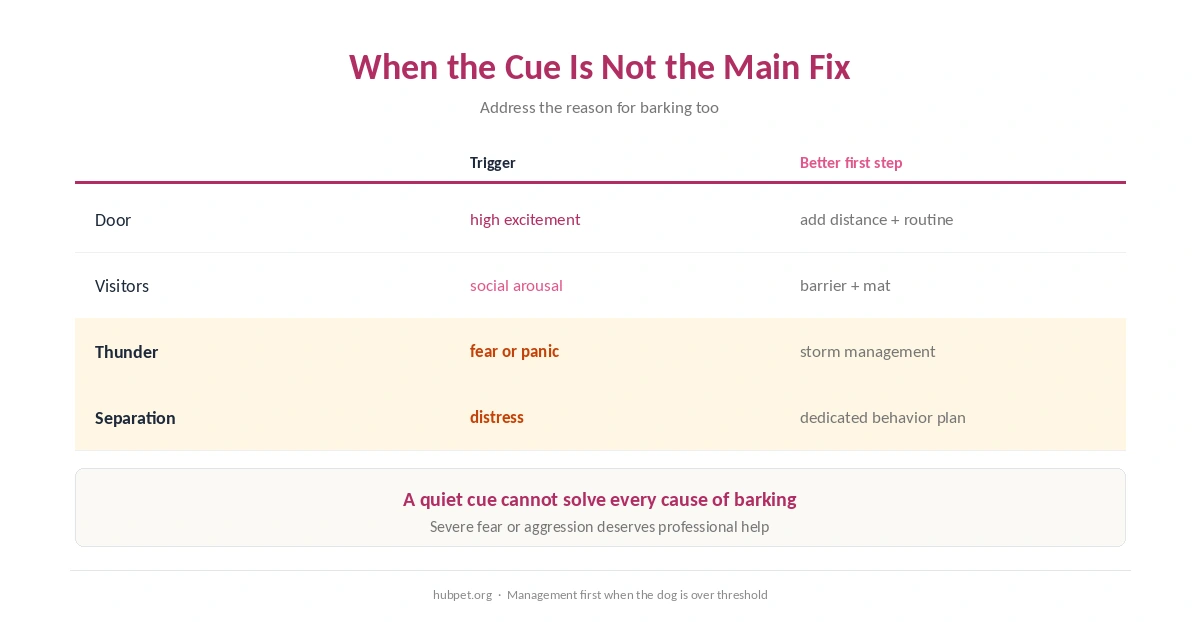
The excessive-barking guide is important because a quiet cue does not fix the reason for every bark. If barking happens during separation distress, use the dedicated separation-anxiety guide rather than turning the cue into a test the dog keeps failing. If barking rises around dogs or people outside, use the distance-first ideas in the reactive-dog guide.
| What happens | Your response | Training goal |
|---|---|---|
| One or two barks, then a pause | Mark and reward the pause | Make silence valuable |
| Dog keeps barking through the cue | Lower the trigger intensity | Create a setup the dog can succeed in |
| Dog becomes more aroused when you speak | Stop adding verbal pressure | Use distance and a simpler task |
| Quiet lasts briefly | Reward first, then build duration slowly | Strengthen the behavior before distractions |
What Not to Do When Teaching Quiet
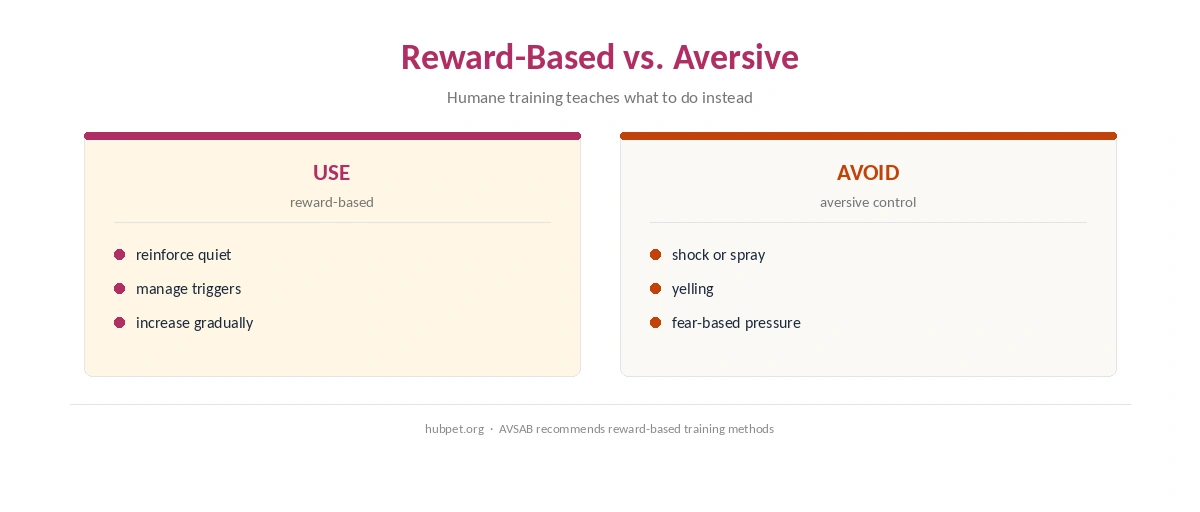
Do not use aversive training to stop barking. AVSAB’s 2021 position says aversive methods are not necessary for dog training or behavior modification and recommends reward-based methods instead. Punishment can also add conflict when barking is connected to fear or anxiety.
Do not expect one cue to replace basic management. The basic training guide explains why skills need easy repetitions before distractions. The wait-at-the-door guide can reduce chaos around entries, while the training-mistakes guide helps prevent raising difficulty too quickly.
If thunder is the trigger, use the management plan in calming a dog during thunderstorms instead of drilling the quiet cue during panic. A frightened dog needs a safer environment first.
When to Get Professional Help
Get professional help when barking is tied to intense fear, panic, aggression, or a sudden major behavior change. AAHA’s 2015 behavior guidelines list fear, aggression, new phobias, and increased reactivity among concerns that merit veterinary assessment. A veterinarian or qualified behavior professional can help identify the cause and build a plan around it.
If the barking creates an immediate safety problem, manage distance and barriers first. The pet emergency signs page is for urgent medical problems, while behavior risk needs a plan that prevents rehearsing dangerous interactions.
How We Research
HubPet reviewed humane-training and barking guidance on October 11, 2026. We used the AVSAB 2021 Humane Dog Training Position Statement, Dogs Trust barking guidance accessed in 2026, VCA barking guidance accessed in 2026, and the 2015 AAHA behavior guidelines. Our research process explains how we choose training sources.
Use the cue when a pause is likely and the dog can respond. Repeating it during continuous barking can turn the word into background noise.
No. Reward the silence and make the setup easier if the dog cannot respond.
Start with the brief pause the dog can already do, then increase duration gradually as the behavior becomes reliable.
Yes, but lower the trigger intensity first and combine the cue with management or a calm alternative behavior.
Address the underlying trigger and get professional help when distress is intense. A quiet cue alone is not a treatment for panic.
Reward the Silence You Want to Keep
How to teach a dog quiet on command comes down to timing and difficulty. Catch a pause, reward it, add the cue when the pattern is predictable, and build duration in small steps. If the dog cannot be quiet, change the environment first. Humane training teaches the dog what to do instead of punishing the bark.