
This article is general information, not veterinary advice. If your pet seems unwell, is in pain or may have eaten something harmful, contact your vet or an animal poison control line right away. Read our vet disclaimer.
How to support a rescue pet in the first month starts with less pressure, not more activity. Give the animal a quiet base, predictable daily anchors, optional social contact, and enough time to show you what feels safe.
How to Support a Rescue Pet in the First Month Without a Fixed Clock
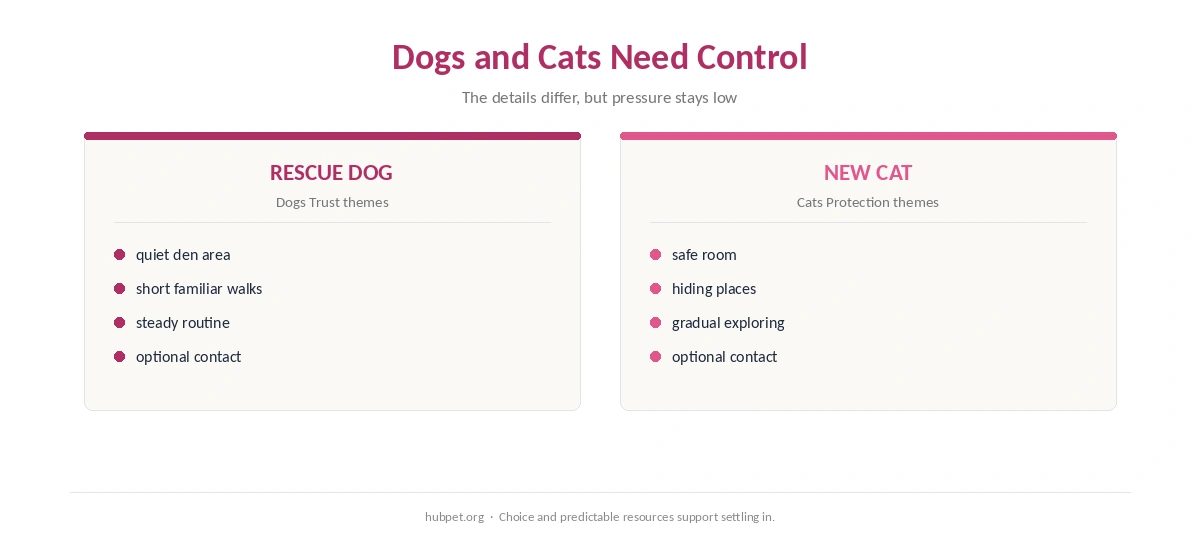
Dogs Trust advises letting an adult rescue dog settle at their own pace, using a quiet den area, and keeping early routines predictable. Cats Protection gives similar advice for new cats: start with a quiet room, allow hiding, and avoid forcing interaction. Those principles fit the broader plan in our new-home adjustment guide. A useful companion care page is how to Build Trust With a Newly Adopted Dog.
Avoid treating the popular “3-3-3” idea as a deadline. The ASPCA presents it as a guideline and also notes that some pets adjust quickly while others need more time. Instead, use the new pet owner checklist to prepare resources, then judge progress from the individual pet. In other words, how to support a rescue pet in the first month is a pacing question, not a countdown. For a related practical guide, see how to Help a Pet Settle After Adoption.
How to Support a Rescue Pet in the First Month: A Practical Plan
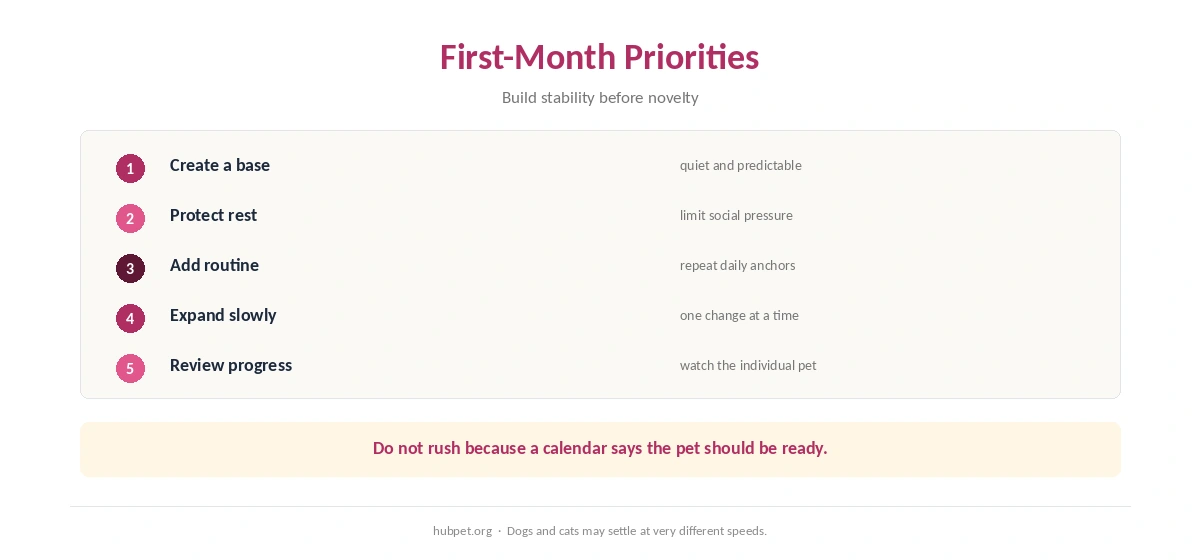
- Set up one reliable retreat. Give the pet a quiet place to rest, hide, and observe without being followed.
- Keep key events predictable. Use roughly consistent times for meals, toilet breaks, walks, play, and sleep.
- Limit early social pressure. Let the pet approach people instead of passing them around for greetings.
- Expand territory gradually. Open more rooms or add new walking routes only when the current setup looks manageable.
- Introduce resident pets slowly. Use distance, barriers, scent work, and short controlled sessions rather than immediate free access.
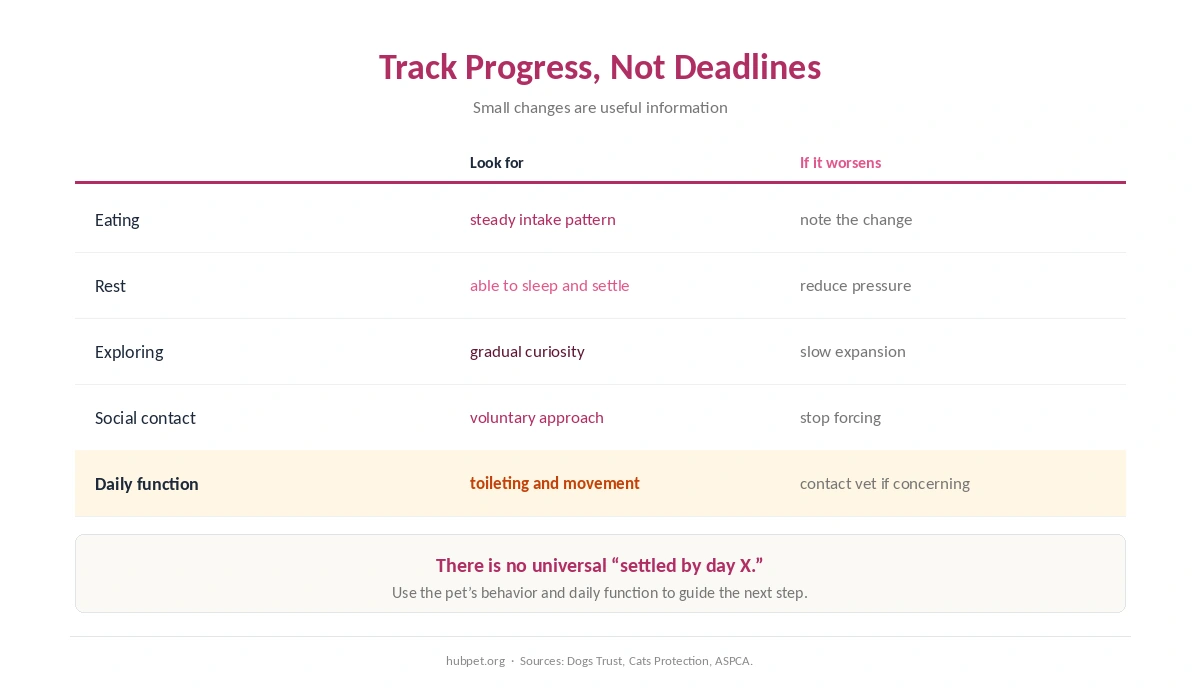
- Watch normal functions. Track eating, drinking, elimination, rest, movement, and behavior so changes are easier to notice.
- Add training gently. Reinforce simple routines and useful skills without turning every interaction into a lesson.
- Schedule ordinary care. Register with a veterinarian and organize records, identification, and follow-up needs.
- Protect downtime. Visitors, outings, and novelty can wait if the pet is still struggling to rest.
- Review progress weekly. Look for broader comfort rather than expecting a specific milestone on a specific day.
For dogs, the first-week dog checklist can organize the arrival. For cats, use the first-week cat checklist. Both work better when the pet also has a calm retreat that other people respect.
How to Support a Rescue Pet in the First Month Around Other Animals
Do not assume a rescue pet wants immediate companionship. If a dog and cat will share the home, follow a gradual dog-to-cat introduction. For two cats, our two-cat introduction plan separates scent, sight, and direct contact instead of rushing the process.
The same principle applies when several pets already live together. Helping pets get along starts with enough resources and safe exit routes. Use the introduction checklist to avoid stacking too many changes in one day.
Predictability also matters after the novelty wears off. A predictable routine can anchor feeding, rest, walks, and play. However, do not infer a hidden abuse history from shyness, hiding, or caution; those behaviors can arise for many reasons. A useful answer to how to support a rescue pet in the first month is to change one thing at a time and watch the response.
When to Call Your Vet
Cats Protection advises contacting a veterinarian if a new cat remains stressed for a prolonged period without signs of improvement. More broadly, sudden or worsening changes in eating, drinking, elimination, movement, or behavior deserve veterinary advice; do not dismiss them as “just settling in.” Use the vet visit checklist to organize observations.
If the trip to the clinic causes stress, our lower-stress vet visit guide can help with preparation. For day-to-day schedule changes, the schedule-change guide shows how to adjust routines without changing everything at once.
How We Research
HubPet reviewed guidance on October 11, 2026. We used Dogs Trust guidance for settling rescue dogs, Cats Protection guidance for bringing a cat home, and ASPCA adoption tips. Our process is on How We Research.
No. The ASPCA presents it as a guideline, and adjustment speed varies. Use the pet’s behavior and daily functioning rather than a calendar deadline.
Keep early social pressure low if the pet still seems uneasy. Dogs Trust specifically advises avoiding visitors during the first few days for a worried rescue dog.
Cats Protection says hiding can be part of early adjustment. Provide a safe room, avoid forcing the cat out, and watch whether eating, drinking, and litter use are continuing.
There is no universal day. Start only when you can manage distance and resources, then use gradual species-appropriate introductions.
Track appetite, water intake, elimination, sleep, movement, play, exploration, social comfort, and any triggers. A simple diary makes change easier to notice.
How to Support a Rescue Pet in the First Month: Bottom Line
How to support a rescue pet in the first month is mostly about pacing. Build a safe base, protect rest, keep daily anchors predictable, and expand the pet’s world gradually. Progress rarely follows a straight line, so use observable comfort and normal daily functions instead of a rigid timeline.