
This article is general information, not veterinary advice. If your pet seems unwell, is in pain or may have eaten something harmful, contact your vet or an animal poison control line right away. Read our vet disclaimer.
Signs your pet is in pain often appear as changes from the animal’s normal routine (AAHA, 2022; AAHA, 2024). AAHA lists limping, stiffness, appetite changes, unusual behavior, vocalization, grooming changes, restlessness, fatigue, and posture changes (AAHA, 2024). AAHA also emphasizes posture, gait, behavior, and owner-reported changes rather than one sign alone (AAHA, 2022). A useful companion care page is how to Respond Early to Changes in Energy.
Signs Your Pet Is in Pain: The Short Answer
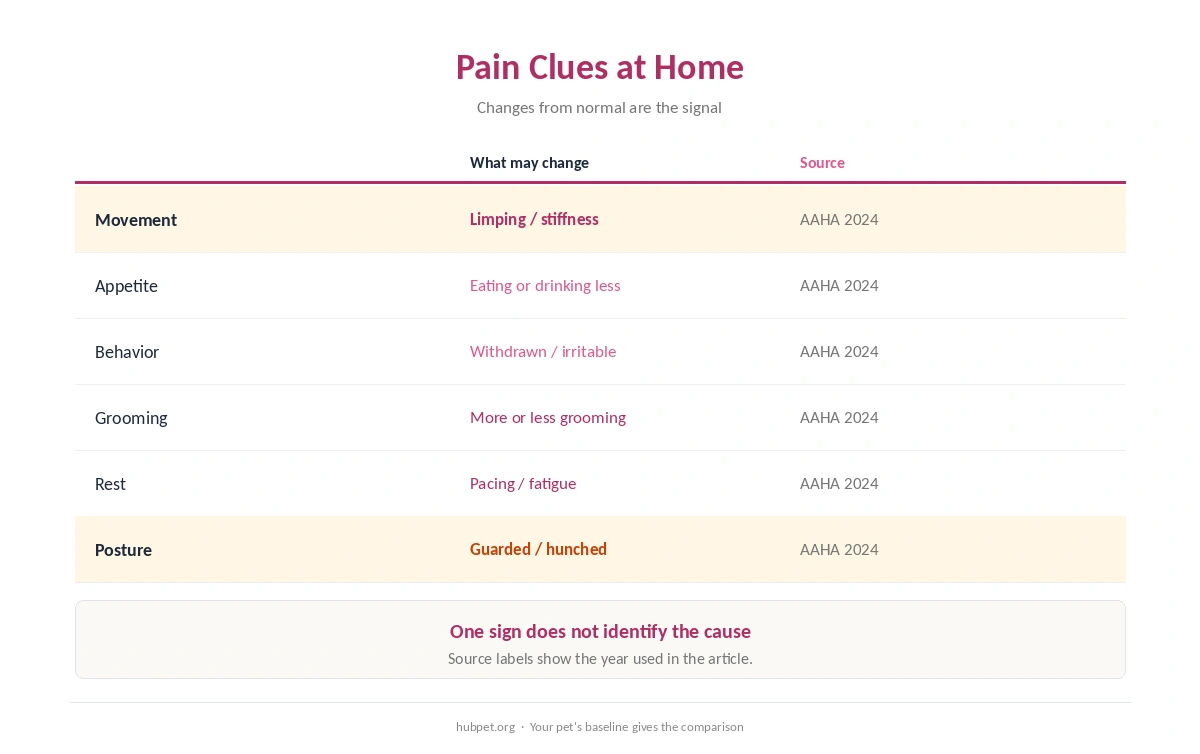
Signs your pet is in pain are most useful when they represent a clear change from baseline (AAHA, 2022). The most useful pain clues are new differences from your pet’s baseline, especially when several changes occur together. AAHA says pain assessment should combine behavior and movement with the physical examination (AAHA, 2022). Owner observations also play an important role (AAHA, 2022). Because one sign has many possible causes, observations support veterinary assessment rather than a home diagnosis (AAHA, 2022).
| What changes | Examples to notice | Source |
|---|---|---|
| Movement | Limping, stiffness, reluctance to jump or use stairs | AAHA, 2024 |
| Appetite | Reduced food or water intake | AAHA, 2024 |
| Behavior | Withdrawal, irritability, fear or aggression | AAHA, 2024 |
| Voice | New whining, whimpering or yowling | AAHA, 2024 |
| Grooming | Over-grooming one area or grooming less | AAHA, 2024 |
| Rest | Pacing, repeated position changes, unusual fatigue | AAHA, 2024 |
| Posture | Hunched or guarded positions, difficulty changing position | AAHA, 2024 |
Signs Your Pet Is in Pain at Home
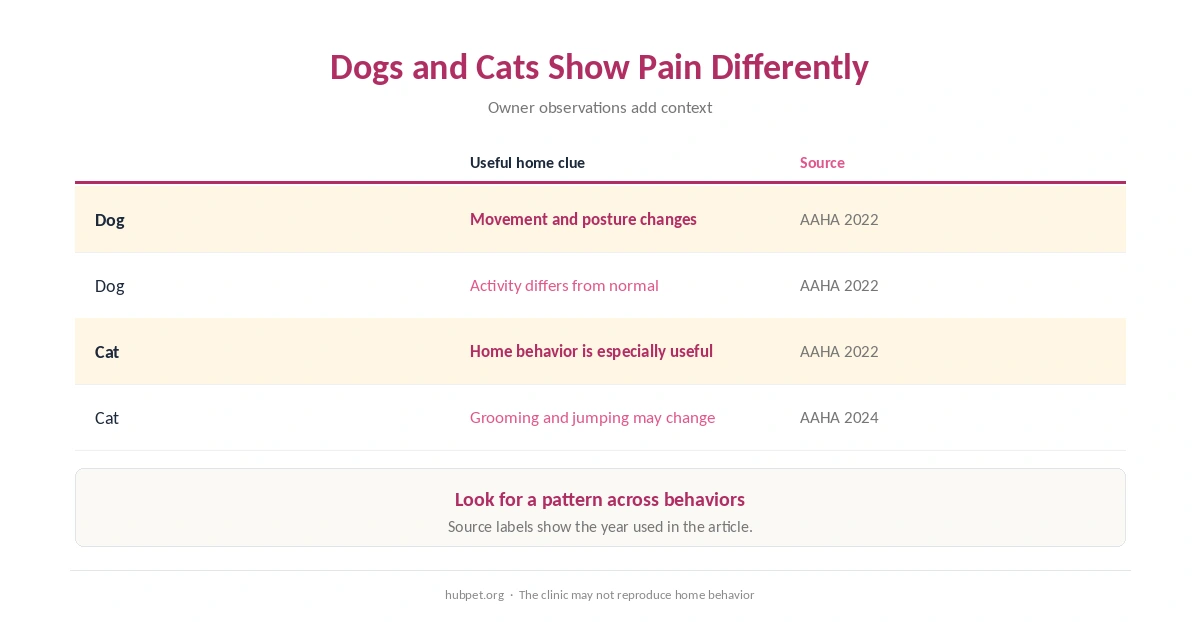
Dogs may change demeanor, posture, movement, or behavior when they hurt (AAHA, 2022). AAHA says deviations from a dog’s normal behavior can suggest pain (AAHA, 2022). For example, sudden hesitation at stairs or resistance to being lifted deserves attention (AAHA, 2024). AAHA includes mobility and handling changes among common pain clues (AAHA, 2024).
For cats, owner input is especially important for chronic pain assessment (AAHA, 2022). Many meaningful behavior changes are easiest to see at home (AAHA, 2022). AAHA lists reduced grooming, over-grooming, lower activity, withdrawal, appetite changes, and reluctance to jump as pain clues (AAHA, 2024).
New vocalization can matter, but silence does not rule pain out (AAHA, 2024). AAHA includes whining, whimpering, and yowling among possible pain signs (AAHA, 2024). However, its guidelines stress combined behavioral and contextual observations (AAHA, 2022). Therefore, compare your pet with its normal routine instead of waiting for crying or limping alone (AAHA, 2022; AAHA, 2024).
What to Record Before the Veterinary Visit
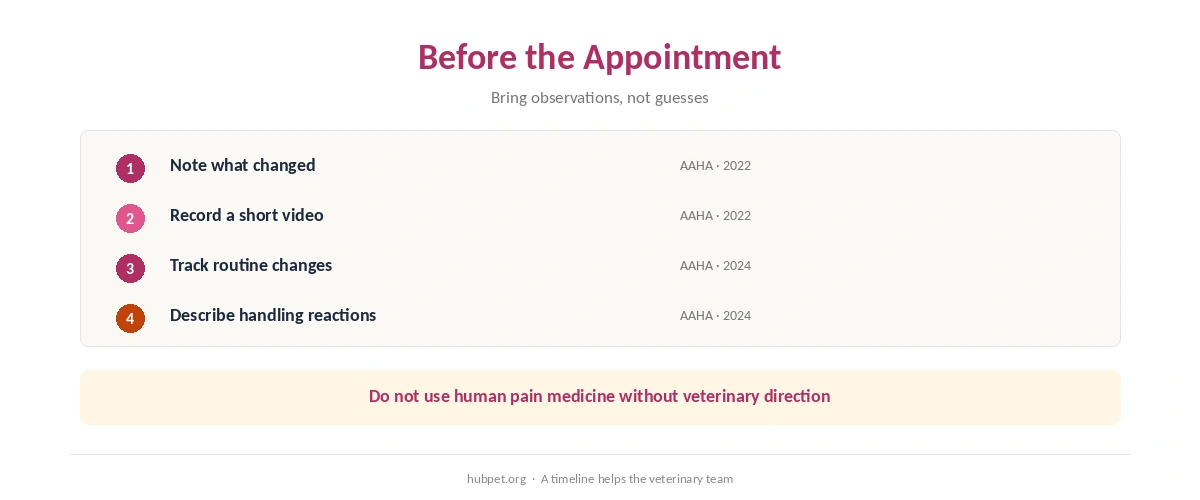
AAHA recommends involving owners in pain assessment (AAHA, 2022). Short home videos or photos can help a veterinary team review movement and behavior (AAHA, 2022). Record when the change began and which activities now look different (AAHA, 2022). Also note changes in eating, grooming, sleep, or social interaction (AAHA, 2024).
- Write down the first day you noticed the change and what was different from normal (AAHA, 2022).
- Record walking or getting up only if the pet chooses the activity without being forced (AAHA, 2022).
- Note appetite, drinking, grooming, sleep, and social changes that appeared with the problem (AAHA, 2024).
- Tell the clinic about any sudden irritability or resistance to handling because pain can change behavior (AAHA, 2024).
- Do not give human pain medicine unless your veterinarian directs it (FDA, 2026). FDA warns that human medicines can harm pets (FDA, 2026).
When to Call Your Vet
Call your veterinarian when pain signs are new, persistent, or affecting normal movement, eating, grooming, rest, or interaction (AAHA, 2024). AAHA recommends veterinary evaluation when owners suspect pain (AAHA, 2024). Labored breathing can reflect pain or serious heart or lung disease (AAHA, 2024). AAHA recommends immediate veterinary attention for every pet with labored breathing (AAHA, 2024). Merck lists severe or constant pain for immediate care (Merck Veterinary Manual, accessed 2026). Therefore, signs your pet is in pain should be discussed with a veterinarian when they persist (AAHA, 2024).
Go now for seizures, collapse or fainting, or trouble breathing (Merck, accessed 2026; VCA, accessed 2026). Also go now for suspected poisoning or heatstroke signs (AVMA, 2025; ASPCA, 2019). A dog with abdominal distension and repeated dry retching needs immediate care (VCA, accessed 2026). A cat straining without passing urine also needs immediate care (Cornell, 2016). Use the full pet emergency signs guide when the situation may be urgent.
How We Research
HubPet works from published veterinary guidance rather than personal anecdotes. On October 11, 2026, we read AAHA common pet pain signs (2024). We also read AAHA pain assessment principles (2022). For canine assessment, we read AAHA canine acute pain guidance (2022). For urgent signs, we used the Merck emergency table. We also checked FDA household danger guidance (2026). Finally, see How We Research for the HubPet method.
Signs Your Pet Is in Pain FAQ
Yes. AAHA uses behavior, movement, grooming, appetite, posture, and interaction changes when assessing pain (AAHA, 2022; AAHA, 2024).
Yes. AAHA lists withdrawal, irritability, fear, aggression, and other personality changes among possible pain clues (AAHA, 2024).
Yes. Short owner videos and photos can help veterinarians review behavior and movement seen at home (AAHA, 2022).
No. Labored breathing can reflect pain or serious heart or lung disease (AAHA, 2024). AAHA recommends immediate veterinary attention (AAHA, 2024).
Do not give human pain medicine unless your veterinarian directs it (FDA, 2026). FDA warns that human medicines may harm pets (FDA, 2026).
The Bottom Line
Signs your pet is in pain matter most when compared with that pet’s normal behavior and routine. AAHA supports watching movement, posture, appetite, grooming, rest, social behavior, and handling tolerance (AAHA, 2022; AAHA, 2024). Then share those changes with the veterinary team (AAHA, 2022; AAHA, 2024). Prompt veterinary assessment is safer than guessing the cause at home (AAHA, 2024).