
How to practice training in short sessions starts with one small goal and a quick path to success. Dogs Trust recommends reward-based training and, in its general training tips, suggests short sessions of about five to ten minutes. The Dogs Trust training tips also recommends working on one behavior at a time and stopping before the session becomes frustrating. A useful companion training page is how to Keep Training Consistent Between Family Members.
VCA guidance is even more flexible. The VCA puppy training guide says individual skill sessions should be only a few minutes at first and can happen several times a day. Therefore, do not treat one exact duration as a rule. End while the learner can still succeed.
How to Practice Training in Short Sessions: Pick One Criterion
How to practice training in short sessions works best when you know what earns the reward before you begin. Start with the positive reinforcement guide. Then choose one observable criterion, such as looking at you, stepping onto a mat, or releasing an item. For another evidence-based explainer, see is It Too Late to Train an Adult Dog.
Next, make the setup easy. The basic home-training guide starts in low-distraction conditions. If your dog struggles, lower difficulty instead of repeating the cue more loudly.
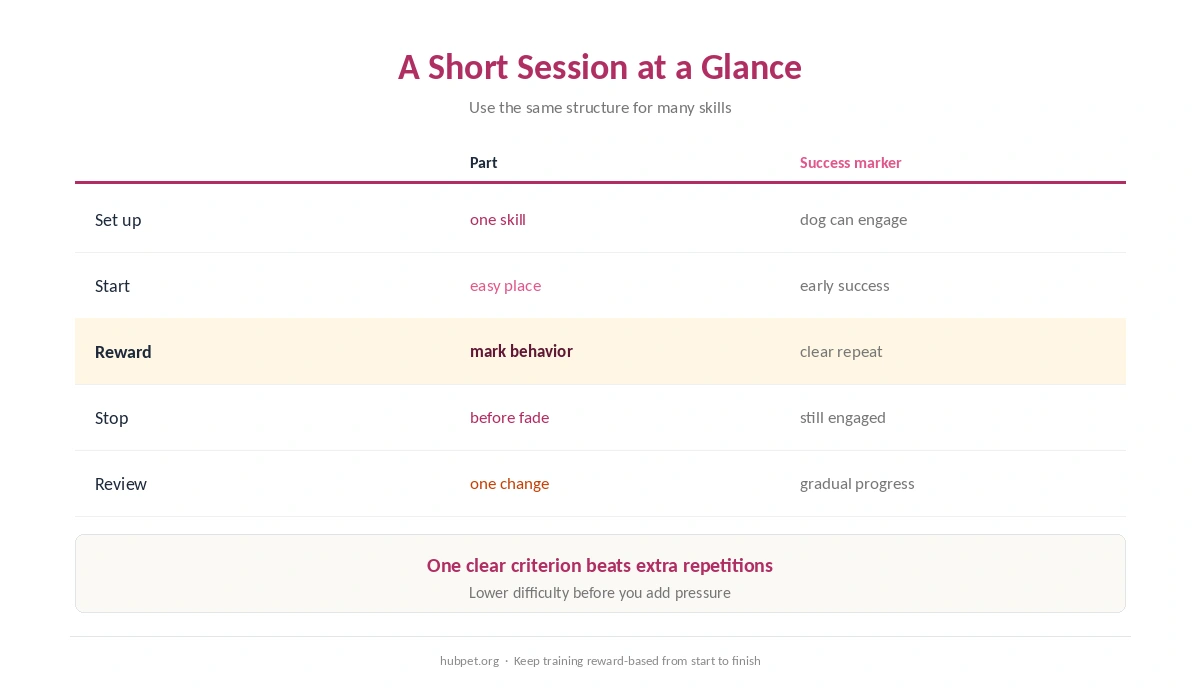
| Session part | What to do | Success marker |
|---|---|---|
| Set up | Choose one skill and useful reward | Dog can engage |
| Start easy | Use a familiar low-distraction place | Early success |
| Reward | Mark the exact behavior you want | Clear repetition |
| Stop | Finish before focus falls apart | Dog still wants to work |
| Review | Change one variable next time | Progress stays gradual |
How to Practice Training in Short Sessions for Real Skills
For settling, use the mat-settle guide and reward brief calm contact with the mat before asking for longer duration. Next, for item release, use the drop-it guide and stop after several easy exchanges instead of pushing until the dog disengages.
Another example of how to practice training in short sessions is impulse-control work. For impulse-control exercises, the leave-it guide and wait-for-food guide both work better when the first version is easy.
Meanwhile, the handling-practice guide shows how short voluntary repetitions can also support cooperative care.
When distractions are the lesson, start farther away or in a quieter place. The distraction-training guide increases difficulty gradually. In addition, the doorbell guide separates station training from the full trigger so the dog does not have to learn everything at once.
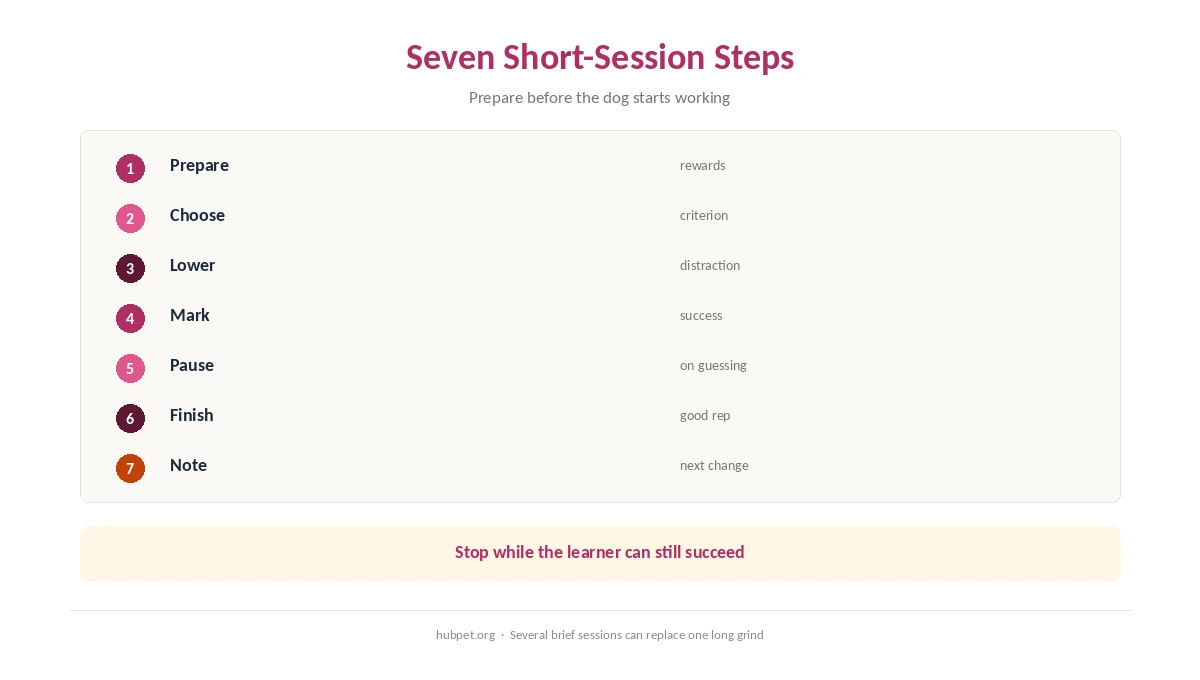
- Prepare rewards and equipment before bringing the dog into the session.
- Choose one behavior and one clear success criterion.
- Start in a place where the dog can respond without struggling.
- Mark and reward successful repetitions promptly.
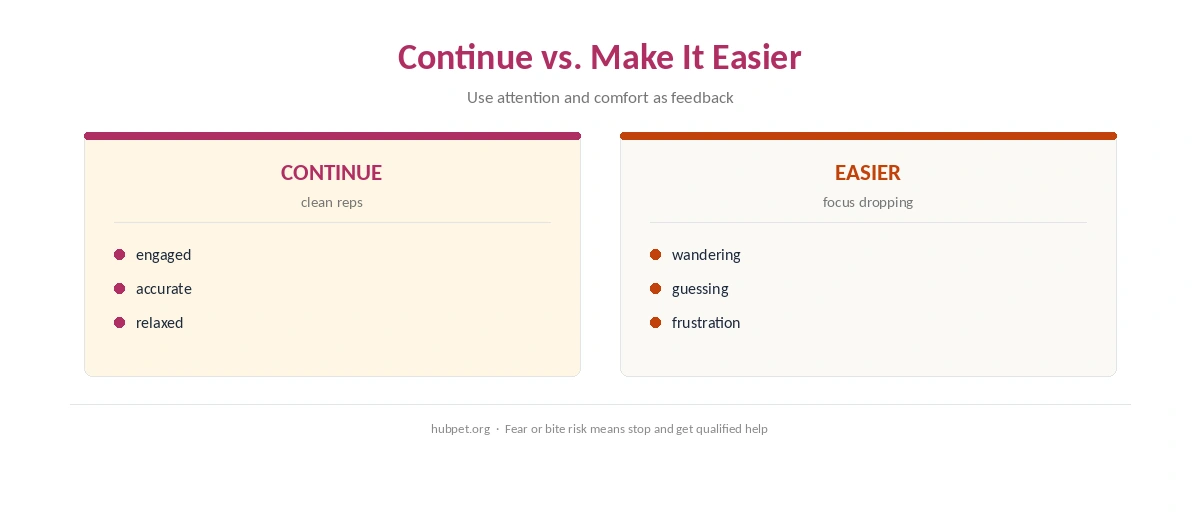
- Pause if the dog starts guessing, wandering, or showing frustration.
- End after a good repetition rather than squeezing in one more difficult attempt.
- Record one note about what to make easier or harder next time.
Use Short Sessions to Prevent Frustration, Not to Rush Progress
Short does not mean intense. Give the dog time to eat the reward, reset, sniff, or move. The play-and-rest guide can help you avoid turning every free minute into a training drill.
If the dog becomes frustrated around a trigger, stop before practicing the reaction. The redirection guide focuses on making the alternative easier. Likewise, the delivery-driver guide shows why management may need to come before practice.
Do not add punishment because a short session did not work. The scolding myth guide explains why correction does not teach the desired replacement. The AVSAB position statements page reaffirms its 2021 recommendation for reward-based dog training.
What Counts as a Successful Short Training Session?
A successful session ends with useful information. The dog may complete several clean repetitions, or you may learn that the setup was too hard. Both outcomes can improve the next plan. Progress should come from clearer criteria and gradual difficulty, not from keeping the dog working longer.
If fear, aggression, or bite risk appears, stop casual practice and get qualified reward-based help. Safety comes before session length or training goals.
How We Research
HubPet reviewed these sources on October 11, 2026: the Dogs Trust training tips, the VCA puppy training guide, and the AVSAB humane-training position page. Read more about our research process.
Dogs Trust suggests about five to ten minutes in general tips, while VCA recommends only a few minutes at first for individual skills. Let success and attention guide the endpoint.
One clear behavior or criterion is usually easier to teach and evaluate than several unrelated goals.
Lower distractions, improve the reward, simplify the criterion, and end before frustration builds.
First check whether the setup is too hard. Make the task easier instead of repeating or escalating the cue.
Yes, if the dog remains comfortable and engaged. VCA notes that brief skill sessions can happen several times a day, especially early in learning.
The Bottom Line: How to Practice Training in Short Sessions
How to practice training in short sessions is simple: choose one criterion, start easy, reward promptly, stop while the dog can still succeed, and adjust one variable next time. Reward-based clarity matters more than chasing a perfect session length.