
A weekly training practice checklist can organize reward-based practice without turning every day into a long drill. The AVSAB position statements page reaffirms the 2021 recommendation to use reward-based methods for dog training. Meanwhile, Dogs Trust training tips recommend calm settings, one behavior at a time, and short sessions.
The weekly rhythm in this checklist is a planning tool, not a scientific rule about how often every dog must train. Use the short-session guide to keep individual sessions manageable. Then use the positive reinforcement guide to make the desired choice worth repeating. For a separate evidence-focused question, see is It Too Late to Train an Adult Dog.
Weekly Training Practice Checklist: Set Up the Week
A weekly training practice checklist works best when the first task is deciding what matters. Pick one or two practical skills for the week instead of trying to improve everything at once. The basic dog training guide gives a simple starting framework.
Next, choose situations where the dog can still succeed. If the skill falls apart around movement or noise, review the distraction-training guide before raising difficulty. Progress comes from clearer setups, not from repeating a cue more loudly.
| Weekly check | What to record | Why it helps |
|---|---|---|
| Goal | One or two skills | Keeps criteria clear |
| Starting level | Easy context | Creates early success |
| Reward | What the dog values | Supports repetition |
| Difficulty | One variable changed | Shows what caused errors |
| Recovery | How quickly focus returns | Helps set the next step |
| Next week | Keep, lower, or raise | Prevents random progression |
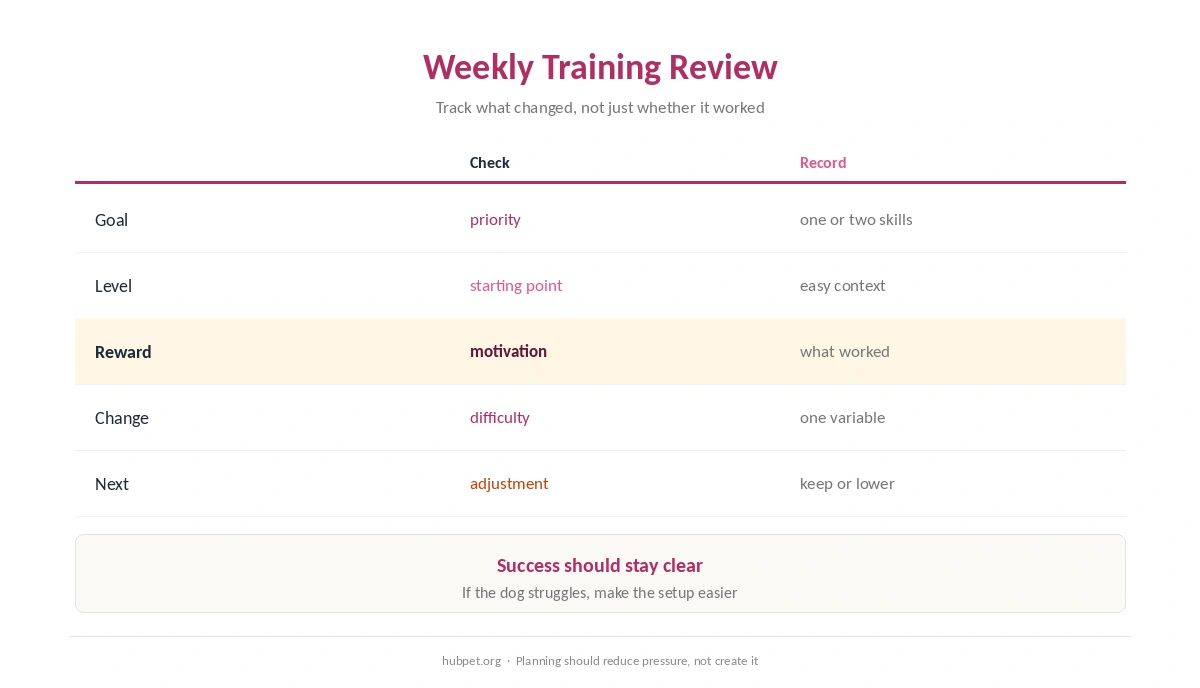
Weekly Training Practice Checklist for Core Skills
For calm behavior, schedule easy repetitions from the settle-on-a-mat guide.
For impulse-control practice, rotate simple versions of the leave-it guide and the wait-for-food guide. Start with an easy version instead of testing the hardest setup every day.
Handling can also be part of a weekly training practice checklist. Use the cooperative handling guide for brief, voluntary touch practice. For item exchanges, the drop-it guide keeps the lesson focused on trading rather than grabbing.
If doorway excitement is a real-life goal, rehearse the station skill from the doorbell guide before adding a visitor. If jumping is the problem, pair management with the jumping guide so the dog has a clear alternative behavior.
- Choose one main skill and one maintenance skill for the week.
- Start each skill in a setting where the dog can respond comfortably.
- Prepare rewards before the session begins.
- Practice several brief sessions instead of one exhausting drill.
- Change only one difficulty factor at a time, such as distance or distraction.
- End after useful success and give the dog normal rest and enrichment.
- Write one note about what to keep the same next week.
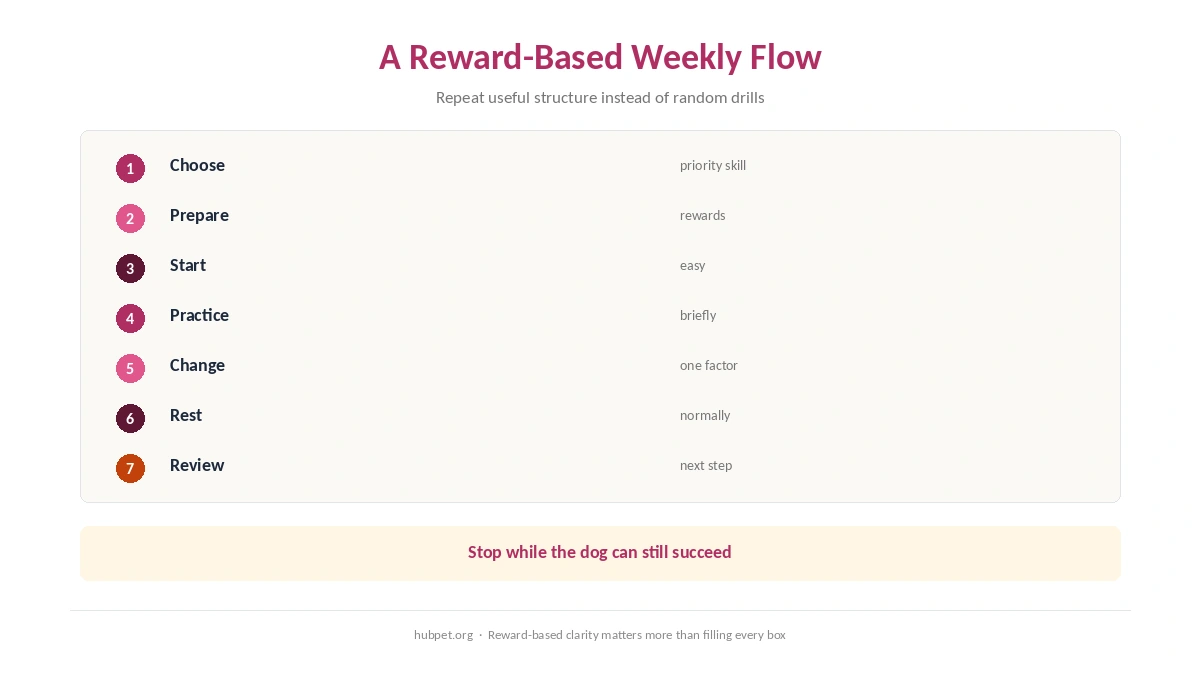
How to Review Your Weekly Training Practice Checklist
At the end of the week, look for patterns rather than a perfect score. If success disappears outside the living room, the lesson may need more gradual generalization. The common training mistakes guide can help identify jumps in difficulty.
If the dog becomes tense around a trigger, lower the challenge. The fear-confidence guide emphasizes distance and choice, while the redirection guide shows how management can prevent repeated unwanted behavior.
Do not add scolding because progress looks slow. The scolding myth guide explains why punishment does not teach the replacement you want. Reward-based training can be adjusted without making the learner afraid of mistakes.
Finally, protect downtime. The play-and-rest guide can help keep training from crowding out sleep, decompression, and ordinary pet life. A checklist should simplify decisions, not create pressure to fill every box.

How We Research
HubPet reviewed these sources on October 11, 2026: the AVSAB humane-training position page and the Dogs Trust training tips. Read more about our research process.
One or two priority skills plus a small amount of maintenance work is easier to evaluate than a long list of unrelated goals.
No universal daily schedule fits every dog. Use short successful practice when the dog is comfortable and include normal rest and enrichment.
Dogs Trust gives five to ten minutes as a general tip, while other guidance may suggest only a few minutes for a new skill. Stop while the dog can still succeed.
Record the setup, the skill, the reward, what difficulty changed, and whether the dog stayed relaxed and successful.
Lower difficulty, improve the setup, and seek qualified reward-based help if fear, aggression, or safety concerns are involved.
The Bottom Line: Weekly Training Practice Checklist
A weekly training practice checklist should keep training clear: choose a small goal, start easy, reward useful behavior, change one variable at a time, and review what the dog actually learned. The checklist is a planning aid, not a quota.