
This article is general information, not veterinary advice. If your pet seems unwell, is in pain or may have eaten something harmful, contact your vet or an animal poison control line right away. Read our vet disclaimer.
How to reduce excessive barking at home starts with identifying what the barking is doing for the dog. RSPCA says dogs may bark from excitement, frustration, boredom, fear, distress, or because they want something (RSPCA, accessed 2026). VCA also describes territorial, separation-related, anxiety, frustration, and attention-seeking barking (VCA, 2019; accessed 2026). For a related behavior guide, see how to Respond Calmly to Attention-Seeking Behavior.
How to Reduce Excessive Barking at Home: Start With the Trigger
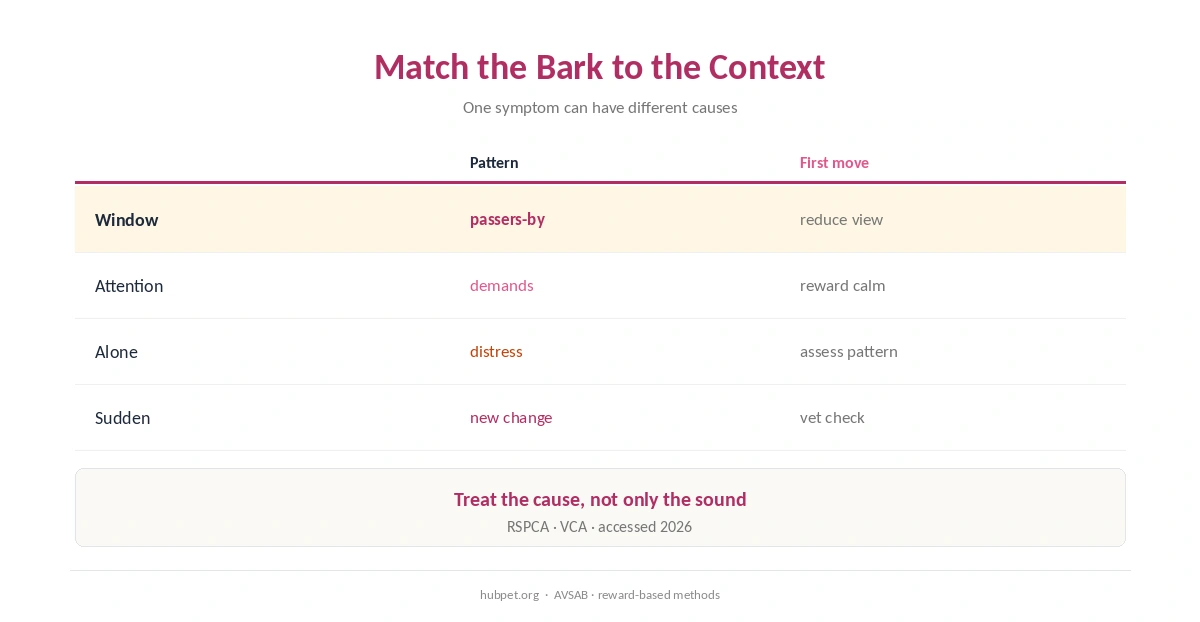
Before changing the barking, write down what happens immediately before it and what happens next. That simple trigger-and-consequence note can separate window barking from attention barking or distress when left alone. Also, compare the pattern with why dogs bark at the door if visitors and passers-by are the main trigger. A useful companion behavior page is why Dogs Bark at People Walking Past.
| Pattern | Likely context | First change |
|---|---|---|
| People or dogs outside | Visual or territorial trigger | Reduce window access and reward calm behavior |
| Owner attention | Owner responses may reinforce barking | Reward quiet alternatives before demands escalate |
| When left alone | Possible separation-related distress | Record the pattern and seek qualified help if distress is intense |
| Sudden increase | A new trigger or health factor may contribute | Contact your veterinarian if you cannot explain the change |
How to Reduce Excessive Barking at Home With Management and Rewards
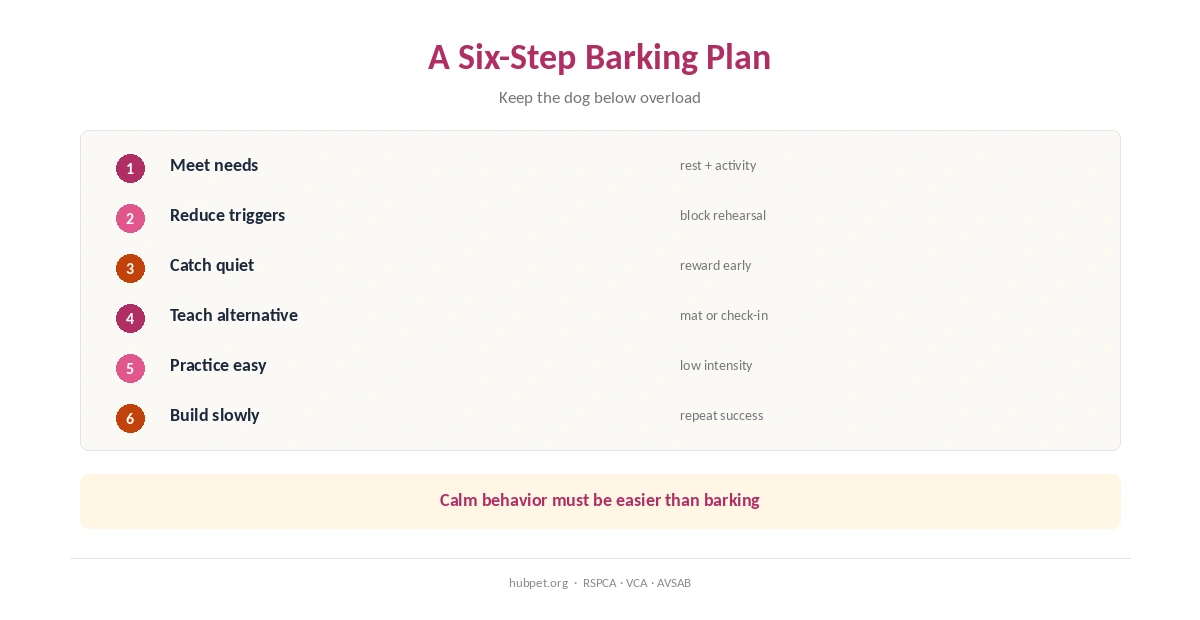
How to reduce excessive barking at home works best when you make the trigger easier before training begins. RSPCA recommends reducing access to passers-by when that view triggers barking. It also suggests using treats or toys before the dog starts reacting (RSPCA, accessed 2026). VCA similarly recommends changing the environment so the dog gets less repeated exposure to barking triggers (VCA, 2019; accessed 2026). This creates enough calm for learning.
- Meet daily needs for rest, social contact, activity, and mental stimulation before a known noisy period.
- Block or soften predictable visual triggers while you teach a calmer response.
- Notice the first quiet second and reward it before barking resumes.
- Teach a simple alternative such as going to a mat, sitting, or checking in with you.
- Practice below the level where the dog becomes too aroused to take food or respond.
- Make sessions short and repeat them across easy situations before harder ones.
The training principle is the same one used in positive reinforcement and basic dog training at home: make the wanted response easy, mark it, and reward it. AVSAB’s 2021 humane-training statement, reaffirmed in 2025, recommends reward-based methods for all dog training and behavior modification. It specifically rejects aversive methods because of welfare risks (AVSAB, 2021/2025).
For dogs that need a stationing behavior, teach a stay only after the dog can settle at an easy distance from the trigger. If greetings create the noise, the plan in stopping jumping on people can give visitors a second calm behavior to reinforce. Daily routine matters too, so use the daily dog care checklist to catch gaps in exercise, rest, and enrichment.
What Not to Do About Barking
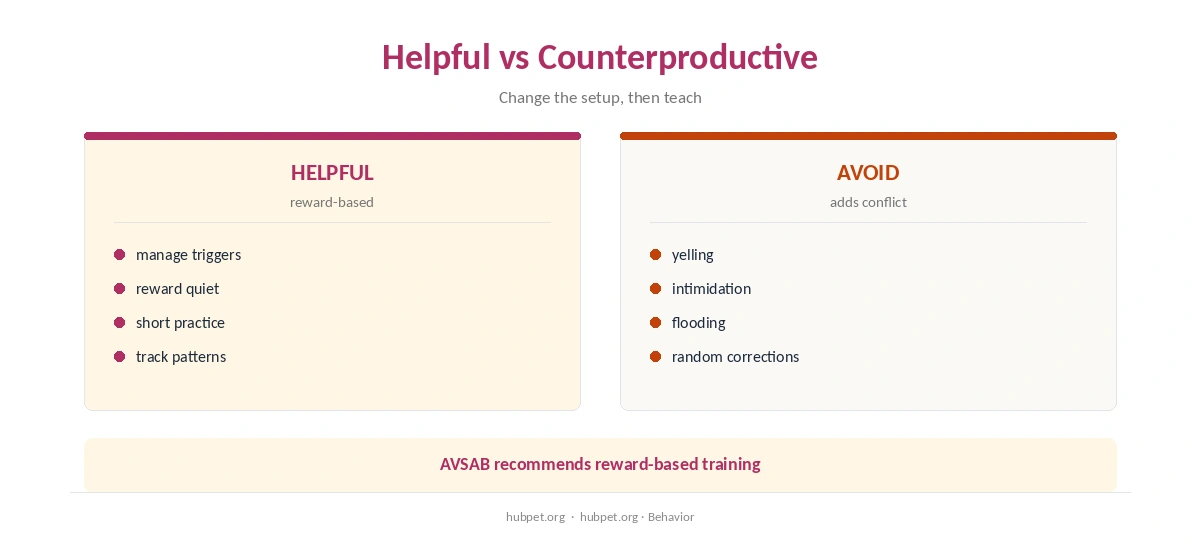
How to reduce excessive barking at home does not require yelling over the dog. VCA notes that yelling can add noise, anxiety, and conflict when the dog shows fear or territorial arousal (VCA, 2019; accessed 2026). AVSAB recommends against force, pain, intimidation, and leash corrections as behavior-change tools (AVSAB, 2021; reaffirmed 2025). Instead, lower the trigger intensity and reinforce a response the dog can repeat.
When to Get Professional Help
RSPCA advises a veterinary check when barking suddenly increases or when a hearing or other health problem may be contributing (RSPCA, accessed 2026). A qualified reward-based trainer or veterinary behavior professional is also appropriate when barking comes with panic when left alone, repeated lunging, aggressive behavior, or a dog who cannot settle even in an easier setup. The pet emergency signs page is for true medical emergencies, not ordinary barking.
How We Research
HubPet uses veterinary, welfare, and behavior sources rather than personal anecdotes. We read these sources on October 11, 2026: VCA Barking in Dogs, AVSAB Humane Dog Training position. We also reviewed RSPCA barking guidance on the same date. See How We Research for our method.
How to Reduce Excessive Barking at Home FAQ
RSPCA lists several possible contexts, including excitement, frustration, boredom, fear, wanting something, and distress. Track when the barking starts before choosing a training plan.
No. Ignoring is not a complete plan for fear, distress, or environmental triggers. Manage the trigger and reinforce the quiet or alternative behavior you want instead.
Yes, but the cue works best after you can create a moment of calm and reward it. VCA emphasizes reinforcing quiet behavior rather than adding more noise or conflict.
Record what happens after you leave. Persistent vocalizing with pacing, destruction, or panic can point to separation-related distress and deserves professional assessment.
A sudden unexplained increase, especially in an older dog or alongside other behavior changes, deserves a veterinary check because medical or sensory changes can contribute.
The Bottom Line
How to reduce excessive barking at home is not about making a dog silent. First identify the trigger, then prevent repeated rehearsal and reward calm alternatives. RSPCA, VCA, and AVSAB all support plans that address the cause and use humane, reward-based behavior change rather than punishment (accessed 2026; AVSAB 2021/2025).