
How to practice calm behavior before walks starts before the front door opens. Reward small signs of composure around the leash, practice at an easier door if needed, and let forward movement happen when the dog can stay connected to you.
How to Practice Calm Behavior Before Walks at an Easy Starting Point
Dogs Trust doorway guidance recommends practicing when the environment is quiet and using a less exciting indoor door if the front door is too difficult. That matches positive reinforcement training: set up a behavior the dog can offer, then make the next step available as part of the reward.
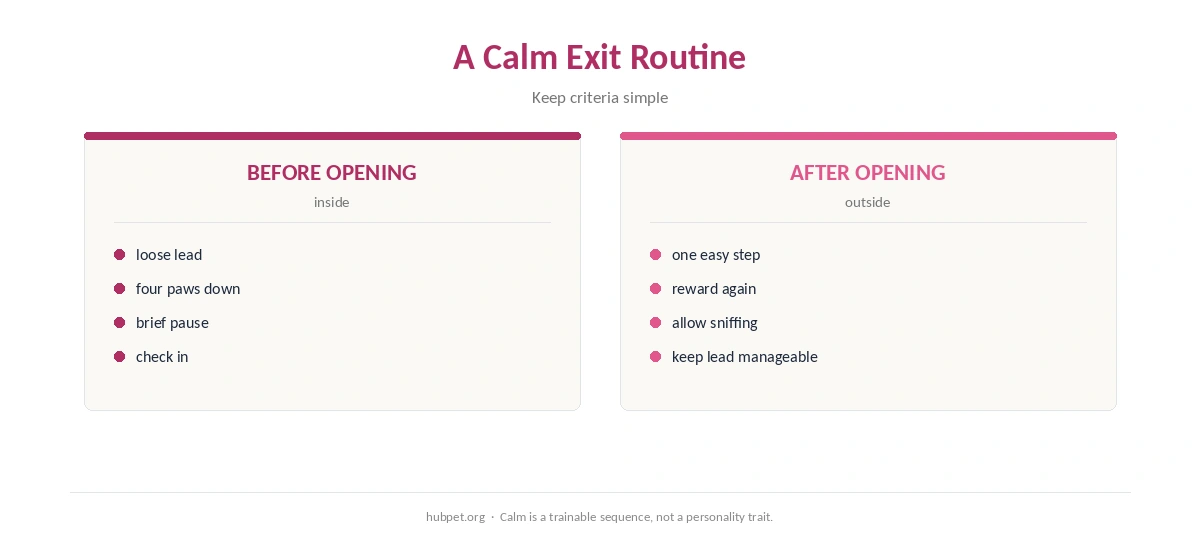
Do not wait for perfect stillness. At first, calm behavior can mean four paws on the floor, a loose leash, a brief pause, or turning back toward you. Basic training foundations and settle-on-a-mat practice can make those small responses easier to teach away from the doorway. That is how to practice calm behavior before walks without turning calm into a rigid sit-and-wait ritual. For the related reward-based training guide, see how to Reward Calm Behavior Effectively.
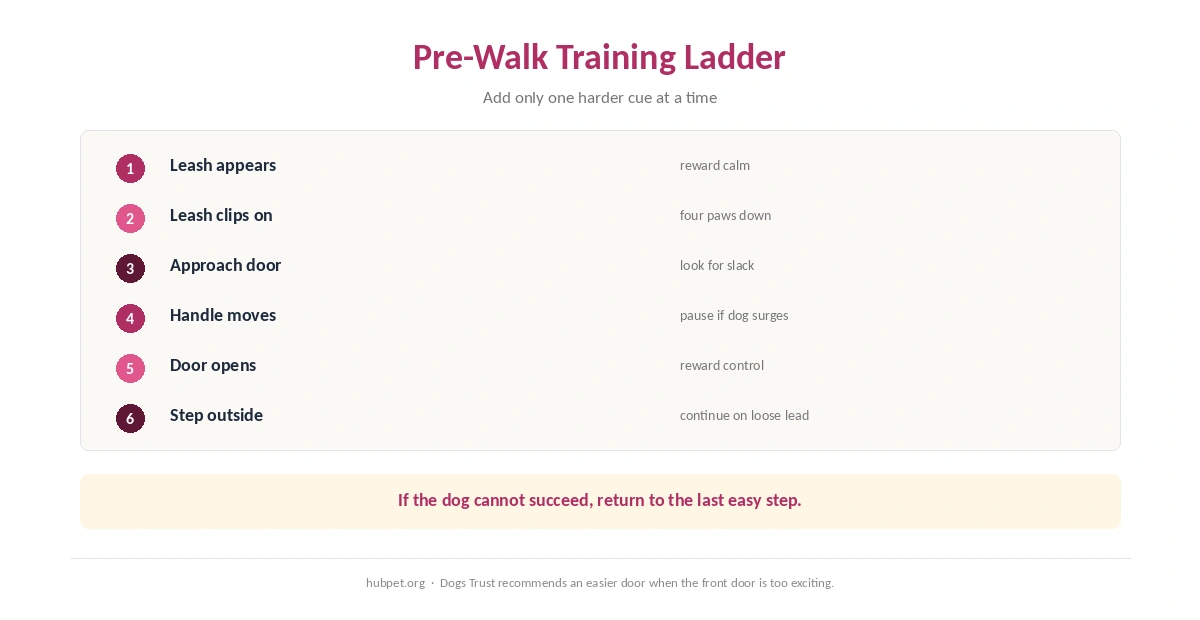
How to Practice Calm Behavior Before Walks Step by Step
- Separate the cues. Pick up the leash at random quiet times, reward calm behavior, then put it away.
- Clip the leash on before excitement peaks. Reinforce a loose body and four paws down.
- Approach an easy door. Pause and reward any moment of slack leash or orientation back to you.
- Move the handle slightly. If the dog surges forward, close the door calmly and make the next repetition easier.
- Open the door a little. Reward the dog for staying able to pause rather than rushing through.
- Step through together. Continue only while the leash remains manageable.
- Reward again outside. A few easy steps, sniffing access, or another valued reward can reinforce the calm start.
- End practice early. If arousal keeps climbing, reset indoors instead of drilling the same hard repetition.
Door manners and loose-leash walking support each other but are not identical skills. Use wait-at-the-door training for thresholds and the loose-leash guide once you are moving.

How to Practice Calm Behavior Before Walks When Excitement Spikes
| What happens | Make the setup easier | Reward |
|---|---|---|
| Jumping at the leash | Put the leash down and practice farther from the door | Four paws down |
| Pulling at the closed door | Use a quieter inside door | Slack leash or a brief pause |
| Barking at outside sounds | Increase distance from the exit | Orienting back to you |
| Cannot take food or respond | Shorten the session and reduce stimulation | Any easy known behavior |
| Calm at the threshold | Add one small piece of the exit routine | Loose leash and recovery |
If outdoor distractions are the main problem, use distraction training on walks. For dogs that lunge or become overwhelmed around triggers, the reactive-walk guide focuses on distance and safety instead of demanding stillness near a trigger.
Practice works better when it stays short. Short training sessions prevent repeated failure, while the weekly practice checklist helps spread easy repetitions across several days. Spreading easy repetitions across the week is also how to practice calm behavior before walks without rehearsing the full high-arousal routine every time.
When to Get Professional Help
Ask a qualified reward-based trainer for help if pre-walk arousal leads to repeated lunging, biting at the leash or people, panic, or a safety risk you cannot manage. AVSAB’s 2021 humane training position recommends reward-based methods for all dog training and behavior modification. A useful companion training page is how to Prevent Overexcitement During Play.
Avoid trying to “wear the dog out” as the only solution. Our walk-length myth guide explains why exercise needs are not a simple one-walk formula. Also review common training mistakes and redirection strategies if the exit routine keeps unraveling.
How We Research
HubPet reviewed guidance on October 11, 2026. We used Dogs Trust doorway training, Dogs Trust loose-leash guidance, and AVSAB’s humane dog training position. Our process is on How We Research.
Not necessarily. A sit can be useful, but the real criterion can be any safe, calm behavior such as four paws down and a loose leash.
Practice the leash cue separately. Pick it up during quiet times, reward calm behavior, and put it away before adding the doorway.
If pulling is part of the pattern, pause and make the setup easier. Dogs Trust notes that moving forward while the dog pulls can teach that pulling works.
Use a quieter interior door first. Dogs Trust specifically recommends lowering the difficulty when the front door is too stimulating.
It can improve the start of the walk, but loose-leash walking is a separate skill that also needs practice once you are moving.
How to Practice Calm Behavior Before Walks: Bottom Line
How to practice calm behavior before walks is a lesson in breaking the routine into smaller cues. Reward composure before the door opens, reduce difficulty when arousal rises, and let the dog move forward when the leash and body are manageable. A calm start is trained, not demanded.