
This article is general information, not veterinary advice. If your pet seems unwell, is in pain or may have eaten something harmful, contact your vet or an animal poison control line right away. Read our vet disclaimer.
Why dogs lick people varies with the dog and the moment. VCA lists social interaction, learned attention, sensory interest in taste or smell, and self-soothing among possible contributors, while also warning that excessive licking can accompany anxiety, pain, allergies, or other health problems (VCA, accessed 2026).
Why Dogs Lick People: What We Know and What We Should Not Assume
Licking is part of normal canine behavior, but one lick does not translate into one human-style message. VCA describes licking during puppy development and social interactions, and it also notes that people can accidentally reinforce licking by giving attention after it happens. Therefore, why dogs lick people is best answered with context rather than a single claim such as “it always means affection.”
Taste and scent can also matter. VCA notes that dogs may investigate salty skin and everyday odors with their mouths and tongues. This is another possible reason why dogs lick people, but it cannot decode every episode. Compare the behavior with why dogs follow people and the body-language approach in the tail-wagging myth guide.
| Context | Possible function | What to do |
|---|---|---|
| Greeting | Social contact | Watch whole body language |
| You respond every time | Learned attention | Reward an alternative |
| After exercise | Taste or scent interest | Redirect calmly |
| Repetitive and hard to interrupt | Possible compulsive pattern | Discuss with your vet |
| New self-licking plus skin change | Possible medical issue | Veterinary assessment |
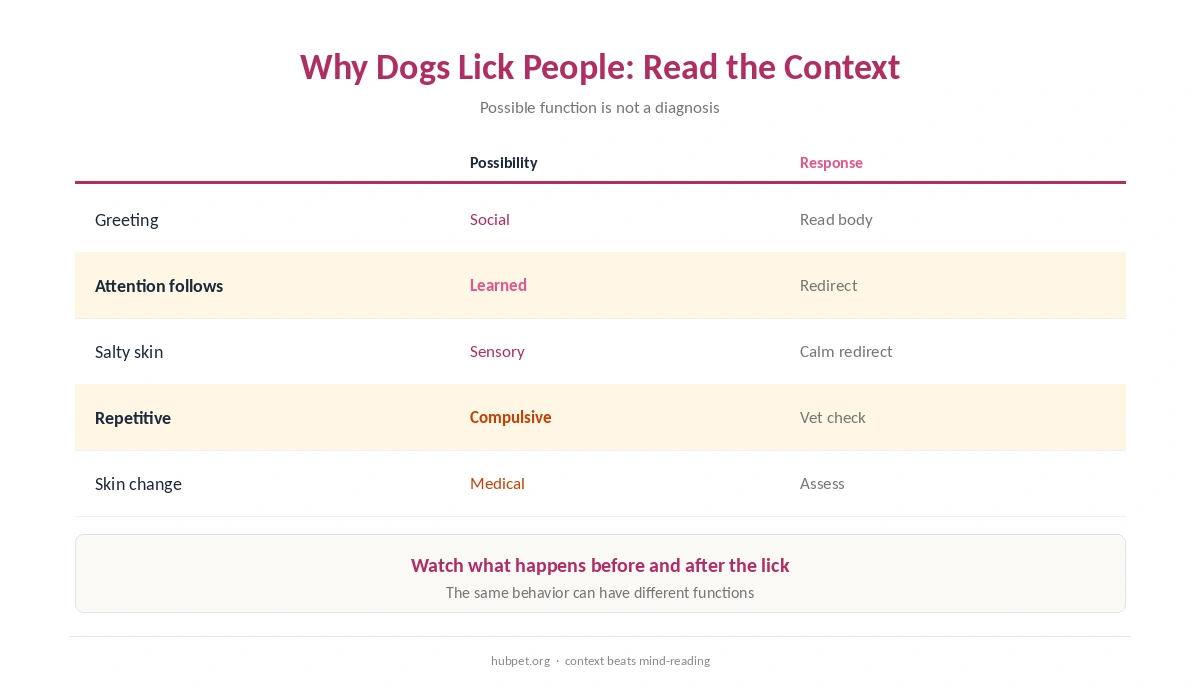
Why Dogs Lick People More After the Behavior Gets Attention
Behavior can strengthen when it produces a useful consequence. If licking reliably starts petting, talking, laughing, or play, the dog may repeat it. Learned attention can therefore help explain why dogs lick people in a specific household. Instead of scolding, redirect to a behavior you can reward. The positive-reinforcement guide and basic dog training guide explain that approach. For a closer look at the related behavior pattern, see why Dogs Whine When They Want Something.
For example, ask for sit before greeting, or reinforce calm settling when the dog chooses it. If licking appears during departures or returns and the dog also paces, vocalizes, destroys items, or toilets indoors, compare the pattern with separation-anxiety guidance. Do not label ordinary closeness as anxiety without the separation-related signs.
- Notice exactly when licking begins and what happens immediately afterward.
- Check the dog’s ears, tail, posture, and movement for the broader emotional context.
- Avoid turning licking into a reliable route to exciting attention if you want less of it.
- Redirect to a simple rewardable behavior or safe activity.
- Keep responses consistent across household members.
- Record abrupt increases or repetitive patterns that are difficult to interrupt.
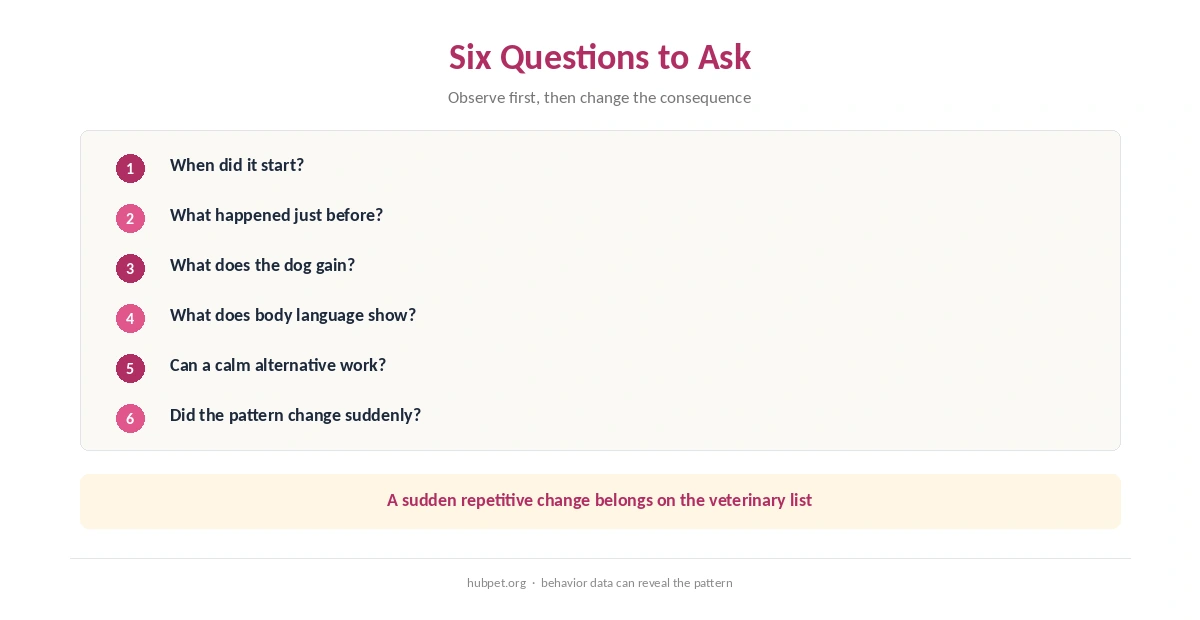
When Licking Is More Than a Social Habit
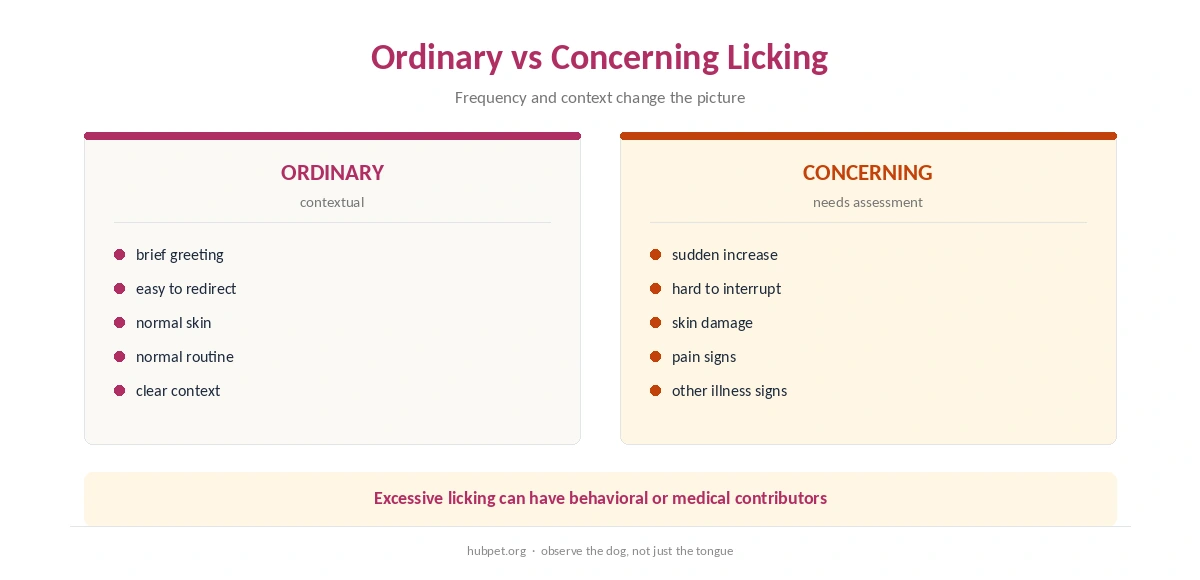
Merck describes compulsive disorders as repetitive behaviors that occur out of context or interfere with normal activities. Incessant licking is one example. VCA also advises veterinary assessment when licking becomes excessive because pain, allergies, anxiety, or other problems can contribute. A sudden shift in why dogs lick people may therefore need a health check. The pain-signs guide can help you notice other changes.
Likewise, sudden licking with vomiting, weakness, breathing difficulty, collapse, or suspected toxin exposure needs medical attention rather than behavior training. Use pet emergency signs for urgent triage. If licking involves paws after outdoor exposure, follow the paw-cleaning guide. If it follows grass eating, see why dogs eat grass instead of assuming one motive.
How We Research
HubPet uses veterinary organizations and research rather than personal anecdotes. We read these sources on October 11, 2026: VCA why dogs lick humans, accessed 2026, Merck Veterinary Manual dog behavior problems, accessed 2026. See How We Research for our method.
Why Dogs Lick People FAQ
No. Social contact can be one context, but attention learning, taste or scent, self-soothing, and other factors may contribute.
If licking reliably brings attention back, that consequence can reinforce the behavior.
Redirect to a simple behavior or activity and reward the alternative consistently.
Contact your veterinarian when licking becomes sudden, repetitive, difficult to interrupt, or appears with skin changes, pain signs, anxiety, or other illness signs.
VCA advises avoiding face licking for health and safety. Redirect the dog to another form of greeting if needed.