
For general education only; not a substitute for individual veterinary assessment. If your pet has pain, an injury, severe distress or a sudden behavior or mobility change, contact your veterinarian. Veterinary disclaimer.
Should I trim my cat’s claws? The answer depends on claw condition, lifestyle, age, mobility, and whether the cat can scratch normally. A healthy active cat that maintains its claws on suitable scratching surfaces may not need routine clipping. An indoor senior whose curved tips catch on fabric may need regular checks and occasional help. The aim is not to remove the cat’s normal scratching ability. It is to prevent overgrown tips from snagging, splitting, or pressing into a paw pad. Start by looking at the whole cat, not by reaching immediately for clippers.
Decide whether a trim is necessary
Observe the claws while your cat rests and walks. Look for tips that curl sharply toward the pads, snag on rugs, or stay extended when they should be retractable. Check the inner dewclaws carefully because they may not contact scratching surfaces. A visible loose outer claw sheath is usually part of normal nail renewal, not a reason to cut. Cats Protection notes that young active cats may maintain their claws without help, while seniors and cats with limited mobility may be more likely to need attention. Sudden changes in grooming or scratching deserve a closer look.
An outdoor cat faces a different tradeoff. Claws assist climbing and escape, and trimming them routinely may reduce grip. Do not automatically apply an indoor trimming schedule to an outdoor cat. For indoor cats, sharper tips alone do not prove that the claws are too long. Observe scratching access, activity and fabric snags instead. If you cannot tell whether a claw is too long, ask your veterinary team to examine it. That is safer than cutting deeply to achieve a cosmetic appearance.
| Observation | What it usually suggests | Next step |
|---|---|---|
| Active outdoor cat, normal movement | Claws help with climbing | Discuss individual need before trimming |
| Indoor cat with occasional sharp tips | Not necessarily overgrowth | Provide scratching surfaces; inspect |
| Tips snag fabric or curve toward pads | May be too long | Arrange a cautious trim or professional check |
| Older cat stops scratching normally | Possible mobility or pain problem | Ask veterinarian to assess |
| Nail in pad, bleeding, limping | Possible injury | Veterinary care, not routine trimming |
Use a decision table, not a fixed calendar
The condition of each individual nail is more informative than a generic date. Some cats require short maintenance trims, and others do fine with scratching posts and occasional inspection. Note whether the cat has started avoiding a favorite perch, licking a toe or limping; these are possible discomfort signals rather than ordinary grooming tasks. If a tip seems to be touching or penetrating the pad, arrange veterinary care instead of trying to pull it free at home. The skin and nail bed can be painful and may need a professional assessment.
A scratcher should remain available whether or not you trim. Offer a stable vertical post tall enough for a comfortable stretch and a horizontal scratching surface if your cat prefers one. Place a scratcher by the area where the cat already chooses to scratch. The published scratching-post guide explains how to encourage that choice without punishment. Nail trimming reduces the sharp tip temporarily but does not change the feline need to scratch, stretch and mark.
Step-by-step check
- Watch the cat walk, scratch and rest before handling a paw.
- Inspect all claws, including dewclaws, for snagging or abnormal curves.
- Decide whether a scratcher, a light trim or veterinary care best fits.
- If trimming is appropriate, condition the cat to handling in tiny rewarded sessions.
- Recheck comfort and adjust the plan as activity and age change.
If clipping is needed, keep the session short
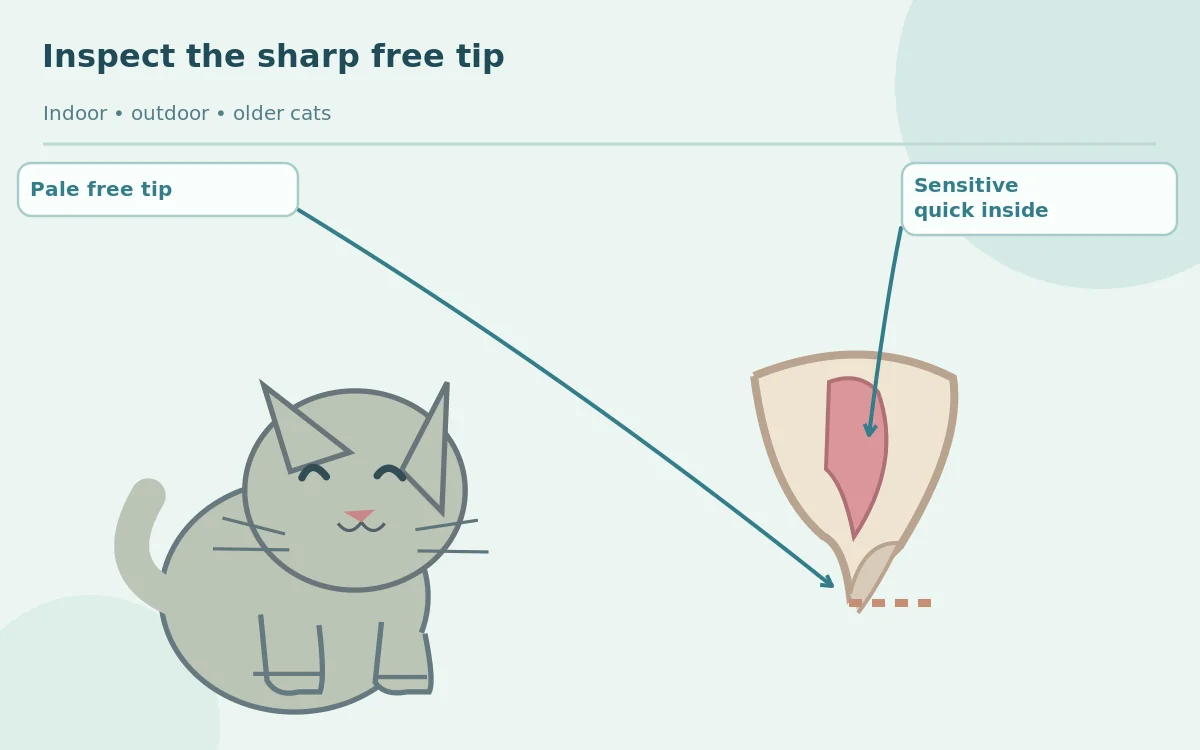
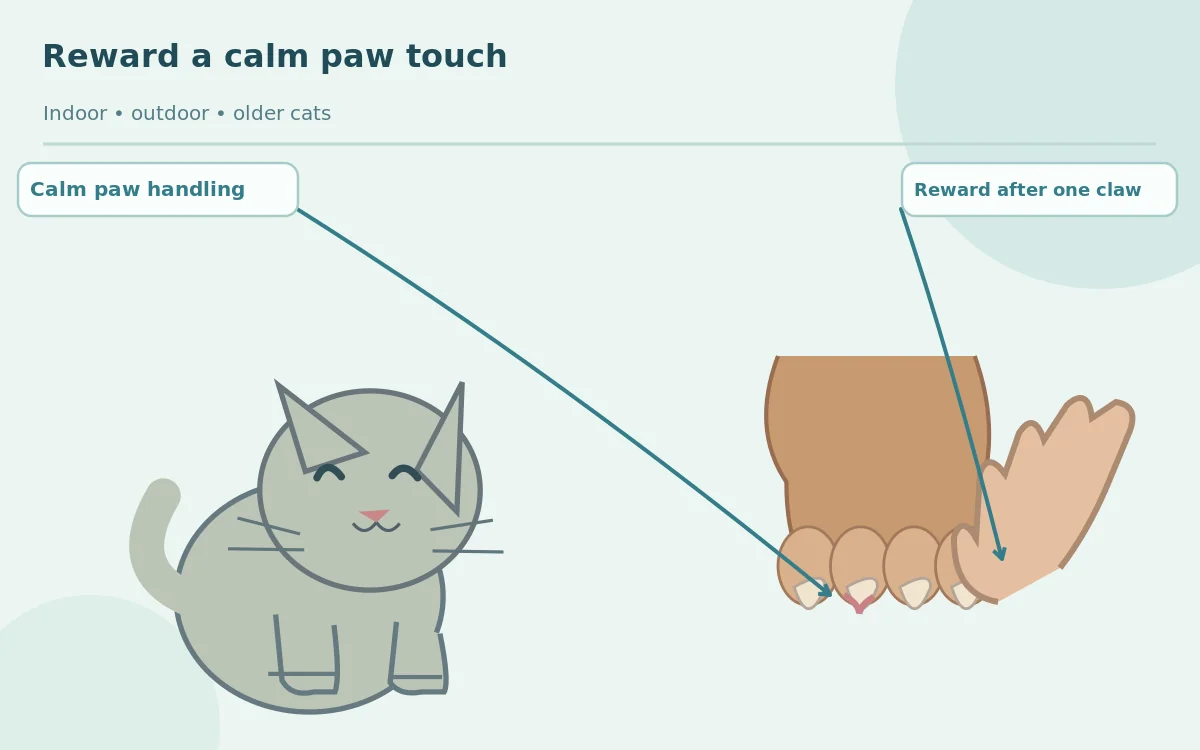
Choose a quiet moment during a calm moment. Introduce paw touching and clippers separately with rewards. Press one toe pad gently only when the cat tolerates handling, and observe the pale tip and the darker or pink quick. VCA and ASPCA recommend trimming only the narrow free tip; never cut the sensitive quick. With dark or difficult nails, a professional demonstration is a sensible first step. One well-tolerated claw is better than an entire paw completed by force. End before the cat becomes frightened.
If your cat pulls away, flattens the ears, flicks the tail sharply or begins to struggle, release the paw and stop. Never hold a struggling cat more tightly or shout to finish a schedule. Work gradually over separate days or use a veterinary clinic or cat-experienced groomer. Our published cat nail-trimming guide covers the clipping technique in greater detail. This article is about deciding whether and when that technique is appropriate.
Check the nails again after trimming
After a trim, watch your cat move and scratch normally. A fresh claw tip should not bleed, cause limping or make the cat guard its paw. Keep clean scratching surfaces available and offer a brief positive activity, such as a familiar food reward or gentle play, if your cat welcomes it. Inspect the dewclaws at the next ordinary grooming check; these may grow differently from the main toes. The need for future maintenance can change with age, illness, outdoor access and daily activity.
Avoid trying to solve furniture scratching with increasingly short cuts. Excessive trimming can expose living tissue and make nail care frightening. Instead, protect the furniture, offer attractive alternatives, and reward the cat for using them. The published sofa-scratching plan addresses the environment. Declawing is not a routine manicure; ASPCA strongly opposes using this amputation as a convenient substitute for managing natural scratching behavior.
Recognize the difference between maintenance and a medical problem
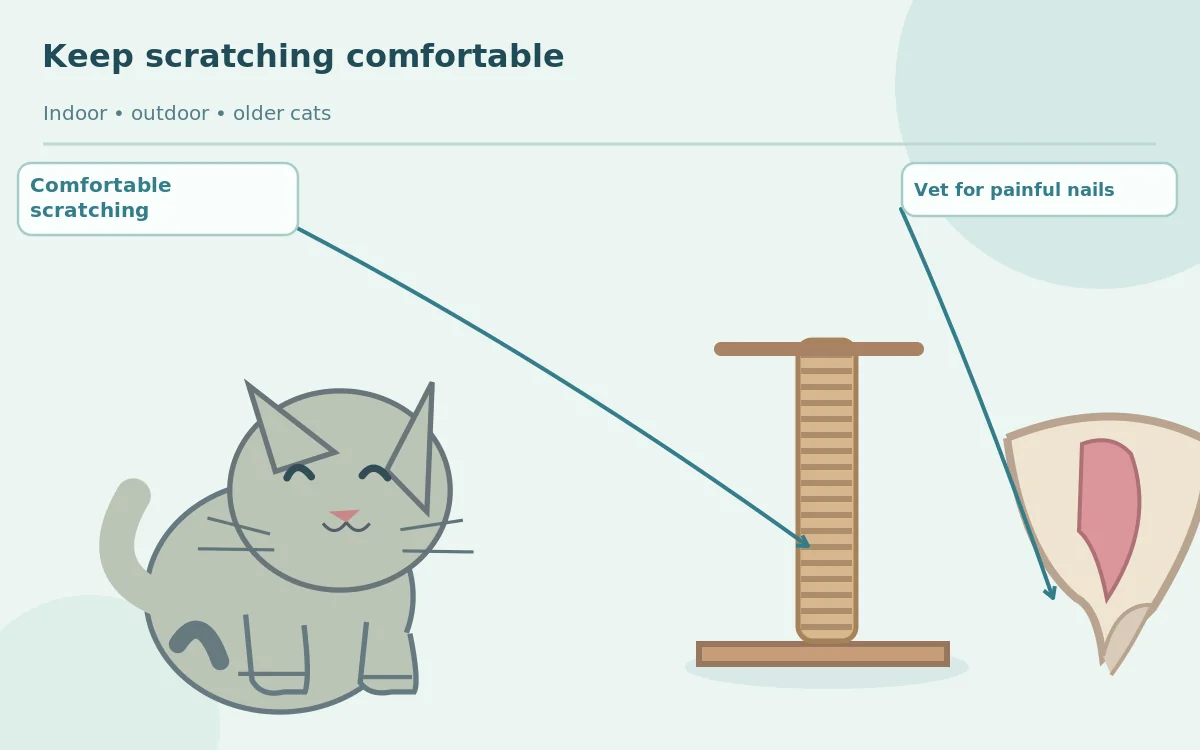
A claw that has curled into the pad, a torn nail, swelling, discharge or an obvious change in gait is not a DIY clipping project. VCA describes broken nails as painful injuries that can need veterinary treatment. Sudden reluctance to jump or scratch may reflect discomfort elsewhere, including joint pain, especially in older cats. Do not assume trimming solves that problem. Keep the cat comfortable and arrange professional assessment promptly if you see signs of pain or injury.
For a cat whose claws look healthy but who is simply uncomfortable with paw contact, the next step is cooperative-care training. Practice letting a hand approach, briefly touching a shoulder and eventually presenting one paw, always pairing comfortable steps with a reward. A veterinary nurse or cat-experienced groomer can also show the right technique. Try to preserve the cat’s sense of choice. The long-term goal is safe routine care rather than a one-time battle over every nail.
Common mistakes to avoid
Common mistakes include trimming every claw merely because it feels sharp, cutting until the nail looks blunt, and forcing a frightened cat to stay restrained. None addresses why the cat may be scratching furniture or why a senior cat has stopped maintaining its claws. Offer scratching choices, keep a simple observation record, and choose professional help sooner if you see an injured nail. If you share a home with a nervous cat, practicing calm paw handling between grooming sessions is often the most useful investment.
When to Call Your Vet
Call your veterinarian for an ingrown or broken claw, persistent bleeding, swelling, discharge, limping, pain during paw handling or a sudden change in scratching behavior. An older cat with new mobility changes also need a veterinary assessment. Do not diagnose joint disease or treat an infected paw yourself. This guide supports routine decisions; your veterinary team can judge what is right for the individual cat.
How We Research
HubPet compared the intent of this search with veterinary, welfare and relevant equipment guidance, then translated supported principles into pet-specific checks. We do not claim hands-on product tests, ranking results or veterinary diagnosis. See our editorial approach.
Sources
Cats Protection — whether cats need claw trimming — source guidance used to support the safety and selection advice above.
VCA — nail care and positive handling — source guidance used to support the safety and selection advice above.
ASPCA — nail tips, the quick and grooming — source guidance used to support the safety and selection advice above.
VCA — painful broken nails and signs requiring care — source guidance used to support the safety and selection advice above.
No. Some indoor cats maintain their claws with normal scratching. Check individual nails for overgrowth and discomfort rather than relying on an automatic schedule.
Not routinely without considering climbing and escape needs. Ask a veterinarian about an unusually long or injured claw and your cat’s actual lifestyle.
Often no. Cats normally shed outer claw sheaths during scratching. Bleeding, pain, limping or a damaged nail bed calls for a veterinary examination.
Yes. A calm one-claw session with a reward can be preferable to restraining a cat for a full set. Stop if the cat becomes distressed.
No. Trimming shortens the hard nail tip; declawing removes part of each toe and major animal-welfare organizations oppose it.