
This article is general information, not veterinary advice. If your pet seems unwell, is in pain or may have eaten something harmful, contact your vet or an animal poison control line right away. Read our vet disclaimer.
How to train a cat to use a scratching post starts with making the right scratching surface easy to choose, then rewarding the cat for approaching and using it. FelineVMA says positive reinforcement should be used for cat training and specifically recommends rewards around scratching posts (FelineVMA, 2026). In practice, how to train a cat to use a scratching post depends on location, surface preference, and reinforcement. For another evidence-based explainer, see can Cats Be Trained?.
How to Train a Cat to Use a Scratching Post by Matching the Cat
Scratching is normal feline behavior, so the goal is not to stop scratching. VCA advises offering a material and orientation the cat prefers, then placing the scratcher where the cat already wants to scratch (accessed 2026). The why-cats-scratch guide explains the marking and maintenance functions behind the behavior.
If the target is a couch, put the new scratcher very close to the chosen spot at first. The sofa-scratching plan covers furniture protection while the new habit develops. Also keep nail care separate from training; trimmed claws do not remove the need to scratch. This is how to train a cat to use a scratching post without turning the new surface into a source of conflict.
| What to match | Good starting choice | Why it matters |
|---|---|---|
| Location | Where scratching already happens | VCA: placement helps |
| Surface | A texture the cat chooses | Preferences differ |
| Stability | A sturdy scratcher | Wobble can discourage use |
| Reward | Food, play, or attention | FelineVMA 2026 |

How to Train a Cat to Use a Scratching Post with Positive Reinforcement
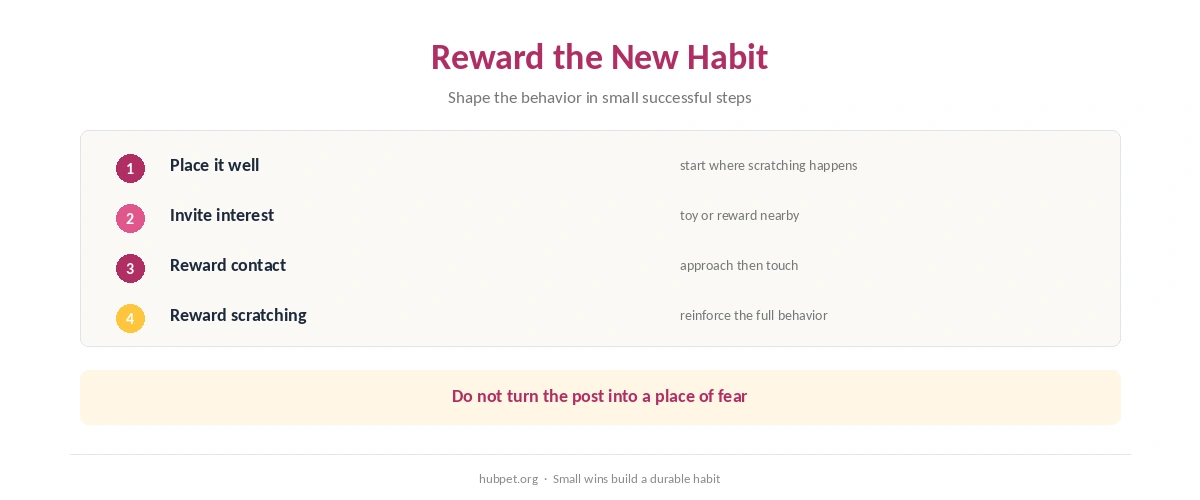
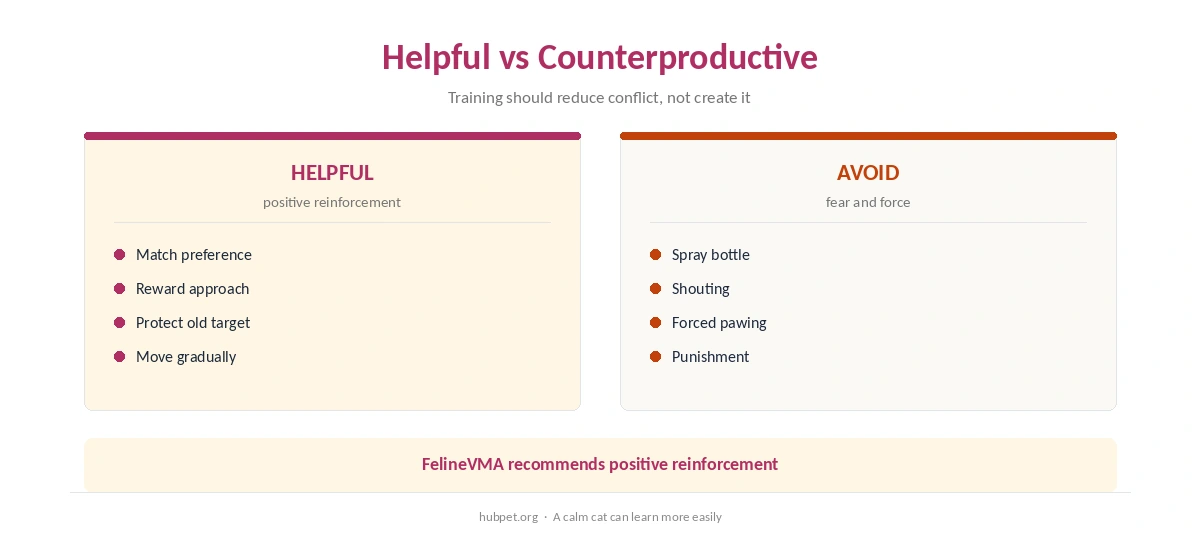
FelineVMA recommends treats, toys, or preferred human attention to entice and reward scratching-post use (2026). VCA likewise describes stepwise rewards: reinforce approaching the post, touching it, and then scratching. Do not spray, shout, or physically punish the cat; FelineVMA says punishment should be avoided because fear interferes with learning. A clear reward sequence is how to train a cat to use a scratching post while keeping the session voluntary.
- Place the scratcher next to a spot the cat already scratches or near a favored resting area.
- Make the scratcher interesting with a toy, catnip if the cat responds to it, or a reward nearby.
- Reward the cat for looking at or approaching the scratcher.
- Reward contact with the scratcher, then reward actual scratching as it appears.
- Protect the old target while the cat builds a reliable new habit.
- Move the scratcher only gradually after the cat is using it consistently.
Training works better when the cat has enough resources and low stress. Review indoor-cat care needs, the daily cat care checklist, and the calm-space setup. These pages help remove environmental pressure that can compete with learning.
For a newly adopted cat, combine this plan with the first-week checklist. If the cat is tense or hiding, use the cat stress signs guide. Then use low-pressure calming steps before expecting a polished training response.
When to Get Professional Help
FelineVMA recommends medical assessment when a cat shows a new behavior change, increased vocalization, biting or scratching people, house-soiling, chronic anxiety, or compulsive behavior (2026). If scratching changes suddenly alongside other unusual behavior, do not assume it is stubbornness. The pet pain guide can help you recognize reasons to call your veterinarian.
How We Research
HubPet uses veterinary organizations and research rather than personal anecdotes. We read these sources on October 11, 2026: FelineVMA Positive Reinforcement Training Toolkit, 2026, VCA scratching behavior guidance, accessed 2026, VCA cat training guidance, accessed 2026. See How We Research for our method.
How to Train a Cat to Use a Scratching Post FAQ
The location, stability, height, orientation, or surface may not match the cat’s preference. Start by placing an appealing, stable scratcher where the cat already scratches.
Do not force the cat. VCA notes that guided paw contact should stop if it creates fear, while FelineVMA emphasizes positive reinforcement and avoiding punishment.
Yes. FelineVMA and VCA both describe food, play, or preferred attention as positive reinforcers for desired scratching behavior.
No. FelineVMA says punishment-based methods should be avoided. Protect the old target and reward the alternative scratcher instead.
Arrange assessment for a sudden behavior change or scratching that appears with pain, anxiety, aggression, house-soiling, or other new signs.