
This article is general information, not veterinary advice. If your pet seems unwell, is in pain or may have eaten something harmful, contact your vet or an animal poison control line right away. Read our vet disclaimer.
How to stop a cat from scratching the sofa starts with accepting that scratching itself is normal. VCA describes scratching as a marking, stretching, and claw-maintenance behavior, so the realistic goal is redirection rather than suppression (VCA, accessed 2026). Give the cat a scratching surface that matches the location and orientation they already choose. Then make that legal option easier to reach and more rewarding than the sofa.
How to Stop a Cat from Scratching the Sofa: Match the Setup
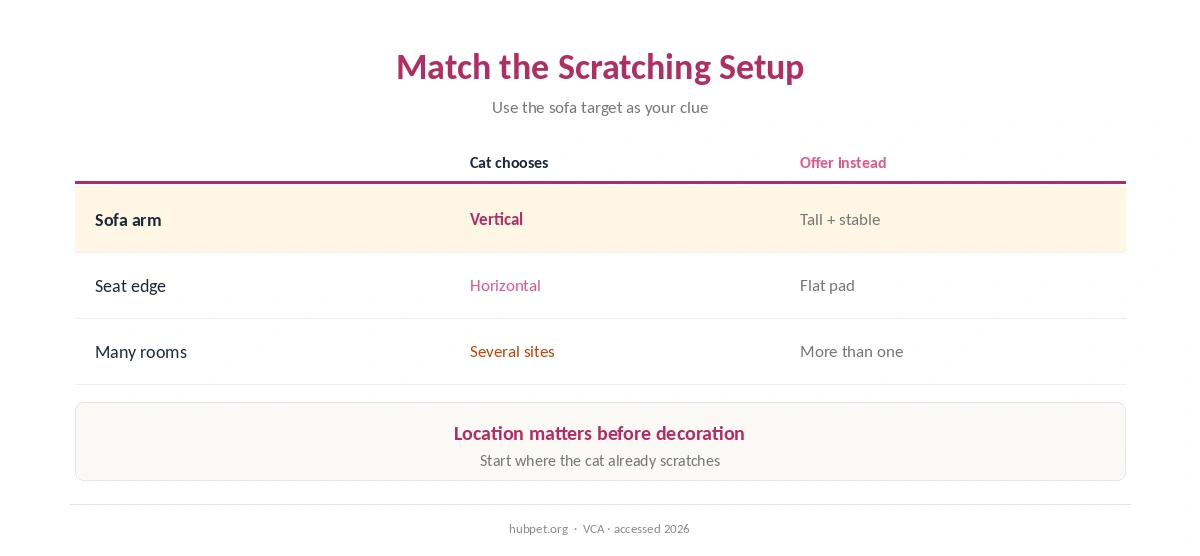
First, study the exact part of the sofa your cat uses. A cat that scratches an upright arm may prefer a tall, stable vertical surface. A cat that works on a rug edge or seat may prefer a horizontal pad. VCA advises placing a scratching surface beside the chosen furniture first, because prominent location matters to cats (VCA, accessed 2026). This is the practical bridge between why cats scratch furniture and how to stop a cat from scratching the sofa without fighting a normal behavior.
| What the cat chooses | Better legal option | Placement |
|---|---|---|
| Upright sofa arm | Tall stable vertical scratcher | Beside the damaged area |
| Flat seat or rug edge | Horizontal scratching surface | Next to the chosen spot |
| Several rooms | More than one scratching area | Where the cat spends time |
How to Stop a Cat from Scratching the Sofa: Reward the Better Choice
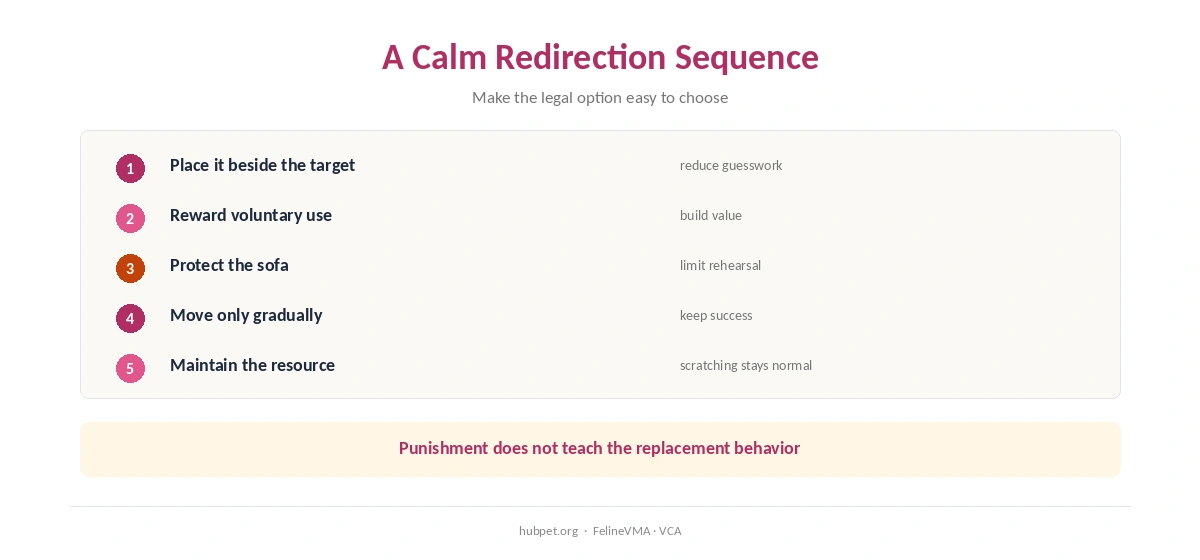
Next, reward the moment your cat uses the scratching surface. FelineVMA guidance on undesirable behaviors recommends positive reinforcement of a desirable alternative rather than punishment (FelineVMA, accessed 2026). Therefore, offer attention, play, or a small food reward after the cat chooses the legal surface. Do not force paws onto it if that creates fear. The same low-pressure handling principle helps with brushing a cat without stress.
- Put the new scratching surface directly beside the sofa target.
- Reward voluntary investigation and scratching on the legal surface.
- Temporarily cover or block the exact sofa area while the new habit develops.
- Move the scratching surface only gradually after the cat uses it reliably.
- Keep an appealing scratching option in a prominent everyday location.
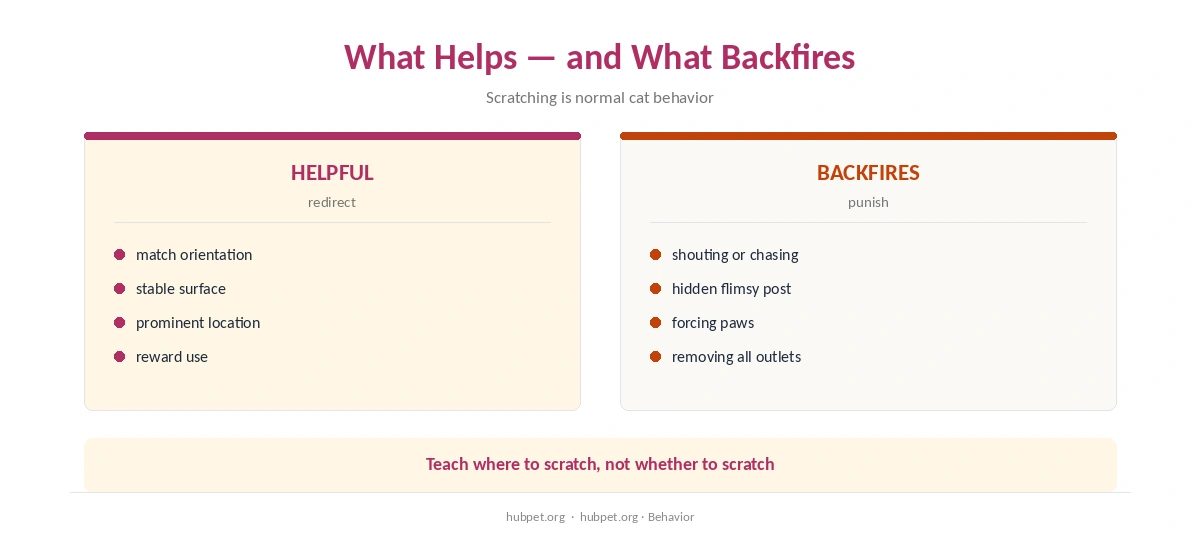
Meanwhile, remove accidental rewards. If scratching reliably brings shouting, chasing, or a dramatic interaction, the event can stay socially interesting. VCA warns against physical punishment because it can create fear or aggression and may only suppress behavior while the person is present (VCA, accessed 2026). Calmly redirect instead. Household setup from pet-proofing your home can also protect vulnerable areas while training is underway. In practice, how to stop a cat from scratching the sofa means making redirection more rewarding than confrontation.
What If the Cat Ignores the Scratching Post?
Change one feature at a time. Try a different orientation, surface, height, or location, then watch what the cat actually chooses. VCA notes that some cats need several scratching areas and that a post should be sturdy enough not to topple (VCA, accessed 2026). In addition, make the legal zone useful with play, resting, or climbing opportunities. A predictable home routine from the new pet owner checklist can help you keep those resources consistent.
If food or kitchen activity is part of your cat’s search for high places, the same replacement-behavior idea appears in keeping pets off kitchen counters. Likewise, changes in vocal behavior should be read in context; purring is not a simple happiness meter.
When to Get Professional Help
A sudden increase in scratching, scratching that spreads to many new places, or scratching that arrives with appetite, social, or elimination changes deserves a veterinary discussion. Merck notes that medical conditions, pain, stress, and anxiety can alter feline behavior (Merck Veterinary Manual, 2025). If medical causes are excluded and the problem remains difficult, ask your veterinarian about a qualified feline behavior professional.
How We Research
HubPet uses published veterinary, welfare, behavior, and research sources rather than personal anecdotes. We read these sources on October 11, 2026: VCA scratching-behavior guidance, FelineVMA positive-reinforcement behavior guidance, Merck Veterinary Manual feline behavior review. See How We Research for our method.
How to Stop a Cat from Scratching the Sofa FAQ
Scratching is a normal marking and stretching behavior, and prominent locations can matter. Put an appropriate scratching surface directly beside that chosen area first (VCA, accessed 2026).
No. VCA advises starting near the existing scratching site. Move it gradually only after the cat uses it reliably.
No. Physical punishment can create fear or aggression and does not teach the cat which scratching surface you want them to use (VCA, accessed 2026).
There is no single best format for every cat. Offer stable vertical and horizontal options and use the cat’s choices to guide you.
No. Scratching serves several normal behavioral functions beyond claw maintenance, so cats still need appropriate scratching outlets.
The Bottom Line
How to stop a cat from scratching the sofa is mostly a design problem: place a preferred scratching surface where the cat already scratches, reward that choice, protect the sofa during the transition, and avoid punishment. If the pattern changes suddenly or comes with other behavioral changes, involve your veterinarian.