
Rear claws are easy to overlook when a cat spends most of its scratching time on a post. They may wear differently from the front claws, so the right answer is not to cut all four paws on the same schedule. To trim a cat’s back claws safely, first decide whether those nails actually need attention. Then prepare a stable spot, check the tip and the sensitive quick, and take the smallest useful amount. VCA and Humane World for Animals both emphasize a gentle approach. A cat that steps away is giving you information; do not turn an optional trim into a wrestling match.
Check the hind paws before choosing a clipper
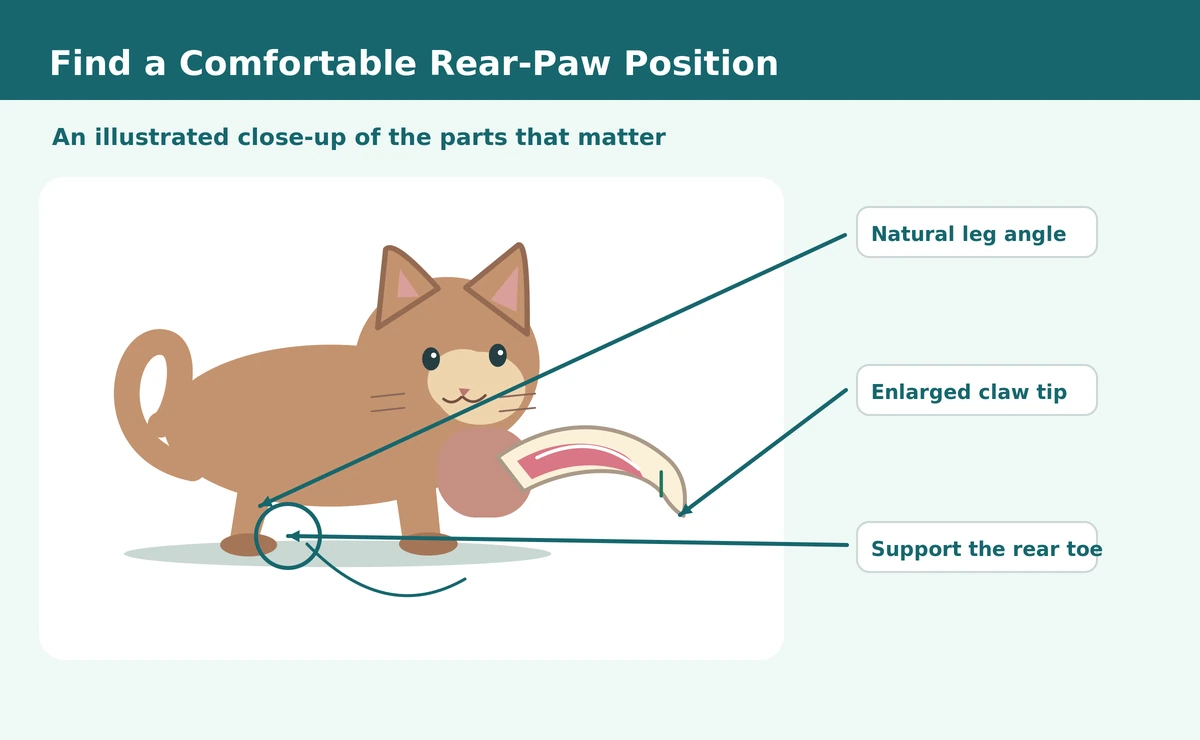
Watch your cat walk and stretch on a familiar nonslip surface. Rear claws often look shorter or blunter than the front claws because the feet work differently during movement. Check whether the tips catch fabric, bend toward the pad, or seem uncomfortable, but do not force the toes apart. A curved nail approaching the skin is a veterinary question, not an invitation to make a deep cut. If the claws are short, smooth, and not catching, a routine inspection may be enough today.
Choose a position the cat already accepts
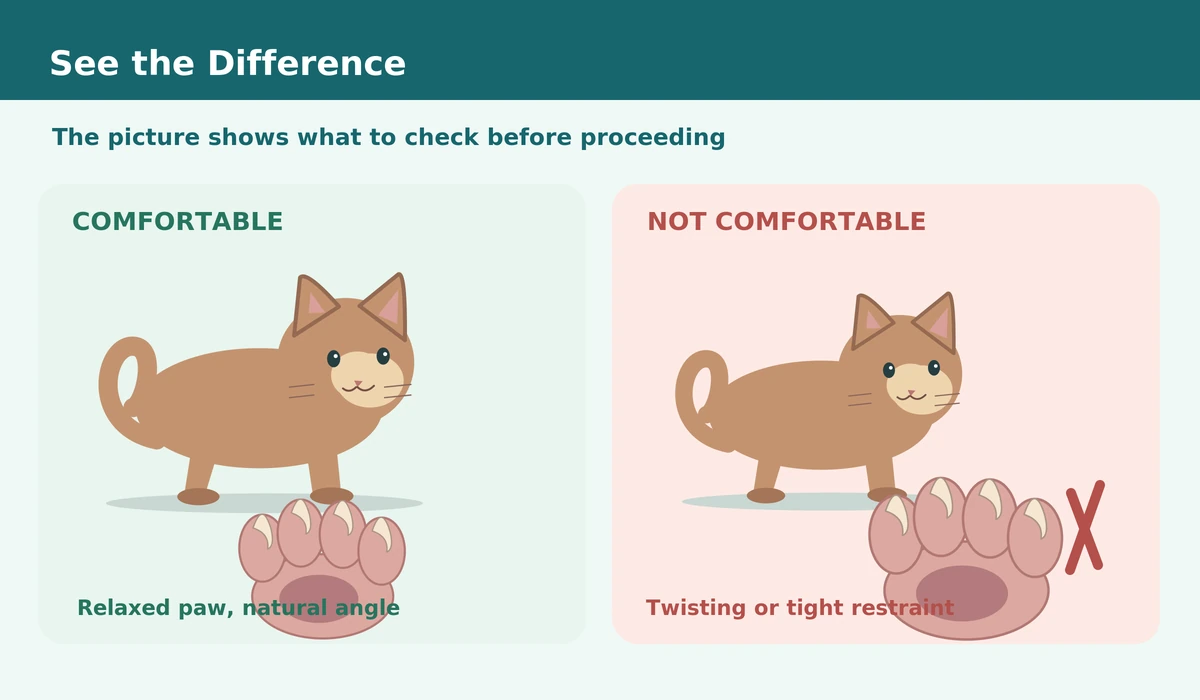
Some cats tolerate a brief rear-paw lift while standing. Others relax beside you on a rug or on your lap with the hind foot resting near your hand. There is no single safe pose for every animal. Support the leg in its natural direction and avoid twisting the ankle to improve your view. Keep the cat free to move away. If reaching the rear paws requires gripping the body tightly, postpone the trim and practice easier handling before trying again.
Find the tip and protect the quick
Use good room lighting and gently expose only one claw. On a pale nail, a pink quick may be visible inside the claw; on darker nails, it may be difficult to identify. The quick contains nerves and blood vessels, so cutting into it can hurt and bleed. Place the clipper only over the narrow sharp point, leaving an obvious safety margin. Never assume that a transparent nail has the same quick length as the nail beside it. When uncertain, leave more nail and ask a veterinarian to demonstrate.
Use an even clip rather than squeezing sideways
VCA advises positioning the blades so their pressure runs from top to bottom of the claw rather than pinching it from the sides. Check that the cutting opening fits the nail without crushing nearby skin or fur. Move slowly enough to see the entire intended cut before closing the tool. Remove a tiny sharp hook, then put the foot down. If the nail splits, the clipper feels blunt, or the cat reacts painfully, stop rather than taking a second larger bite. A smooth outcome matters more than speed.
Reward a single comfortable success
Let your cat sniff the unused clipper at a distance, then reward voluntary interest. On a different repetition, touch the outer leg briefly and give another reward. Gradually build toward holding the paw for a moment, extending a claw, and eventually trimming one tip. You do not need to finish a whole foot in one session. End while the cat remains relaxed and curious. This creates a practical routine that can be repeated without chasing the cat around the room or keeping it pinned on a table.
Recognize stop signals before a swat
A rapidly lashing tail, flattened ears, sudden tension, pulling the foot away, turning to bite, or repeated attempts to leave means the task is too difficult now. Release the paw rather than tightening your grip. A short pause may be enough for a calm cat; a frightened cat needs the session to end. Never punish a frightened cat or force it through the procedure. If discomfort is new or the hind legs are sensitive, contact your veterinarian to check for pain rather than assuming the cat is simply uncooperative.
Keep the work area and tools predictable
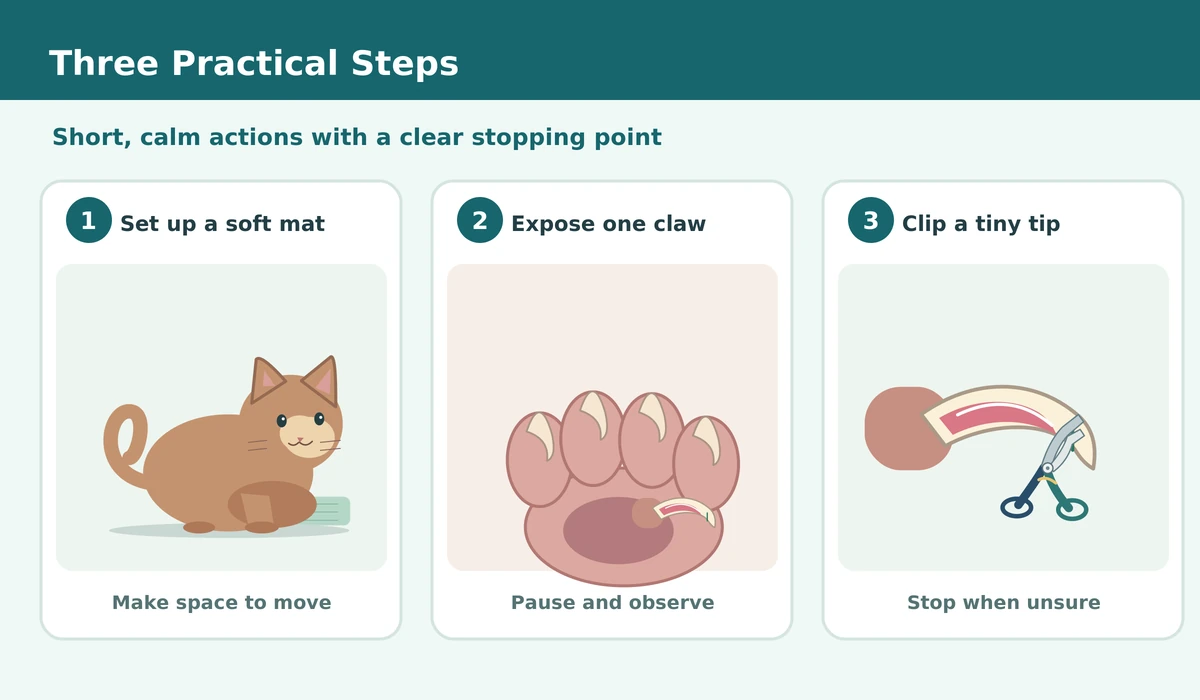
Place a towel or nonslip mat where your cat already feels comfortable. Set the clipper and a reward within easy reach, but not where the cat might step on sharp edges. Check the cutting surfaces for chips or dullness before touching a paw. Use good lighting instead of trying to cut a moving claw by feel. Have the clinic’s phone number available if a claw looks damaged or starts bleeding. An uncluttered setup helps you keep both eyes on the claw and the cat’s body language.
Know when a rear claw needs professional care
A nail that grows into a pad, is torn near its base, smells unusual, causes limping, or sits next to swollen tissue should be assessed by a veterinarian. Do not pull a curled nail away from the pad or try to cut out embedded material. Older cats and animals with reduced mobility may need more frequent observation, but their handling comfort varies. A clinic can also show you an appropriate trimming angle for a difficult nail. Home maintenance is for healthy visible tips, not wounds or painful paw problems.
Plan follow-up checks rather than a fixed quota
Write down the date and which rear toes were checked, especially when only one nail needed shortening. Look again during an ordinary grooming moment instead of waiting until a claw hooks upholstery. Cats may use their rear claws differently as activity or health changes, so a calendar alone is not enough. Keep the front and rear paw checks separate: one foot may need a trim before another does. The aim is comfortable movement and an intact claw, not a perfectly matching set of nail lengths.
Use a simple three-part decision at each session
First, ask whether the nail actually needs shortening. Second, ask whether the whole claw tip and your cutting tool are clearly visible. Third, ask whether your cat remains relaxed and able to leave. If any answer is no, stop with observation or handling practice rather than clipping. You can ask a veterinary technician to demonstrate the position using your own cat. That single supervised lesson may be more valuable than several stressful attempts based only on photographs or generic angle diagrams.
How We Research
HubPet reviewed veterinary and animal-welfare guidance relevant to trim a cat’s back claws, compared what sources support, and separated everyday observation from problems needing hands-on care. We accessed the resources below on November 1, 2026. We do not diagnose wounds or recommend forceful grooming. For more about the editorial process, see About HubPet.
Sources
VCA Animal Hospitals — How to Trim a Cat’s Nails. The complete reference explains its recommended handling or nail-care method and limitations.
Humane World for Animals — Trimming Your Cat’s Claws. The complete reference explains its recommended handling or nail-care method and limitations.
This is general pet-care education, not veterinary diagnosis or treatment. A painful nail, persistent bleeding, swelling, a claw in the pad, or major walking changes need a veterinarian. Read the veterinary disclaimer.
They can wear differently. Check the individual tips and comfort instead of assuming all four paws need equal trimming.
Yes, if your cat comfortably accepts a brief natural paw lift and the claw is clearly visible. Do not twist the leg.
No. One calm, accurate tip trim is better than forcing a full session.
Stop and rebuild tolerance with easier, rewarded paw-touch steps; ask a professional for help if needed.
Contact a veterinarian. Do not try to free or cut an embedded claw yourself.