
This article is for general education, not veterinary advice. For pain, injury, serious distress or an unexpected behavior change, consult your veterinarian. Read our veterinary disclaimer.
Why do cats claw you when they were purring a moment ago, or when your hand simply moved across the sofa? A paw strike can be part of play, a warning to give space, a response to too much petting, or an attempt to escape restraint. The surrounding signals matter more than the scratch alone. A cat with an arched back and pinned ears needs a very different response from a relaxed kitten grabbing a moving sleeve. Start by observing what happened just before the claws appeared. Do not assume spite, dominance, or deliberate punishment.
Read the context before reacting to a scratch
Play-related swatting often follows tracking, crouching, pouncing, and chasing a moving target. Some cats learned to treat human hands as wrestling partners, especially when people encouraged hand play earlier. By contrast, a defensive swipe may follow a sudden approach, an attempt to pick the cat up, or a blocked escape route. Check for a lowered posture, flattened ears, tail tucked close, hissing, or a fixed stare. These signs suggest that the cat is uncomfortable, not asking for more contact.
Petting-induced clawing can occur when contact continues after the cat has had enough. Watch for skin twitching, a tail beginning to lash, ears rotating, and a cat shifting away. Stop at those early signs. Pain can also make previously welcome touching unpleasant, so a sudden change needs veterinary attention. The published cat scratching behavior overview explains territory marking on objects; clawing a person requires closer attention to context and consent.
| Situation | Likely context | What to do |
|---|---|---|
| Swats at moving fingers | Play or hunting rehearsal | Use a wand toy; stop hand play |
| Tail lashes during petting | Contact may be unwelcome | Stop touching; let cat leave |
| Pinned ears and crouching | Fear or defensive warning | Increase distance; clear exit |
| Swats when lifted | Handling discomfort or pain | Do not force; veterinary check if new |
| Sudden intense attack | Medical or serious behavior concern | Separate safely; seek professional assessment |
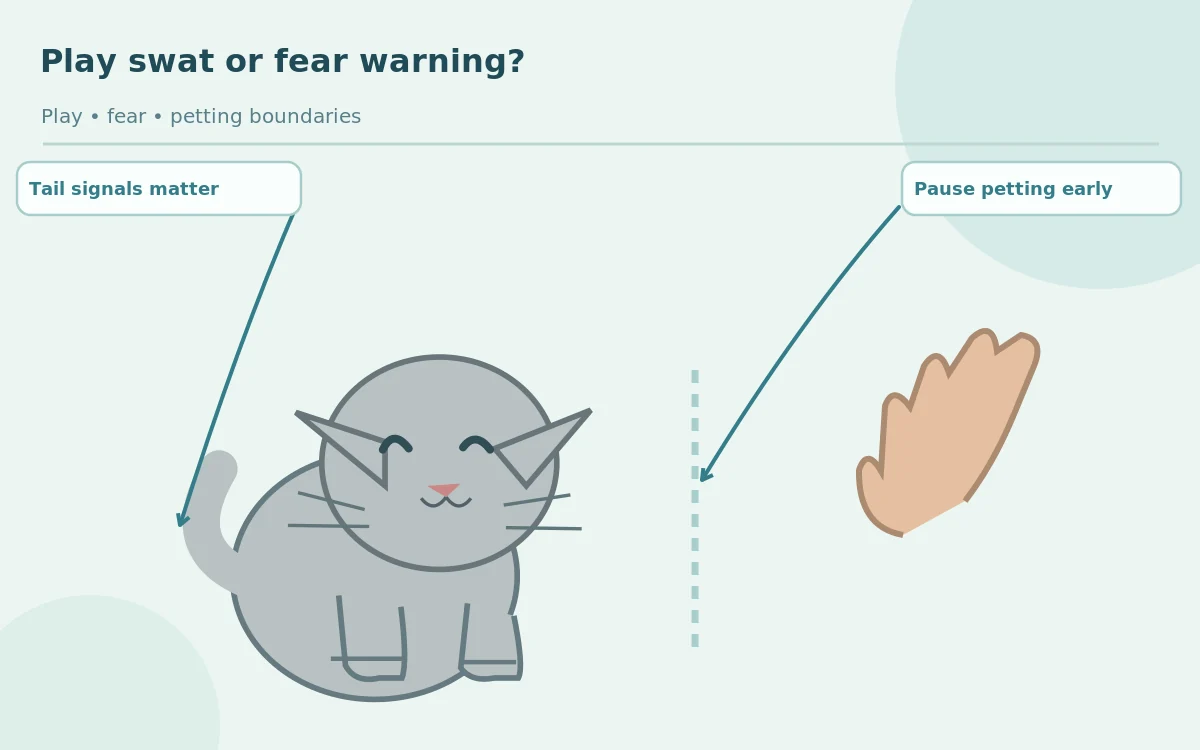
Separate play, fear, and discomfort in a simple log
Write down where the cat was, who approached, whether a toy was moving, and what the paws and tail were doing immediately beforehand. A cat that hooks ankles at dusk may need better play outlets. Swatting only when lifted can signal uncomfortable handling or pain. When another pet blocks a retreat, the cat may also lash out in fear. Do not recreate a stressful situation to test your theory. Your goal is to avoid the trigger while offering a more comfortable choice.
Use a short observation table to prevent hasty assumptions. The same cat might swat during energetic play on Monday and during fear on Tuesday. Sudden or escalating aggression, growling, or bite attempts require a professional assessment. Cornell and ASPCA emphasize that play, defensive, and petting-related aggression have different patterns. A label such as bad cat provides no useful plan. Instead, identify what helps the animal regain a relaxed body and voluntary movement.
- Note exactly what happened before the cat used its claws.
- Check tail, ear, posture, and escape options before deciding what it means.
- For playful swats, change from hand games to supervised wand or chase toys.
- For fearful or petting-related swats, stop the interaction and allow space.
- Seek veterinary guidance for sudden changes, injury, or repeated severe attacks.
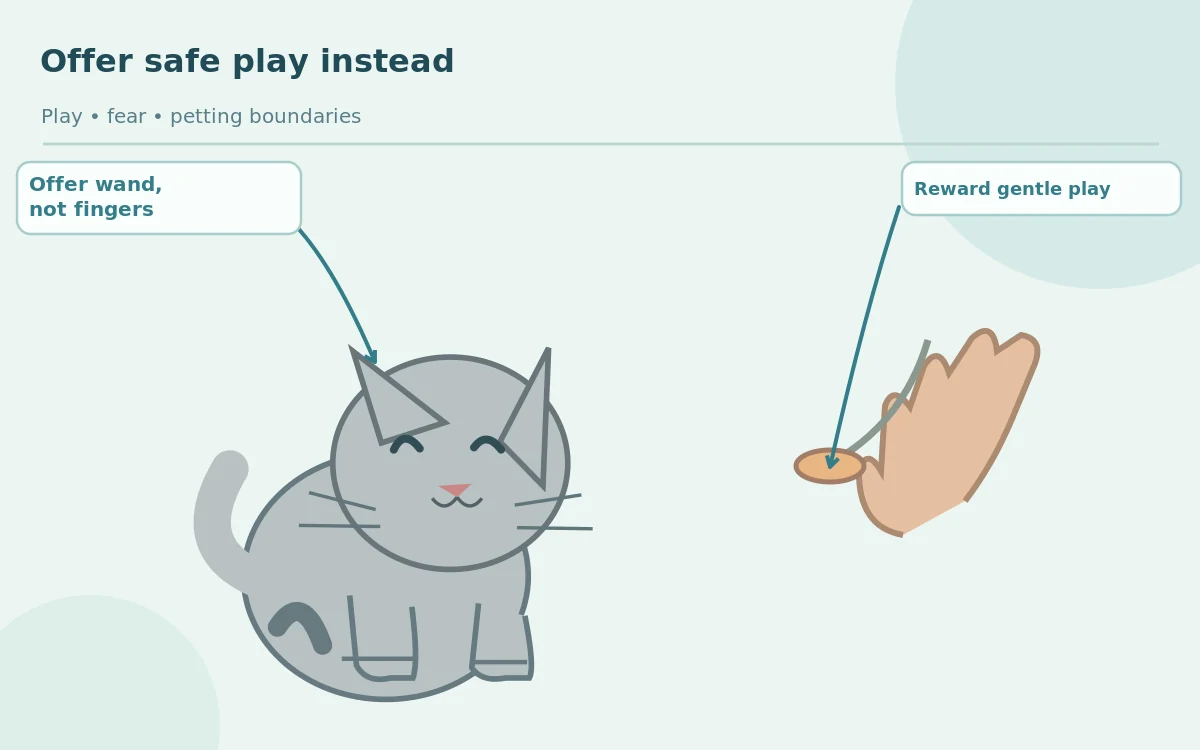
Redirect playful claws without using your hands
For play swats, offer a wand or appropriately sized chase toy that keeps claws away from skin. Give the cat a chance to stalk, pursue, capture, and end the session calmly. A few brief interactive sessions can be more useful than waving fingers near the cat’s face. Do not pull a hand away in a fast teasing motion and then repeat the game; this may make hands even more exciting targets. If the cat grabs you, stop movement and disengage calmly once it releases.
When the cat plays gently, reward that behavior through a toy game, a calm voice, or a preferred treat. Rotate toys to sustain interest and inspect strings and feathers after use. Store loose-string toys when unattended. For a cat scratching furniture rather than people, the appropriate outlet is often a stable post; our published scratching-post training guide addresses that separate goal. Never declaw, hit, spray water at, or frighten a cat to suppress natural claw behavior.
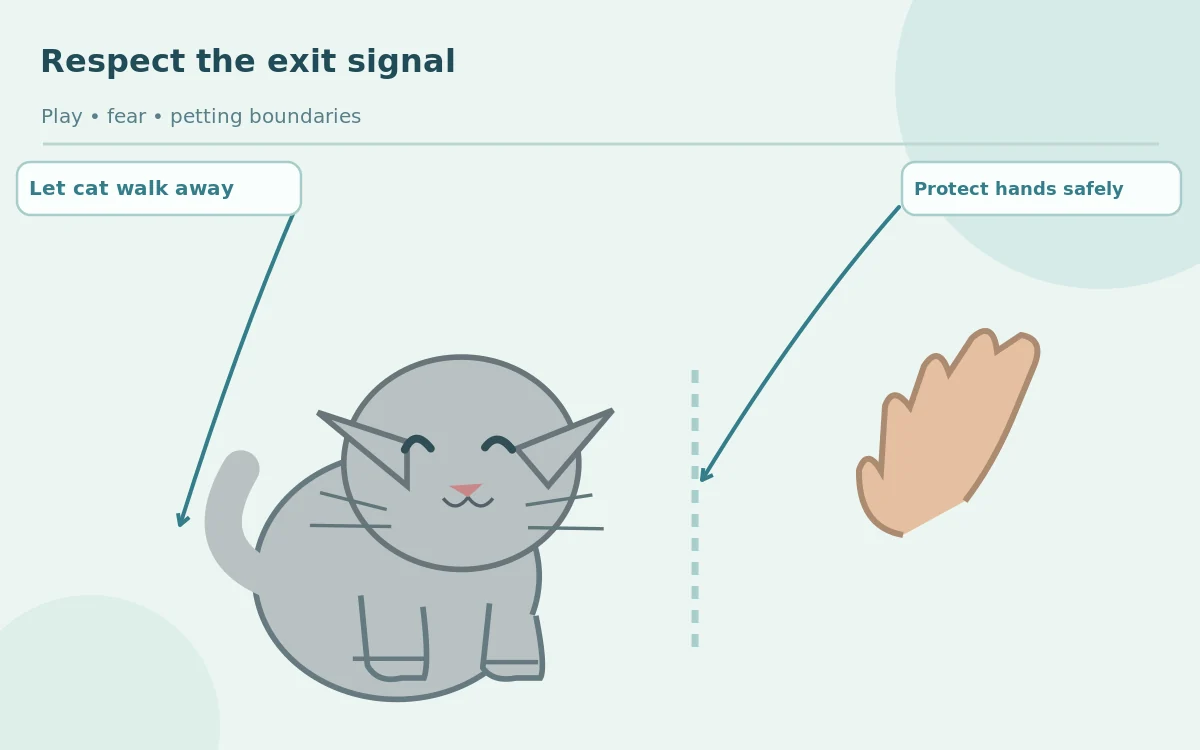
Protect boundaries and know when to ask for help
If a cat swats during petting, offer shorter strokes and let the cat walk away. If it swats near a doorway, remove crowding or blocked exits. Ask visitors and children to wait for the cat to approach rather than reaching into hiding spaces. Provide elevated resting spots, predictable routines, and separate resources in multi-cat homes. Nail care can reduce accidental scratches but does not fix fear; the published cat nail trimming guide covers humane maintenance. Do not hold an angry cat down to trim its claws.
For a fresh scratch on human skin, wash the area thoroughly and seek medical advice for deep wounds, redness, swelling, fever, or bites. Cat scratches and bites can become infected. Your own healthcare professional should advise on wound management and risk factors. For the cat, consult a veterinarian for abrupt aggression, pain signs, appetite or movement changes, or repeated attacks. A credentialed, reward-based feline behavior professional can help once health issues have been assessed.
A useful success measure is fewer situations in which the cat feels compelled to use its claws, not a cat that never scratches anything. Scratching surfaces, stalking, and play are natural needs. Give the cat acceptable places to perform those behaviors. Distinguish between a soft paw tap, a playful grab, and a defensive swipe with stiff posture. If the cat repeatedly targets people despite changes in play and handling, gather your observations and consult a professional rather than trying escalating punishment.
When to Call Your Vet
Book a veterinary visit for sudden clawing, pain on touch, changes in activity or appetite, or intense fear or aggression. If a person receives a deep scratch or bite, wash the wound and seek healthcare advice promptly, especially when infection signs develop. This is general behavioral information, not a diagnosis of the cat or treatment advice for human injuries.
How We Research
HubPet reviewed the search question against animal-welfare, veterinary, and equipment-installation guidance as relevant. We used sources for safety principles, then translated them into checks you can perform at home. We did not claim to test or certify any named product or provider. Read our editorial approach.
Sources
ASPCA — common forms of cat aggression — background for the specific safety and behavior recommendations above.
Cornell — feline play and fear aggression — background for the specific safety and behavior recommendations above.
VCA — clawing people and scratching behavior — background for the specific safety and behavior recommendations above.
Some cats signal that touching has become uncomfortable. Stop at tail, ear, or skin-twitching warnings and let the cat move away.
Not necessarily. Play involves stalking and chasing; fearful or painful responses often include defensive posture and a need for distance.
No. Punishment can increase fear and does not teach an alternative. Offer appropriate play and respect the cat’s boundaries.
Trimming may reduce accidental damage but will not resolve play habits, fear, overstimulation, or pain. Address the context.
Seek advice for sudden or escalating attacks, pain signs, behavior changes, or repeated aggression that cannot be managed safely.