
For general education only; not a substitute for individual veterinary assessment. If your pet has pain, an injury, severe distress or a sudden behavior or mobility change, contact your veterinarian. Veterinary disclaimer.
Where to get cat nails trimmed depends on handling experience, your cat’s comfort, and claw health. Both veterinary clinics and experienced cat groomers offer routine maintenance. Only the veterinary team can evaluate medical problems. A torn nail, claw pressing into a pad, or clear pain needs a veterinarian. Routine grooming is not appropriate. For a calm, healthy cat, compare providers on feline handling experience and appointment conditions. Ask how and when they stop.
Choose between a vet and a cat-experienced groomer
A veterinary team is usually the first call if you see limping, swelling, bleeding, a split nail or a painful toe. They can examine whether the problem involves more than a long tip. Veterinary technicians or nurses may also offer straightforward nail-trim appointments for otherwise healthy cats, depending on clinic policy. Ask whether your cat requires an examination first, how the clinic sets its fees and what the team does if the cat becomes frightened. The best service will explain its low-stress approach rather than promise that staff can complete every cat’s nails on the first try.
A groomer who regularly works with cats may be convenient for uncomplicated maintenance. Confirm that the provider actually accepts cats: a dog-grooming salon may not have suitable facilities or trained handlers. Ask if the service offers nail trims without bathing, how staff keep cats away from barking dogs, and what happens when the cat resists. An in-home service might reduce transport stress, but should still follow hygienic, gentle handling practices. No provider should guarantee a painless trim while ignoring clear signs of distress.
| Provider | Best fit | Question to ask |
|---|---|---|
| Veterinarian or veterinary nurse | Painful nails, medical concerns, complex handling | Can the toes be examined during the appointment? |
| Cat-experienced groomer | Routine healthy nails in a tolerant cat | How do you stop when the cat signals stress? |
| Mobile cat grooming professional | Cat dislikes travel but accepts home visitors | Do you have feline-specific experience and clean tools? |
| DIY with professional demonstration | Cat allows gradual cooperative handling | Can you show the safe free tip and quick? |
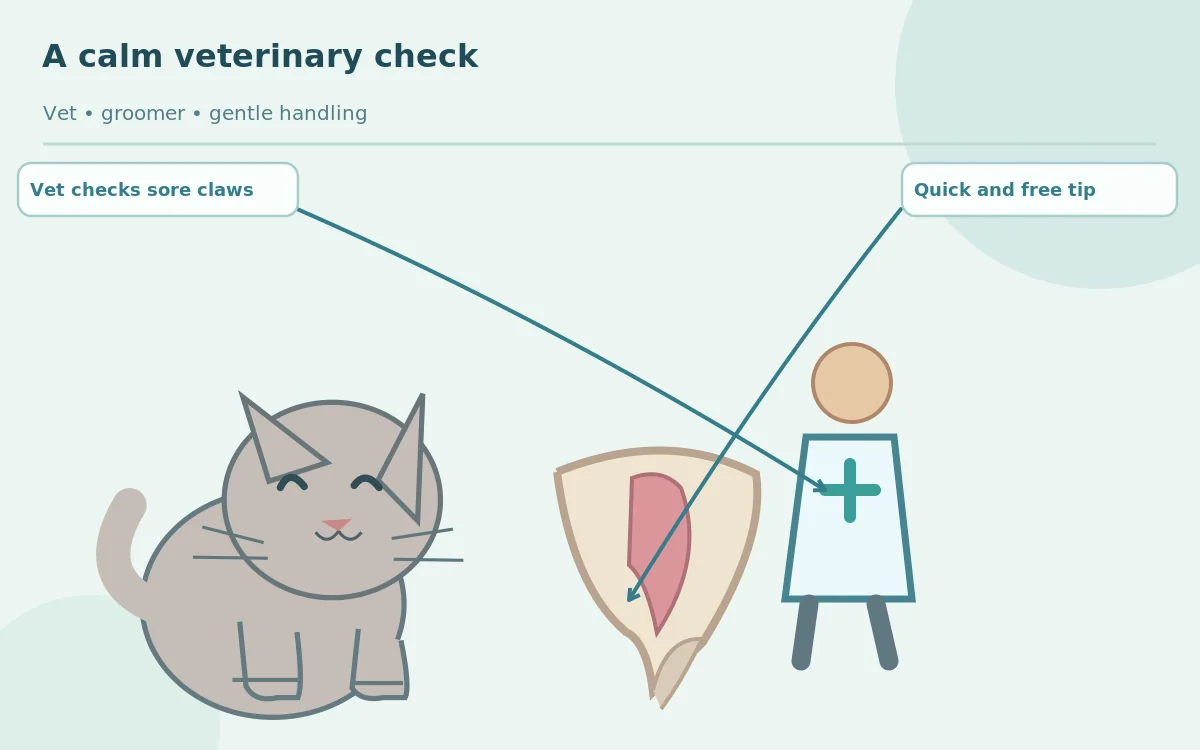
Check the provider before you book
Ask who will hold the cat, how they identify the quick, and whether they can stop after only a few claws. Look for practical answers about handling rather than claims that a towel wrap or an assistant makes every situation safe. VCA recommends gradual desensitization and reward-based handling for cats that dislike paw care. A skilled professional should also be willing to explain alternatives and refer medical concerns to a veterinarian. Do not choose solely on the advertised price or the shortest appointment slot.
Explain your cat’s temperament honestly. Mention a history of biting, past nail injuries, fear of carriers, arthritis, or difficulty accepting touch near the feet. That allows the provider to plan a calmer time, a longer appointment, or a veterinary assessment. Bring relevant records when the visit involves medical concerns. If a clinic suggests a pre-visit plan for an exceptionally fearful cat, follow your own veterinarian’s instructions; do not give sedatives or human medication on your own.
Step-by-step check
- Call your regular veterinary clinic first for painful, broken or overgrown nails.
- For routine care, identify providers who explicitly work with cats.
- Ask about handling, quiet spaces, cancellation rules and when they stop.
- Share the cat’s medical and behavior history before the visit.
- Afterward, monitor comfort and practice gentle handling at home.
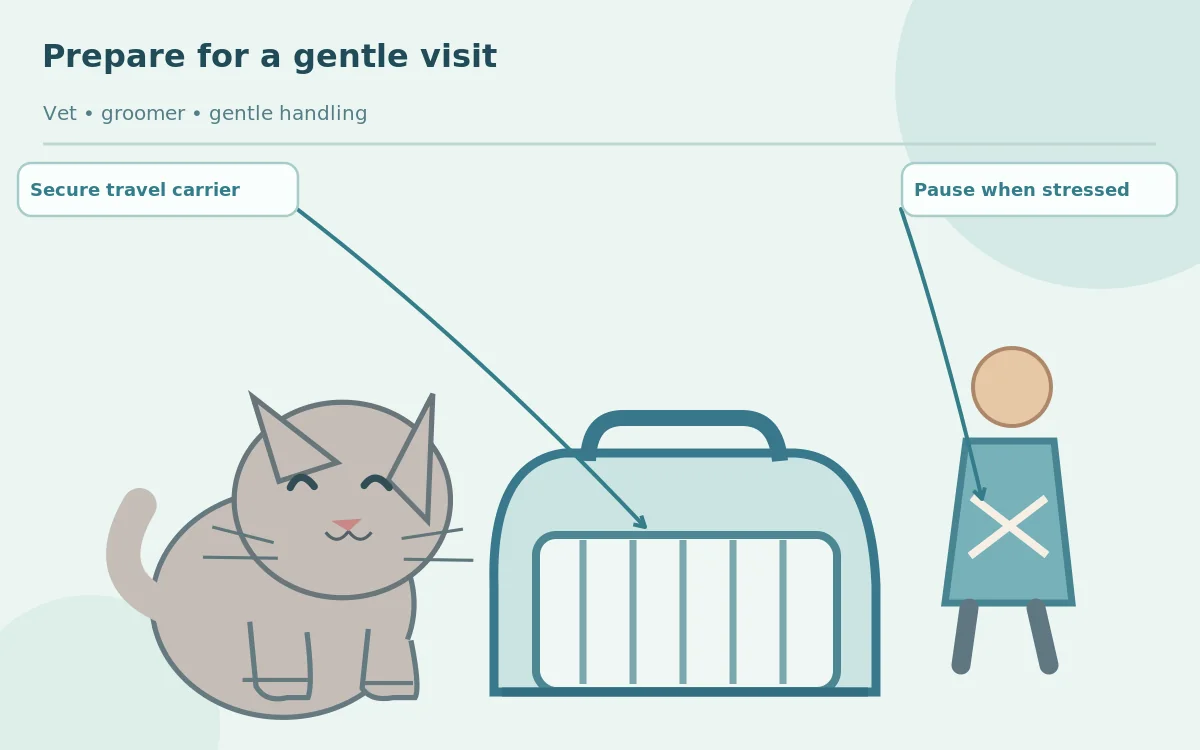
Prepare a low-stress trip and appointment
Set out a secure carrier beforehand and let the cat explore it voluntarily. On the visit day, line it with a familiar washable towel and keep the trip quiet. Ask whether you can wait outside until the treatment area is ready if the lobby is noisy. The cat should never travel loose in a car. If your cat is panicking before leaving home, call the clinic for advice rather than wrestling it into the carrier and arriving with an already frightened animal.
For an appointment, explain that you’d rather complete two easy claws than all claws under force. Offer a familiar reward if the practice permits it. Watch for flattened ears, repeated paw withdrawal, tail thrashing, freezing, hissing or attempts to escape. Those signs call for a pause or a different plan. ASPCA advises using a professional groomer or vet when grooming creates a risk of injury. The published handling practice guide can help create positive associations between appointments.
Know what a good nail-trim visit looks like
A calm provider checks that the cat is healthy enough for a routine trim, uses clean cat-suitable clippers and assesses each claw individually. They should avoid cutting the pink quick or guessing at how far to shorten dark nails. A routine visit may end with only a few sharp tips clipped if the cat becomes stressed. A professional should tell you which nails the provider trimmed, whether any toe needs medical attention and how to introduce cooperative paw care at home. Ask when to recheck rather than accepting a universal schedule.
Request a demonstration at a calm moment. Watch how to extend the nail and where the free tip ends. Our published cat nail guide gives additional background, but an in-person demonstration can clarify what is safe for this particular cat. If you are uneasy with the proposed method, you can decline or seek another provider. Good routine grooming protects comfort and trust; completing every nail at any cost is not the goal.
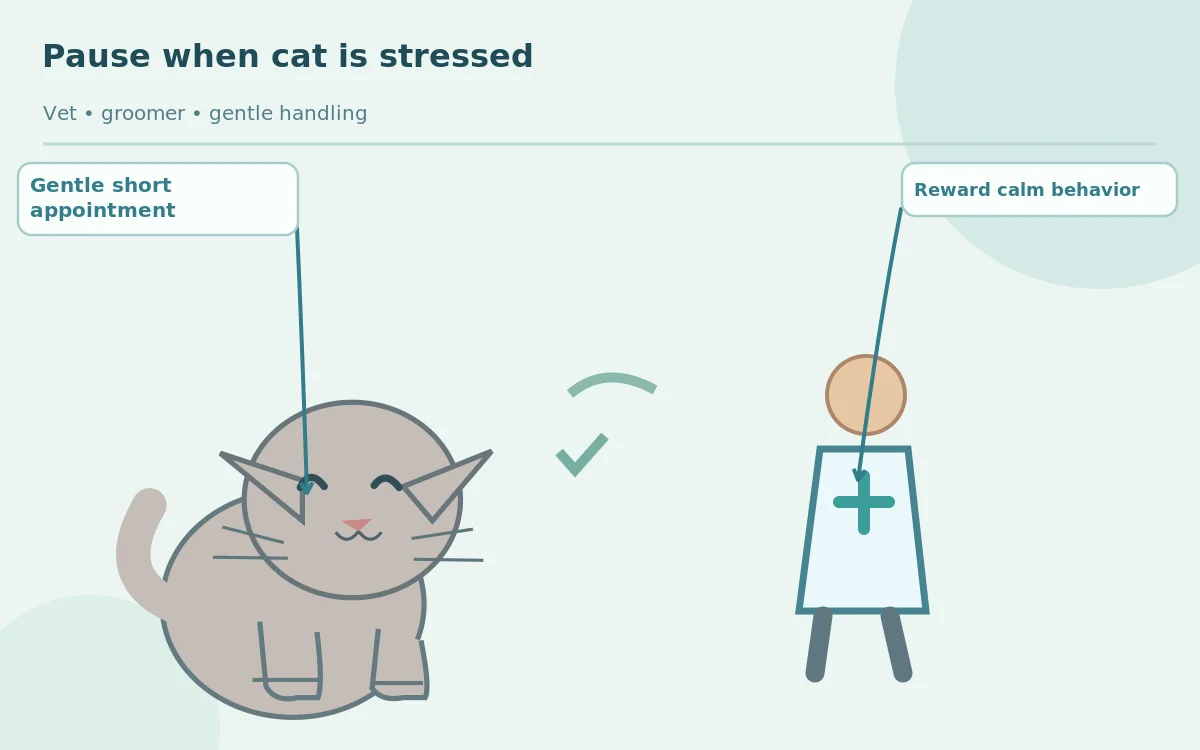
After the trim, track comfort instead of appearance
At home, let your cat recover in a familiar quiet area with food, water and a suitable scratching post. Check movement and foot placement without forcing another handling session. Mild irritation from travel may settle, but persistent limping, blood, repeated licking or toe guarding deserves a call to the vet. Keep a note of how the appointment went, the restraint tolerated, and which rewards worked. Share that information at the next visit to improve the experience.
Consider whether the cat’s environment needs changes. Multiple scratching surfaces, regular play and easy access to perches help maintain normal claw use. If you notice sharp claws but no snags or pain, you may not need to book as frequently. If a senior cat’s claws grow into the pads, a veterinary assessment is important; repeated cosmetic trims will not address the underlying difficulty maintaining them. The published daily cat-care checklist can help you remember paw checks alongside other care tasks.
Common mistakes to avoid
Do not assume every pet shop offers feline grooming, or that the nearest dog salon is automatically suitable. Avoid booking an extremely stressed cat into a walk-in slot without discussing the handling plan. Do not hide bite history or a suspicious claw injury. And avoid relying on a provider who uses punishment, forceful restraint or promises a complete trim regardless of the cat’s response. A shorter, calmer visit often gives a better foundation for future maintenance.
When to Call Your Vet
Call your veterinarian for a claw entering the pad, persistent bleeding, a broken or infected nail, swelling, limping or sudden pain. Ask about veterinary behavior support if even gentle handling triggers extreme distress. Only your vet can decide whether the cat has a medical problem or needs a special visit plan; this article does not diagnose or recommend medication.
How We Research
HubPet compared the intent of this search with veterinary, welfare and relevant equipment guidance, then translated supported principles into pet-specific checks. We do not claim hands-on product tests, ranking results or veterinary diagnosis. See our editorial approach.
Sources
ASPCA — professional care when grooming is unsafe — source guidance used to support the safety and selection advice above.
VCA — professional help and desensitization — source guidance used to support the safety and selection advice above.
Handling Exercises (VCA) — signs of distress — source guidance used to support the safety and selection advice above.
Broken Nails (VCA) — injury guidance — source guidance used to support the safety and selection advice above.
Some clinics offer technician nail-trim appointments, but policies vary. Call first and ask whether the clinic requires an examination for your cat’s circumstances.
Some do, but many work only with dogs. Confirm real feline experience, quiet handling arrangements, and an option to stop if stress overwhelms your cat.
No. That may be painful and injured. Contact a veterinarian for assessment rather than trying to solve it as routine grooming.
Ask how staff recognize stress signals, whether they will stop after a few nails, and how they avoid forcing a frightened cat.
Yes. Ask for a calm demonstration and practice reward-based paw handling between visits, progressing at the cat’s pace rather than rushing.