
This article is general information, not veterinary advice. If your pet seems unwell, is in pain or may have eaten something harmful, contact your vet or an animal poison control line right away. Read our vet disclaimer.
How to respond early to changes in appetite means noticing a clear change from your pet’s normal pattern and gathering useful information without trying to diagnose the cause at home. AAHA’s 2024 pet-health guidance says a sudden appetite decrease or increase can accompany several health problems. Examples include pain, dental discomfort, illness, or hormonal problems. Therefore, a meaningful change belongs in a veterinary conversation, especially when it is sudden or paired with other signs. For a closer look at this part of daily care, see how to Notice Small Changes in Pet Behavior.
How to Respond Early to Changes in Appetite: Define the Change
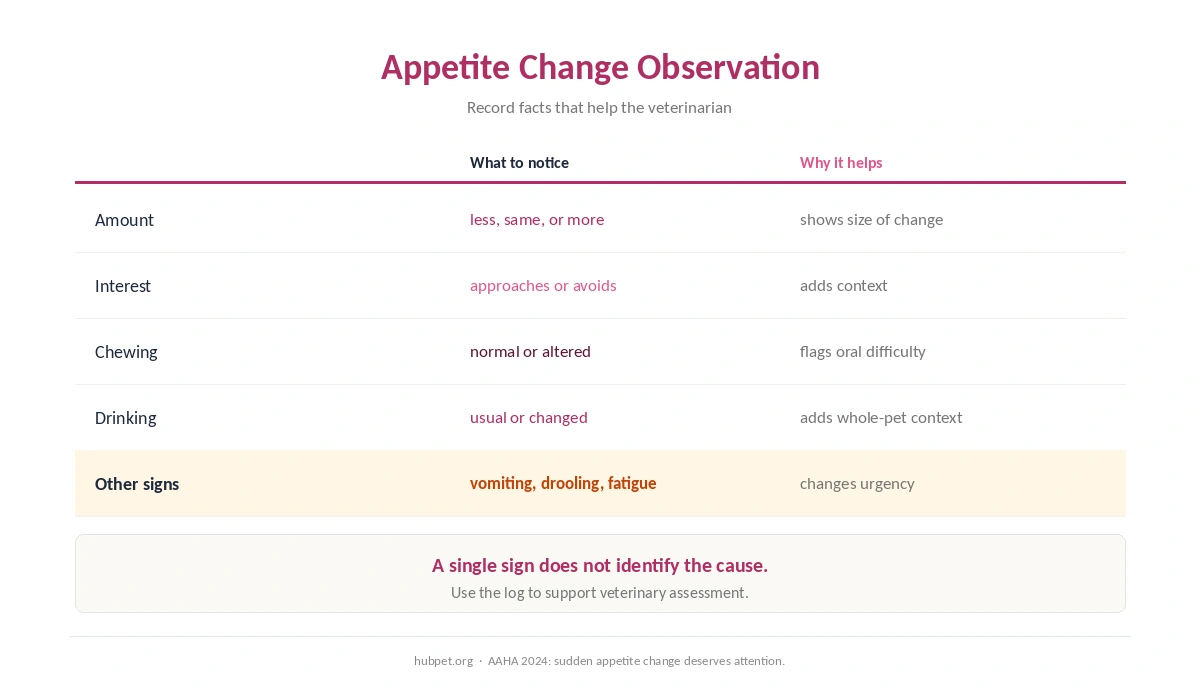
First, compare today with the pet’s own baseline. “Eating less” can mean leaving part of a meal, approaching food but walking away, eating only soft items, or refusing food altogether. “Eating more” can mean finishing unusually fast, searching for food between meals, or asking for extra food. Record the pattern instead of guessing why it happened.
Use a consistent routine so the comparison is easier. The scheduled-feeding guide can help create a repeatable baseline. If you recently changed food, review how to switch pet food gradually. For pets with a history of picky eating, the picky-eater guide focuses on routine and observation rather than force-feeding.
Also, note water intake and access. The hydration guide can help you review bowls, locations, and daily access. AAHA’s 2024 pain-sign guidance notes that reduced food or water intake can accompany discomfort. However, a home checklist cannot tell you whether pain, nausea, dental disease, stress, or another condition is responsible.
How to Respond Early to Changes in Appetite: Record Context, Not a Diagnosis
How to respond early to changes in appetite becomes easier when the notes are specific. Write down when the change started, whether it affects every meal, whether the pet approaches food normally, and whether chewing or swallowing looks different. In addition, record vomiting, diarrhea, drooling, movement changes, hiding, unusual vocalization, or marked fatigue if they occur.
In practice, how to respond early to changes in appetite is to make the change measurable: what changed, when it started, and what else changed at the same time. For a closer look at this part of daily care, see how to Respond Early to Changes in Energy.
The weekly pet care checklist can help you compare appetite with grooming, toileting, and activity. The vet visit checklist can turn those notes into useful questions. If behavior changes at the same time, the pain-signs guide explains why appetite is only one part of the picture.
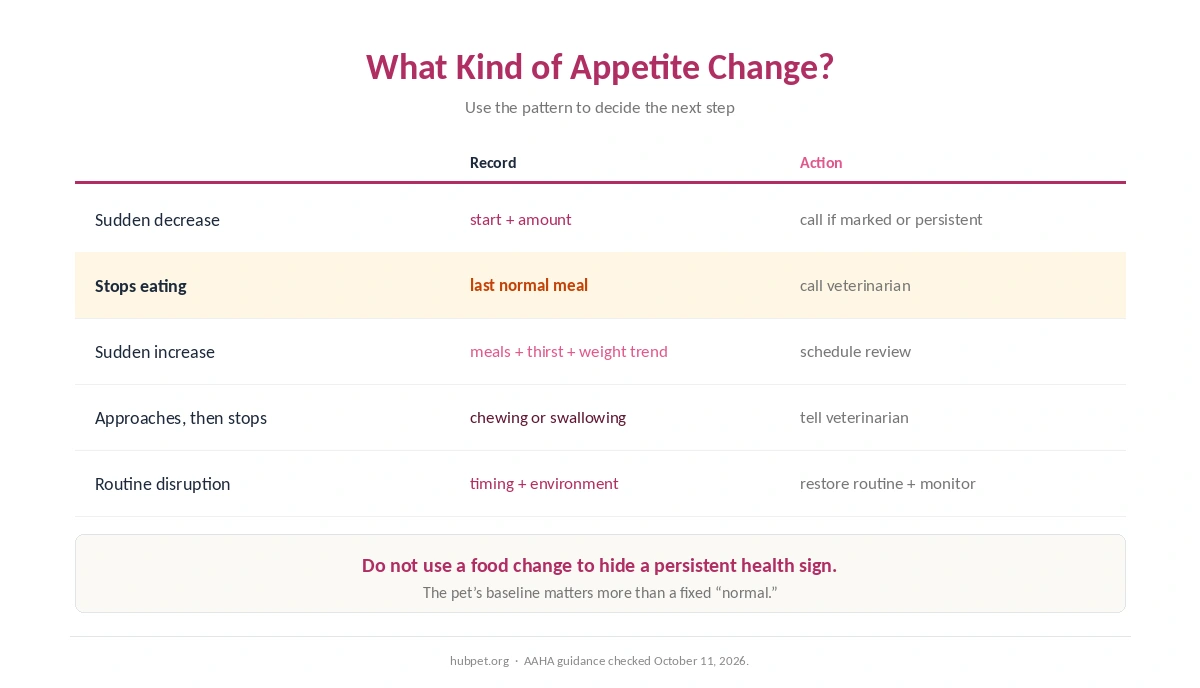
| What you notice | What to record | Next step |
|---|---|---|
| Sudden decrease | how much, how long, other signs | contact veterinarian if marked or persistent |
| Stops eating | last normal meal and other signs | call veterinarian |
| Sudden increase | meal pattern, weight trend, thirst | schedule veterinary review |
| Approaches but will not eat | chewing, swallowing, drooling | tell veterinarian |
| Change after routine disruption | timing and environment | restore routine, still monitor health |
For a newly adopted pet, appetite may change alongside stress and unfamiliar routines. The new-home adjustment guide can help you reduce environmental pressure. Even so, do not assume stress is the cause of a significant appetite change. A veterinarian may need to rule out medical causes first.
Likewise, appetite can look different after a veterinary visit or procedure. The after-vet comfort guide can help with a calmer recovery environment. Follow the clinic’s discharge instructions, and contact the clinic if appetite does not match the expectations they gave you.
When to Call Your Vet About an Appetite Change
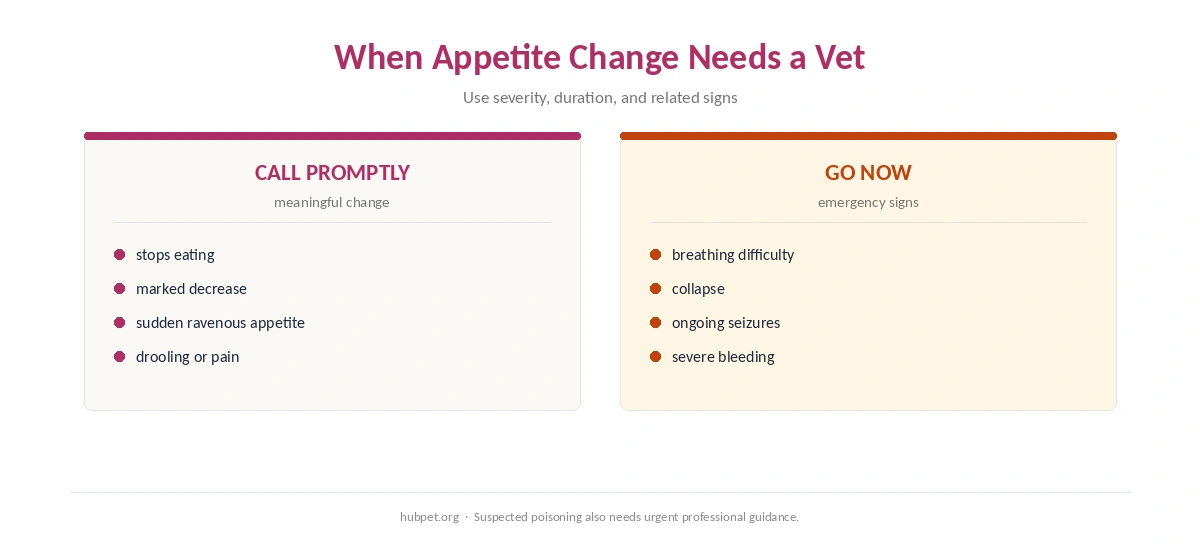
AAHA’s 2024 “10 Pet Health Signs You Should Never Ignore” guidance advises scheduling a veterinary appointment if a pet stops eating, becomes unusually picky, or becomes suddenly ravenous. AAHA’s 2024 pain guidance also says decreased appetite that lasts more than a day can be concerning. Because individual risk varies, call sooner when the change is marked or the pet has other concerning signs.
Contact your veterinarian promptly if appetite change comes with repeated vomiting or diarrhea, marked lethargy, drooling, trouble chewing, obvious pain, or a sudden behavior change. The pet first-aid checklist can help you organize immediate safety steps while you arrange professional care. Do not give human medicines, appetite stimulants, or home remedies unless a veterinarian prescribed them for that pet.
Go now: breathing difficulty, collapse, ongoing seizures, severe bleeding, suspected poisoning, or another emergency sign needs urgent care. Use the pet emergency signs guide while contacting a veterinarian or emergency service.
If the appetite change follows possible access to something harmful, use the toxic foods for dogs guide, toxic foods for cats guide, or toxic houseplants guide. Then contact a veterinarian or poison control service right away.
How We Research
HubPet reviewed these sources on October 11, 2026: AAHA’s 2024 pet-health signs guidance and AAHA’s 2024 pain-sign guidance. AAHA treats sudden appetite change as a reason to pay attention and links appetite loss with several possible health problems without making appetite alone diagnostic. Read our editorial method at How We Research.
Not necessarily. Compare with your pet’s normal pattern and the whole clinical picture, but contact your veterinarian if the change is marked, persistent, or paired with other signs.
Not automatically. A sudden food change can make the pattern harder to interpret. Ask your veterinarian when the appetite change is significant or unexplained.
Yes. AAHA’s 2024 pain guidance lists decreased food or water intake among possible pain signs.
Record the start time, amount eaten, interest in food, chewing or swallowing changes, drinking, vomiting or diarrhea, energy, toileting, and any recent routine changes.
No. AAHA’s 2024 guidance says a sudden increase can also justify veterinary review, especially when it is a clear change from baseline.
How to Respond Early to Changes in Appetite: Bottom Line
How to respond early to changes in appetite starts with noticing the baseline shift and recording the pattern. Contact the veterinarian when the change is sudden, marked, persistent, or paired with other signs. Do not turn one symptom into an internet diagnosis. Useful notes and timely veterinary guidance are safer than guessing at a cause.