
This article is general information, not veterinary advice. If your pet seems unwell, is in pain or may have eaten something harmful, contact your vet or an animal poison control line right away. Read our vet disclaimer.
How to feed pets on a schedule means creating a repeatable feeding plan that fits the individual animal, not forcing every dog and cat into the same number of meals. The 2021 AAHA feeding-plan guidance says feeding frequency should be part of an individualized nutrition recommendation.
Cats also have species-specific feeding behavior. The FelineVMA/AAFP feeding consensus statement recommends plans that support hunting and foraging behavior, small meals, and safe individual access. Therefore, a schedule can be structured without becoming one large bowl at one fixed time.
How to Feed Pets on a Schedule: Start With the Existing Plan
First, how to feed pets on a schedule starts with writing down what already happens: meal windows, treats, training food, puzzle feeders, and food offered by other household members. The daily dog checklist and daily cat checklist can help you place feeding beside the rest of routine care.
Next, keep the total daily plan consistent with veterinary advice and the food’s feeding instructions. Do not invent a gram target from a generic website. AAHA 2021 recommends individualized assessment based on the pet’s health, body condition, life stage, and current intake.
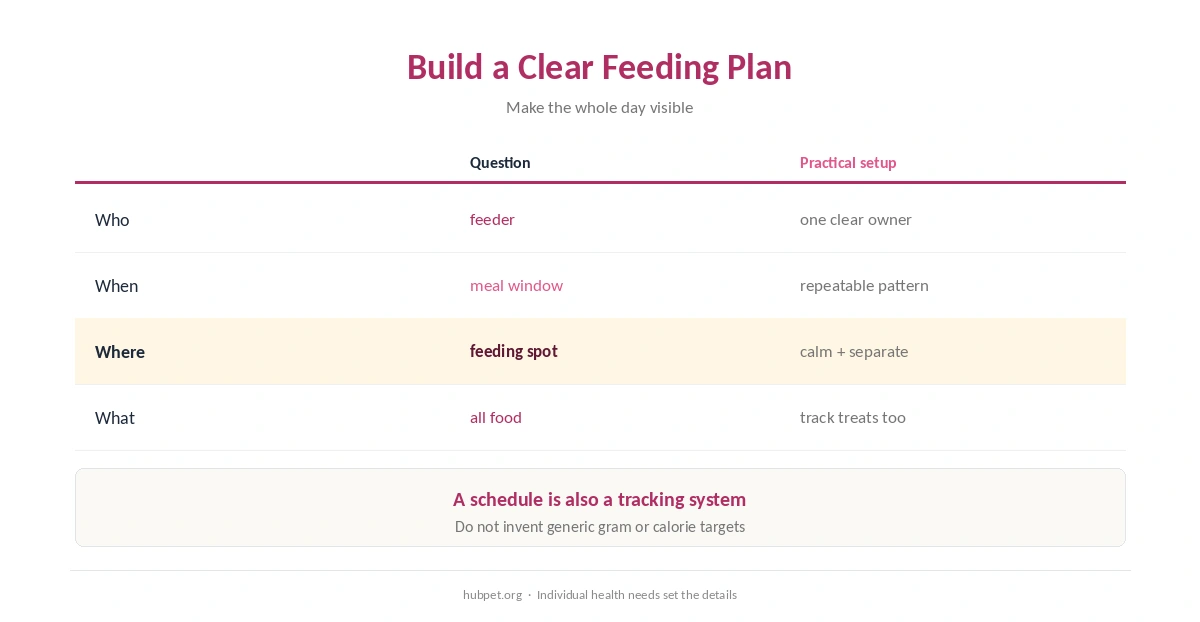
| Schedule question | Practical answer | Why it matters |
|---|---|---|
| Who feeds? | Assign the person or device | Prevents accidental extra meals |
| When? | Use repeatable meal windows | Makes intake easier to track |
| Where? | Choose a calm feeding area | Reduces competition and interruption |
| What counts? | Include treats and training food | Keeps the whole daily plan visible |
How to Feed Pets on a Schedule in Multi-Pet Homes
How to feed pets on a schedule also means choosing where each animal can eat without being crowded. The multi-pet household checklist covers separate resource access. This matters even more when one pet eats quickly, another grazes, or a dog seeks the cat’s food.
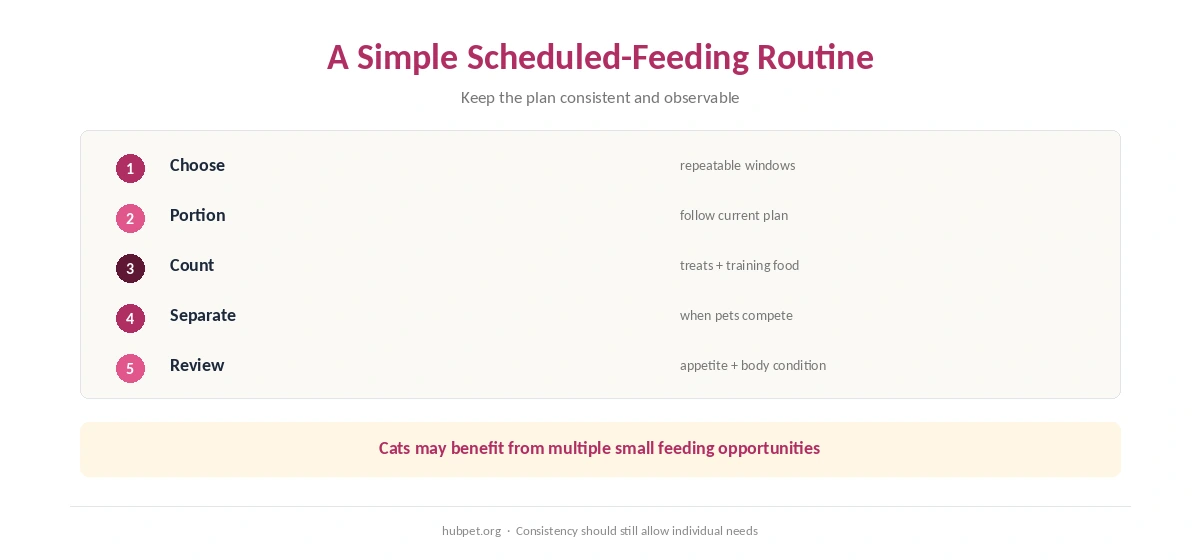
For cats, the FelineVMA feeding guidance supports multiple small feeding opportunities and private access. Food puzzles can also support foraging behavior. Use ideas from the enrichment-corner guide and toy rotation without adding uncounted food on top of the daily plan.
For dogs, predictable mealtimes can fit inside a predictable daily routine. However, food schedules should not become a reason to ignore individual medical or life-stage needs. Senior pets may need an adjusted plan; see aging-cat support and senior-dog comfort for broader home changes.
- Choose repeatable meal windows that fit the household and the pet’s veterinary nutrition plan.
- Measure or portion the day’s food according to the plan you already use.
- Count treats, training food, and food-dispensing toys as part of that daily intake.
- Feed animals separately when competition, stealing, or guarding is possible.
- Review body condition, appetite changes, and feeding concerns with your veterinarian.
How to Feed Pets on a Schedule Without Creating New Problems
Change feeding patterns gradually when possible. The food-transition guide covers diet changes, while the picky-eater guide explains why appetite problems should not become a contest. Keep fresh water available according to the hydration guide.
Do not use a schedule to justify ignoring scavenging or food-seeking behavior. Use trash-can pet-proofing, counter management, and begging management to change access and learned routines.
If a dog eats feces, the guides to coprophagia and cat-litter scavenging cover that behavior separately.
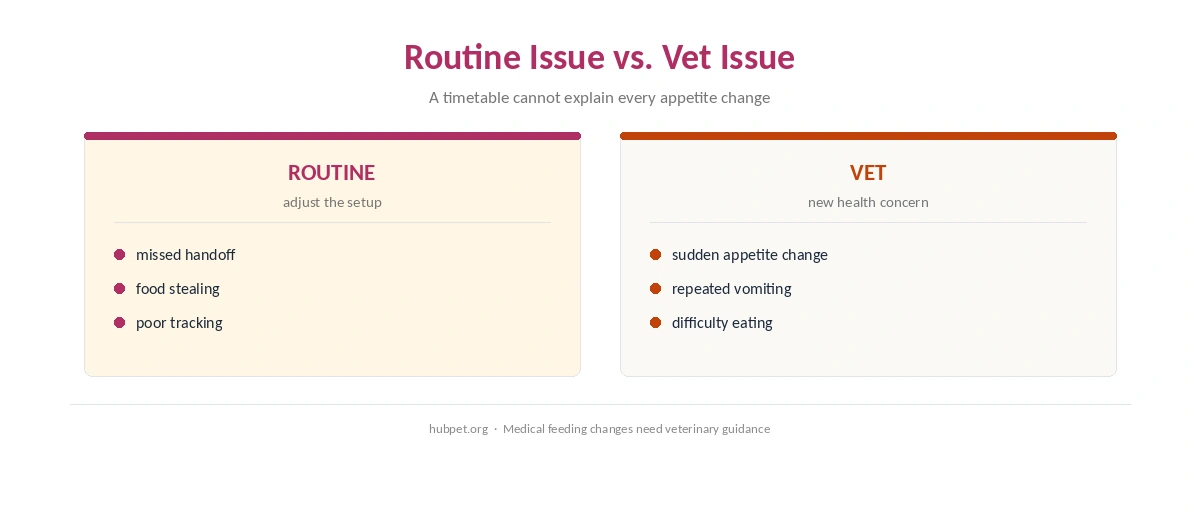
A sudden appetite change, repeated vomiting, diarrhea, weight change, or difficulty eating deserves veterinary attention. A feeding timetable cannot diagnose the cause. If the pet appears acutely unwell, review pet emergency signs.
How We Research
HubPet reviewed these sources on October 11, 2026. We used the AAHA 2021 feeding-plan guidance, the FelineVMA/AAFP feline feeding consensus statement, and the WSAVA Global Nutrition Guidelines. Our research process avoids generic calorie and gram prescriptions.
Assign responsibility clearly and track what has already been fed. Include treats and training food so several people do not accidentally duplicate meals.
No. Feeding frequency should fit the individual pet. Feline guidance also emphasizes small feeding opportunities and foraging behavior.
Yes. Count the food inside them as part of the daily feeding plan rather than as extra food.
Not necessarily. Separate feeding can reduce stealing, competition, and guarding and lets you track each pet’s intake more accurately.
Contact your veterinarian for sudden appetite change, repeated vomiting or diarrhea, weight change, difficulty eating, or concerns about a pet with a medical condition.
The Bottom Line on How to Feed Pets on a Schedule
How to feed pets on a schedule is about consistency, tracking, safe access, and an individualized nutrition plan. Use repeatable meal windows, count all food sources, separate pets when needed, and let veterinary guidance set the medical details.