
This article is general information, not veterinary advice. If your pet seems unwell, is in pain or may have eaten something harmful, contact your vet or an animal poison control line right away. Read our vet disclaimer.
A weekly pet care checklist is a practical review of routines, supplies, grooming, behavior, and home safety. It is not a veterinary schedule. AAHA says all pets should receive routine veterinary care at least yearly, with more frequent visits for seniors and pets with chronic conditions (AAHA, 2026). A useful companion page is how to Avoid Burnout as a Pet Owner.
Use the weekly review to notice small changes and to make sure daily tasks have not drifted. ASPCA general-care guidance covers clean water, grooming, litter care, exercise, safe housing, and identification. AAHA also emphasizes ongoing dental care and preventive wellness rather than waiting for obvious illness.
Weekly Pet Care Checklist: 12 Things to Review
- Review appetite, drinking, energy, mobility, and bathroom habits for changes from your pet’s normal pattern.
- Wash and refill food and water bowls as needed and confirm fresh water is always available.
- Brush or comb the coat on the schedule that fits the species and coat type; look for tangles, skin changes, fleas, or ticks.
- Check paws and nails for cracks, swelling, broken nails, or overgrowth without automatically trimming every week.
- Look at the ears for odor, discharge, redness, or discomfort; clean only when appropriate for that pet.
- Keep up the home dental routine recommended for your pet; do not substitute human toothpaste.
- Refresh litter, bedding, resting areas, and frequently used pet spaces so they stay clean and accessible.
- Inspect collars, tags, leashes, harnesses, carriers, gates, and favorite toys for damage or poor fit.
- Check the home for new medications, foods, plants, cleaners, cords, trash, or small objects within reach.
- Review parasite preventives, prescriptions, and upcoming appointments against the schedule your veterinarian gave you.
- Make sure enrichment still matches the pet: play, scratching, walks, training, hiding places, or other species-appropriate activity.
- Write down any new lump, cough, limp, appetite change, behavior shift, vomiting, diarrhea, or elimination change that persists or worries you.
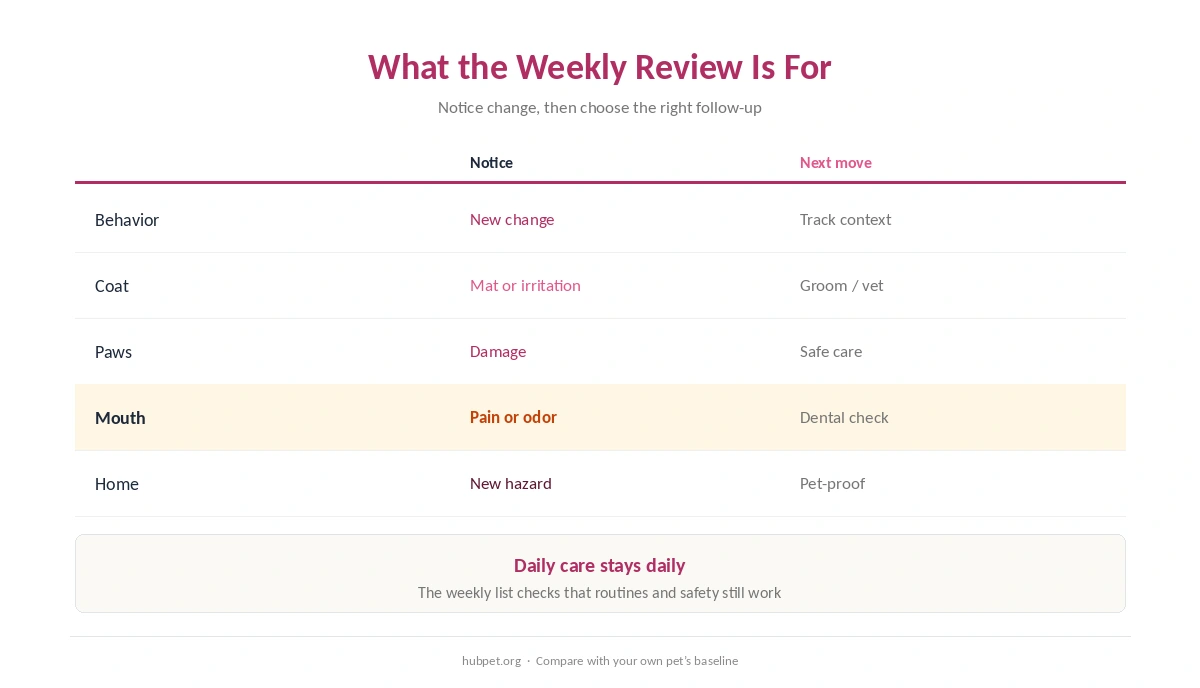
| Review area | What to notice | Use the finding |
|---|---|---|
| Behavior | Change from normal | Track context |
| Coat / skin | Tangles or irritation | Groom or call vet |
| Paws / nails | Damage or overgrowth | Plan safe care |
| Mouth | Odor, pain, gum change | Book dental check |
| Home | New reachable hazards | Pet-proof again |
How to Use a Weekly Pet Care Checklist
Keep daily care daily. A weekly pet care checklist does not turn food, water, toileting, medication, exercise, or enrichment into weekly tasks. The daily dog care checklist and daily cat care checklist cover everyday care. Pet hydration explains why water access needs constant attention.
Use the weekly pet care checklist as a slower head-to-tail review. For dogs, link coat care to home grooming and nails to safe nail trimming.
For cats, use stress-aware brushing for coat handling. A weekly pet care checklist can prompt you to look at claws without forcing a trim on a calendar.
Do not turn the checklist into automatic cleaning. Some healthy dogs may not need routine ear cleaning, so use the dog-ear guide instead of cleaning by calendar. For cats, keep the litter-box location stable and accessible while you maintain the box.
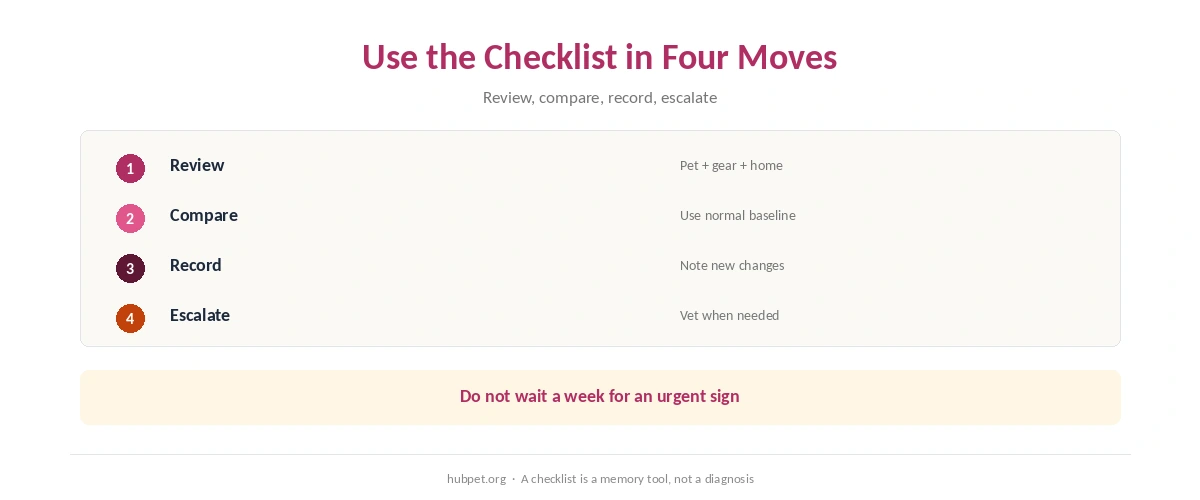
- Choose one consistent day so the review is easy to remember.
- Compare with your pet’s own baseline, not another pet.
- Record changes that are easy to forget between veterinary visits.
- Move urgent or persistent concerns out of the checklist and into veterinary care.
When a Weekly Pet Care Checklist Finds a Problem
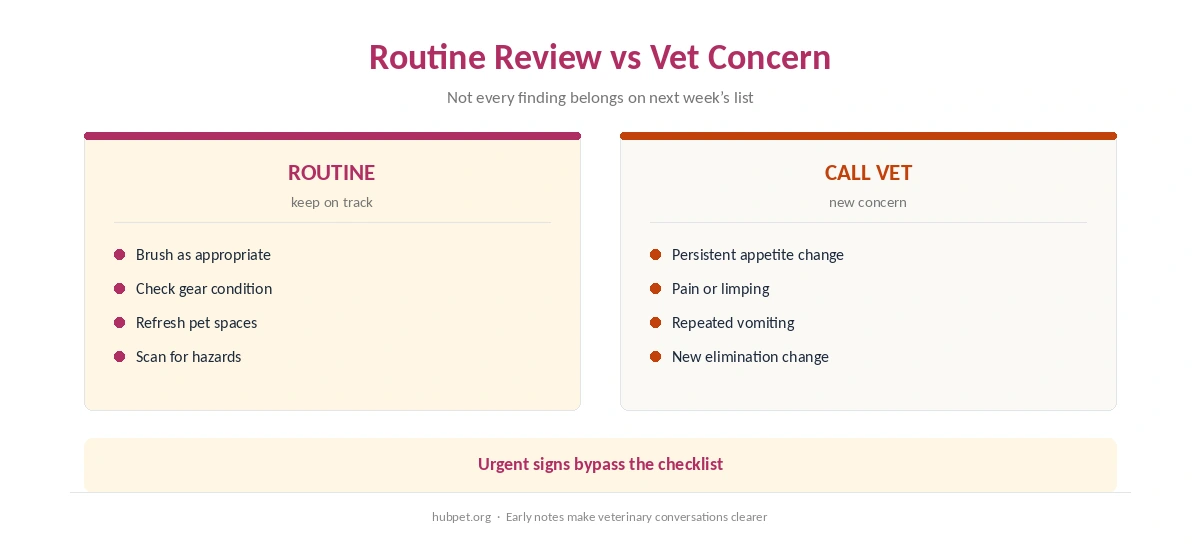
A checklist is useful because pets can hide pain and illness. A weekly pet care checklist gives you a fixed moment to compare with your pet’s normal baseline. AAHA’s 2026 wellness guidance emphasizes routine exams and early detection. If you find a persistent change in movement, appetite, grooming, behavior, or elimination, compare it with signs of pain and use the vet-visit checklist to organize what you observed.
If the weekly review reveals a new household hazard, fix the environment rather than relying on memory. The pet-proofing checklist covers common risks. Trouble breathing, collapse, seizures, severe bleeding, known poisoning, or another urgent sign belongs in pet emergency signs, not on next week’s list.
How We Research
HubPet uses veterinary organizations and research rather than personal anecdotes. We read these sources on October 11, 2026: AAHA annual wellness guidance, updated 2026, AAHA home dental-care guidance, accessed 2026, ASPCA general dog care, accessed 2026, ASPCA general cat care, accessed 2026. See How We Research for our method.
Weekly Pet Care Checklist FAQ
No. This is a review list. Water, food, toileting, prescribed medication, and many exercise needs are daily, while veterinary visits and some grooming tasks follow different schedules.
Not automatically. Ear-cleaning frequency is individual, and some healthy dogs may not need routine cleaning.
AAHA says daily toothbrushing is the best home method for plaque control. Follow your veterinarian’s dental-care plan rather than using the weekly checklist as the dental schedule.
Record what changed, when it started, how often it happens, and any related appetite, movement, bathroom, or behavior changes.
No. AAHA recommends routine veterinary care at least yearly for all pets, with more frequent care for some animals.