
This article is general information, not veterinary advice. If your pet seems unwell, is in pain or may have eaten something harmful, contact your vet or an animal poison control line right away. Read our vet disclaimer.
How to switch pet food gradually is less about one rigid calendar and more about a slow transition the pet tolerates. VCA recommends introducing a new food slowly over a couple of weeks, noting that some cats may need even longer (accessed 2026).
How to Switch Pet Food Gradually Without a Sudden Change
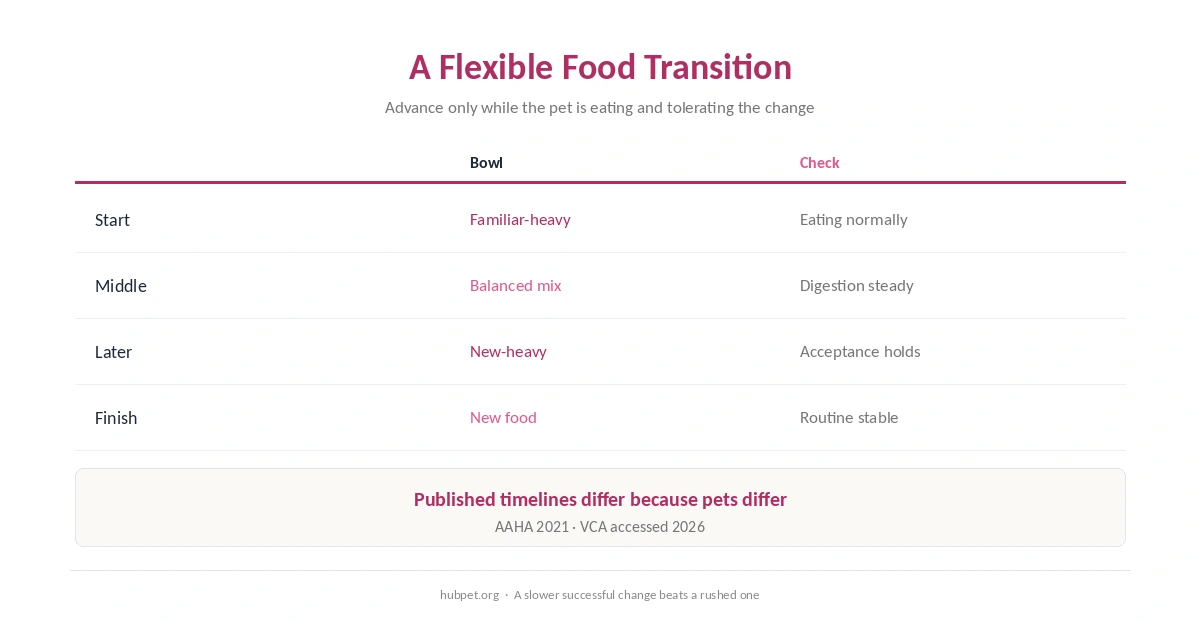
How to switch pet food gradually can start with mostly familiar food and a small amount of the new food. Move through a middle stage, then a new-food-heavy stage, before the full change. AAHA’s 2021 handout uses a seven-day dog example. It also notes that cats may need much longer, even up to 40 days, depending on acceptance.
How to switch pet food gradually depends on the individual pet. VCA says to plan on a slow change over a couple of weeks and to be especially patient with cats (accessed 2026). Published examples are guides, not deadlines.
| Stage | Bowl pattern | What to watch |
|---|---|---|
| Start | Mostly familiar food | Normal appetite and stool |
| Middle | More balanced mix | Acceptance and digestion |
| Later | Mostly new food | No new vomiting or diarrhea |
| Finish | New food | Stable eating pattern |
How to Switch Pet Food Gradually When the Pet Is Picky
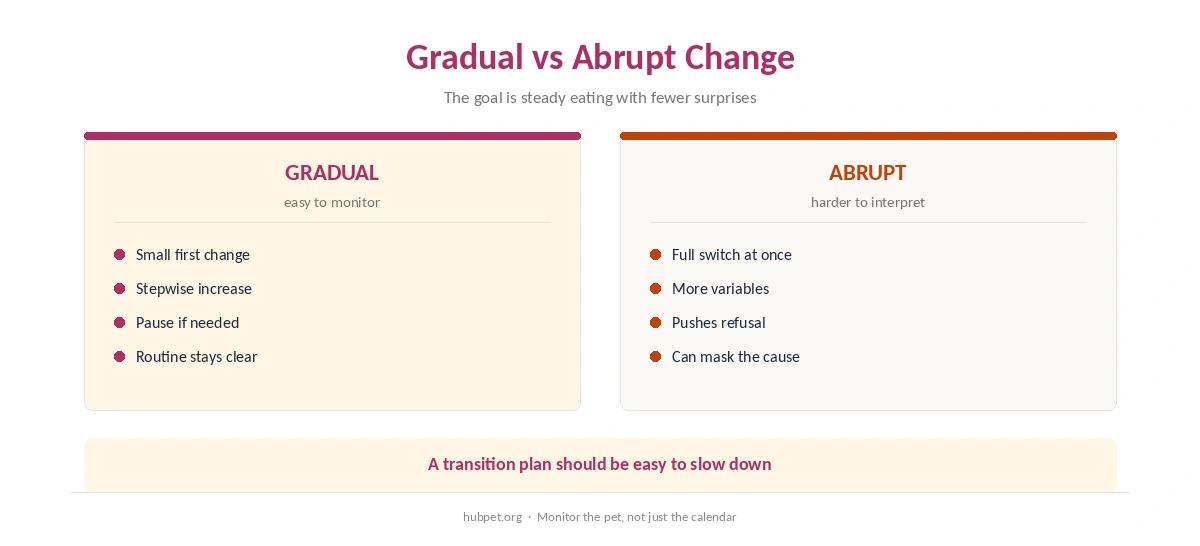
How to switch pet food gradually with a picky pet requires patience. VCA notes that cats can be sensitive to changes in food form, taste, and texture (accessed 2026). If eating drops as the new food increases, return to the last stage that worked instead of pushing ahead.
- Change one feeding variable at a time so you can see what the pet accepts.
- Keep meal routines predictable while the food itself is changing.
- Slow the transition if stool becomes loose or appetite drops.
- Do not add unverified human foods or supplements to force acceptance.
- Ask your veterinarian before changing a therapeutic or medically prescribed diet.

For new pets, coordinate the transition with the first-week dog checklist or the first-week cat checklist. Too many changes at once can make the cause of appetite or digestion changes harder to identify.
Routine monitoring helps too. Use the daily dog care checklist or daily cat care checklist. For cats, the indoor-cat care guide covers the broader home routine.
Food safety still applies during a transition. Keep foods toxic to dogs and foods toxic to cats out of the experiment. If a dog eats plants or grass, use the grass-eating evidence guide instead of assuming the pet needs a diet change.
When to Call Your Vet During a Food Change
VCA says a slow transition can reduce digestive upset (accessed 2026). Still, vomiting, diarrhea, or reduced appetite can appear during a change. Contact your veterinarian if signs persist, become significant, or the pet stops eating normally. AAHA says cats need adequate daily calories during a transition (2021).
If the pet becomes weak, collapses, has trouble breathing, or may have eaten something harmful, use pet emergency signs. Do not continue a feeding experiment during an emergency. For ordinary meal manners, the begging guide treats behavior separately from nutrition.
How We Research
HubPet uses veterinary and research sources rather than personal anecdotes. We read these sources on October 11, 2026: VCA pet diet selection and transition guidance, accessed 2026, AAHA food-transition handout, 2021. See How We Research for our method.
How to Switch Pet Food Gradually FAQ
There is no single universal schedule. AAHA’s 2021 handout shows a seven-day dog example and notes that cats may need much longer; VCA advises a slow transition over a couple of weeks and sometimes longer for cats.
Prefer a gradual change. Sudden changes can make digestion and acceptance harder, especially for some cats.
Slow down and return to the last mix the pet accepted. Contact your veterinarian if the pet eats less than normal or does not eat adequately.
Ask the veterinarian who recommended the diet before changing it. A medical diet can have a specific purpose that makes unsupervised substitution inappropriate.
Slow or stop the transition and contact your veterinarian if signs are significant or persist. Treat urgent signs as an emergency, not as a routine food-transition issue.