
This article is general information, not veterinary advice. If your pet seems unwell, is in pain or may have eaten something harmful, contact your vet or an animal poison control line right away. Read our vet disclaimer.
Foods that are toxic to cats include Allium foods such as onion, garlic, and chives (ASPCA, accessed 2026). Chocolate or concentrated caffeine, alcohol, raw yeast dough, and excessive salt are also hazards (ASPCA, accessed 2026). Cats are especially susceptible to Allium-related red-blood-cell injury (ASPCA, accessed 2026; Merck Veterinary Manual, 2024). Therefore, call a veterinarian or animal poison-control service after a suspected exposure (ASPCA, accessed 2026; AVMA, 2025). Do not wait for symptoms before making that call (ASPCA, accessed 2026).
Foods That Are Toxic to Cats: The Short List
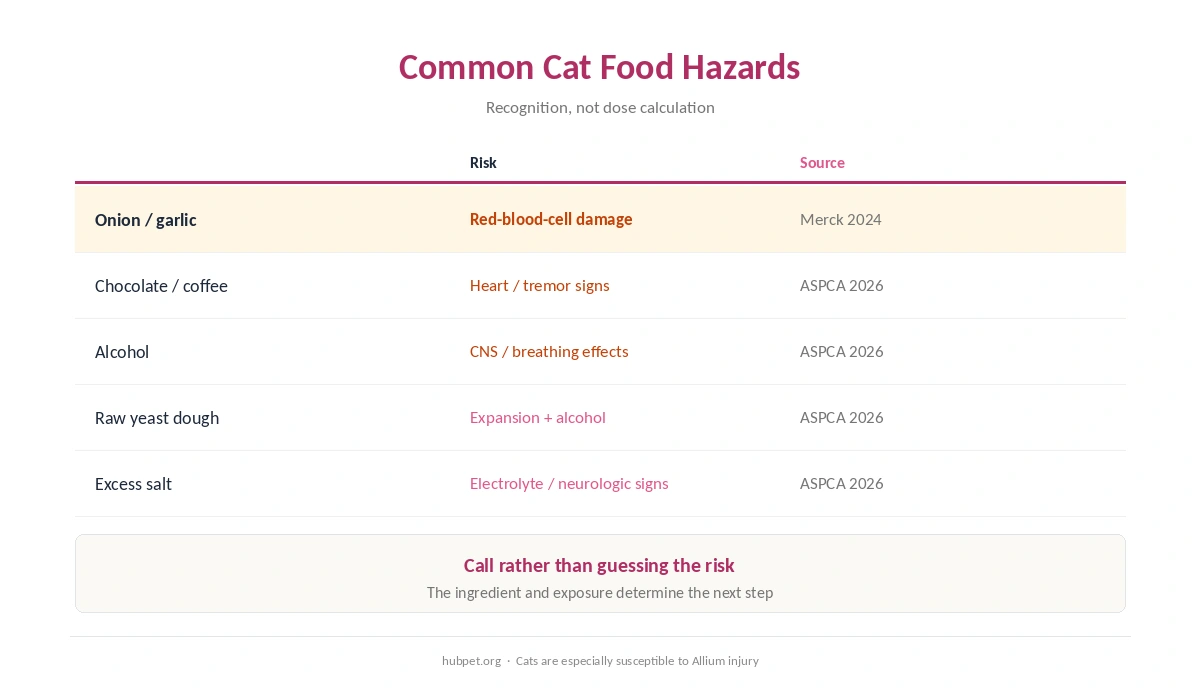
A useful list of foods that are toxic to cats focuses on hazards with clear veterinary guidance (ASPCA, accessed 2026). Onion, garlic, and chives can irritate the digestive tract and damage red blood cells (ASPCA, accessed 2026). Chocolate, coffee, and caffeine can cause digestive, heart, tremor, or seizure signs (ASPCA, accessed 2026). Alcohol and raw yeast dough can cause serious toxicity, while excessive salt can produce dangerous electrolyte changes (ASPCA, accessed 2026).
| Food or ingredient | Risk described by sources | Source |
|---|---|---|
| Onion / garlic / chives | GI irritation and red-blood-cell damage; cats are more susceptible | ASPCA 2026 / Merck 2024 |
| Chocolate / coffee / caffeine | GI signs, abnormal heart rhythm, tremors or seizures | ASPCA 2026 |
| Alcohol | Incoordination, breathing problems, tremors, coma or death can occur | ASPCA 2026 |
| Raw yeast dough | Dough can expand; fermentation also produces alcohol | ASPCA 2026 |
| Excessively salty foods | Excess salt can disturb electrolytes and cause neurologic signs | ASPCA 2026 |
Foods That Are Toxic to Cats: What to Do After Exposure
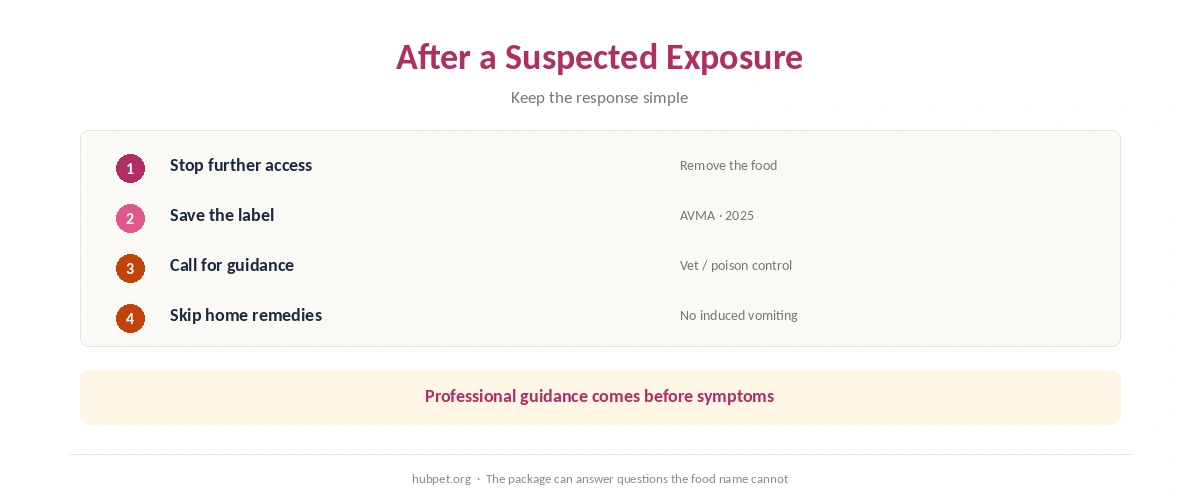
After a suspected toxic-food exposure, remove access and call for professional guidance promptly (ASPCA, accessed 2026). AVMA says to keep the product or container available for identification (AVMA, 2025). In addition, collect useful chewed or vomited material when it is safe to do so (AVMA, 2025). Bring it for the veterinary team (AVMA, 2025). Do not induce vomiting or give medication unless a veterinarian or poison-control professional directs you to do so (AVMA, 2025).
- Move the food or ingredient out of reach so the cat cannot eat more (ASPCA, accessed 2026).
- Keep the package, ingredient panel, recipe, or product label available for the call (AVMA, 2025).
- Call your veterinarian, emergency hospital, or an animal poison-control service promptly (AVMA, 2025).
- Do not try to induce vomiting or give a medication unless a veterinary professional specifically directs it (AVMA, 2025).
Why Allium Foods Deserve Special Attention in Cats
Allium foods include onions, garlic, chives, and leeks (Merck Veterinary Manual, 2024). Merck reports toxicosis in cats after raw, cooked, dehydrated, or granulated forms (Merck Veterinary Manual, 2024). Importantly, cats are the most susceptible species in Merck’s review (Merck Veterinary Manual, 2024). Red-blood-cell injury may develop after the exposure rather than immediately after ingestion (Merck Veterinary Manual, 2024).
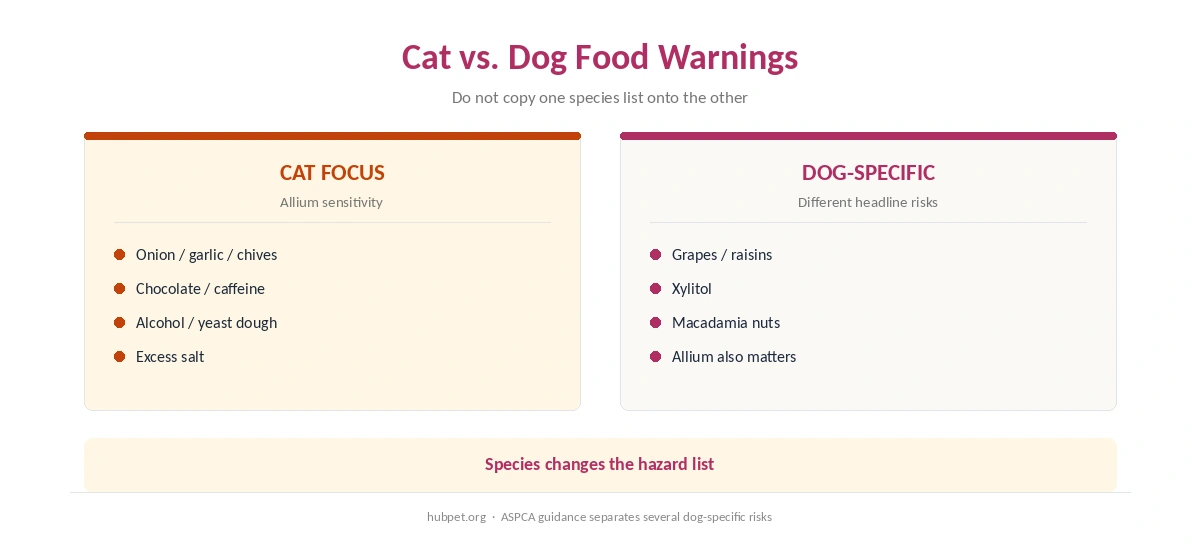
A generic internet list cannot judge the risk from a seasoning-powder exposure (Merck Veterinary Manual, 2024). Instead, tell the veterinarian or poison-control professional the exact product name and ingredients (AVMA, 2025). For homes with both species, see foods that are toxic to dogs. That guide explains dog-specific hazards that differ from this cat list.
When to Call Your Vet
For foods that are toxic to cats, call after any suspected exposure (ASPCA, accessed 2026; AVMA, 2025). Do not wait for vomiting, weakness, or other signs before making the call (ASPCA, accessed 2026). The response depends on the ingredient and exposure (ASPCA, accessed 2026).
Go now for trouble breathing, collapse, seizures, severe or constant pain, or other rapidly worsening signs (Merck Veterinary Manual, 2025). The pet emergency signs guide gives the broader urgent-care checklist. After a suspected poisoning, AVMA also recommends calling ahead so the veterinary hospital can prepare (AVMA, 2025).
How We Research
HubPet works from published veterinary and animal-welfare guidance rather than personal anecdotes. We read these sources on October 11, 2026: ASPCA people-food hazards (accessed 2026), Merck Allium toxicosis review (2024), AVMA Pet First Aid (2025), Merck emergency guidance (2025). We also follow the research method described on How We Research.
Foods That Are Toxic to Cats FAQ
Yes. ASPCA and Merck say Allium foods can damage red blood cells (ASPCA, accessed 2026; Merck Veterinary Manual, 2024). Both sources identify cats as especially susceptible (ASPCA, accessed 2026; Merck Veterinary Manual, 2024).
Chocolate contains methylxanthines. ASPCA links these compounds to vomiting, diarrhea, abnormal heart rhythm, tremors, and seizures in pets (ASPCA, accessed 2026).
ASPCA describes some food hazards as species-specific. It identifies cats as more susceptible to Allium injury, while its grape, raisin, and macadamia warnings focus on dogs (ASPCA, accessed 2026).
No home method belongs in this guide. AVMA says not to induce vomiting or give medication unless a veterinarian or poison-control center directs you (AVMA, 2025).
Have the package or ingredient list available (AVMA, 2025). Describe what the cat may have eaten and any visible signs (AVMA, 2025).
The Bottom Line
Foods that are toxic to cats call for prevention and a clear call-first plan (ASPCA, accessed 2026; AVMA, 2025). Keep Allium ingredients, chocolate, concentrated caffeine, alcohol, raw yeast dough, and very salty foods out of reach (ASPCA, accessed 2026). If exposure occurs, save the label and contact veterinary or poison-control help promptly (AVMA, 2025).