
This article is general information, not veterinary advice. If your pet seems unwell, is in pain or may have eaten something harmful, contact your vet or an animal poison control line right away. Read our vet disclaimer.
Foods that are toxic to dogs include several common snacks and ingredients (ASPCA, 2026; FDA, 2026). ASPCA lists grapes, raisins, chocolate, onions, garlic, macadamia nuts, and alcohol among food hazards for dogs (ASPCA, 2026). FDA also warns about xylitol and concentrated caffeine products (FDA, 2026). Grapes and raisins can cause kidney injury in dogs (ASPCA, 2026). Xylitol can cause low blood sugar and liver injury (ASPCA, 2026). Chocolate or coffee products can cause digestive, heart, tremor, or seizure signs (ASPCA, 2026).
Foods That Are Toxic to Dogs: The Short List
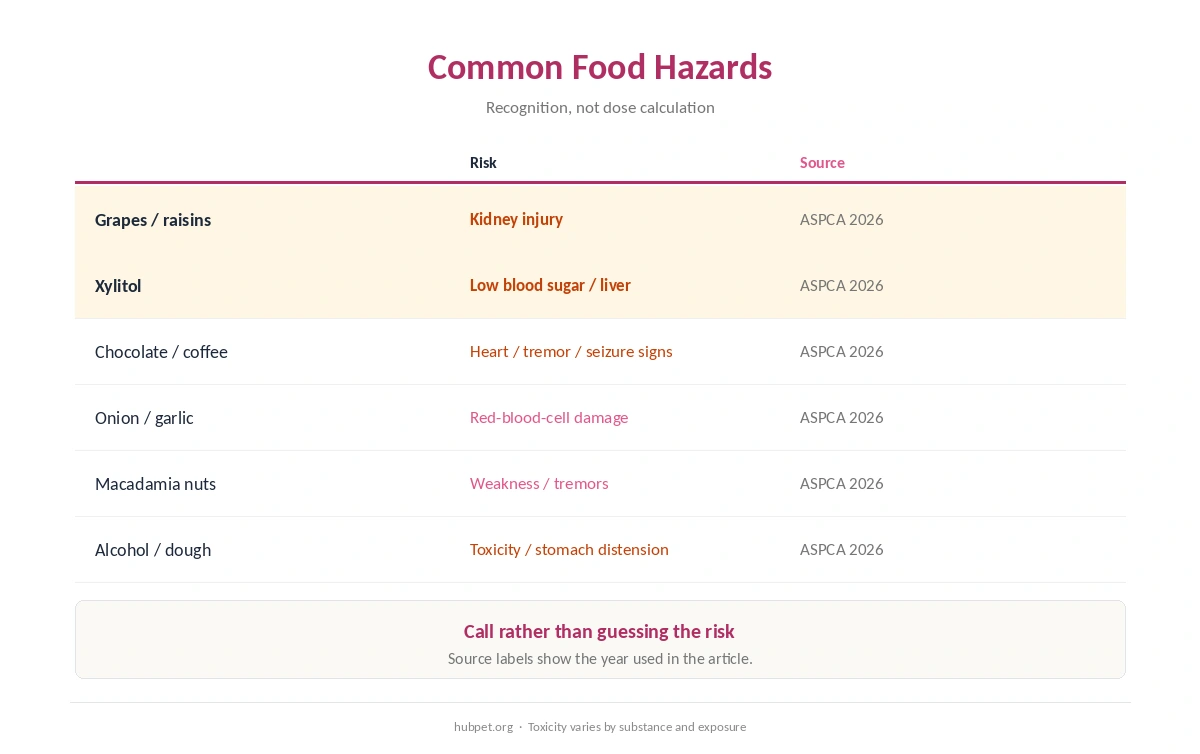
Use this list of foods that are toxic to dogs as a trigger to call, not a dosing chart. FDA says toxicity varies with the substance, animal, and exposure amount (FDA, 2026). Therefore, contact a veterinarian or pet poison-control center promptly after a potentially dangerous ingestion (FDA, 2026). This guide names hazards and warning patterns without giving home-treatment doses.
| Food or ingredient | Risk described by sources | Source |
|---|---|---|
| Grapes and raisins | Kidney injury in dogs | ASPCA, 2026 |
| Xylitol | Low blood sugar and possible liver injury in dogs | ASPCA, 2026 |
| Chocolate / coffee | GI signs, heart effects, tremors or seizures | ASPCA, 2026 |
| Onion / garlic / chives | GI irritation and red-blood-cell damage; dogs are at risk | ASPCA, accessed 2026 |
| Macadamia nuts | Weakness, incoordination, vomiting, tremors or high temperature in dogs | ASPCA, accessed 2026 |
| Alcohol / raw yeast dough | Alcohol toxicity; dough can also expand and contribute to dangerous stomach distension | ASPCA, accessed 2026 |
Foods That Are Toxic to Dogs: What to Do After Exposure
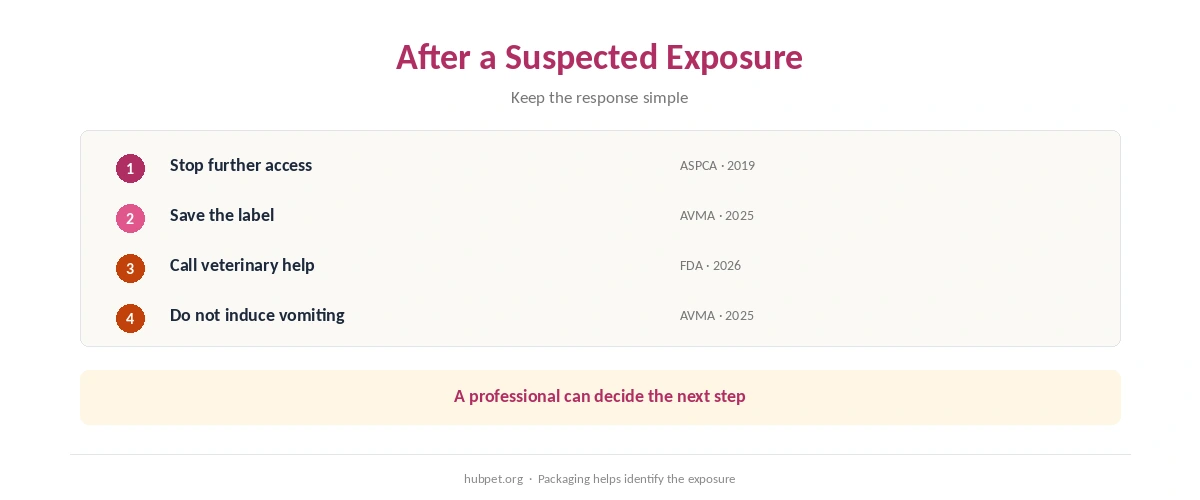
After a suspect food exposure, AVMA says to contact veterinary or poison-control help immediately (AVMA, 2025). Keep the product or container available for identification (AVMA, 2025). If useful material was chewed or vomited, preserve it for the veterinary team (AVMA, 2025). ASPCA also says to call even when the dog still looks normal because poison effects can be delayed (ASPCA, 2019).
- Remove access to the food so the dog cannot eat more, then contact a veterinarian or poison-control service (ASPCA, 2019).
- Keep the package, ingredient list, or label available so the substance can be identified (AVMA, 2025; ASPCA, 2019).
- Tell the professional what the dog ate and what signs you can see (ASPCA, 2019). Do not calculate a home treatment from this page (ASPCA, 2019).
- Do not induce vomiting or give medication unless a veterinarian or poison-control professional directs you to do so (AVMA, 2025).
Three Food Hazards That Hide in Ordinary Products
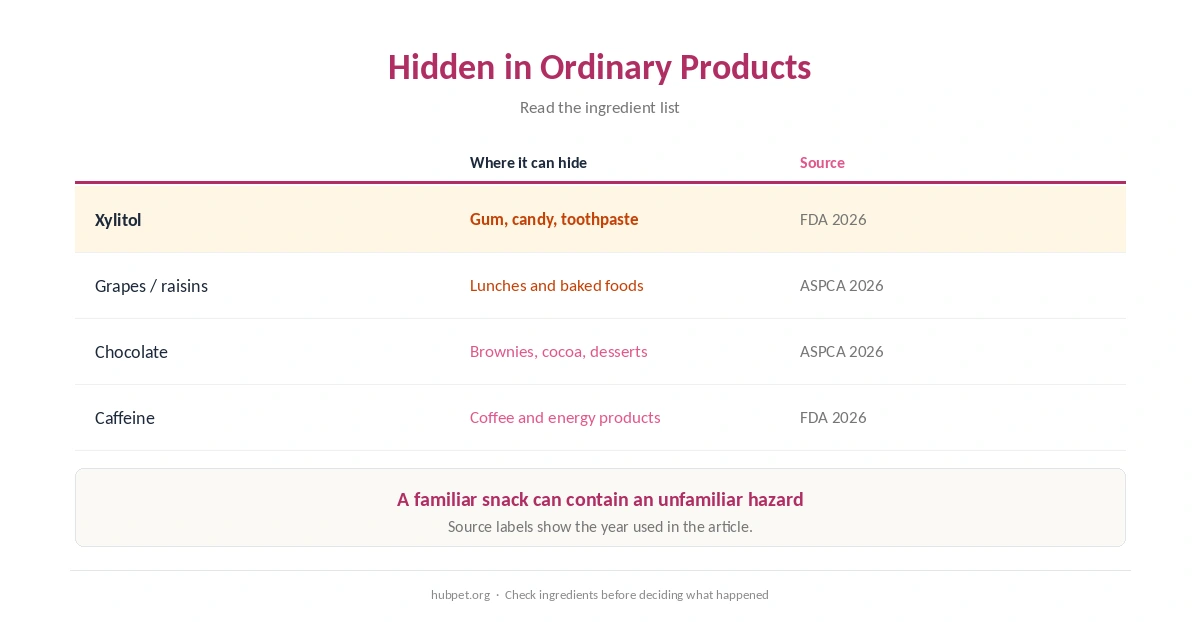
Xylitol can appear in gum, candy, mouthwash, toothpaste, cough syrup, and other products (FDA, 2026). Therefore, FDA recommends checking ingredients instead of relying on the product category alone (FDA, 2026). ASPCA says xylitol can cause low blood sugar and possible liver damage in dogs (ASPCA, 2026). Possible signs include vomiting, lethargy, poor coordination, or seizures (ASPCA, 2026).
Grapes and raisins can cause kidney injury in dogs (ASPCA, 2026). ASPCA’s 2026 guidance treats this exposure as high risk, not a harmless snack (ASPCA, 2026). Because this page gives no safe threshold, call a veterinarian or poison-control service after an exposure (FDA, 2026).
Chocolate and coffee products contain methylxanthines (ASPCA, accessed 2026). ASPCA says more concentrated chocolate or caffeine sources can carry greater risk (ASPCA, accessed 2026). Possible effects include vomiting, diarrhea, abnormal heart rhythm, tremors, and seizures (ASPCA, accessed 2026). White chocolate contains less methylxanthine than baking chocolate or cocoa powder (ASPCA, accessed 2026). However, ASPCA still includes chocolate on its foods-to-avoid list (ASPCA, accessed 2026).
When to Call Your Vet
Call a veterinarian or pet poison-control service promptly after a potentially dangerous food exposure (FDA, 2026). ASPCA also says not to wait for symptoms after suspected poisoning (ASPCA, 2019). Risk varies by substance and exposure, so a web article cannot determine an individual dog’s treatment (FDA, 2026). For foods that are toxic to dogs, professional triage is safer than guessing at home (FDA, 2026).
Go now for seizures, collapse or fainting, or trouble breathing (Merck, accessed 2026; VCA, accessed 2026). Also go now for suspected poisoning or heatstroke signs (AVMA, 2025; ASPCA, 2019). A dog with abdominal distension and repeated dry retching needs immediate care (VCA, accessed 2026). A cat straining without passing urine also needs immediate care (Cornell, 2016). The broader pet emergency signs page explains the triage list.
How We Research
HubPet works from published veterinary guidance rather than personal anecdotes. On October 11, 2026, we read ASPCA toxin guidance (2026). We also read the ASPCA Top 10 Toxins report (2026). For food details, we checked the ASPCA people-food list. We read FDA pet hazard guidance (2026) for ingredient risks. For response steps, we read AVMA Pet First Aid (2025). We also used ASPCA poisoning response guidance (2019). Finally, see How We Research for the HubPet method.
Foods That Are Toxic to Dogs FAQ
No. Grapes and raisins can cause kidney injury in dogs (ASPCA, 2026). FDA advises prompt veterinary or poison-control contact (FDA, 2026).
Check the ingredient list for xylitol and call promptly (FDA, 2026). ASPCA says xylitol can cause low blood sugar and liver injury (ASPCA, 2026).
White chocolate contains less methylxanthine than baking chocolate or cocoa powder (ASPCA, accessed 2026). However, ASPCA still lists chocolate as a food to avoid (ASPCA, accessed 2026).
Do not induce vomiting unless a veterinarian or poison-control professional directs you (AVMA, 2025).
Yes. Onion, garlic, and chives can irritate the gut and damage red blood cells (ASPCA, accessed 2026). Dogs are among the species at risk (ASPCA, accessed 2026).
The Bottom Line
Foods that are toxic to dogs are easier to prevent when the household knows the hazard list (ASPCA, 2026; FDA, 2026). A household hazard list and response plan can simplify prevention and response (ASPCA, 2026; FDA, 2026). Keep xylitol, grapes, raisins, chocolate, caffeine, Allium foods, macadamia nuts, and alcohol-related hazards away from dogs (ASPCA, 2026; FDA, 2026). After a suspected exposure, call promptly (ASPCA, 2026; FDA, 2026). Do not use this page to calculate a home remedy or delay professional advice (FDA, 2026).