
This article is general information, not veterinary advice. If your pet seems unwell, is in pain or may have eaten something harmful, contact your vet or an animal poison control line right away. Read our vet disclaimer.
How to encourage a picky eater safely begins by separating true food preference from reduced appetite caused by illness, pain, stress, or difficulty eating. VCA advises ruling out an underlying medical cause before labeling a dog or cat “picky” (VCA, accessed 2026). In other words, how to encourage a picky eater starts with a stable meal setup rather than constant novelty.
How to Encourage a Picky Eater Without Chasing Every Meal
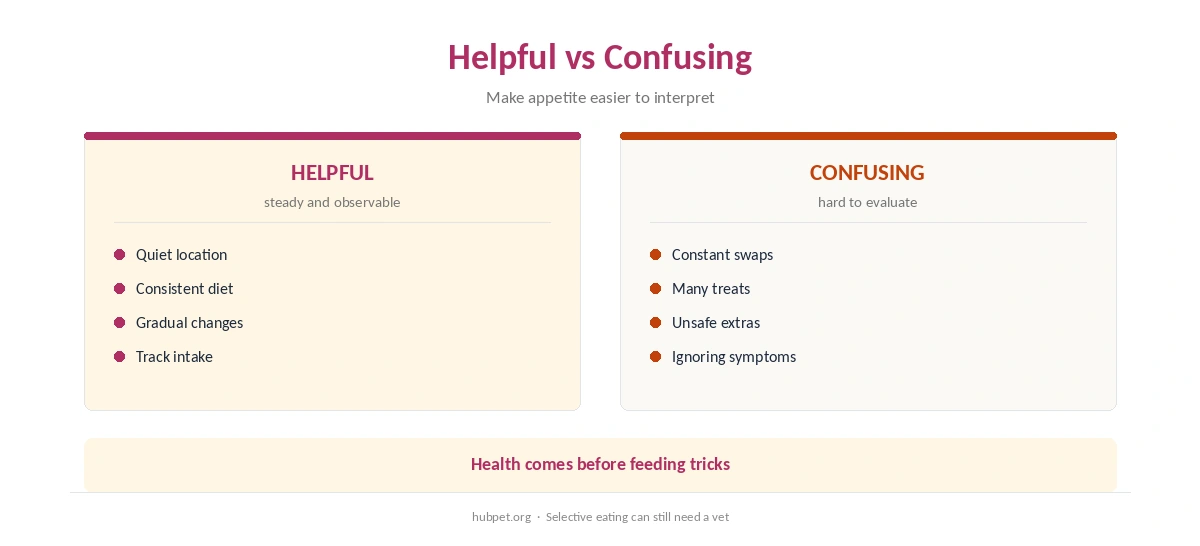
Once a veterinarian finds no medical concern, consistency can make meals easier to interpret. VCA recommends considering texture and flavor preferences, limiting extra snacks, and using a predictable feeding routine for genuinely selective eaters. If you are changing foods, use the gradual food-transition guide instead of repeatedly switching the entire bowl overnight.
The feeding environment matters too. VCA notes that loud equipment, social pressure, or competition can disrupt eating. A quiet feeding location can therefore help some pets. For anxious cats, the stressed-cat plan shows the same principle: reduce unnecessary pressure around essential resources.
| Check first | Why it matters | Source |
|---|---|---|
| Medical cause | Pain or disease can reduce appetite | VCA |
| Meal environment | Noise and competition can matter | VCA |
| Treat intake | Extras can displace meals | VCA |
| Food transition | Abrupt change can reduce acceptance | VCA / AAHA |

How to Encourage a Picky Eater with a Simple Routine
- Confirm that the pet is otherwise well and that a veterinarian has addressed any concerning appetite change.
- Feed in a quiet place where another pet cannot crowd or steal the meal.
- Use a consistent complete and balanced diet that fits the pet’s life stage and veterinary needs.
- Keep treats and table food from replacing a meaningful part of the regular diet.
- If changing foods, make the transition gradually and slow down if appetite or digestion worsens.
- Track what the pet actually eats so your veterinarian has useful information if the problem continues.
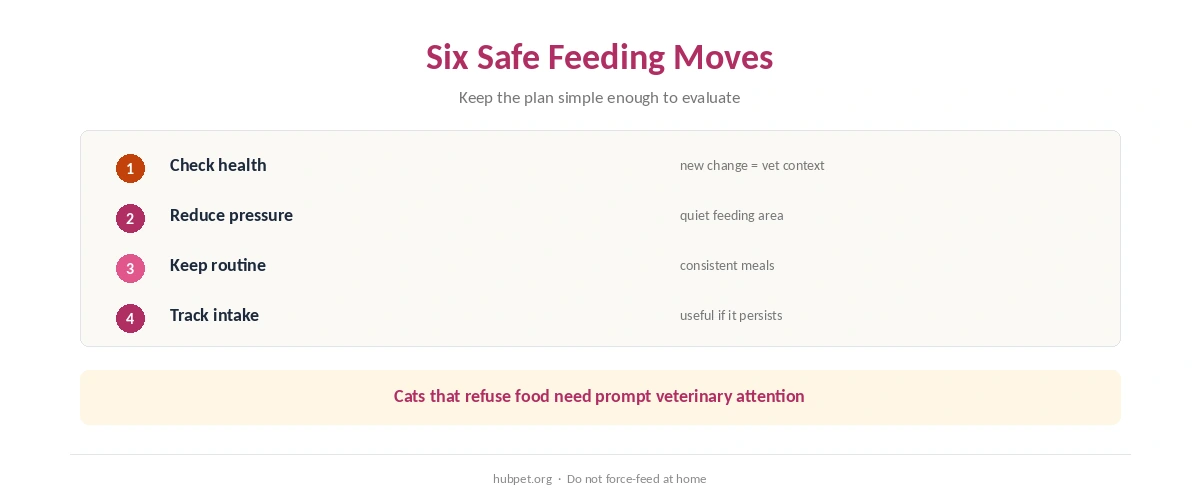
For dogs, review the daily dog care checklist and begging-at-the-table guide. That helps keep extra handouts from blurring the feeding pattern. For cats, use the daily cat care checklist to keep appetite changes in the wider health context. This routine shows how to encourage a picky eater without letting snacks hide the real appetite pattern.
Do not use risky human foods as enticements. Keep the dog toxic-food list and cat toxic-food list in mind. For a newly adopted pet, compare the new-dog first week rather than making several food changes at once. It also shows how to encourage a picky eater without creating a second problem with unsafe foods.
When to Call Your Vet About a Picky Eater
Treat a new or sustained appetite change as a health clue, not a training problem. VCA says decreased appetite can reflect dental pain, gastrointestinal disease, kidney disease, arthritis, or other medical causes. Cornell says a cat that refuses food can develop serious medical problems and should be examined, especially if weight loss accompanies the refusal (updated 2026). A useful companion care page is how to Respond Early to Changes in Appetite.
If eating seems painful, use signs of pet pain to organize what you observe. If the pet becomes weak, collapses, has trouble breathing, or may have eaten something harmful, use pet emergency signs and seek urgent care.
How We Research
HubPet uses veterinary organizations and research rather than personal anecdotes. We read these sources on October 11, 2026: VCA feeding picky dogs, accessed 2026, VCA feeding picky cats, accessed 2026, Cornell feeding your cat, updated 2026, AAHA pet food selection guidance, 2024. See How We Research for our method.
How to Encourage a Picky Eater FAQ
A new appetite change can reflect illness, pain, dental problems, stress, or difficulty eating. VCA recommends ruling out medical causes before calling a pet picky.
Repeated abrupt changes can make the pattern harder to interpret. Use a consistent suitable diet and make any needed transition gradually.
Yes. Extra calories and high-value snacks can reduce interest in the regular meal or teach the pet to wait for preferred extras.
It can be. Cornell states that a cat refusing food can develop serious medical problems, so persistent food refusal deserves prompt veterinary assessment.
Do not improvise with foods that may be toxic or nutritionally inappropriate. Ask your veterinarian for safe options if appetite support is needed.