
This article is general information, not veterinary advice. If your pet seems unwell, is in pain or may have eaten something harmful, contact your vet or an animal poison control line right away. Read our vet disclaimer.
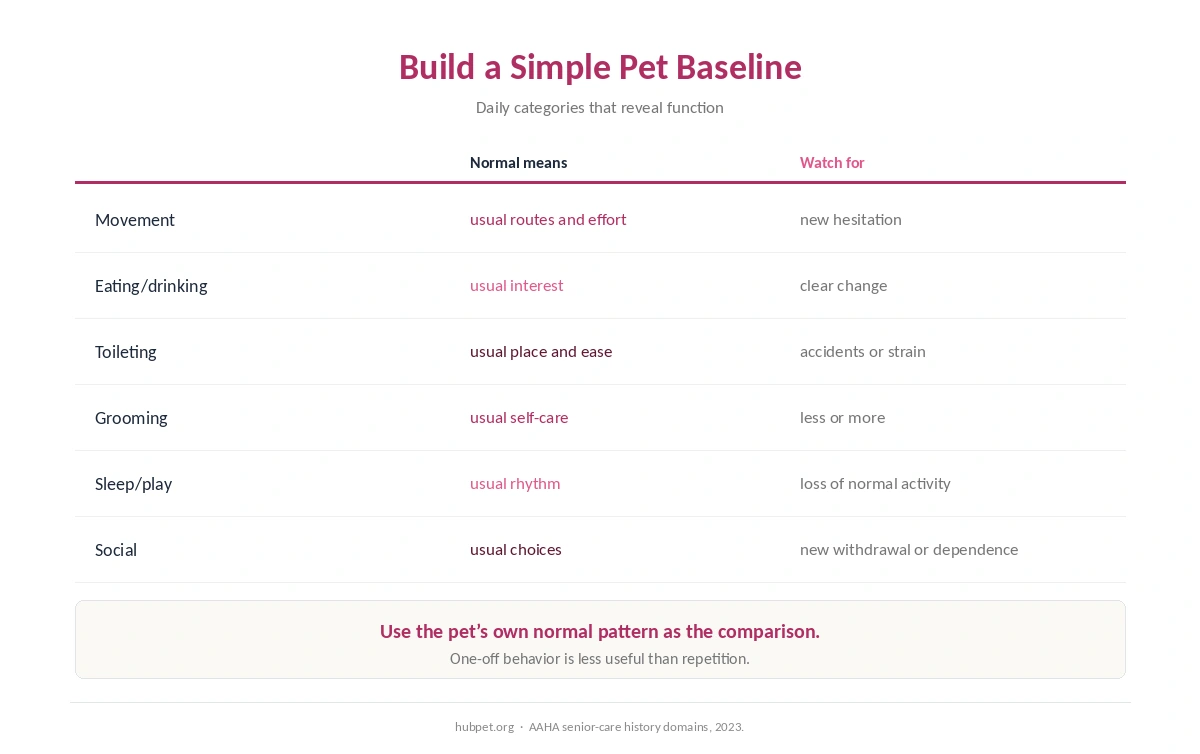
How to notice small changes in pet behavior starts with knowing the animal’s normal pattern. AAHA’s 2023 senior-care guidance recommends asking about eating, drinking, exercise, movement, play, elimination, attitude, grooming, vision, and hearing. Those categories also work as a practical baseline for adult pets. The point is observation, not home diagnosis.
How to Notice Small Changes in Pet Behavior by Building a Baseline
First, choose a few categories you can observe consistently. Movement, appetite, drinking, toileting, grooming, sleep, play, and social behavior cover much of daily life. Then, note what is usual for your pet rather than comparing with another animal. Our predictable-routines guide can make patterns easier to see because the daily context changes less.
Small changes matter most when they repeat or affect function. For example, a pet may take a different route around a slippery floor, stop jumping to a usual perch, sleep in a new place, or interact differently. The pet pain-signs guide explains why behavior can provide useful clues about discomfort without identifying the cause.
For older animals, use home changes for senior pets and senior dog comfort guidance as context. However, do not assume every new limitation belongs to aging. AAHA’s 2023 guidelines explicitly caution against treating old age itself as a disease explanation.
How to Notice Small Changes in Pet Behavior Without Overreading Them
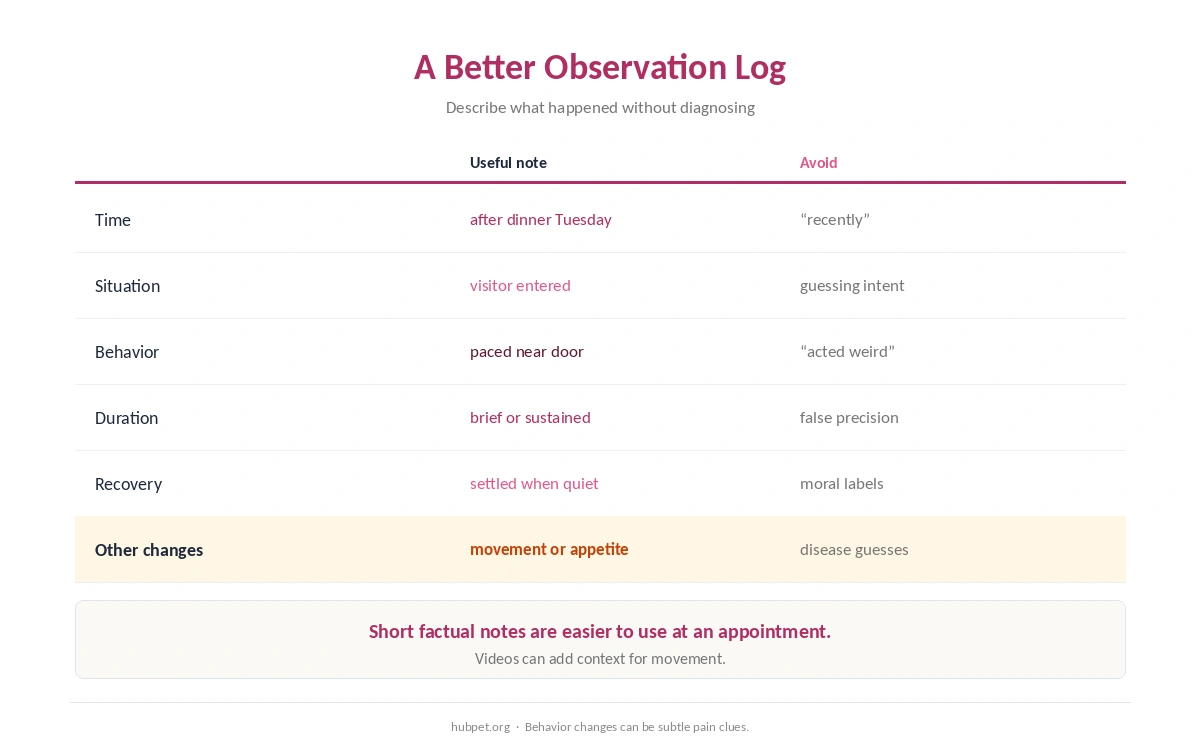
How to notice small changes in pet behavior also means resisting one-off conclusions. A single quiet evening may mean little. A repeated change at the same time, place, or activity is more useful. Therefore, record what happened before the behavior, what the pet did, how long it lasted, and what happened next.
| Log field | Example of useful detail | Avoid |
|---|---|---|
| Date and time | Tuesday after dinner | “recently” |
| Situation | visitor arrived, leash came out | guessing the motive |
| Behavior | paced for several minutes | “acted weird” |
| Duration | brief or sustained | exact timing when you did not measure it |
| Recovery | settled after room became quiet | assuming the pet “learned a lesson” |
| Other changes | movement, appetite, toileting, grooming | diagnosing a disease |
In addition, how to notice small changes in pet behavior becomes clearer when you compare the same daily task over time. Toileting changes deserve careful context. The litter-box problem guide separates setup issues from reasons to seek veterinary assessment. Grooming can change too, so routine care such as grooming a dog at home can double as a gentle observation opportunity. Keep handling low-pressure with the handling-practice guide.
Sleep and recovery matter as well. The play-and-rest guide helps you distinguish planned quiet time from a broader loss of normal activity. For cats that appear tense, the stressed-cat guide focuses on environmental support without treating behavior as a diagnosis.
Know Which Changes Belong in a Vet Conversation
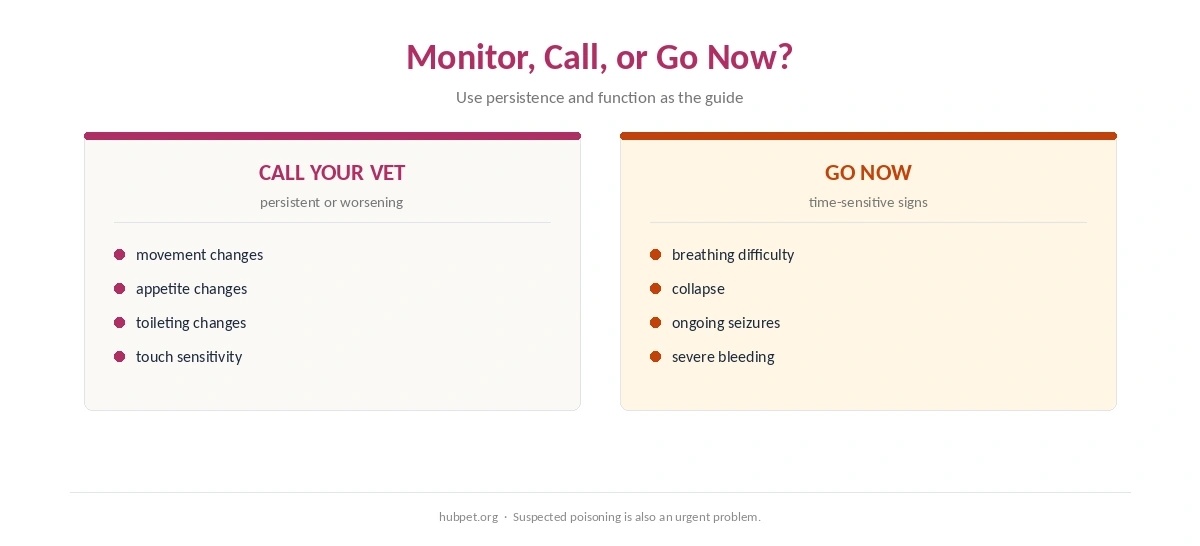
AAHA’s 2024 pain guidance says personality and behavior changes can accompany pain. Merck Veterinary Manual pain guidance reviewed in 2025 adds that chronic pain signs can be subtle. Therefore, contact your veterinarian when a behavior change persists, worsens, or appears with altered movement, appetite, drinking, toileting, grooming, sleep, or touch tolerance.
Bring a concise record rather than a theory. The vet visit checklist can organize observations and questions. In addition, less-stressful vet preparation can make the appointment easier for pets that become tense during travel or handling. A useful companion care page is how to Respond Early to Changes in Appetite.
Go now: breathing difficulty, collapse or loss of consciousness, ongoing seizures, severe bleeding, suspected poisoning, or other emergency signs need immediate veterinary care. Use the pet emergency signs guide for the site-wide emergency checklist.
How We Research
HubPet reviewed these sources on October 11, 2026: the 2023 AAHA Senior Care Guidelines for Dogs and Cats, AAHA’s 2024 guidance on common pet pain signs, and Merck Veterinary Manual pain guidance reviewed in 2025. The sources support tracking daily function and using behavior changes as clues for veterinary assessment, not as a diagnosis. Read our method at How We Research.
Know a few normal daily patterns first, then compare movement, eating, drinking, toileting, grooming, sleep, play, and social behavior with that baseline.
No. Focus on repeated, persistent, worsening, or function-changing patterns instead of interpreting every one-off behavior.
Yes. Short videos can show movement or behavior that may not appear during a clinic visit.
It can. AAHA and Merck describe behavior changes as possible pain clues, but a veterinarian needs to assess the cause.
Bring the date, context, exact behavior, duration, recovery, and any changes in movement, appetite, drinking, toileting, grooming, or sleep.
How to Notice Small Changes in Pet Behavior: Bottom Line
How to notice small changes in pet behavior is a baseline skill. Describe what changed, keep a short factual log, and look for repeated patterns across daily function. Then, share persistent or concerning changes with your veterinarian instead of trying to diagnose them from behavior alone. A useful companion care page is how to Respond Early to Changes in Energy.