
How to balance play and rest for pets is less about hitting a universal time target and more about alternating useful activity with genuine recovery. The AAHA 2026 enrichment guide describes physical, cognitive, social, sensory, and food-based enrichment. Meanwhile, Dogs Trust settle-training guidance emphasizes a predictable routine, enrichment, and a quiet comfortable place to rest. For the related reward-based training guide, see how to Prevent Overexcitement During Play.
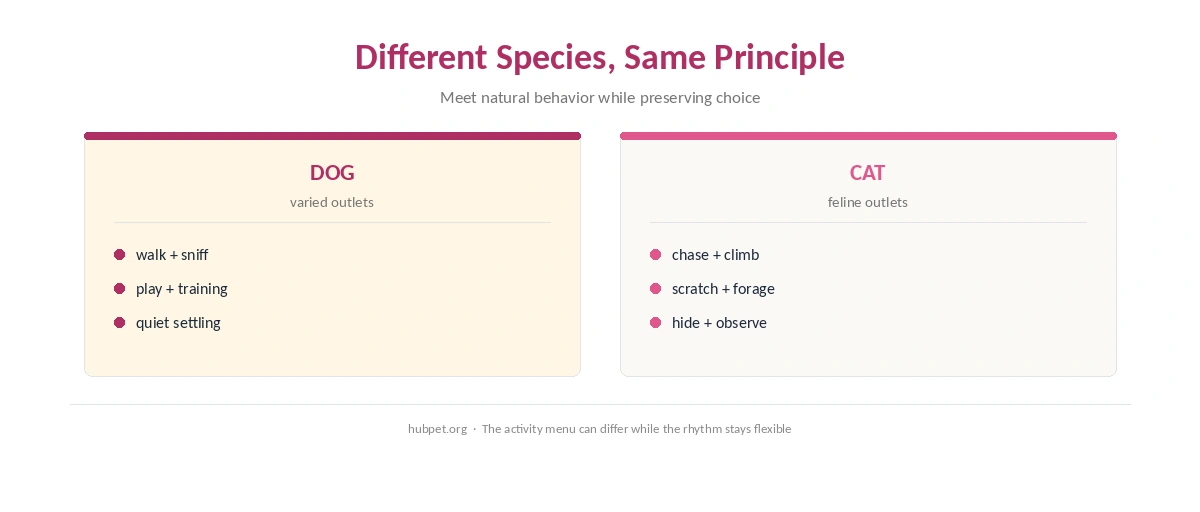
Cats need the same broad idea but not the same activities. The FelineVMA environmental-needs guidance includes safe resting places, separated resources, opportunities for play and predatory behavior, and positive predictable interaction. Therefore, a balanced day gives the pet both ways to engage and ways to disengage.
How to Balance Play and Rest for Pets: The Short Answer
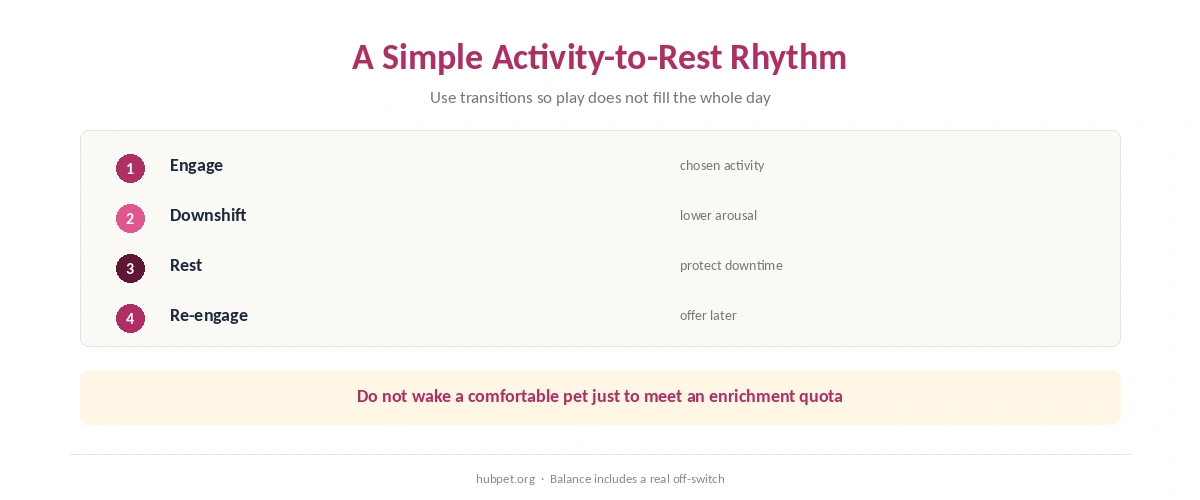
Use a rhythm: activity, a calmer transition, then an undisturbed rest opportunity. That rhythm is the practical core of how to balance play and rest for pets without a rigid clock. Watch the individual pet rather than forcing a fixed schedule. If play becomes frantic, mouthy, or hard to stop, reduce intensity and add a calmer activity. If the pet keeps choosing rest, do not keep restarting the game simply to meet a quota.
The environment should make both choices easy. Put active options in one part of the home and protect a quiet resting area elsewhere. HubPet’s enrichment-corner guide helps organize activities, while the calm-space guide covers retreat and decompression.
| Part of the rhythm | Dog examples | Cat examples |
|---|---|---|
| Active engagement | Walk, tug, search game, short training | Chase toy, climbing, food puzzle, short training |
| Downshift | Sniffing, licking, calm chew, slow search | Slow foraging, grooming, quiet observation |
| Rest opportunity | Comfortable bed in a low-traffic area | Safe resting place with choice of height or cover |
| Re-engage later | Choose a new activity when the dog is ready | Offer another play opportunity when the cat initiates or responds |
How to Balance Play and Rest for Pets by Reading the Response
For dogs, high energy does not always mean “more intense exercise.” Dogs Trust notes that exercise, enrichment, sniffing, chewing, licking, and a peaceful resting place can all support settling. Therefore, if your dog gets more wired after fast games, use ideas from settle training and indoor high-energy activities to add structure rather than endless arousal. For another evidence-based explainer, see is More Exercise Always the Solution?.
For cats, short bursts often fit normal play better than trying to sustain one long session. Offer chances to stalk, chase, pounce, climb, scratch, forage, and then withdraw. The guides to indoor cat stimulation, safe climbing spaces, and scratching-post training cover several different outlets.
Novelty can help, but it should not erase familiar favorites. Research summarized in the toy-rotation guide found habituation to repeated toys in cats and dogs, while also showing why there is no universal household rotation interval. In practice, rotate when interest fades and keep a valued familiar option available.
Build a Day With More Than One Kind of Enrichment
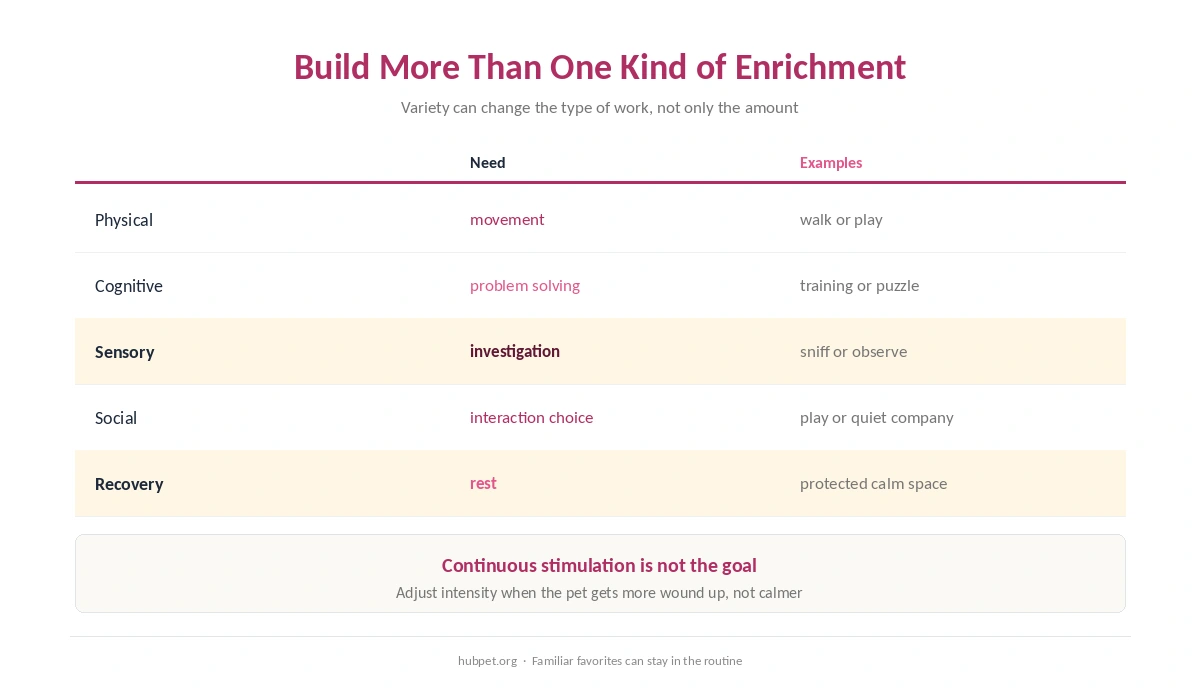
A balanced routine changes the type of work, not just the amount. Therefore, how to balance play and rest for pets also means varying the kind of engagement across the day. Mental effort can come from training or foraging. Sensory enrichment can come from sniffing or safe observation. Physical activity can come from play or a walk. Social time can be interactive or quiet companionship. This broader mix is why indoor cat boredom and cat zoomies should not be answered with “just exercise more.”
Rest needs also change with context. A new pet may need more protected downtime while adapting, so use the first-week dog checklist or the first-week cat checklist. Older dogs may need easier access to comfortable resting places, which the senior-dog comfort guide explains without turning age into a disease label.
Finally, protect routine basics. Meals, water, toileting, quiet space, and sleep should not compete with nonstop enrichment. The weekly care checklist and the separate daily dog/daily cat checklists can keep foundational care visible while enrichment changes from day to day.
How We Research
HubPet reviewed enrichment and rest sources on October 11, 2026. We used the AAHA 2026 enrichment guide, Dogs Trust settle-training guidance, and FelineVMA environmental-needs handout. Our research process avoids universal activity or sleep quotas when the cited sources do not establish one.
Give active outlets, then deliberately add a calmer transition and protect a comfortable rest area. Constantly escalating play can make it harder for some pets to switch off.
A predictable routine can help, but there is no single schedule that fits every dog and cat. Adjust the type and intensity of activity to the individual response.
Let a comfortably resting pet rest. Offer another activity opportunity later rather than treating enrichment as a quota that must interrupt recovery.
They can add useful cognitive and foraging enrichment, but they do not replace every other need. A balanced routine uses several types of activity and preserves rest.
The game may be too intense or may end without a downshift. Try shorter bouts followed by sniffing, foraging, gentle interaction, or another calm activity.
The Bottom Line on How to Balance Play and Rest for Pets
How to balance play and rest for pets means building a rhythm, not chasing a universal number. Offer varied activity, lower the intensity before arousal runs away, and protect genuine rest. Then adjust the mix according to what your individual pet chooses and handles well.