
This article is general information, not veterinary advice. If your pet seems unwell, is in pain or may have eaten something harmful, contact your vet or an animal poison control line right away. Read our vet disclaimer.
How to make vet visits less stressful starts before the appointment. AAHA guidance published in 2026 recommends calm handling practice, positive travel experiences, familiar comfort items, and planning ahead for animals that show intense fear. For cats, the 2026 FelineVMA respectful-handling statement emphasizes choice, control, hiding options, and avoiding aversive restraint.
The goal is not to make every pet enjoy every procedure. Instead, reduce avoidable stress and give the veterinary team useful information about what your pet can handle. Start with the vet-visit checklist to organize transport, records, questions, and practical preparation before the day becomes rushed.
How to Make Vet Visits Less Stressful Before the Appointment
Practice only when your pet is relaxed and healthy enough for handling. How to make vet visits less stressful includes keeping these sessions brief and easy. AAHA 2026 guidance suggests calm touches to areas such as paws, ears, mouth, and body with positive reinforcement. Stop before the pet becomes worried. Use the low-pressure principles from positive reinforcement basics and low-stress cat brushing.
For cats, make the carrier ordinary furniture rather than an emergency object. The FelineVMA toolkit advises leaving it available and building positive associations, while the carrier-introduction guide breaks the process into voluntary entry, door movement, lifting, and short travel steps. For dogs that ride in the car, pair short non-vet trips with calm rewards before appointment day when practical.
| Before the visit | Lower-stress option | Why it helps |
|---|---|---|
| Carrier appears | Leave it available between trips | Reduces the carrier-only-means-vet pattern |
| Handling practice | Brief touch plus a valued reward | Builds predictability without forcing endurance |
| Car travel | Practice short calm trips first | Separates travel from clinic arrival |
| Known severe fear | Tell the clinic before the visit | Lets the team plan handling and veterinary support |

How to Make Vet Visits Less Stressful at the Clinic
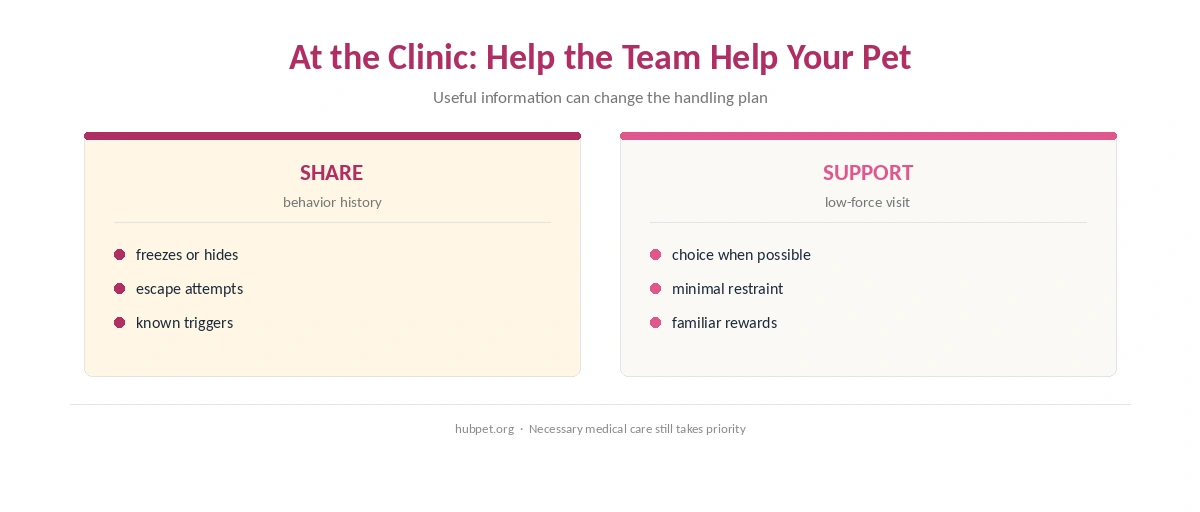
Give the team a short behavior history before handling starts. How to make vet visits less stressful also means telling staff what your pet does when worried. Mention freezing, hiding, avoiding touch, lunging, growling, hissing, or previous escape attempts. The 2022 AAFP/ISFM Cat Friendly Veterinary Interaction Guidelines say the team should respond to the cat’s current emotional state. For dogs, the guest-anxiety guide uses the same principle: distance and choice matter when an animal is worried.
Cats may benefit from staying in the carrier until the team is ready, with reduced visual stimulation when appropriate. FelineVMA 2026 guidance rejects forceful neck restraint, tight restraint, and other coercive handling. If the pet needs more support, the veterinary team decides how to proceed. Do not give a human medication or leftover prescription before the appointment unless your veterinarian specifically instructed you to do so.
For dogs, familiar reward-based skills can create a predictable task. A dog who already knows settling on a mat, sit, or stay may use those skills in easy parts of the visit. However, training should never replace necessary medical care or become a demand when the dog is too frightened to respond.
Plan the Trip Home and the Next Visit
Afterward, let the pet decompress in a familiar area. The post-vet comfort guide covers quiet recovery, multi-pet reunions, and signs that should go back to the clinic. Keep the carrier available for cats after the visit so it does not immediately disappear and regain its old warning value.
If another pet reacts to clinic smells or behavior changes, add distance rather than forcing a greeting. Use the multi-pet household checklist and the pets-get-along guide to protect routes and resting areas. A calm reunion matters more than proving that the pets can share space immediately.
Write down what worked before the next appointment. For example, note the waiting setup, carrier response, handling preferences, useful rewards, and the point where stress rose. Then share that information with the clinic. This makes the next plan specific to your pet rather than relying on a generic routine.

When Extra Veterinary Support Is Needed
AAHA’s 2026 guidance says intense fear around veterinary visits deserves a conversation with the veterinarian, including freezing, strong vocalizing, repeated escape attempts, or aggression. The veterinarian may recommend a medical or behavioral plan for future visits. Follow that individual plan exactly; HubPet does not provide drug choices or doses.
If your pet is currently ill, injured, having trouble breathing, collapsing, seizing, bleeding heavily, or showing another emergency sign, do not delay urgent care while trying to complete training. Use the pet emergency signs guide and call the clinic while you are arranging transport.
How We Research
HubPet reviewed veterinary-visit guidance on October 11, 2026. Sources include AAHA’s 2026 preparation guidance, the 2022 AAFP/ISFM Cat Friendly Veterinary Interaction Guidelines, and the 2026 FelineVMA respectful-handling statement. Our research process prioritizes current veterinary guidance and avoids medication instructions that belong to the treating veterinarian.
Keep the carrier familiar, reward voluntary entry, reduce unnecessary handling, share the cat’s stress signals with the clinic, and use a Cat Friendly approach.
Practice brief calm handling, build positive car experiences, bring familiar rewards, and tell the clinic in advance about strong fear or aggression.
Follow your clinic’s instructions. Fasting requirements depend on the reason for the visit and any planned procedure, so do not invent a rule at home.
Only use medication that your veterinarian prescribed for that pet and that visit plan. Do not give human drugs or leftover prescriptions on your own.
Tell the veterinary team before handling begins. Severe fear may require a different visit plan, additional preparation, or veterinary support for future appointments.
The Bottom Line on How to Make Vet Visits Less Stressful
How to make vet visits less stressful is a planning problem, not a test of obedience. Build positive carrier and handling experiences before the appointment, communicate your pet’s stress signals, favor choice and minimal force, and debrief after the visit. When fear is intense, involve the veterinary team rather than pushing the pet through it.