
This article is general information, not veterinary advice. If your pet seems unwell, is in pain or may have eaten something harmful, contact your vet or an animal poison control line right away. Read our vet disclaimer.
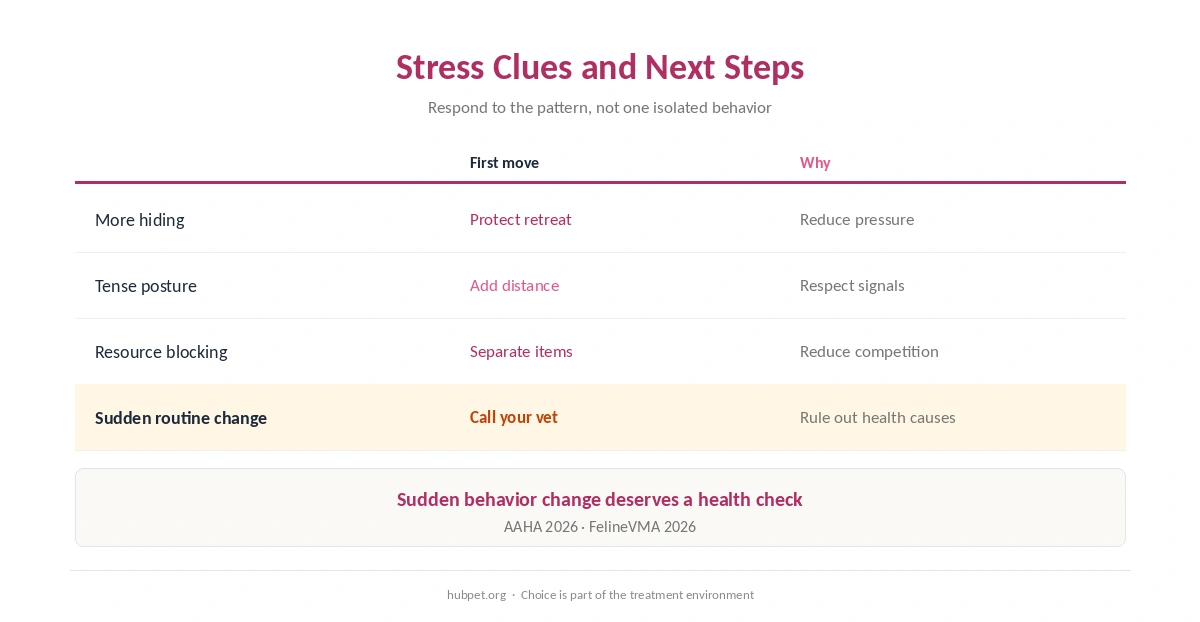
How to calm a stressed cat at home starts by reducing pressure and restoring choice. AAHA says stress can show up as more hiding, overgrooming, changes in eating or sleeping, litter box accidents, vocalizing, or other routine changes (AAHA, updated 2026).
How to Calm a Stressed Cat at Home by Making the Environment Safer
How to calm a stressed cat at home often begins with a retreat that nobody drags them out of. FelineVMA says every cat needs a safe place and recommends separated resources for food, water, toileting, scratching, play, and rest (FelineVMA, 2026). The calm-space guide shows how to build that retreat without trapping the cat.
Next, make the day more predictable. AAHA recommends stable routines and a safe retreat for anxious cats (updated 2026). Keep feeding, play, and quiet time reasonably consistent, while letting the cat choose whether to approach. The cat stress signs guide can help you notice whether the cat is actually settling.
| What you notice | Low-pressure response | Source |
|---|---|---|
| More hiding | Protect a quiet retreat | AAHA 2026 / FelineVMA 2026 |
| Tense body language | Pause interaction and add distance | AAHA 2021 |
| Resource guarding or blocking | Spread resources apart | FelineVMA 2026 |
| New litter changes | Reduce stress and arrange a vet check | AAHA 2026 |
How to Calm a Stressed Cat at Home Without Forcing Contact
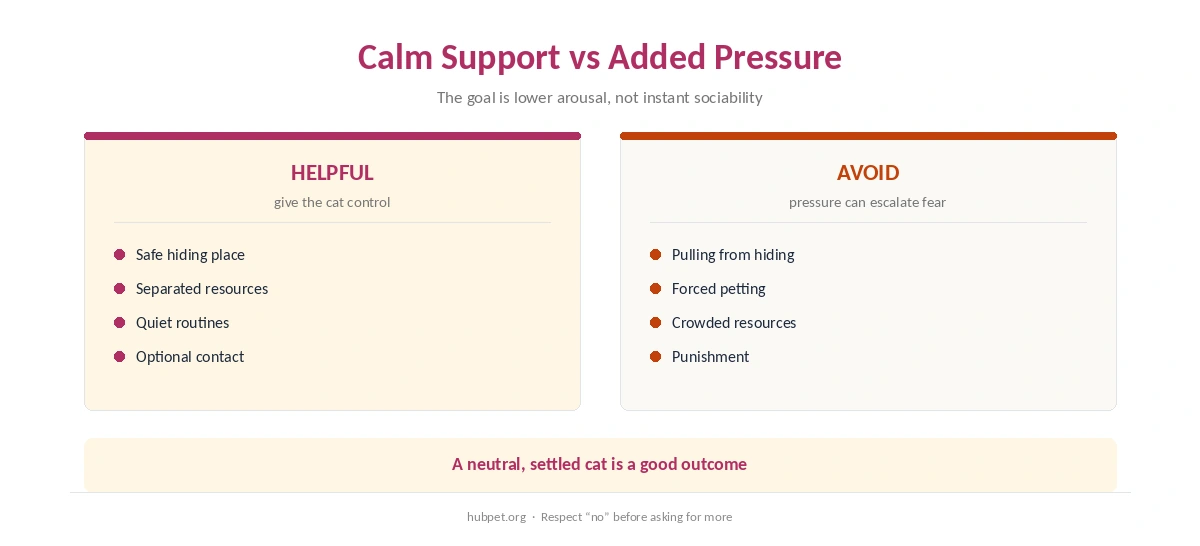
How to calm a stressed cat at home also means letting the cat control social contact. FelineVMA advises positive, consistent, predictable interaction and says caregivers should respect individual preferences rather than force petting or handling (2026). A cat that walks away is giving useful information, not failing a training exercise.
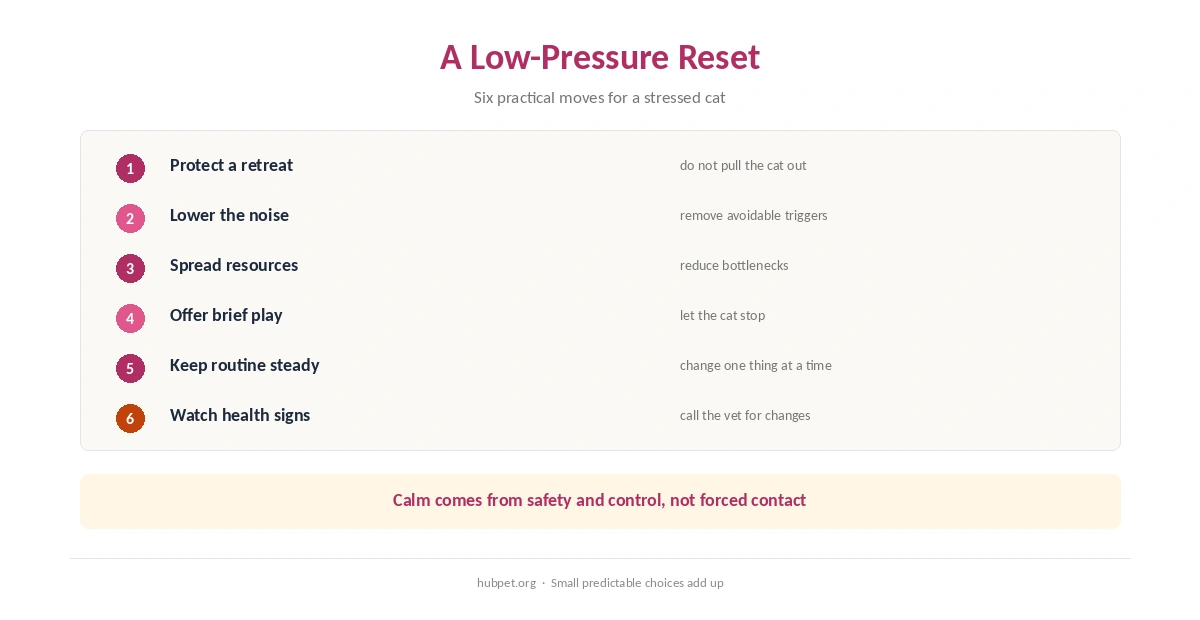
- Lower household noise and stop unnecessary handling for now.
- Keep a familiar hiding or elevated resting place available.
- Separate food, water, litter, scratching, and resting resources when crowding is a problem.
- Offer short play opportunities and let the cat end the session.
- Use a quiet litter box location with an easy route in and out.
- Keep daily care predictable rather than adding many changes at once.
If the stress followed a move or adoption, use the first-week new-cat checklist. It keeps the first days quiet and predictable.
In multi-cat homes, use the two-cat introduction plan to lower social pressure. For mixed-species homes, the pet compatibility guide covers gradual shared-space work.
How to calm a stressed cat at home is easier when indoor life includes enrichment and resource choice. The indoor-cat care guide explains why a safer indoor setting does not remove behavioral and health needs.
When to Call Your Vet About a Stressed Cat
AAHA says a shift in normal routines, withdrawal, or lethargy is a reason to talk with a veterinarian, and it notes that pain or medical conditions can contribute to anxiety-like behavior (updated 2026). New vomiting, diarrhea, appetite changes, litter box changes, or excessive grooming with bald or sore areas also deserve veterinary discussion rather than being labeled as stress alone (AAHA, 2026).
For new house-soiling, use the litter box problem guide and arrange veterinary assessment. If the cat seems painful, compare signs of pain. For collapse, difficulty breathing, seizure, suspected poisoning, or another crisis, use pet emergency signs and seek urgent care.
How We Research
HubPet uses veterinary and research sources rather than personal anecdotes. We read these sources on October 11, 2026: AAHA cat anxiety guidance, updated 2026, FelineVMA environmental needs guidance, 2026, AAHA/AAFP feline life-stage behavior guidance, 2021. See How We Research for our method.
How to Calm a Stressed Cat at Home FAQ
No. FelineVMA guidance emphasizes a safe place and control over interactions. Make sure essential resources remain accessible and monitor for health changes.
Yes, if the cat seeks or accepts it. AAHA says comforting a scared cat is appropriate; let the cat choose the type and duration of contact (updated 2026).
Stress can contribute, but new house-soiling can also have medical causes. AAHA recommends veterinary assessment for a new elimination problem (2026).
There is no universal timeline. Reduce the trigger, restore predictable resources, and contact your vet if the cat is not returning toward normal or health signs appear.
Protect one quiet safe place and reduce forced interaction while you watch eating, drinking, litter use, movement, and normal social behavior.