
This article is general information, not veterinary advice. If your pet seems unwell, is in pain or may have eaten something harmful, contact your vet or an animal poison control line right away. Read our vet disclaimer.
How to practice handling your pet at home starts with consent, predictability, and very small steps. Dogs Trust handling guidance says to introduce touch gradually, watch for discomfort, stop when the dog becomes worried, and reward relaxed participation. For cats, the FelineVMA cooperative-care guidance recommends voluntary participation and positive reinforcement rather than physical restraint.
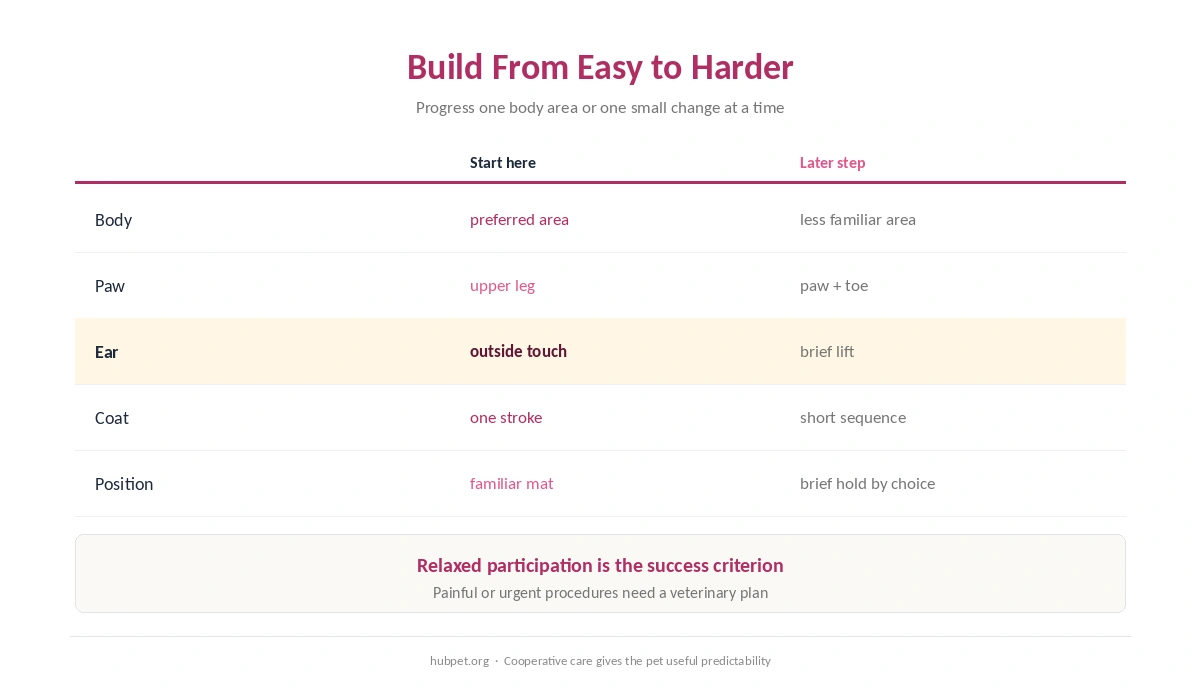
Home practice can make routine checks less surprising, but it should never become a wrestling match. Therefore, begin with touch your pet already accepts. Then build toward paws, ears, mouth area, coat, tail, or brief positioning only while the animal stays relaxed. The goal matches low-stress veterinary preparation: help the pet learn what will happen and give them a realistic way to pause.
How to Practice Handling Your Pet at Home: The Short Answer
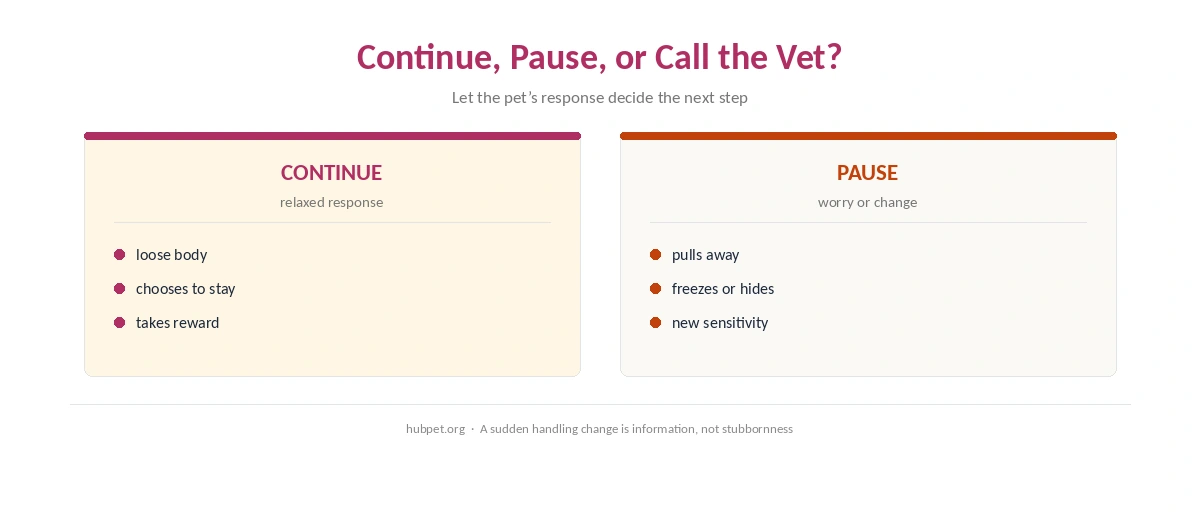
Choose a quiet place, keep the session brief, touch one easy area, then reward and stop before your pet wants to leave. That is the core of how to practice handling your pet at home without forcing cooperation. Gradually add a new body area or a little more duration. However, if your pet stiffens, pulls away, hides, freezes, growls, hisses, swats, or tries to escape, reduce the difficulty instead of holding on.
Predictable routines can help. Dogs Trust suggests using the same order when examining a dog so the dog knows what comes next. Meanwhile, FelineVMA describes targeting and stationing as cooperative-care skills that let a cat choose a position. You can connect that idea with mat settling or a familiar towel for a cat, without turning the station into forced restraint.
| Practice skill | Easy starting point | Progress only when relaxed |
|---|---|---|
| Body touch | One stroke on a preferred area | Brief touch on a less familiar area |
| Paw handling | Touch shoulder or upper leg | Move gradually toward paw and one toe |
| Ear check | Touch outside of ear | Lift ear flap briefly without poking the canal |
| Coat check | One gentle stroke or brush pass | A short sequence over another body area |
| Positioning | Stand or sit on a familiar mat | Briefly hold a predictable position by choice |

How to Practice Handling Your Pet at Home Step by Step
- Pick a quiet location and a time when your pet already looks comfortable.
- Start with a body area your pet normally accepts, such as the shoulder or side.
- Use a predictable cue before the touch so the pet gets information about what comes next.
- Touch briefly, remove your hand, then give a preferred reward.
- Repeat only while body language stays loose and the pet chooses to remain nearby.
- Add one small change at a time, such as a new body area or slightly longer touch.
- End the session while it is still easy, then return later rather than pushing through worry.
For dogs, the same foundation helps with ear checks, nail care, and home grooming. However, practice should not imitate a painful procedure. Dogs Trust specifically notes that pain can make handling harder, so a sudden change in tolerance deserves a veterinary conversation rather than tougher training.
For cats, break the task down even further. One paw touch can be enough for a session. Then, over time, that skill can support cat nail care or low-stress brushing. The FelineVMA 2026 respectful-handling guidance emphasizes predictable interactions and cooperative care. Therefore, chasing, pinning, or forcing a frightened cat works against the goal.
Use Handling Practice for Observation, Not Diagnosis
Handling practice can help you notice a change, but it does not tell you what caused it. In other words, how to practice handling your pet at home includes knowing when to stop the practice and record a change instead. For example, the home skin-check guide explains how to record a new lump, redness, hair loss, or sensitivity without diagnosing the condition. Likewise, healthy coat care focuses on observation and gentle grooming rather than treating a skin problem at home.
If your pet suddenly resists touch they previously tolerated, stop escalating the exercise. New sensitivity, limping, swelling, vocalizing, or a sharp behavior change can have a medical cause. The pain-signs guide explains why behavior can change when an animal hurts. If the change is severe or your pet also seems acutely unwell, use the emergency-signs guide and contact a veterinarian.
Preparation also belongs around the handling, not only in the touch itself. Keep carriers familiar with carrier practice, use the vet-visit checklist, and follow the clinic plan after appointments with post-visit comfort guidance. These routines make handling one piece of a larger predictability plan.
How We Research
HubPet reviewed handling sources on October 11, 2026. We used Dogs Trust guidance reviewed by its Behavior team, the FelineVMA 2026 positive-reinforcement toolkit, and the FelineVMA 2026 respectful-handling statement. Our research process treats home handling as preparation and observation, not medical diagnosis.
Let them leave. Make the next repetition easier, shorter, or more rewarding, and work below the point where the pet feels a need to escape.
There is no universal session length. Keep it brief enough that your pet stays relaxed and end before they become worried or tired of participating.
No. Cooperative-care guidance favors gradual voluntary participation. Forced restraint can increase fear and make later handling harder.
You can practice often if the sessions remain easy and welcome, but frequency should follow the individual pet rather than a rigid quota.
Stop increasing handling and contact your veterinarian, especially when the change comes with sensitivity, movement changes, swelling, or other signs of illness or discomfort.
The Bottom Line on How to Practice Handling Your Pet at Home
How to practice handling your pet at home is mostly about making care predictable and voluntary. Start with easy touch, pair it with a reward, progress in tiny steps, and stop when body language changes. If tolerance drops suddenly, treat that as new information rather than a training failure.