
This article is general information, not veterinary advice. If your pet seems unwell, is in pain or may have eaten something harmful, contact your vet or an animal poison control line right away. Read our vet disclaimer.
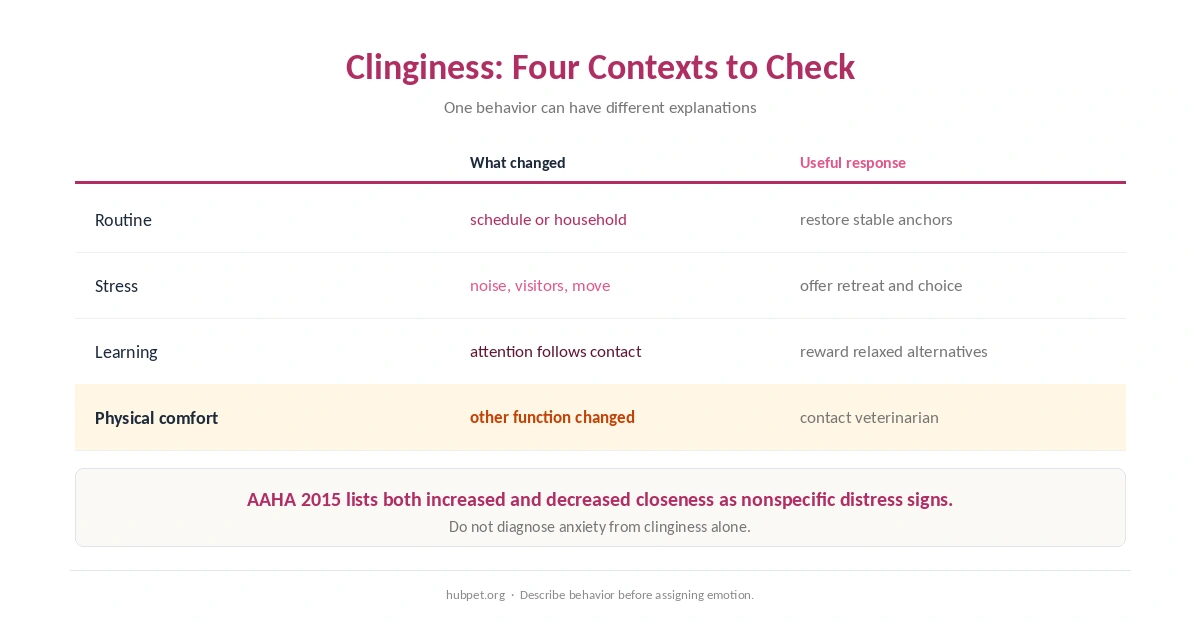
Why pets may become clingy suddenly has more than one possible explanation. AAHA’s 2015 behavior guidelines list increased closeness to preferred people among nonspecific anxiety or distress signs. However, the same guidelines also list decreased closeness. Therefore, a sudden change in contact-seeking is a clue to investigate, not proof of one emotion or diagnosis.
Why Pets May Become Clingy Suddenly After a Routine Change
First, look at what changed around the same time. A new work schedule, visitors, moving, a household member leaving, or a different daily rhythm can change the cues a pet relies on. Our predictable-routines guide can help restore a few stable anchors without making the day rigid.
Next, consider whether the pet is seeking proximity after unfamiliar or stressful events. The new-home adjustment guide covers major environmental change. The new-people guide can help when household social patterns change. During busy seasons, the holiday stress guide focuses on quieter retreats and predictable routines.
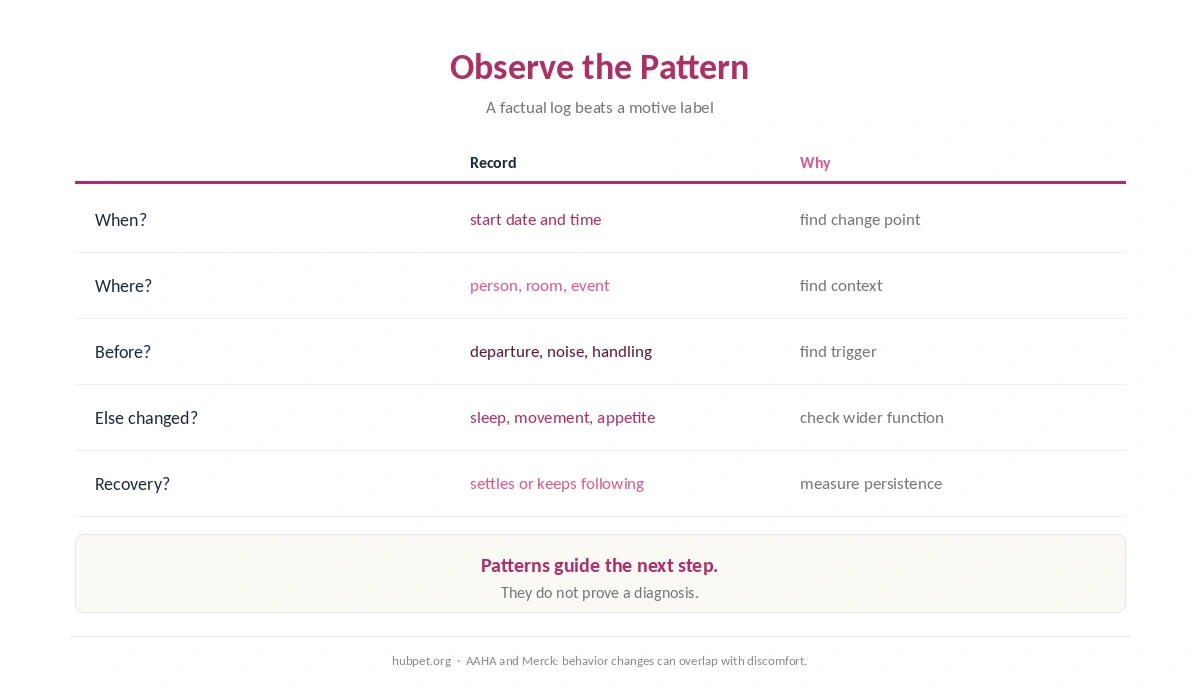
However, do not assume that extra closeness means jealousy, guilt, or manipulation. Those labels can hide the actual pattern. Instead, describe what the animal does, when it starts, what happens before it, and how long recovery takes. The calm-space guide can also give the pet a choice between contact and rest.
Why Pets May Become Clingy Suddenly: Check the Whole Pattern
Why pets may become clingy suddenly can also involve learning. Attention, touch, access to a favorite place, or a change in household response can reinforce contact-seeking. That does not make the behavior “bad.” Instead, keep needed affection available while also rewarding relaxed, independent behavior when the pet chooses it.
Meanwhile, in multi-pet homes, competition for access can change social behavior. Use balancing attention among multiple pets to reduce accidental crowding. If the change happens around children, why pets act differently with children helps separate observable behavior from assumptions about motive.
| Question | What to observe | Why it helps |
|---|---|---|
| When did it start? | date and household change | connects behavior with context |
| Where does it happen? | specific room, person, or time | shows whether the pattern is situational |
| What comes before it? | departure, noise, handling, conflict | identifies possible triggers |
| What else changed? | appetite, movement, sleep, toileting | flags broader functional change |
| How does the pet recover? | settles, paces, hides, follows | shows whether arousal resolves |
In addition, why pets may become clingy suddenly can be easier to interpret after you compare the behavior with a recent event. After an appointment or other stressful event, some pets may seek more proximity. The after-vet comfort guide focuses on quiet recovery and choice. Likewise, gentle handling practice can reduce pressure around routine care.
Sudden Clinginess Can Also Be a Health Clue
AAHA’s 2024 pain guidance says pain can change personality and behavior. Some pets withdraw, while others act unusually fearful, irritable, or attention-seeking. Merck Veterinary Manual pain guidance reviewed in 2025 also notes that subtle behavior changes can accompany chronic pain. Therefore, sudden clinginess should not be diagnosed as anxiety from the internet.
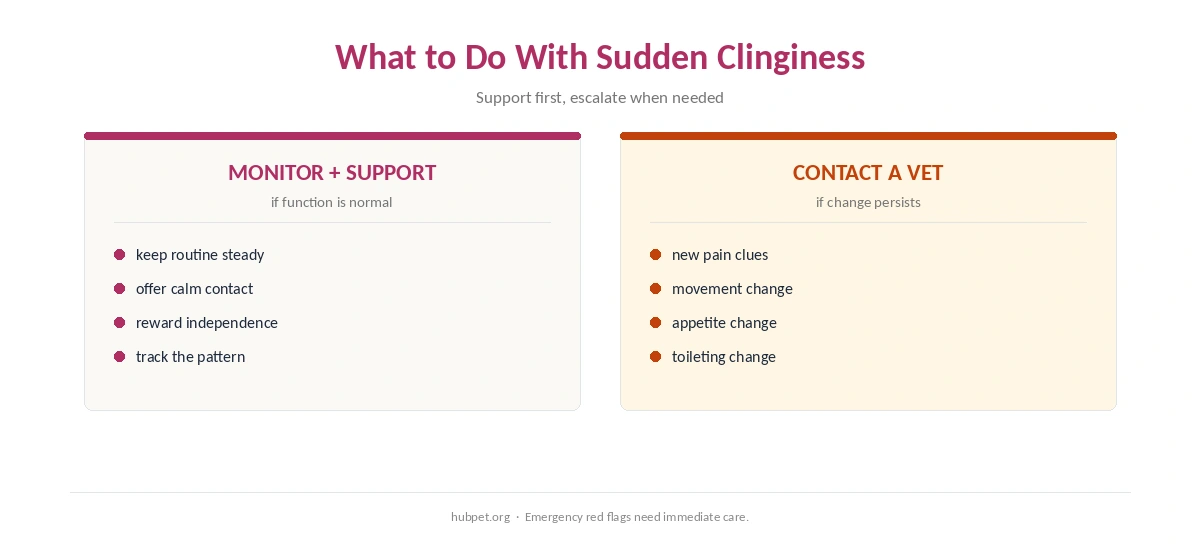
Moreover, use the pet pain-signs guide if the change comes with altered movement, grooming, sleep, appetite, or tolerance of touch. For easier appointments, prepare for a less-stressful vet visit. Contact your veterinarian when the behavior is new, persistent, worsening, or paired with other changes in normal function.
Go now: if sudden behavior change appears with breathing difficulty, collapse, ongoing seizures, severe bleeding, suspected poisoning, or another emergency sign, seek urgent veterinary care. The pet emergency signs guide summarizes time-sensitive red flags.
How We Research
HubPet reviewed these sources on October 11, 2026: the AAHA 2015 table of common anxiety and distress signs, AAHA’s 2024 guidance on common pet pain signs, and Merck Veterinary Manual pain guidance reviewed in 2025. These sources support treating a change in closeness as a nonspecific sign that needs context. Read our method at How We Research.
No. Increased closeness is nonspecific. Look at the full pattern and seek professional assessment when the change is persistent or disruptive.
Yes. Changes in routine or social access can alter behavior. Keep useful daily anchors predictable and give the pet choices for contact and retreat.
It can. AAHA and Merck describe behavior and social changes as possible pain clues, so a sudden unexplained change deserves veterinary attention.
No. Avoid turning attention into a conflict. Meet social needs while also reinforcing calm, independent behavior when the pet offers it.
Clinginess alone is not an emergency sign. Seek urgent care when it appears with serious red flags such as breathing difficulty, collapse, ongoing seizures, severe bleeding, or suspected poisoning.
Why Pets May Become Clingy Suddenly: Bottom Line
Why pets may become clingy suddenly depends on context. Routine changes, stressful events, learning history, social access, and physical discomfort can all alter closeness. Track the pattern, avoid human motive labels, support calm choices, and involve your veterinarian when the change is unexplained or affects normal function.