
This article is general information, not veterinary advice. If your pet seems unwell, is in pain or may have eaten something harmful, contact your vet or an animal poison control line right away. Read our vet disclaimer.
How to help a pet recover from stressful events begins by lowering demands and restoring predictable access to rest, food, water, toileting, and familiar routines. AAHA’s 2015 behavior guidelines support low-stress handling and meeting basic behavioral needs, while Merck Veterinary Manual guidance updated in 2025 stresses that behavior changes can also have medical causes.
How to Help a Pet Recover From Stressful Events: First Reduce Pressure
After a frightening or disruptive event, remove avoidable triggers before asking the pet to “get back to normal.” AAHA’s 2015 guidelines describe low-stress environments as part of behavioral care. A protected retreat can help, so start with our calm-space setup and keep access voluntary.
Next, restore familiar daily anchors. Predictable access to meals, walks or litter areas, play, and sleep reduces unnecessary novelty. Our routine guide gives a simple framework, and balancing play with rest can prevent a well-meant recovery day from becoming overstimulating.
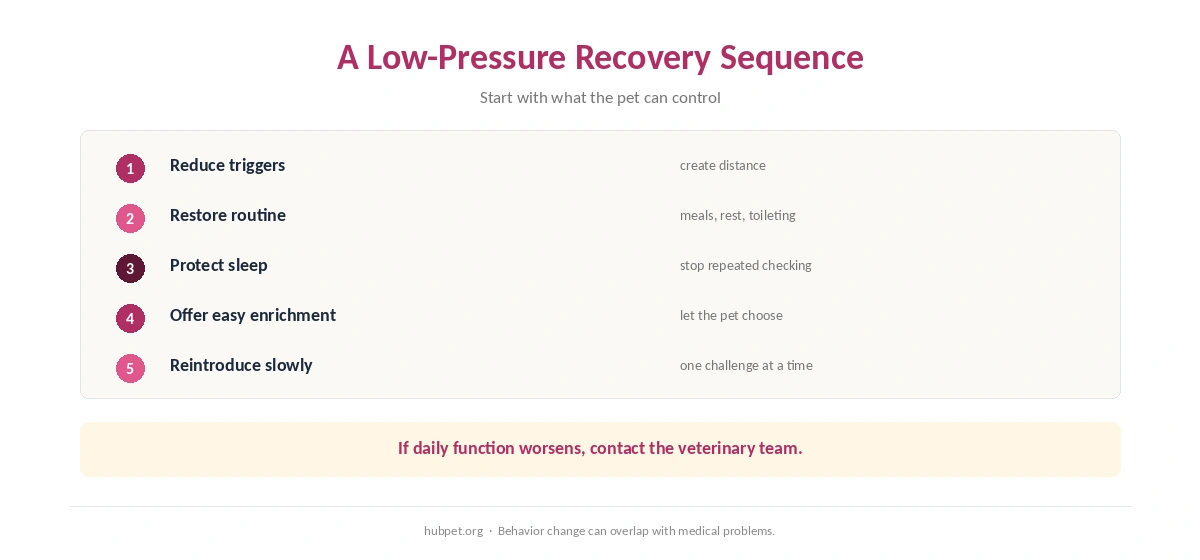
How to Help a Pet Recover From Stressful Events Without Forcing Contact
Choice matters during recovery. AAHA’s 2015 behavior guidance supports cooperative, low-stress interactions, and FelineVMA’s 2025 indoor-cat position highlights safe places plus predictable positive human contact for cats. Therefore, invite interaction but allow the pet to move away or rest. A related checklist is pet Stress Reduction Checklist.
- Reduce repeat exposure. If the trigger is avoidable, create distance while the pet settles.
- Return to familiar routines. Keep basic daily events consistent unless the veterinarian has given different instructions.
- Protect sleep and quiet time. Do not repeatedly wake, handle, or test the pet to see whether it is “over it.”
- Offer normal enrichment at an easy level. Let the pet choose whether to sniff, play, forage, or watch from a safe place.
- Watch daily function. Note meaningful changes in eating, drinking, elimination, movement, sleep, and social behavior.
- Increase difficulty gradually. Reintroduce visitors, travel, noises, or busy spaces only when the pet can recover comfortably.
The recovery plan should match the trigger. For noise events, use fireworks support or thunderstorm planning. The practical answer to how to help a pet recover from stressful events changes with the trigger.
For a veterinary trip, post-vet comfort and lower-stress vet visits address a different set of cues.
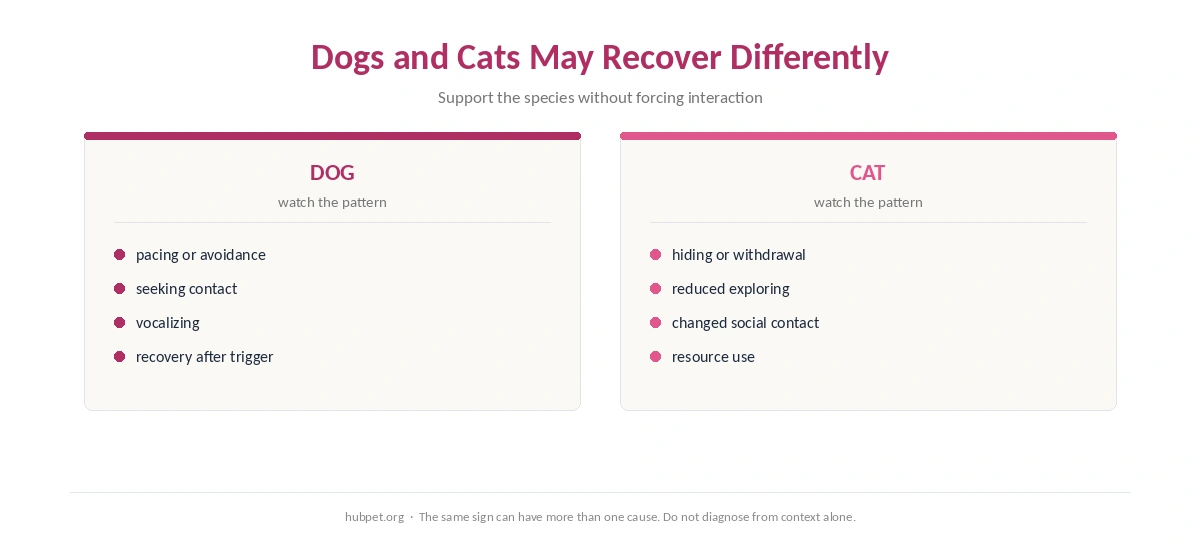
Recovery Looks Different in Dogs and Cats
Dogs may seek contact, avoid it, pace, vocalize, or become more watchful after a stressful event. Cats may hide, reduce exploration, or change social contact. Merck Veterinary Manual behavior guidance updated in 2025 notes that stress can alter behavior and that medical problems can produce similar changes, so context alone cannot identify the cause.
For cats, our cat stress-sign guide and stressed-cat support guide can help you observe patterns without assigning a diagnosis. A careful approach to how to help a pet recover from stressful events also includes watching whether daily function returns. For household schedule disruption, schedule-change support focuses on rebuilding predictable cues.
Sleep can also become unsettled after disruption. Keep the evening quiet and consistent, then use night-settling steps if bedtime itself has become difficult. However, do not treat persistent restlessness as “just stress” when other illness or pain signs appear.
When to Call Your Vet
Contact your veterinarian when a behavior or appetite change is sudden, marked, persistent, or accompanied by pain, weakness, vomiting, diarrhea, abnormal urination, or another physical change. Merck Veterinary Manual guidance updated in 2025 says medical causes should be excluded when behavior changes. Use our pain-sign overview to organize observations for the call.
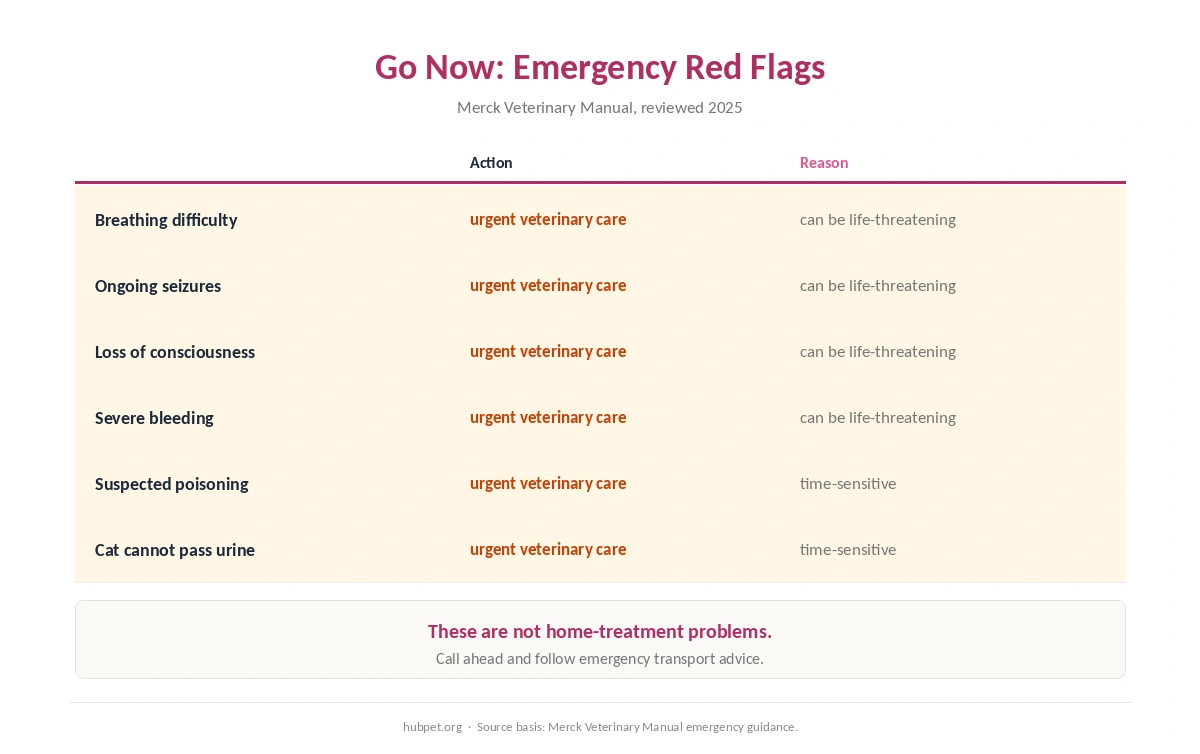
Go now: seek urgent veterinary care for difficulty breathing, ongoing seizures, loss of consciousness, severe bleeding, suspected poisoning, heatstroke, or a cat that cannot pass urine. These are emergency patterns summarized from Merck Veterinary Manual emergency guidance reviewed in 2025. Our pet emergency signs page explains why waiting can be unsafe.
How We Research
HubPet reviewed sources on October 11, 2026. We used the 2015 AAHA Canine and Feline Behavior Management Guidelines, Merck Veterinary Manual behavior guidance updated in 2025, the Merck emergency guide reviewed in 2025, and the 2025 FelineVMA indoor-cat position. Read our method on How We Research.
There is no universal timetable. Track the pet’s own eating, resting, elimination, movement, exploration, and social behavior, and contact a veterinarian if recovery stalls or physical signs appear.
Offer calm contact if the pet seeks it, but keep an easy way to move away. Forced holding or repeated checking can add pressure.
Some normal activity can be useful when the pet is comfortable, but more activity is not automatically better. Protect rest and choose low-pressure enrichment.
Hiding can occur with fear or stress, but it can also accompany illness. Merck guidance updated in 2025 supports veterinary assessment when behavior changes are persistent or come with physical signs.
Stress itself is not a diagnosis. Difficulty breathing, ongoing seizures, loss of consciousness, severe bleeding, suspected poisoning, heatstroke, or inability to urinate need urgent veterinary care.
How to Help a Pet Recover From Stressful Events: Bottom Line
How to help a pet recover from stressful events comes down to less pressure, more predictability, protected rest, and careful observation. Reintroduce difficult situations gradually, and do not assume every behavior change is psychological. The holiday-stress guide shows how the same principles apply when disruption lasts for several days.