
This article is general information, not veterinary advice. If your pet seems unwell, is in pain or may have eaten something harmful, contact your vet or an animal poison control line right away. Read our vet disclaimer.
How to help pets settle for the night starts with a repeatable wind-down, not a battle over bedtime. Meet normal needs earlier, lower arousal gradually, and protect a comfortable rest area. The AAHA review on canine sleep, published July 2026 highlights links between sleep and behavior, while Dogs Trust recommends teaching calm settling in easy environments.
For cats, nighttime activity can also reflect normal feline patterns and the home environment. The FelineVMA indoor-cat statement, 2025 emphasizes safe places, play, predatory behavior, separated resources, and predictable positive interaction. Therefore, a calm night begins with the whole day, not only the last few minutes.
How to Help Pets Settle for the Night: Short Answer
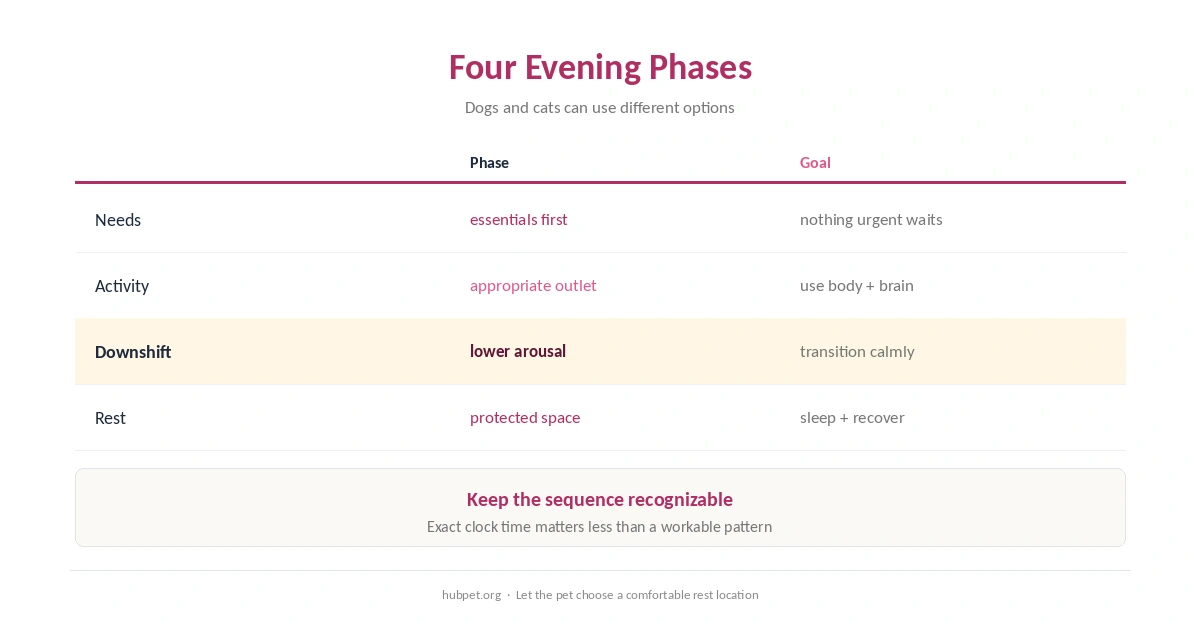
How to help pets settle for the night is easiest when the last part of the day follows a familiar sequence. Use a calm evening routine as the foundation: meet practical needs, add appropriate activity, then shift toward quiet choices and protected rest.
However, do not try to exhaust a pet right before bed. High-arousal play can make some animals more activated. The play-and-rest guide explains why recovery is part of the routine, not a reward that comes only after total fatigue.
| Evening phase | Dogs | Cats |
|---|---|---|
| Meet needs | Toileting, water, calm contact | Food, water, litter access, social choice |
| Use energy | Sniffing, easy training, appropriate play | Interactive play and exploration |
| Downshift | Mat, bed, quiet enrichment | Low-pressure contact or independent activity |
| Protect rest | Undisturbed sleep area | Safe resting and hiding options |
How to Help Pets Settle for the Night Step by Step
First, keep the final routine recognizable. A stable order can matter even when clock time changes slightly. The guide to predictable routines and the article on schedule changes show how anchor events can remain familiar during a busy week.
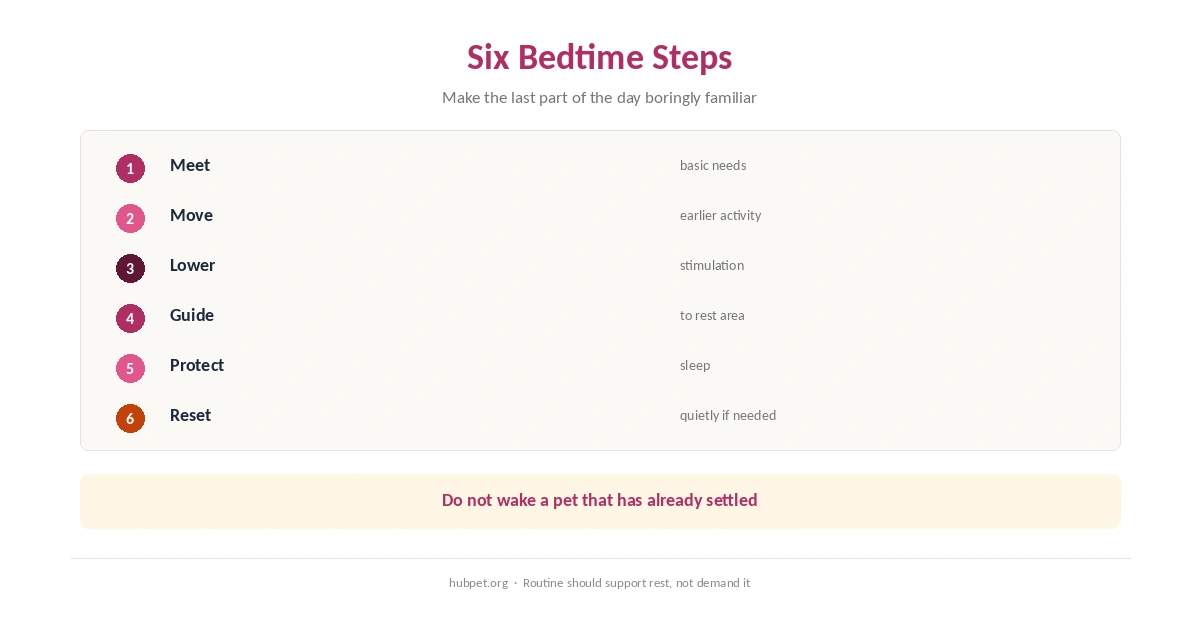
- Meet normal toilet, litter, water, and household needs before the final wind-down.
- Use an appropriate activity earlier in the evening rather than saving all stimulation for bedtime.
- Lower the intensity of play, training, lights, and household traffic gradually.
- Guide dogs to a familiar bed or mat and let cats choose a safe resting location.
- Avoid repeatedly waking a pet that has already settled.
- If the pet gets up, quietly address a real need and then return to the normal sequence.
For dogs, a practiced settle can give the evening a clear endpoint. The settle-on-a-mat guide and current Dogs Trust settle guidance both build calm behavior with rewards in a low-distraction setting before harder situations. In practice, how to help pets settle for the night means making the final steps boringly familiar rather than adding a new challenge.
For cats, the environment may matter more than a verbal cue. Offer safe elevated or hidden resting choices, then let the cat decide. The guides to safe climbing spaces and why cats prefer height can help create options without forcing one sleeping spot.
Fix the Setup Before Blaming the Pet
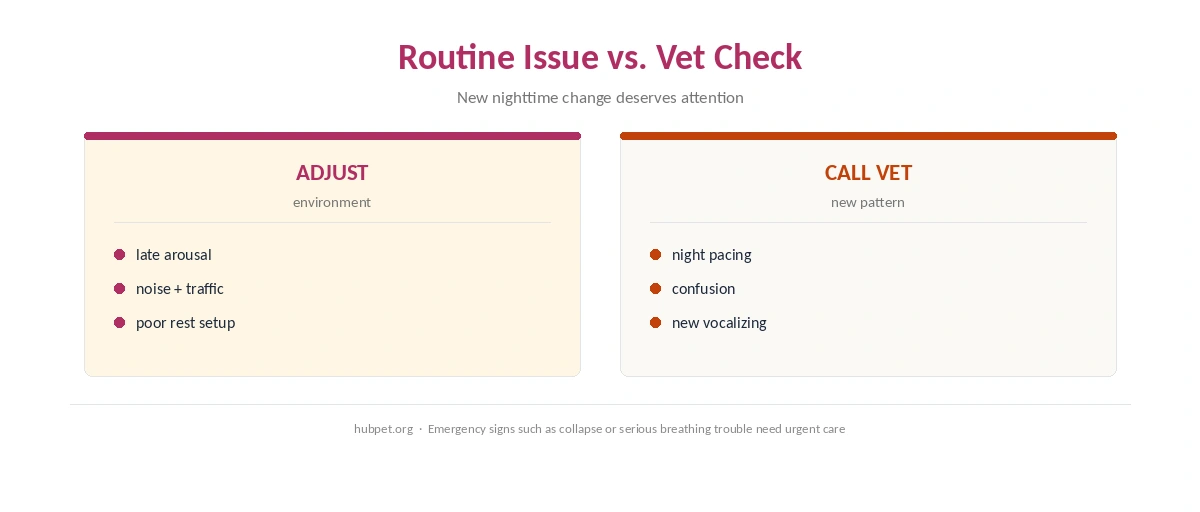
A pet that cannot settle may be reacting to the environment. Late visitors, loud television, hallway traffic, a competing animal, or an uncomfortable sleeping area can keep the household activated. The calm-space guide offers a starting point for reducing avoidable disturbance.
Multi-pet homes may need more than one rest zone. Do not make every animal share a bed, crate area, or route to water. The pet harmony guide and multi-pet checklist emphasize choice and separate resources rather than forced togetherness.
Also keep feeding and enrichment predictable enough that the pet is not waiting for a surprise late-night event. The scheduled feeding guide and toy-rotation guide can help structure the evening without inventing a rigid universal timetable.
When to Call Your Vet
Call your veterinarian if a previously settled pet develops persistent nighttime restlessness, repeated vocalizing, confusion, unusual toileting changes, or another marked behavior change. The AAHA sleep review, 2026 says nighttime pacing, vocalizing, or reversed sleep patterns warrant veterinary evaluation, especially in senior dogs. Those signs have several possible causes, so an online bedtime routine cannot diagnose them.
For older animals, changes in mobility, senses, or cognition can alter sleep and navigation. The guides to senior-dog comfort and aging-cat support describe practical home adjustments, but new or worsening changes still deserve veterinary assessment.
Go now for collapse, serious breathing difficulty, unresponsiveness, a seizure, or another emergency sign. The AAHA pet-emergency guide, 2024 lists breathing difficulty, unresponsiveness, and seizures as urgent signs. Use the pet emergency-sign guide while arranging immediate care.
How We Research
HubPet reviewed these sources on October 11, 2026: the AAHA canine-sleep review, 2026, the Dogs Trust settle-training guide, and the FelineVMA 2025 indoor-cat statement. Read more about our research process.
Use a familiar wind-down, meet normal needs, lower arousal, and reward calm settling in a comfortable sleep area.
Provide appropriate daytime and evening activity, safe resting choices, predictable resources, and avoid forcing one sleeping location.
Not as a universal strategy. Use appropriate activity earlier, then allow a gradual downshift and recovery.
Check for a real need or environmental disturbance, then return calmly to the normal routine rather than adding exciting interaction.
A new persistent change, especially with confusion, vocalizing, toileting changes, or other signs of illness, deserves veterinary assessment.
The Bottom Line on How to Help Pets Settle for the Night
How to help pets settle for the night comes down to a predictable sequence, appropriate earlier activity, a gradual downshift, and a comfortable place to rest. Do not force sleep or chase exhaustion. If a previously settled pet develops a marked new nighttime pattern, contact your veterinarian rather than treating it as a training problem alone.