
This article is general information, not veterinary advice. If your pet seems unwell, is in pain or may have eaten something harmful, contact your vet or an animal poison control line right away. Read our vet disclaimer.
How to reduce stress during holidays with pets starts before guests arrive. Keep familiar routines where practical, create a quiet retreat, secure exterior doors, and reduce access to food, decorations, and crowded areas. The AAHA Thanksgiving pet-safety guide, updated September 24, 2026 recommends a quiet area away from guests and maintaining normal feeding, exercise, and bathroom routines as much as possible.
Holiday stress is not one single behavior. Some pets hide, pace, vocalize, pant, avoid people, or become more reactive when household noise and traffic change. Therefore, how to reduce stress during holidays with pets should focus on choice and prevention, not on forcing social interaction. For the matching checklist, see pet Stress Reduction Checklist.
How to Reduce Stress During Holidays with Pets: Short Answer
How to reduce stress during holidays with pets means lowering predictable pressure. Give the pet a retreat before the door starts opening, keep important routines recognizable, and tell guests not to follow an animal that is hiding or resting. The guest-anxiety guide offers a more detailed setup for visitors.
If fireworks or loud celebrations are likely, prepare for noise separately. Use the storm and fireworks checklist and the fireworks coping guide rather than waiting for the first loud event to improvise.
| Holiday pressure | Lower-stress setup | Avoid |
|---|---|---|
| Guests | Quiet retreat and controlled greetings | Forced handling |
| Open doors | Barrier plus current identification | Free access to entryway |
| Food | Keep unsafe items and trash inaccessible | Guest feeding from plates |
| Noise | Distance, familiar sounds, safe room | Testing tolerance |
| Routine | Keep anchor events recognizable | Changing everything at once |

How to Reduce Stress During Holidays with Pets Step by Step
First, set up a retreat while the home is still quiet. Include familiar bedding, water, and appropriate resources. The calm-space guide can help choose a low-traffic location. Cats may prefer a hiding or elevated option, while some dogs may use a familiar bed or crate if it already feels safe.
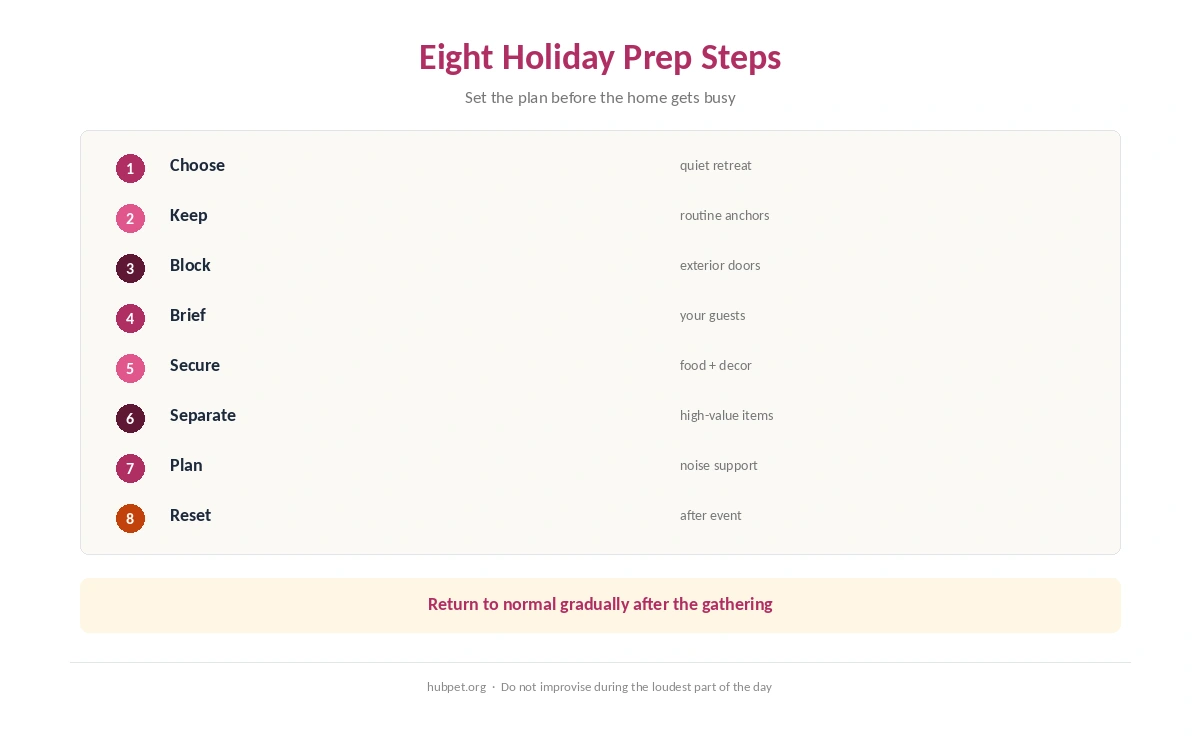
- Choose a quiet retreat before guests, deliveries, cooking, or decorations increase household traffic.
- Keep feeding, toileting, walks, play, and sleep anchor points as familiar as practical.
- Use a gate or closed door to keep the pet away from repeated exterior-door openings.
- Ask guests to let the pet approach voluntarily instead of reaching into hiding places.
- Keep unsafe foods, trash, medications, cords, candles, and decorations inaccessible.
- Separate pets around high-value food or chews when competition is possible.
- Plan noise management before fireworks, music, or parties begin.
- After the event, return to the normal routine instead of adding more stimulation.
Arrival routines can matter as much as the party itself. For dogs that react to the bell or visitors, use reward-based doorbell training well before the event. A fearful dog may need more distance, so the fear-confidence guide is a better fit than repeated greetings.
For shy cats, let retreat remain voluntary. The shy-cat support guide explains why hiding should not be treated as defiance. In multi-pet homes, use separate resources and routes if extra people make competition more likely.
Keep Holiday Safety Separate from Holiday Socializing
Stress reduction also means preventing emergencies that add more disruption. Keep known unsafe foods away from pets using the guides to foods toxic to dogs and foods toxic to cats. Also review toxic houseplants before adding seasonal greenery.
If a pet travels for the holiday, do not introduce the carrier or car at the last minute. The carrier introduction guide and cat car-travel guide use gradual preparation rather than forced exposure.
After a busy day, restore familiar cues. The calm evening routine and night-settling guide can help the household transition from activity to protected rest.
When to Call Your Vet
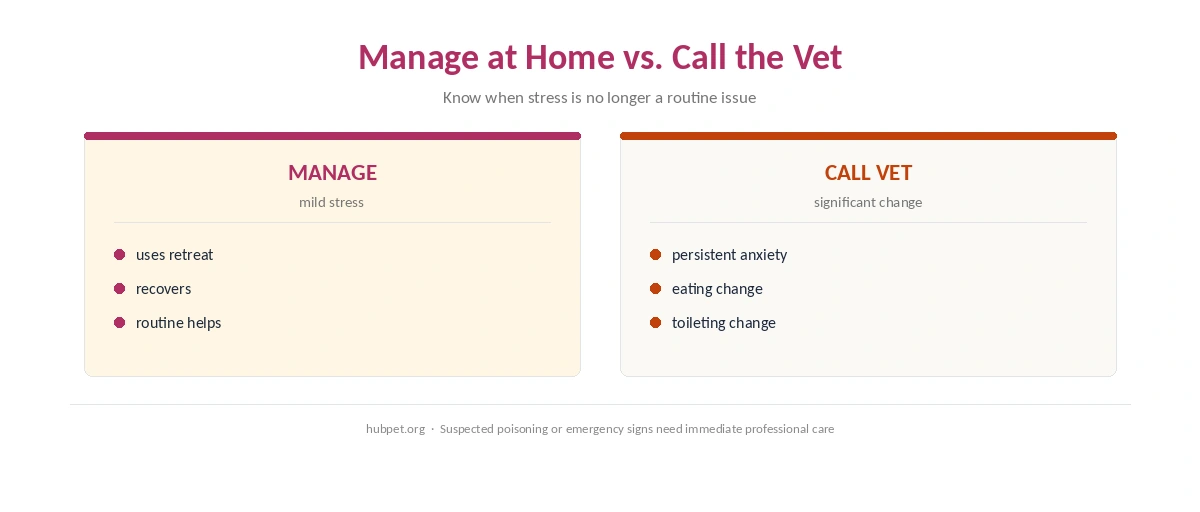
Contact your veterinarian if holiday stress is intense, persistent, or accompanied by a marked change in eating, drinking, toileting, sleep, or normal behavior. AAHA 2024–2026 holiday guidance recommends veterinary input when anxiety remains significant despite management. Do not give a pet a human medication or start a calming drug without veterinary direction.
Call promptly if the pet may have swallowed an unsafe food, plant, medication, decoration, or other harmful item. The pet first-aid checklist can help you prepare information, but it does not replace professional advice.
Go now for collapse, serious breathing difficulty, a seizure, unresponsiveness, suspected heatstroke, or another emergency sign. Use the pet emergency-sign guide while arranging immediate care.
How We Research
HubPet reviewed these sources on October 11, 2026: the AAHA Thanksgiving safety guide, updated September 24, 2026, the AAHA holiday-party guide, 2024, and current AAHA travel guidance. Read more about our research process.
Not if the pet is worried. Let the animal approach voluntarily and keep a quiet retreat available.
Reduce noise and traffic, protect routine, provide a retreat, and prevent repeated door and food hazards.
Keep important anchor points recognizable when practical, even if the exact schedule shifts.
Do not pull the pet out. Protect the retreat and allow voluntary re-entry into the household activity.
Seek veterinary advice for intense or persistent anxiety, major behavior changes, or changes in normal eating, drinking, toileting, or sleep.
The Bottom Line on How to Reduce Stress During Holidays with Pets
How to reduce stress during holidays with pets is mostly preparation: protect a retreat, preserve familiar anchors, control doors and hazards, and let social contact stay voluntary. If anxiety becomes intense or normal behavior changes sharply, contact your veterinarian rather than trying to push the pet through the event.