
This article is general information, not veterinary advice. If your pet seems unwell, is in pain or may have eaten something harmful, contact your vet or an animal poison control line right away. Read our vet disclaimer.
How to tell if your cat seems stressed starts with changes from normal. Watch posture, hiding, activity, appetite, grooming, litter box use, and social behavior together. AAHA/AAFP describes crouching, hiding, freezing or fleeing, rotated ears, dilated pupils, vocalization, and body tension as fear or stress signs (AAHA/AAFP, 2021). AAHA also lists eating changes, litter box changes, excessive grooming, withdrawal, and lethargy among anxiety clues (AAHA, 2026).
How to Tell If Your Cat Is Stressed: Watch for a Change From Normal
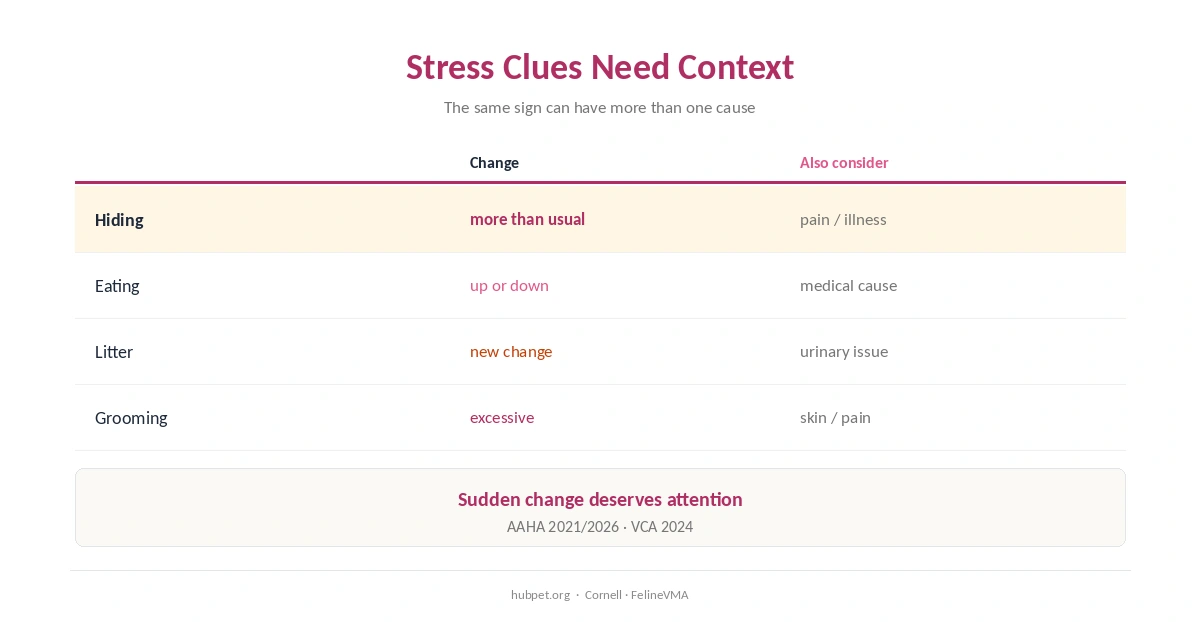
How to tell if your cat shows stressed behavior depends on comparison with that cat’s normal routine. AAHA notes that cats differ in resilience (AAHA, 2026). A shift in regular behavior can matter even when it looks subtle (AAHA, 2026). VCA warns that illness can cause many of the same changes (VCA, 2024). Those overlaps include hiding, appetite changes, litter box changes, altered grooming, and reduced activity (VCA, 2024).
| What you notice | Can fit stress | Also rule out |
|---|---|---|
| More hiding or withdrawal | Yes | Pain or illness can also cause withdrawal |
| Eating less or more | Yes | Medical causes need veterinary assessment |
| Litter box change | Yes | Urinary or gastrointestinal disease |
| Overgrooming | Yes | Skin disease, pain, or other medical causes |
| Crouched or tense posture | Yes | Fear, stress, pain, or illness |
How to Tell If Your Cat Is Stressed From Body Language
AAHA/AAFP’s 2021 guidance describes several body-language clues. A stressed cat may crouch, flatten the body, rotate the ears back, dilate the pupils, hide, freeze, flee, hiss, growl, yowl, or swish the tail (AAHA/AAFP, 2021). Context still matters. For example, purring does not always mean a cat is happy. Read the whole body and situation rather than one sound.
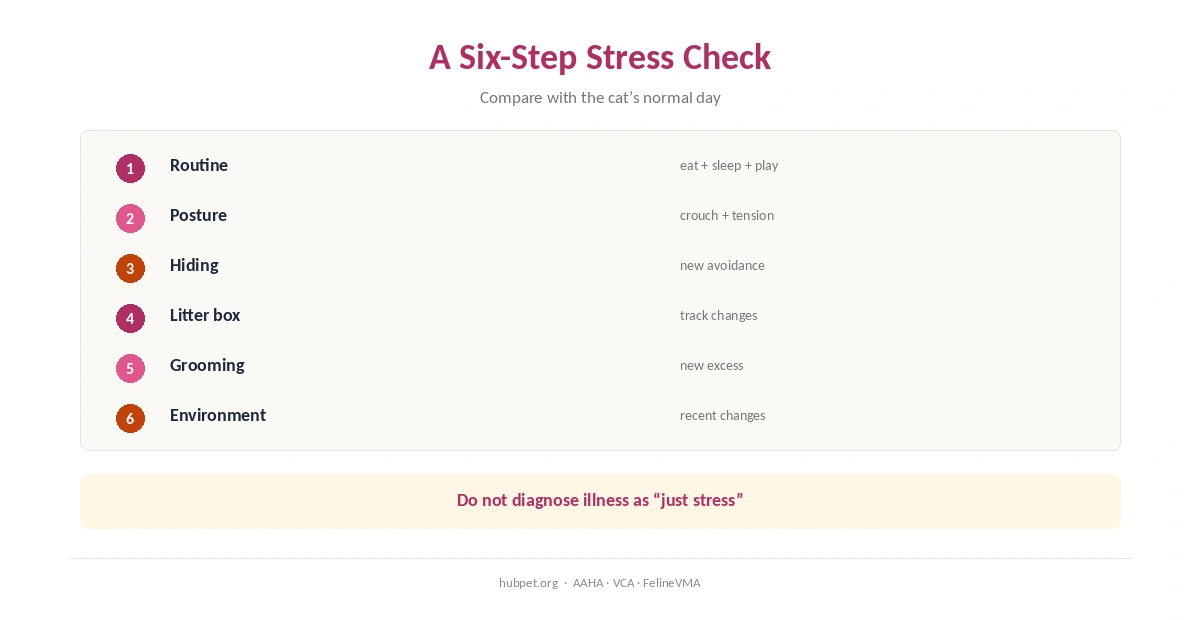
- Compare today with your cat’s usual appetite, sleep, play, grooming, and social routine.
- Notice posture and movement: crouching, tension, freezing, fleeing, or unusually low activity can matter.
- Watch whether your cat hides longer or avoids people, pets, rooms, or resources that were previously comfortable.
- Track litter box use and changes in urine or stool rather than labeling every change as behavioral.
- Look for repetitive grooming, scratching, or other self-directed behavior that is new or increasing.
- Write down recent environmental changes such as visitors, construction, schedule changes, or conflict with another pet.
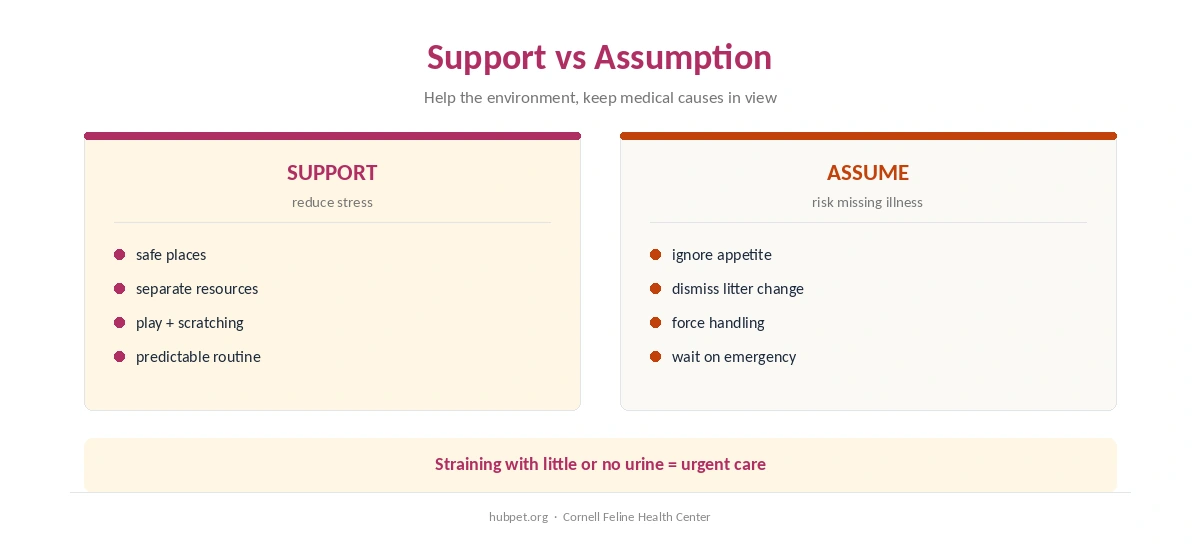
Environmental needs matter because FelineVMA’s 2013 AAFP/ISFM guidelines link unmet needs with stress and unwanted behavior. The framework includes a safe place and separated key resources. It also includes play, predatory opportunities, predictable positive human interaction, and respect for the cat’s senses (AAFP/ISFM, 2013). The daily cat care checklist can help you notice whether those basics stay consistent.
For normal outlets, provide scratching areas instead of suppressing the behavior. See why cats scratch furniture and how to protect a sofa without punishing scratching.
Low-stress handling matters too. Brushing a cat without stress and trimming cat nails safely both use gradual, choice-based handling rather than restraint battles.
Stress, Environment, and Litter Box Changes
Cornell says stress is an important factor in feline idiopathic cystitis (Cornell Feline Health Center, accessed 2026). Environmental enrichment and modification can reduce stress and may reduce the severity or frequency of episodes in affected cats (Cornell, accessed 2026). Still, stress does not explain every litter box change. Repeated straining with little or no urine needs urgent veterinary assessment because urinary obstruction can be life-threatening (Cornell, accessed 2026). For a related behavior guide, see why Cats Hate Water.
When to Call Your Vet
Call your veterinarian when behavior changes are sudden or persistent (VCA, 2024; AAHA, 2026). Also call when changes come with reduced appetite, lethargy, vomiting, diarrhea, breathing changes, pain, or marked litter box changes (VCA, 2024; AAHA, 2026). Go now for repeated straining with little or no urine, trouble breathing, collapse, a seizure, or another sign in pet emergency signs (Cornell, accessed 2026). Stress can look like illness, and illness can look like stress.
How to tell if your cat seems stressed also means checking the home setup. Home setup also affects baseline stress. Pet-proof your home covers physical hazards. The companion article do indoor cats need less care explains why indoor safety still requires enrichment and resources.
How We Research
HubPet uses veterinary and feline-welfare sources rather than personal anecdotes. We read the following on October 11, 2026: AAHA Cat Anxiety, updated 2026; AAHA/AAFP Feline Life Stage Guidelines, 2021; AAFP/ISFM Environmental Needs Guidelines, 2013. We also reviewed VCA illness guidance and Cornell urinary-disease guidance. See How We Research for our method.
How to Tell If Your Cat Is Stressed FAQ
No. Hiding can be normal, but a new or marked increase deserves context. Illness and pain can also cause withdrawal, so compare with the cat’s normal pattern.
Yes. Stress can contribute to behavior and urinary problems, but litter box changes can also be medical. Repeated straining or little to no urine is an emergency.
It can, but Cornell and veterinary sources advise ruling out medical causes first because skin disease, pain, and other conditions can also cause excessive grooming.
AAHA lists changes such as moving, new people or pets, altered routines, and unfamiliar experiences as possible stressors. Individual cats vary in how strongly they respond.
When the change is sudden, persistent, or comes with appetite, energy, breathing, pain, vomiting, diarrhea, or urinary changes, contact your veterinarian.
The Bottom Line
How to tell if your cat seems stressed means noticing a cluster of changes. Compare them with the cat’s normal behavior and environment. AAHA, FelineVMA, Cornell, and VCA all emphasize context and the overlap between stress and medical problems (2013–2026 guidance). Support environmental needs, but seek veterinary assessment when a change is sudden, persistent, or paired with physical signs.