
This article is general information, not veterinary advice. If your pet seems unwell, is in pain or may have eaten something harmful, contact your vet or an animal poison control line right away. Read our vet disclaimer.
A daily dog care checklist should cover water, food, bathroom access, exercise, enrichment, rest, and a quick change check. RSPCA calls for constant clean water and regular toilet opportunities (RSPCA, accessed 2026). It also advises suitable daily exercise, play, and checks for injury or illness. AAHA’s canine life-stage checklist adds enrichment, safety, dental care, and preventive care tailored to the individual dog (AAHA, 2019). Use this checklist as a repeatable observation routine. It does not replace your dog’s veterinary plan.
Daily Dog Care Checklist: 10 Things to Check
- Refresh clean drinking water and make sure the bowl is easy to reach.
- Feed the planned diet and notice any meaningful change in appetite.
- Provide regular bathroom opportunities and notice unusual changes.
- Give exercise appropriate for your dog’s age, health, and ability.
- Provide mental stimulation through sniffing, play, training, or safe chew activities.
- Give calm social contact while also protecting uninterrupted rest.
- Look over the coat, skin, paws, and body for a new injury or obvious problem.
- Notice changes in movement, breathing, energy, behavior, eating, or drinking.
- Keep the home secure and remove newly accessible hazards.
- Follow the home dental and grooming routine your veterinarian has recommended.
Daily Dog Care Checklist: Why the Basics Matter
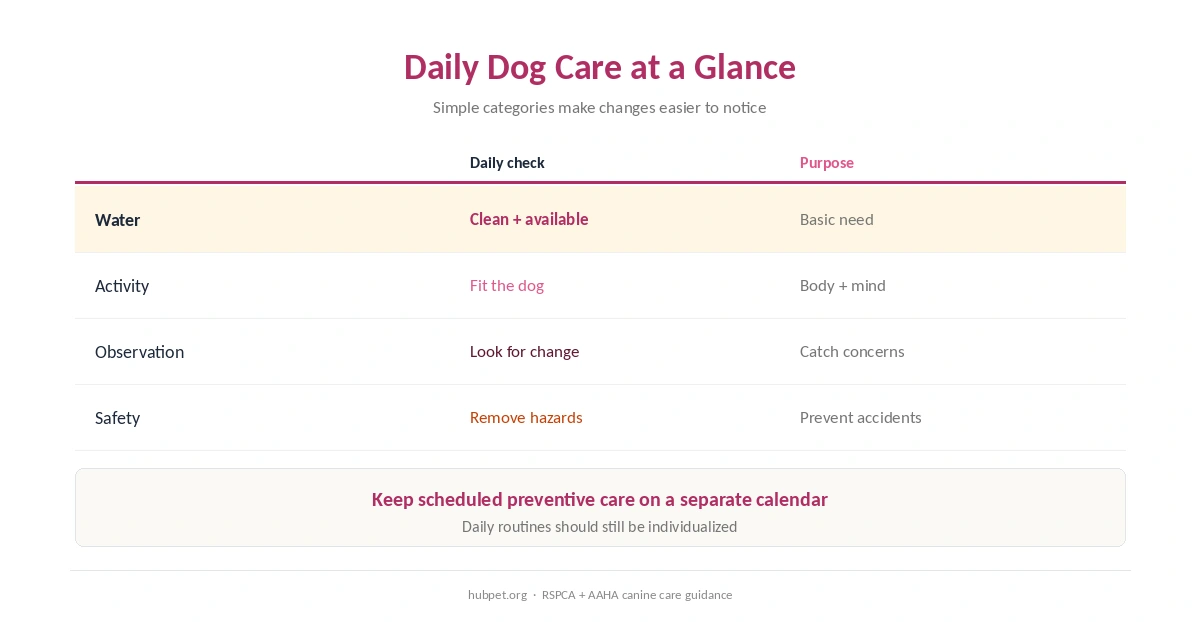
Water and nutrition are the first layer. RSPCA says dogs should have constant access to clean drinking water (RSPCA, accessed 2026). The diet should fit age, lifestyle, and health needs. A sudden change in eating or drinking can be a reason to contact a veterinarian. Avoid changing food amounts or medical diets from a generic checklist. Those decisions depend on the individual dog.
Movement and enrichment are the next layer. RSPCA advises regular exercise and opportunities to play (RSPCA, accessed 2026). AAHA recommends exercise and mental stimulation appropriate to age, breed, temperament, and health (AAHA, 2019). A daily dog care checklist should record whether the dog had a suitable chance to move and think. It should not impose one universal number of minutes.
| Daily area | Simple check | Source |
|---|---|---|
| Water | Clean water is continuously available | RSPCA 2026 access |
| Exercise + enrichment | Matched to the individual dog | AAHA 2019 |
| Health observation | Look for new injury or illness signs | RSPCA 2026 access |
| Home safety | Remove accessible hazards | RSPCA / AAHA |
What Belongs on the Calendar, Not the Daily List
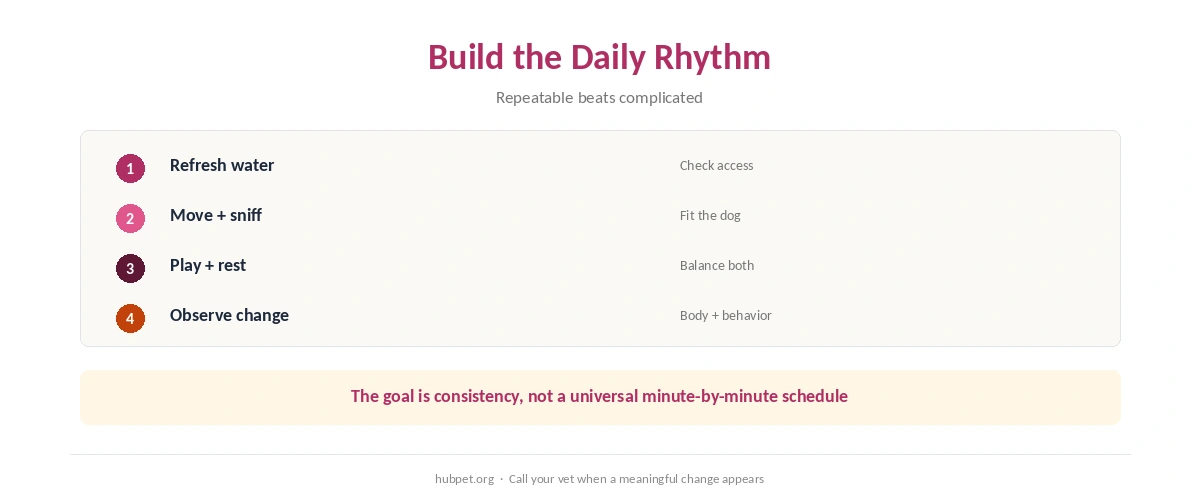
Some important care does not happen every day. AAHA and AVMA preventive guidance includes regular veterinary exams, vaccination decisions, parasite control, and dental assessment. These plans depend on life stage and risk (AAHA/AVMA guidance; AAHA, 2019). Keep those items on a separate calendar. Your daily routine then helps you notice changes early enough to discuss them at the right time. A daily dog care checklist should complement that calendar rather than duplicate it.
For household safety, pair this routine with pet-proofing your home. For coat care, use home dog grooming rather than forcing every grooming task into a daily schedule.
Keep toxic foods for dogs inaccessible. New owners can also organize the wider setup with the new pet owner checklist.
When to Call Your Vet
Contact your veterinarian when you notice a meaningful change in appetite, drinking, bathroom habits, movement, breathing, energy, or behavior (RSPCA, accessed 2026). Also call when your daily check finds pain or injury. Review signs a pet may be in pain if the change is subtle. Severe breathing difficulty, collapse, seizures, or suspected poisoning need urgent care. Use pet emergency signs as the urgent reference.
How We Research
HubPet uses published veterinary, welfare, behavior, and research sources rather than personal anecdotes. We read these sources on October 11, 2026: RSPCA dog diet and water guidance, RSPCA dog home and enrichment guidance, RSPCA daily dog health guidance, AAHA Canine Life Stage Checklist, 2019, AVMA pet-care resource. See How We Research for our method.
Daily Dog Care Checklist FAQ
Water, planned meals, bathroom access, suitable exercise, enrichment, rest, social contact, home safety, and a quick check for changes are practical daily categories supported by RSPCA and AAHA guidance.
There is no single duration for every dog. AAHA says exercise should fit age, breed, temperament, and individual needs; health can also change what is appropriate (AAHA, 2019).
No. Ear cleaning is not a universal daily task. Some dogs may never need routine cleaning, and your veterinarian can advise the right schedule (VCA, accessed 2026).
No. Coat, skin, age, health, and lifestyle change grooming needs. Use the schedule that fits the individual dog and professional guidance.
New changes in eating, drinking, movement, bathroom habits, breathing, energy, behavior, or signs of pain or injury warrant veterinary advice, especially when the change is sudden.
The Bottom Line
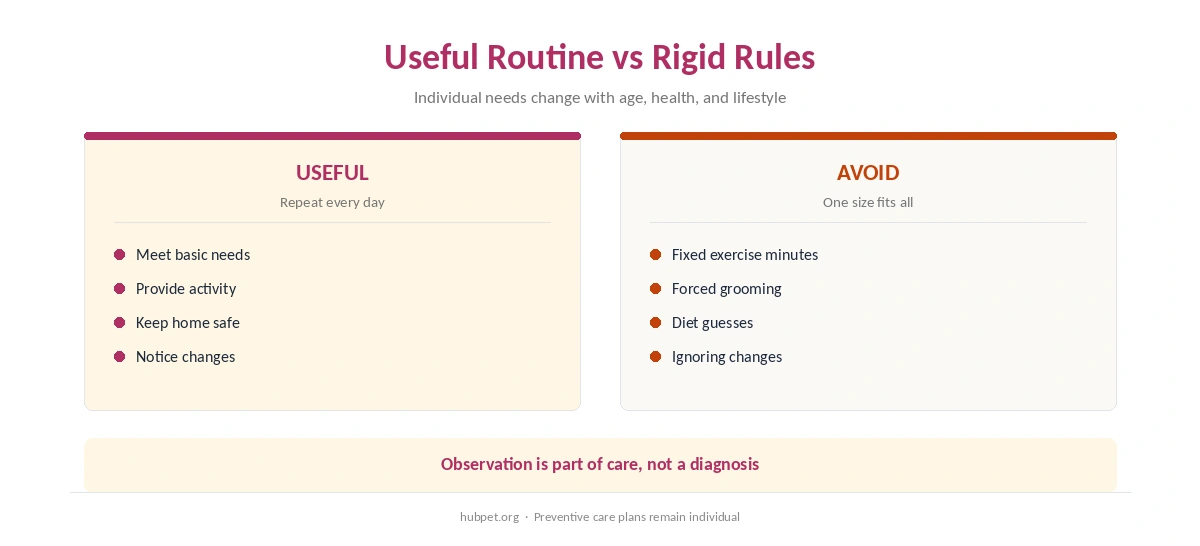
A daily dog care checklist works best as a consistent rhythm. Meet basic needs, provide suitable activity, and notice what is different today. Keep preventive veterinary care on its own calendar. Use the daily routine to spot changes early instead of forcing every dog into the same schedule. In hot weather, adjust the routine using the safety steps in heatstroke in dogs and cats. A related myths-and-facts page is is a Dry Nose a Sign of Illness in Dogs?.