
This article is general information, not veterinary advice. If your pet seems unwell, is in pain or may have eaten something harmful, contact your vet or an animal poison control line right away. Read our vet disclaimer.
First week with a new dog checklist items should focus on safety, routine, observation, and trust before ambitious training goals. AAHA advises keeping the first days calm, limiting visitors, monitoring eating and bathroom habits, and letting a new dog explore at their own pace (AAHA, 2026). ASPCA similarly recommends a dedicated safe space and patient adjustment (ASPCA, accessed 2026). For a related practical guide, see how to Build Trust With a Newly Adopted Dog.
Also, prepare the home before the dog gets full access. Use the broader new pet owner checklist for supplies and records, then use pet-proof your home and the pet-proofing checklist for hazards. A first week with a new dog checklist works best when the environment is already simple and predictable.
First Week with a New Dog Checklist: The Essential Tasks
- Set up a quiet resting area and let the dog choose when to use it (AAHA, 2026).
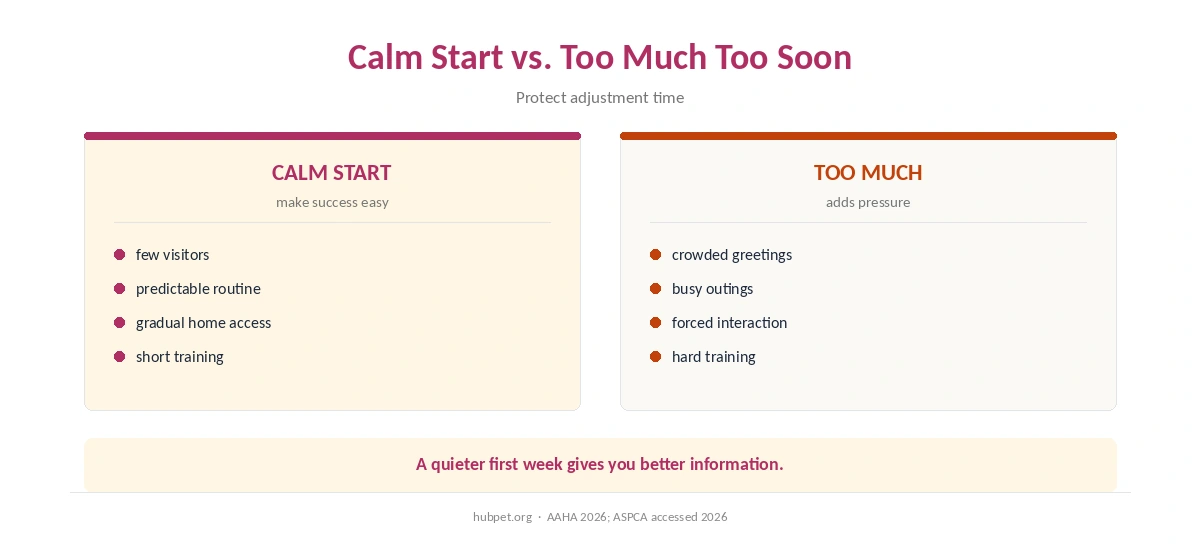
- Keep visitors and household excitement low during the first days (AAHA, 2026).
- Use a consistent schedule for meals, outdoor bathroom breaks, rest, and walks.
- Monitor eating, drinking, urination, bowel movements, and general energy so changes are easy to notice.
- Confirm identification and current contact details before relying on routine outings.
- Arrange veterinary care and bring available medical, vaccination, and medication records.
- Start house rules with management and rewards rather than punishment (AVSAB, 2021; reaffirmed 2025).
- Keep early training brief and easy; practice name response, calm handling, and simple household cues.
- Avoid forced greetings with people or other pets; let the dog gain confidence at their own pace (ASPCA, accessed 2026).
- Review the home daily for newly discovered chewing, escape, or access hazards.
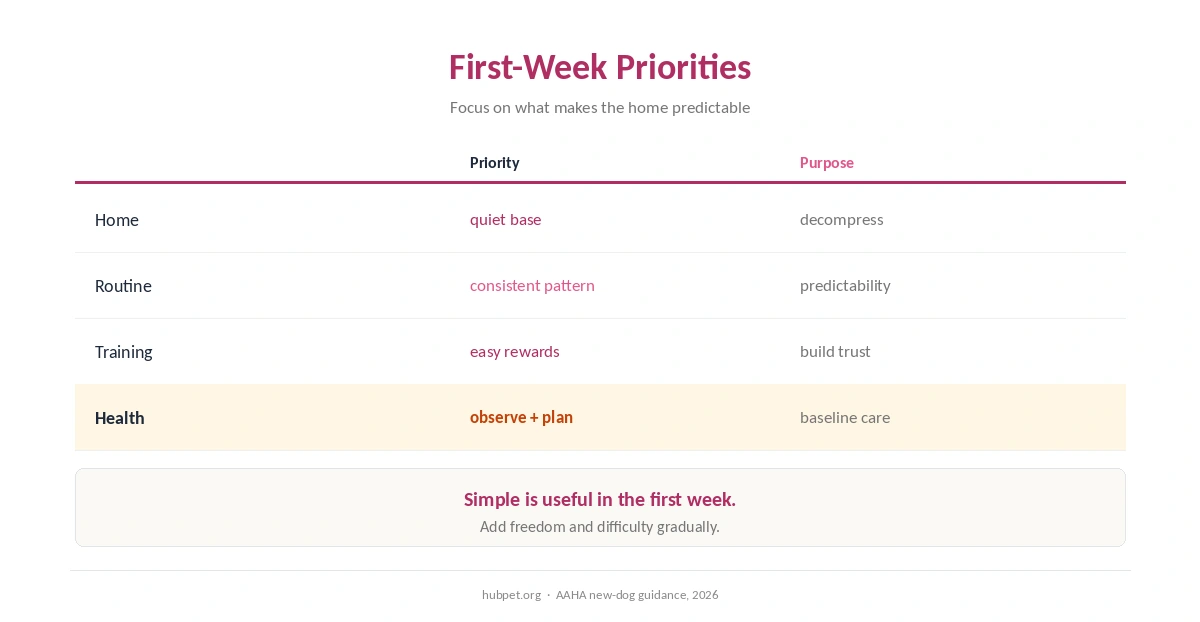
First Week with a New Dog Checklist: Build a Predictable Routine
Next, make the first week boring in a useful way. AAHA recommends a calm environment and consistent feeding and bathroom routines while the dog settles (AAHA, 2026). For daily basics, the daily dog care checklist can become the repeatable routine after this transition week. For a closer look at this part of daily care, see how to Support a Rescue Pet in the First Month.
| Area | First-week priority | Why it matters |
|---|---|---|
| Home | quiet base + safe access | reduces unnecessary pressure |
| Routine | predictable meals/rest/toilet trips | helps observation and learning |
| Training | brief reward-based practice | builds easy success |
| Health | records + veterinary plan | creates a care baseline |
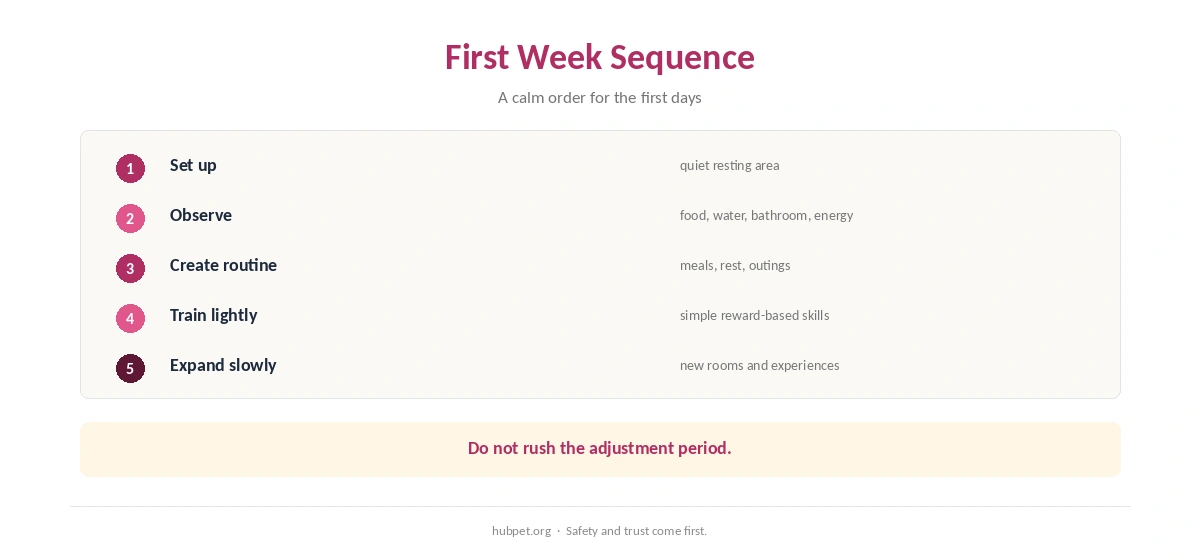
A first week with a new dog checklist should also set realistic training expectations. Use positive reinforcement and basic dog training at home for simple skills. However, do not crowd the week with difficult cues, busy outings, or repeated introductions before the dog has settled.
When to Call Your Vet During the First Week
Contact your veterinarian when you notice persistent changes in appetite, drinking, bathroom habits, energy, pain, vomiting, diarrhea, coughing, or another health concern; the exact cause cannot be judged from a checklist alone. If the dog has difficulty breathing, collapses, has severe bleeding, or shows another emergency sign, seek urgent veterinary care (AVMA, 2025) and use pet emergency signs. Keep toxic foods for dogs and toxic houseplants out of reach from day one.
How We Research
HubPet uses animal-health, welfare, and behavior sources rather than personal anecdotes. We read these sources on October 11, 2026: AAHA new dog checklist 2026, ASPCA adoption and first-week guidance, AVSAB humane training position, AVMA Pet First Aid 2025. See How We Research for our method.
First Week with a New Dog Checklist FAQ
AAHA advises keeping visitors to a minimum in the first days so the dog can settle without extra pressure (AAHA, 2026).
Yes, but keep it brief and easy. Focus on reward-based routines and simple skills rather than demanding performance (AVSAB, 2021/2025).
Give access gradually and supervise. ASPCA recommends a dedicated space and time to observe the new environment rather than forcing rapid exposure (accessed 2026).
Set up veterinary care early and bring all available records. Contact the clinic sooner if you notice a health concern.
Safety and predictability. A calm routine gives you time to learn the dog’s normal behavior before adding harder training or social demands.
The Bottom Line
A first week with a new dog checklist should make the dog’s world smaller, safer, and more predictable before it becomes bigger. Finally, use calm routines, reward-based learning, careful observation, and early veterinary planning as the foundation for the weeks ahead.