
This article is general information, not veterinary advice. If your pet seems unwell, is in pain or may have eaten something harmful, contact your vet or an animal poison control line right away. Read our vet disclaimer.
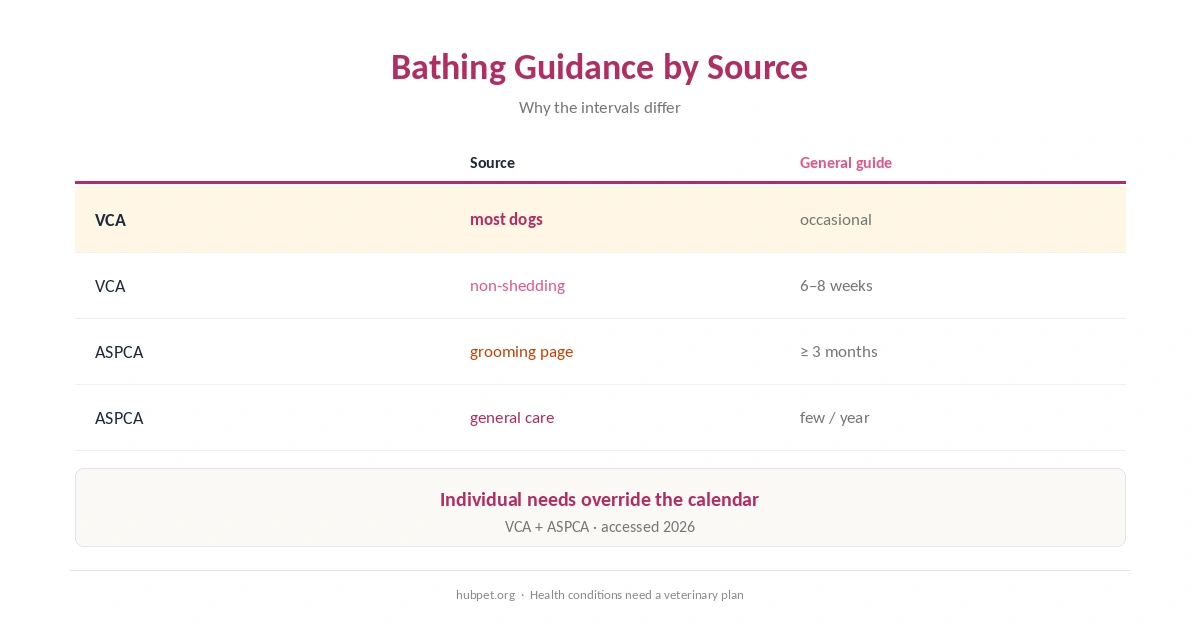
How often should you bathe a dog? There is no single interval for every healthy dog. VCA says most dogs need baths only occasionally, usually when the coat is dirty or develops an odor (VCA, accessed 2026). For healthy non-shedding dogs, VCA gives about every six to eight weeks as one example (VCA, accessed 2026). ASPCA’s grooming guidance says at least once every three months. Its general dog-care page says many dogs need only a few baths a year (ASPCA, accessed 2026).
How Often Should You Bathe a Dog? Use Coat, Lifestyle, and Skin
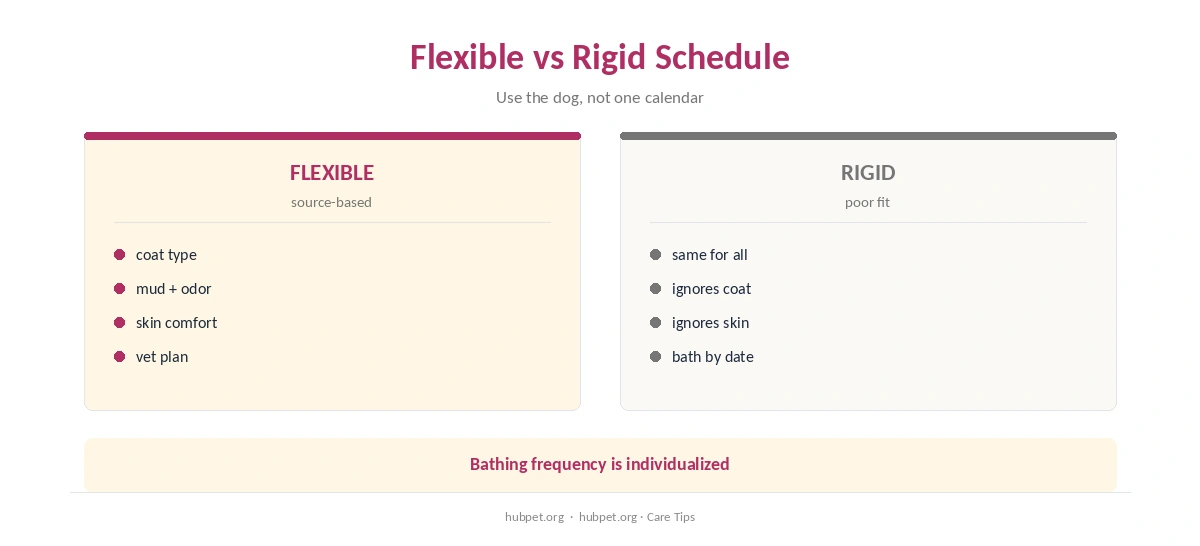
The safest answer to how often should you bathe a dog is to match the schedule to the individual dog. VCA says age, lifestyle, coat type, and underlying health status all affect bath frequency (VCA, accessed 2026). Therefore, a muddy active dog, a non-shedding coat, and a dog with veterinary skin treatment may all have different schedules.
| Source | General guidance | Important qualifier |
|---|---|---|
| VCA | Occasional; dirty or odorous coat | Non-shedding healthy dogs may be about every 6–8 weeks |
| ASPCA grooming | At least once every 3 months | Some dogs need more often because of outdoor activity or skin problems |
| ASPCA general care | Many dogs need only a few baths a year | Brush or remove mats before bathing |
| Veterinary plan | May be more frequent for skin disease | Follow the veterinarian’s specific bathing plan |
How Often Should You Bathe a Dog Without Overdoing It?
How often should you bathe a dog also depends on what the coat actually needs. Start with the coat rather than the calendar. If it is clean, comfortable, and free of an objectionable odor, a bath may not be due yet under VCA’s occasional-bathing approach (VCA, accessed 2026). If the dog gets muddy or rolls in something unpleasant, bathing sooner can make sense. The practical setup in how to bathe a dog without making a mess helps keep the bath calm and controlled.
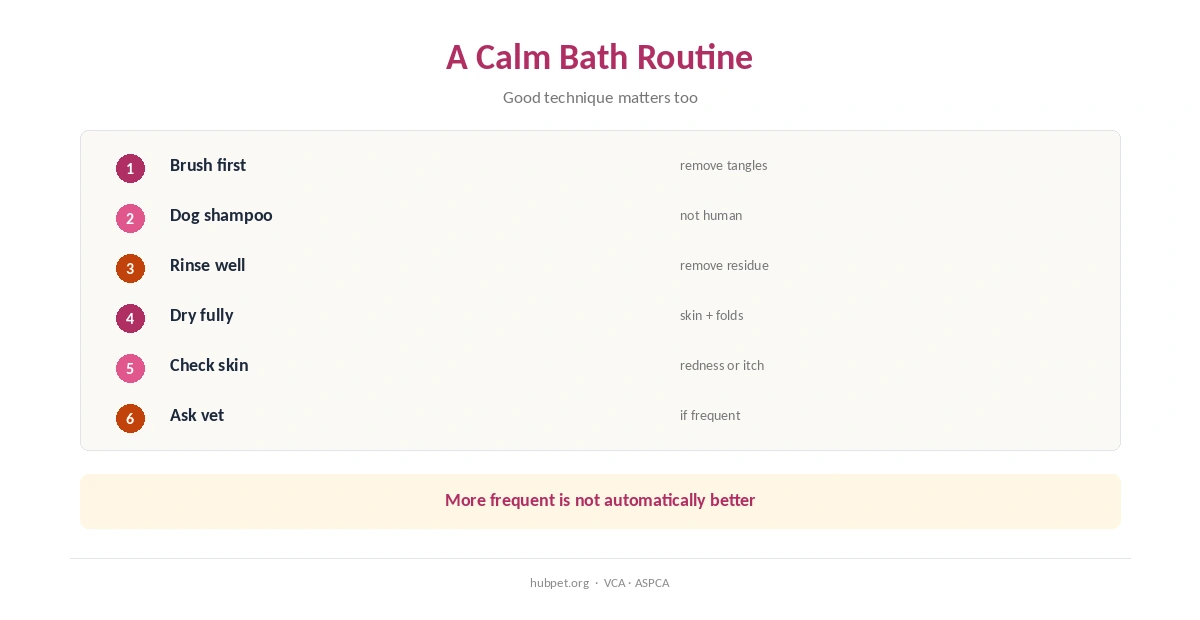
- Brush out loose hair and tangles before the bath so water does not tighten mats.
- Use a shampoo formulated for dogs rather than human shampoo, as VCA recommends.
- Rinse thoroughly so shampoo residue does not remain in the coat.
- Dry the coat and skin well, especially in folds or dense areas that stay damp.
- Watch for redness, itching, flakes, odor, or discomfort after bathing.
- If frequent bathing seems necessary, ask your veterinarian whether skin disease or a veterinary bathing plan is involved.
Bathing is only one part of coat care. Grooming a dog at home covers brushing and coat checks. Managing pet hair on furniture focuses on shedding in the home rather than adding baths. Also, the daily dog care checklist helps you notice skin or coat changes between baths.
When More Baths Are a Medical Plan
VCA says dogs with allergies or other skin conditions may need more frequent bathing as part of veterinary treatment (VCA, accessed 2026). That schedule can be very different from routine grooming. Do not copy a medicated-bath interval from another dog; the product, contact time, and frequency belong to the treating veterinarian’s plan.
Routine grooming also includes nails and ears, but those tasks have their own intervals. Use trimming a dog’s nails at home for nail timing and cleaning dog ears safely for ear care. More bathing does not replace either task.
When to Call Your Vet
Contact your veterinarian if bathing is followed by persistent redness, itching, pain, sores, worsening odor, or other skin changes (VCA, accessed 2026). Also ask before increasing bath frequency because of recurrent skin or coat problems. If your dog seems painful during handling, compare the change with signs your pet is in pain and arrange veterinary assessment.
How We Research
HubPet uses veterinary, welfare, and behavior sources rather than personal anecdotes. We read these sources on October 11, 2026: VCA Grooming and Coat Care for Your Dog, ASPCA Dog Grooming Tips, ASPCA General Dog Care. See How We Research for our method.
How Often Should You Bathe a Dog FAQ
There is no single rule for every dog. Healthy routine bathing is usually less frequent, while some veterinary skin plans can require much more frequent baths.
VCA says most dogs need bathing occasionally when the coat is dirty or odorous. It gives about every six to eight weeks as an example for healthy non-shedding dogs.
ASPCA’s grooming page says at least once every three months, while its general-care page says many dogs need only a few baths a year. Both emphasize individual needs.
Bathing can be part of grooming, but shedding is better managed with coat-appropriate brushing and household hair control rather than simply adding more baths.
Ask when your dog needs frequent baths, has persistent itching, redness, sores, odor, or has a diagnosed skin condition that requires a specific bathing plan.
The Bottom Line
How often should you bathe a dog? Use the dog in front of you, not a universal calendar. VCA and ASPCA give different general intervals because coat, lifestyle, and skin health change the answer. For a healthy dog, bathe when the coat needs it and ask your veterinarian before turning frequent bathing into a routine (accessed 2026).