
This article is general information, not veterinary advice. If your pet seems unwell, is in pain or may have eaten something harmful, contact your vet or an animal poison control line right away. Read our vet disclaimer.
How to choose the right place for a litter box comes down to quiet access, escape options, and separation from food, water, and loud appliances. AAHA recommends multiple useful locations in multi-cat homes rather than clustering every box in one spot (AAHA/AAFP, 2021; AAHA, updated 2026).
How to Choose the Right Place for a Litter Box in a Quiet Area
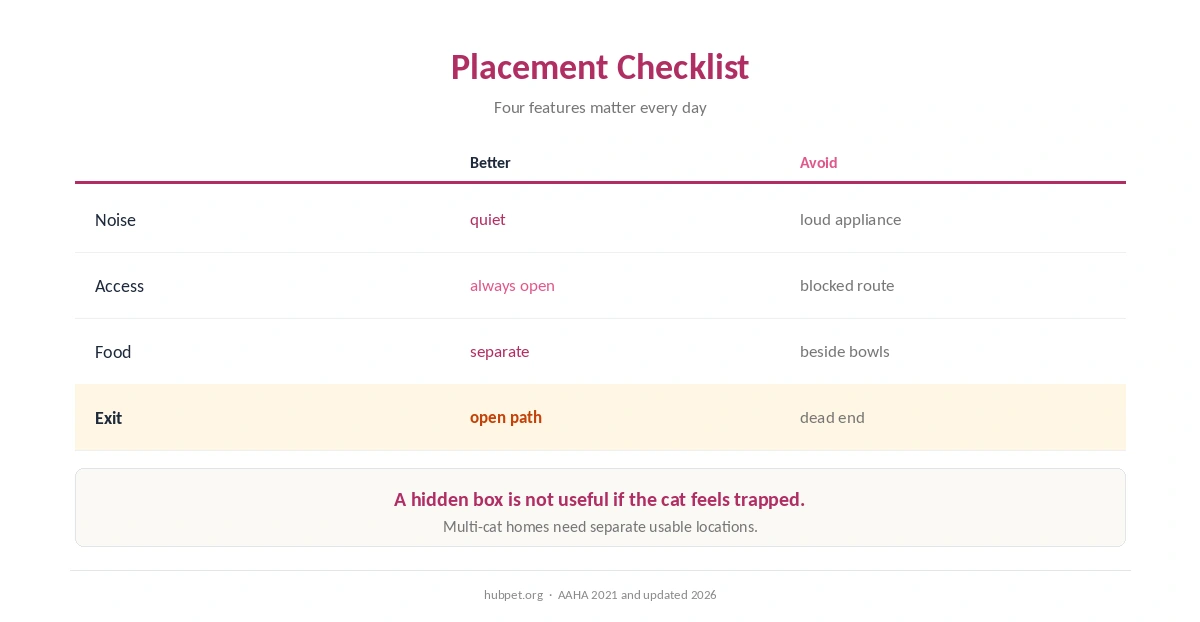
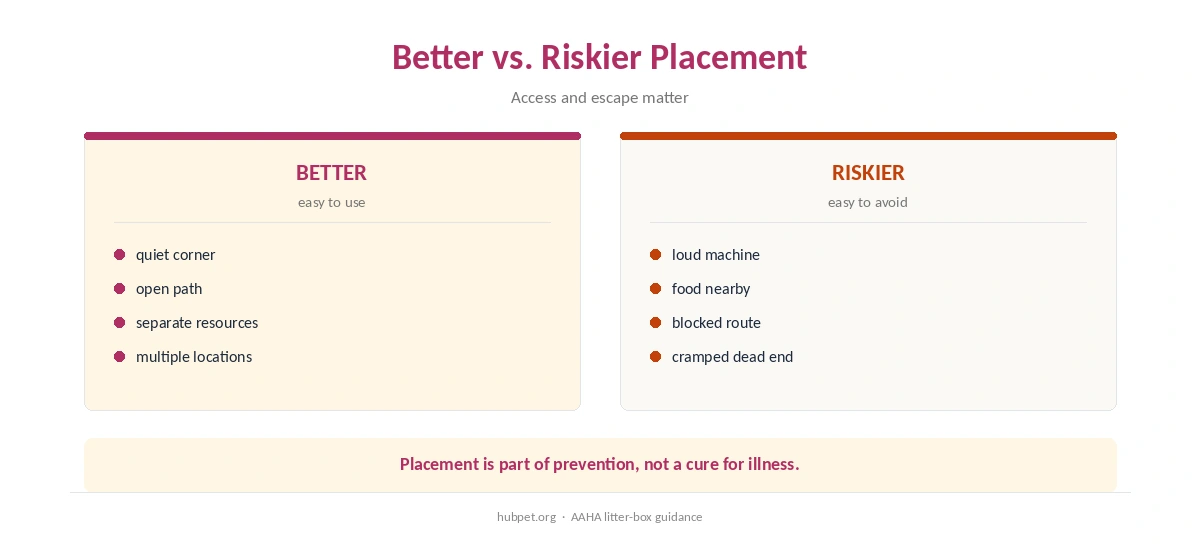
First, choose a location the cat can reach easily at any time. AAHA says boxes should be in quiet, accessible areas and not beside loud appliances, food, water, busy traffic, or cramped corners (updated 2026). The 2021 AAHA/AAFP guidelines also emphasize an escape route when possible.
The setup should complement daily cat care and odor-control routines. Keep those tasks easy enough to repeat every day. If the cat already avoids the box, use the litter-box problem guide because a location change alone does not rule out medical causes.
| Location feature | Better choice | Avoid |
|---|---|---|
| Noise | quiet low-traffic area | washer, dryer, loud appliance |
| Access | easy route at all times | closed rooms or blocked paths |
| Food and water | separate area | right beside bowls |
| Exit options | open path away | cramped dead end |
How to Choose the Right Place for a Litter Box in a Multi-Cat Home
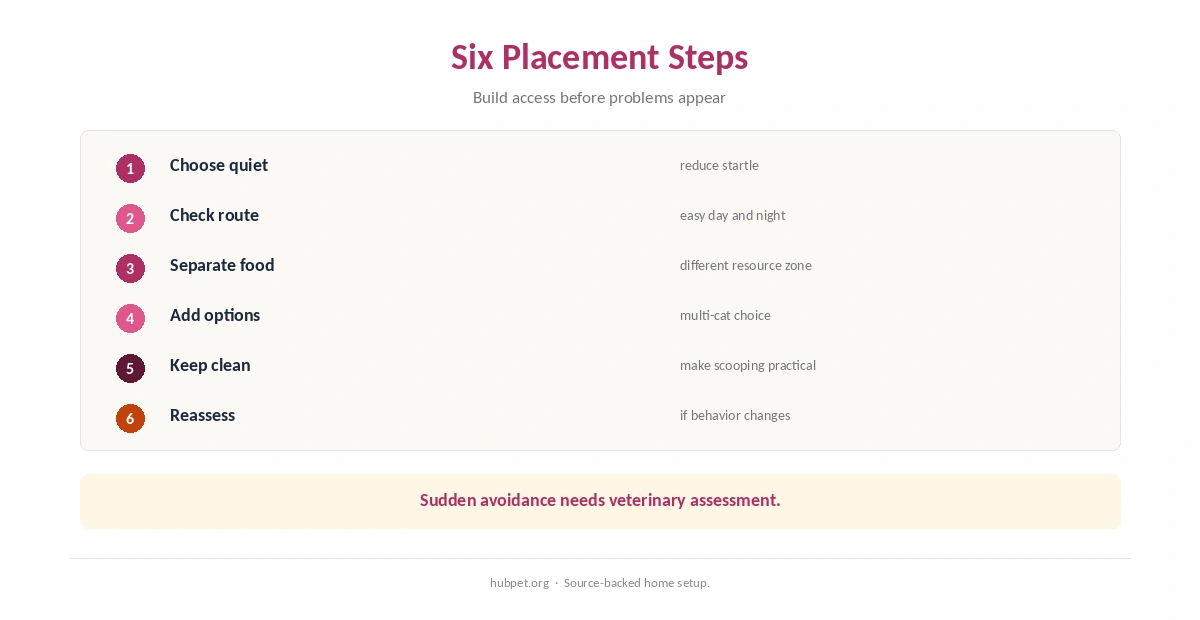
Next, spread boxes across useful locations instead of placing them side by side. AAHA recommends one box per cat plus one extra and says separate locations can reduce competition (AAHA, 2026). Feline environmental guidance also calls for multiple, separated key resources in multi-cat homes (Feline guidance accessed 2026).
- Give each cat a route to a box that another pet cannot easily block.
- Use more than one floor when cats regularly spend time on different levels, while avoiding stairs for cats with mobility limits (AAHA/AAFP, 2021).
- Keep at least one option away from household bottlenecks and doorways.
- Place the box where cleaning is realistic, because odor control depends on regular scooping.
- Pair placement with safe resting areas rather than putting every resource in one cluster.
- If a new cat is arriving, use the first-week cat checklist before expanding access.
For a cat showing tension, compare signs of cat stress and indoor environmental needs. Social tension can make a technically accessible box feel unsafe. If another cat is part of the problem, the two-cat introduction guide explains how to reduce pressure during introductions.
Also keep the surrounding route safe. The pet-proofing checklist helps remove cords, unstable objects, and other hazards from everyday pathways. Meanwhile, the cat zoomies guide is useful for keeping high-activity routes away from fragile litter setups.
How to choose the right place for a litter box is especially important during the first days in a new home. Use the first-week new-cat checklist and the general new-pet checklist to set up resources before the cat explores widely.
A practical answer to how to choose the right place for a litter box is to check the route at the cat’s level. The box should remain reachable without squeezing past another pet or a noisy household bottleneck.
When to Call Your Vet About Litter Box Changes
How to choose the right place for a litter box cannot be separated from health when elimination changes suddenly. A good location cannot fix pain or urinary disease. AAHA says a new house-soiling problem deserves veterinary assessment, and repeated straining with little or no urine can be an emergency. Seek veterinary care rather than repeatedly moving the box when the pattern changes suddenly.
How We Research
HubPet uses veterinary, welfare, and behavior sources rather than personal anecdotes. We read these sources on October 11, 2026: AAHA litter-box guidance, updated 2026, AAHA/AAFP litter-box considerations, 2021, feline environmental-needs guidance. See How We Research for our method.
How to Choose the Right Place for a Litter Box FAQ
No. AAHA and feline environmental guidance recommend separating toileting areas from food and water.
Only if it stays quiet and easy to access. AAHA specifically warns against placement next to loud appliances (updated 2026).
Separate useful locations are better in multi-cat homes because they reduce competition and provide real choice (AAHA/AAFP, 2021).
AAHA recommends one box per cat plus one extra (updated 2026).
Arrange veterinary assessment. New house-soiling can have medical as well as environmental causes (AAHA, 2026).
The Bottom Line
How to choose the right place for a litter box means making toileting quiet, easy to reach, and hard for another pet to block. Separate the box from food and noise, distribute boxes across useful locations, and investigate sudden avoidance with your veterinarian.