
This article is general information, not veterinary advice. If your pet seems unwell, is in pain or may have eaten something harmful, contact your vet or an animal poison control line right away. Read our vet disclaimer.
First week with a new cat checklist planning should focus on safety, a small predictable home base, quiet routines, and an early veterinary plan. ASPCA advises a dedicated safe space and patience during the first days (accessed 2026). FelineVMA recommends veterinary assessment as soon as possible for a new cat, especially before mixing with resident cats (accessed 2026).
First Week with a New Cat Checklist: Before and on Day One
First, prepare one quiet transition room or area with separate food, water, litter, scratching, resting, and hiding options. Feline environmental guidance emphasizes separated resources and safe places, while AAHA recommends a quiet, accessible litter box away from food and water (AAHA, 2024; FelineVMA guidance accessed 2026).
Use the general new-pet checklist for supplies, then make the home cat-specific with the pet-proofing checklist. This keeps the first setup focused on safe access and predictable resources. A useful companion care page is how to Help a Newly Adopted Cat Feel Safe at Home.
Before exploration expands, remove hazards from toxic houseplants and foods toxic to cats. That work matters more than adding extra activities during the first days.
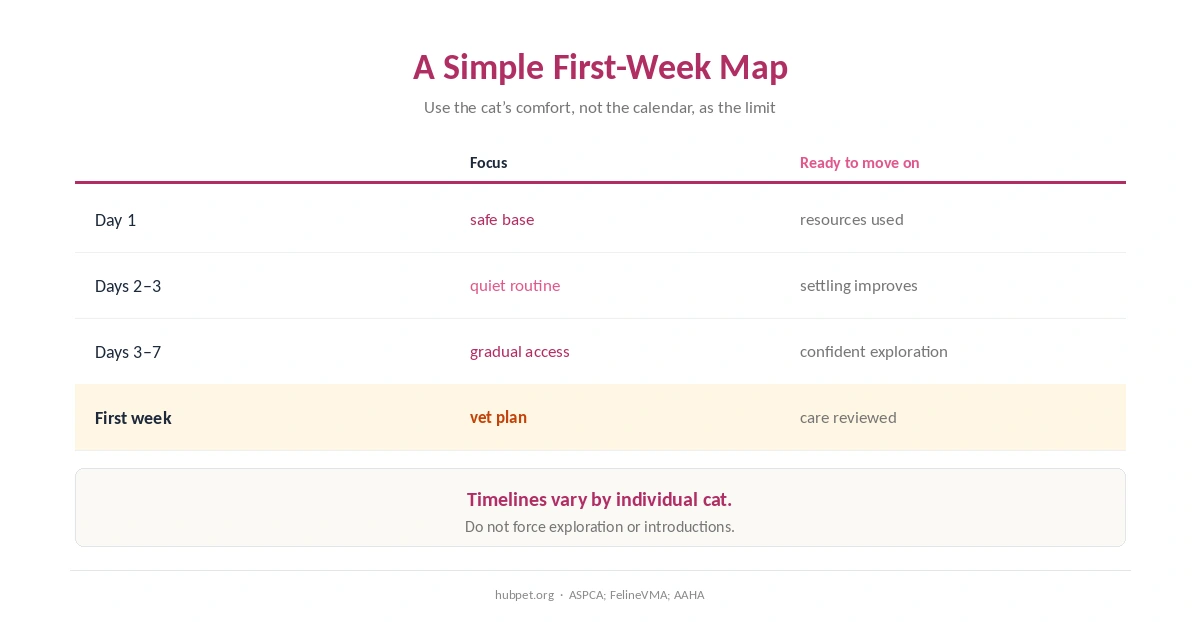
| Time | Priority | What success looks like |
|---|---|---|
| Day 1 | safe room + basic resources | cat can hide, eat, drink, and toilet privately |
| Days 2–3 | quiet routine | cat chooses when to approach |
| Days 3–7 | gradual expansion | cat explores without being pushed |
| First week | veterinary plan | health history and preventive care reviewed |
First Week with a New Cat Checklist: Days Two Through Seven
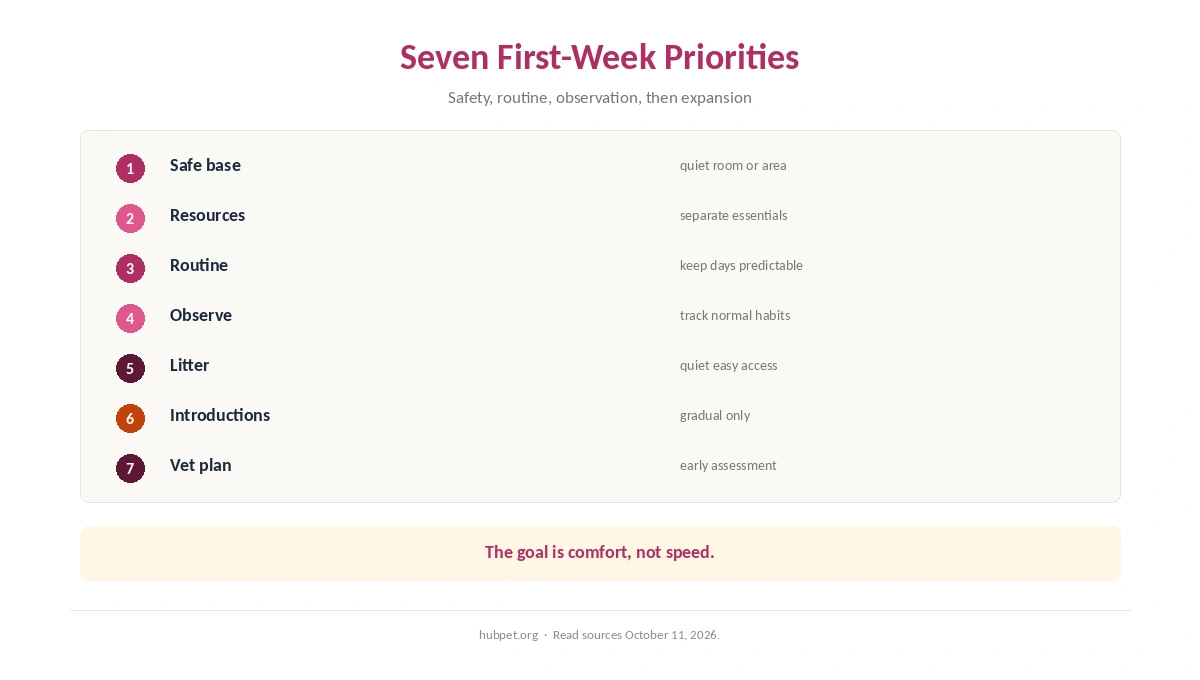
- Keep meals, litter care, play, and quiet time predictable instead of filling the week with visitors.
- Let the cat approach people voluntarily; ASPCA advises against forcing interaction during the first days (accessed 2026).
- Use a calm-space setup so hiding and resting remain available.
- Follow the daily cat care checklist to notice changes in appetite, water intake, litter use, grooming, and activity.
- Choose a quiet litter-box location before opening more rooms.
- If another cat lives in the home, use the two-cat introduction plan rather than direct contact.
- If a dog lives there, use the dog-to-cat introduction plan with separation and barriers.
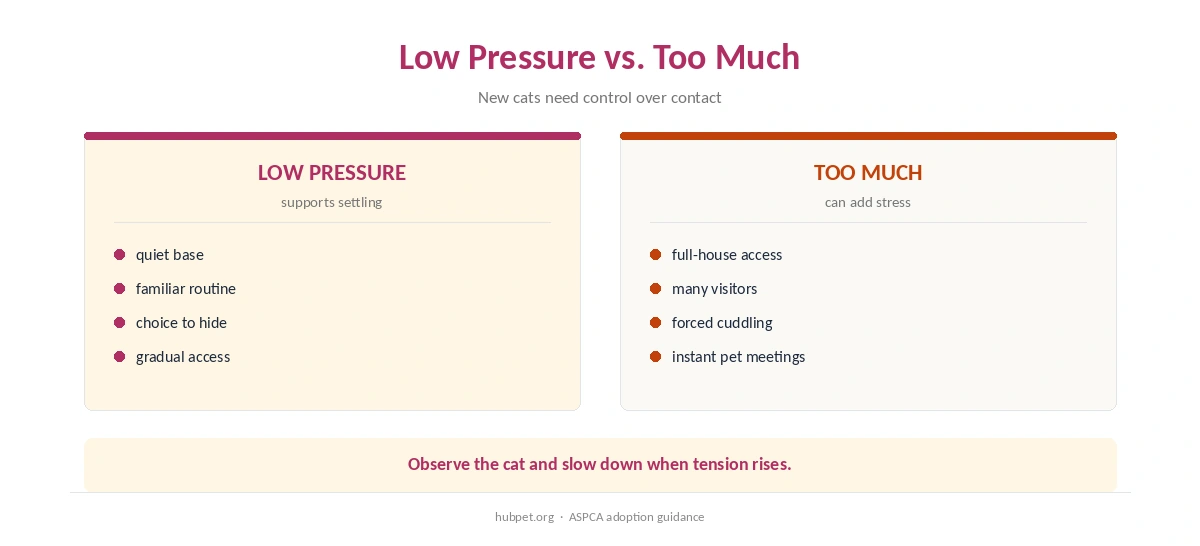
Meanwhile, watch behavior without treating every hiding spell as a problem. The cat stress guide explains common stress signals and why sudden or persistent changes can overlap with illness. For grooming later, cat nail trimming and low-stress brushing should be introduced gradually rather than packed into the first day.
A first week with a new cat checklist should also protect social introductions from moving too fast. Use the two-cat introduction plan for resident cats and the dog-to-cat plan when a dog lives in the home.
The first week with a new cat checklist is working when the cat can use core resources and explore without being pushed. Progress can be slow and still be appropriate.
When to Call Your Vet During the First Week
FelineVMA caregiver guidance says a new cat should see a veterinarian as soon as possible. When resident cats are present, it recommends an assessment even before the new cat comes home (accessed 2026). For kittens, AAHA advises the first veterinary visit within the first week at home or sooner for concerning signs (AAHA, 2024).
Contact your veterinarian sooner if the cat seems ill, stops eating, has repeated vomiting or diarrhea, has breathing trouble, or shows unusual lethargy. For severe breathing difficulty, collapse, seizures, major bleeding, suspected poisoning, or other urgent signs, use the emergency-sign guide and seek immediate care.
How We Research
HubPet uses veterinary, welfare, and behavior sources rather than personal anecdotes. We read these sources on October 11, 2026: ASPCA adoption tips, FelineVMA caregiver education, AAHA new-cat guidance, AAHA kitten health care guide, 2024. See How We Research for our method.
First Week with a New Cat Checklist FAQ
A small, quiet transition area is often easier to manage. Expand access gradually as the cat becomes comfortable.
No. ASPCA recommends giving a new pet time and space and not forcing interaction during the first days (accessed 2026).
FelineVMA says as soon as possible; for kittens, AAHA advises the first visit within the first week at home or sooner if the kitten seems sick (AAHA, 2024).
No. Use species-appropriate gradual introductions with separate spaces and barriers.
Watch eating, drinking, litter use, grooming, activity, and comfort with the environment so changes are easier to notice.
The Bottom Line
A first week with a new cat checklist should reduce pressure rather than add activities. Start small, keep resources predictable, arrange veterinary care, and let the cat set the pace for exploration and social contact.