
This article is general information, not veterinary advice. If your pet seems unwell, is in pain or may have eaten something harmful, contact your vet or an animal poison control line right away. Read our vet disclaimer.
How to support a pet after surgery at home begins with the discharge instructions from the veterinary team that performed the procedure. VCA post-operative guidance updated in 2025 and Merck Veterinary Manual recovery guidance reviewed in 2025 both emphasize following the individual plan. Therefore, generic internet advice should never override the surgeon’s restrictions, wound-care directions, medication label, or recheck schedule.
How to Support a Pet After Surgery at Home: Set Up Recovery First
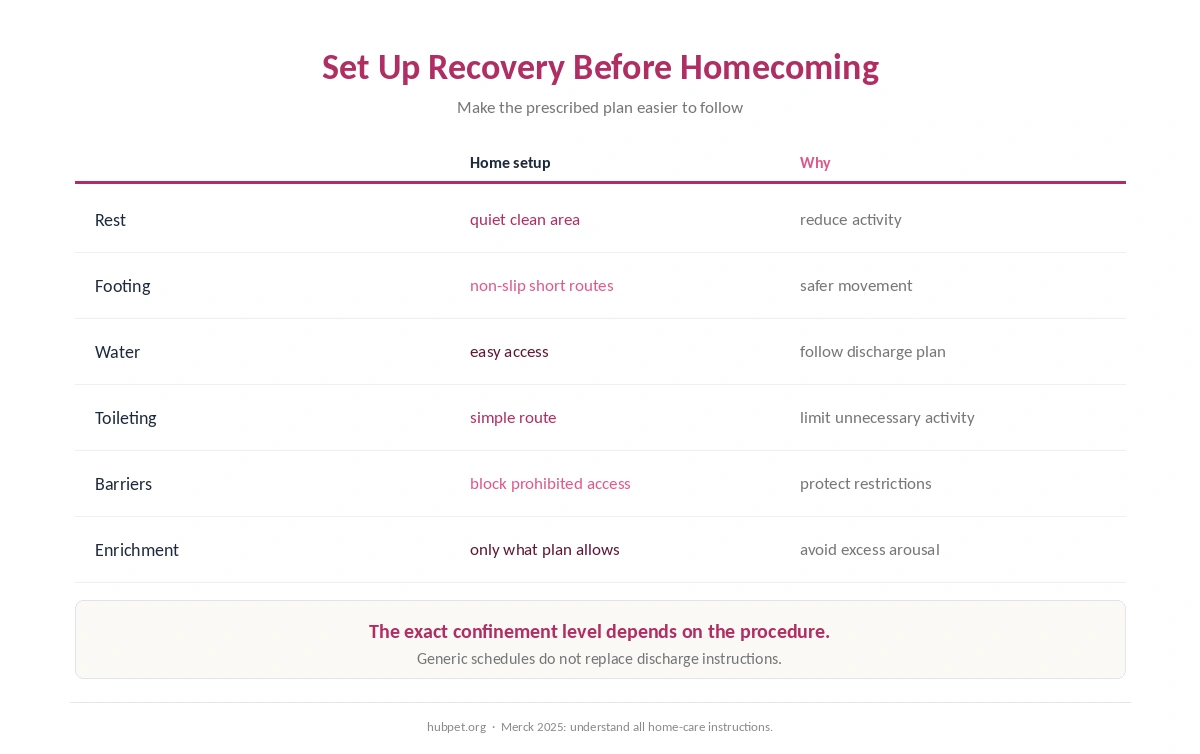
Before the pet comes home, prepare a quiet, clean recovery area with easy access to water and toileting. Merck’s 2025 recovery guidance notes that some pets need activity restriction, a crate, or a small room. However, the exact level of confinement depends on the procedure. Use the calm-space guide to reduce traffic and interruptions.
Remove opportunities for running, jumping, or rough play if the veterinary team has restricted them. The pet-proofing guide can help you block unsafe routes. If a crate forms part of the prescribed plan, use crate-comfort steps rather than turning confinement into punishment.
Keep household activity predictable. The predictable-routines guide can help with meals, toileting, and rest. In addition, balancing play and rest offers low-key ideas for reducing arousal while activity is limited. Any enrichment still needs to fit the veterinary team’s restrictions.
How to Support a Pet After Surgery at Home: Follow the Written Plan
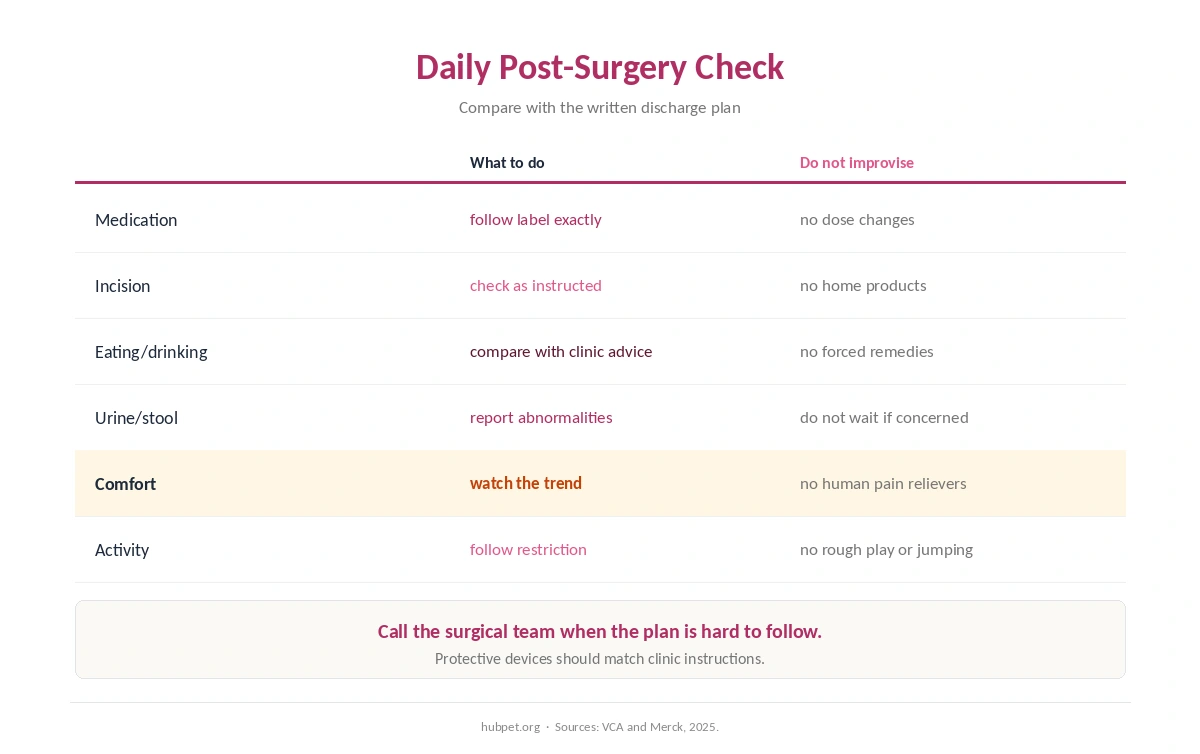
How to support a pet after surgery at home is mostly a consistency job. Merck’s 2025 guidance says to give prescribed medication exactly as directed and follow label instructions. HubPet does not provide doses or substitutions. If you cannot give a prescribed medication, contact the veterinary hospital rather than changing the dose, timing, or product yourself.
Check the incision or wound only as instructed. VCA guidance updated in 2025 advises monitoring for excessive redness, swelling, discharge, odor, bleeding, or damaged stitches. It also warns against putting products on a surgical incision unless the veterinarian tells you to. Therefore, do not improvise with hydrogen peroxide, rubbing alcohol, ointments, or other home treatments. For the related care topic, see how to Prevent a Pet from Licking Wounds.
Prevent licking or chewing when the discharge plan requires it. VCA’s 2025 guidance notes that an Elizabethan collar or recovery suit may protect the site, depending on the patient and procedure. If the pet reaches the incision, removes stitches, or defeats the protective device, call the hospital promptly. The handling-practice guide can help you keep necessary checks brief and calm.
| Daily check | What to compare | Action |
|---|---|---|
| Medication plan | label and discharge sheet | give only as directed |
| Incision or wound | appearance described by the clinic | report worsening redness, swelling, discharge, odor, bleeding, or opening |
| Eating and drinking | clinic expectations for this procedure | call if intake does not match instructions or you are concerned |
| Urination and stool | normal function and clinic instructions | report abnormal output or difficulty |
| Comfort and behavior | trend from discharge onward | call if the pet worsens instead of improving |
| Activity | prescribed restriction | prevent prohibited running, jumping, or rough play |
Also, how to support a pet after surgery at home includes keeping the recovery environment calm enough to follow restrictions. If the pet seems unsettled after the clinic visit, the after-vet comfort guide can help you lower household pressure. For future visits, less-stressful vet preparation may make transport and handling easier. Keep any post-surgery changes within the current veterinary instructions.
When to Call Your Vet
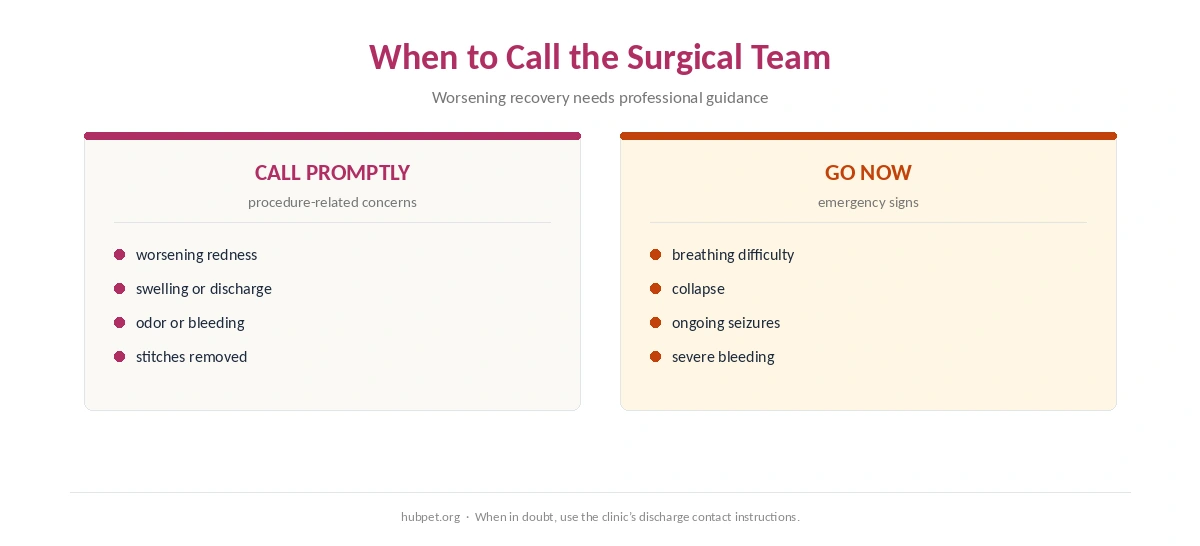
Call the surgical team when the pet’s condition changes suddenly, worsens, or does not match the discharge instructions. VCA guidance updated in 2025 specifically flags excessive or continuous bleeding, increasing swelling or redness, unpleasant odor, discharge, or removed stitches as reasons to contact the hospital. Merck’s 2025 recovery guidance also advises reporting abnormal urination, stool, wound changes, or other concerns.
Pain control belongs with the veterinary team. The pet pain-signs guide can help you describe behavior changes, but do not add human pain relievers or change prescribed medication on your own. Use the vet visit checklist to keep the discharge sheet, questions, and recheck details together.
Go now: breathing difficulty, collapse or loss of consciousness, ongoing seizures, severe uncontrolled bleeding, or another emergency sign needs immediate veterinary care. Use the pet emergency signs guide as a site-wide reference. If you must leave the pet alone during recovery, review the home-alone safety checklist and follow the surgeon’s confinement rules.
How We Research
HubPet reviewed these sources on October 11, 2026: VCA post-operative instructions for dogs updated in 2025, VCA post-operative instructions for cats updated in 2025, Merck Veterinary Manual recovery guidance reviewed in 2025, and AAHA’s 2025 discussion of enrichment during post-surgical confinement. Read our method at How We Research.
Not unless the veterinary team specifically directs it. VCA’s 2025 post-operative guidance warns against applying these products to healing incisions.
Contact the veterinary hospital for advice. Do not change the dose, timing, or product yourself.
Use the protective device recommended for the individual procedure and patient. If the pet can reach the incision, contact the clinic for help.
Follow the written restriction from the surgical team. Different procedures require different limits, so a generic schedule cannot replace the discharge plan.
Contact the clinic for worsening redness, swelling, discharge, odor, bleeding, opening, or removed stitches, and for any change that concerns you.
How to Support a Pet After Surgery at Home: Bottom Line
How to support a pet after surgery at home means making the veterinary plan easy to follow. Prepare a quiet recovery area, restrict activity as directed, give medication only as prescribed, protect the incision, and track eating, drinking, toileting, comfort, and wound appearance. When anything does not match the discharge plan, call the surgical team rather than improvising. For the matching checklist, see pet Recovery Support Checklist.