
How to prevent overexcitement during play is easier when you manage arousal before the game becomes chaotic. Dogs Trust guidance recommends regular breaks during exciting activities and practicing skills when the dog is calm. AVSAB’s 2021 Humane Dog Training Position Statement recommends reward-based methods for training and behavior modification. Therefore, this plan uses reinforcement and easier setups, not punishment.
How to Prevent Overexcitement During Play Before It Peaks
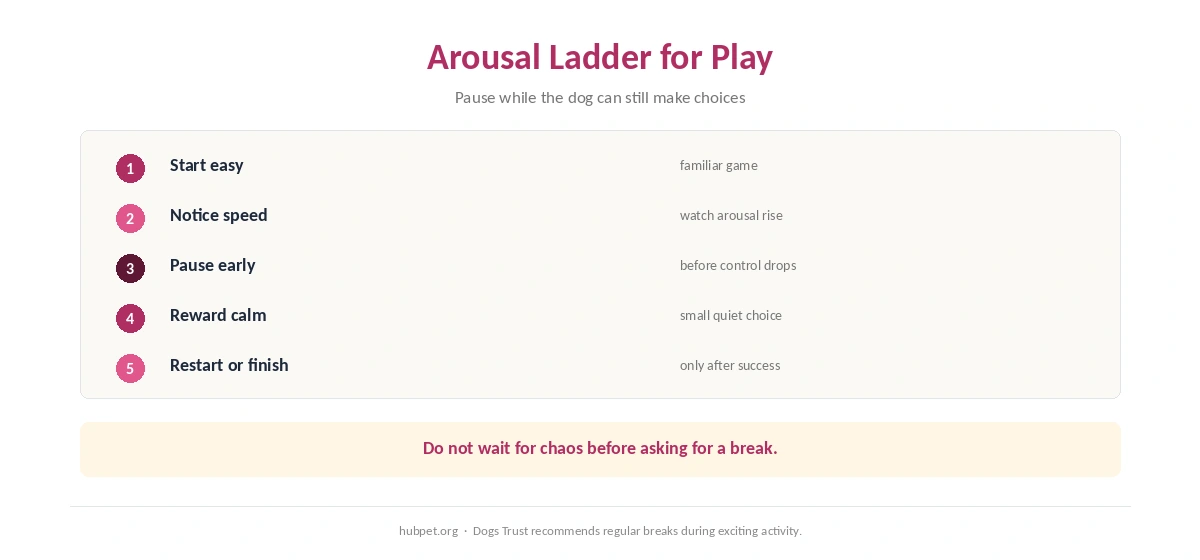
First, start the game at a level your dog can handle. Short play bursts make it easier to notice rising arousal before grabbing, jumping, or frantic movement takes over. Our play-and-rest guide can help you build recovery into the day instead of using play only to exhaust the dog.
Next, use a predictable start and finish. The basic dog training guide explains how clear cues and rewards help learning. Keep sessions short with short-session training. Then, end while the dog can still respond rather than waiting for the game to fall apart.
Watch for your dog’s individual early signs of rising arousal. These may include faster movement, harder grabbing, repeated jumping, difficulty disengaging, or ignoring a cue that was easy a moment ago. Do not use those signs as a reason to scold. The scolding myth guide explains why punishment is not the training plan.
How to Prevent Overexcitement During Play With Rewarded Breaks
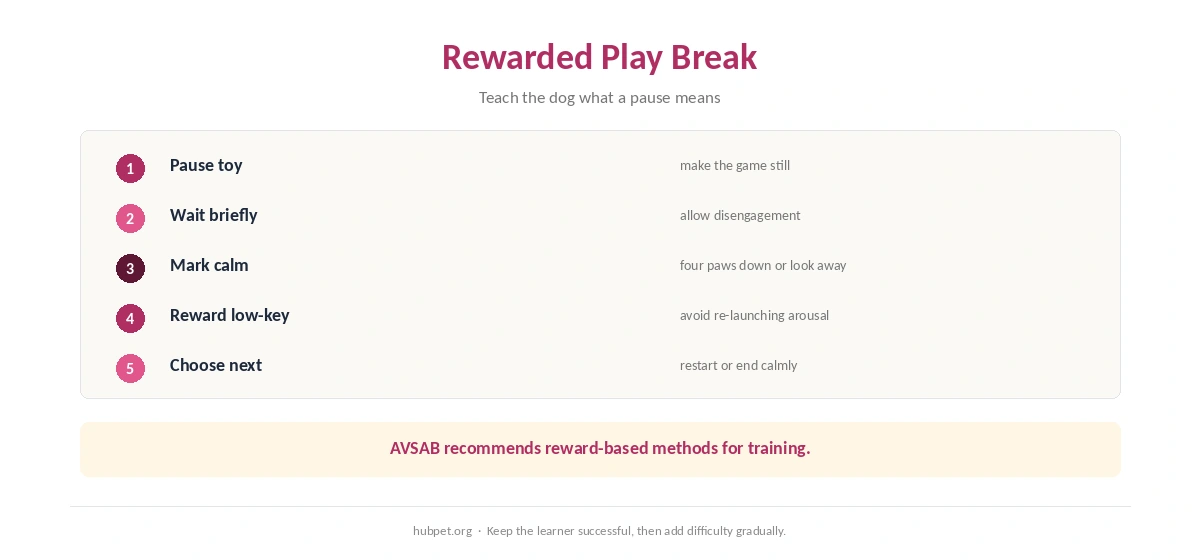
How to prevent overexcitement during play depends on teaching what happens during a break. Dogs Trust guidance recommends calm rewards for calm behavior because an energetic reward can raise arousal again. Therefore, pause the game, wait for a small quiet behavior, mark it, and give a low-key reward that your dog values.
- Start with a familiar toy or game in a low-distraction area.
- Play briefly while the dog can still respond to you.
- Pause the toy and allow a moment of disengagement.
- Mark a small calm choice, such as four paws down or looking away.
- Reward in a way that does not immediately restart frantic movement.
- Restart the game only if the dog can re-engage without losing control.
If the dog cannot respond, make the next repetition easier. The distraction-training guide shows how to lower environmental difficulty. Likewise, redirecting unwanted behavior focuses on teaching an alternative instead of creating a confrontation.
A calm end matters too. Use a consistent finish cue, put the toy away, and shift to a lower-arousal activity. The calm evening routine offers examples of quiet transitions. If your dog still has energy, indoor enrichment for high-energy dogs can add sniffing and problem-solving instead of more frantic chase.
Change the Setup When Play Keeps Boiling Over
Also, how to prevent overexcitement during play gets easier when the environment supports calmer choices. Overexcitement is often easier to prevent through the environment than through repeated cues. Reduce the intensity of the game, move to a quieter space, shorten the session, or choose an activity with more sniffing and less rapid chasing. The predictable-routines guide can also help dogs that reach play already highly aroused.
Do not treat one long, intense game as a complete plan for meeting a dog’s needs. The one-long-walk myth guide explains why daily needs include more than a single exercise bout. Meanwhile, the doorbell calmness guide shows the same training principle: work below the point where the dog can no longer make useful choices.
For a simple practice schedule, use the weekly training practice checklist. If you use a crate or mat as a rest area, the crate-comfort guide keeps that space positive. Do not send the dog there as punishment after play.

How We Research
HubPet reviewed these sources on October 11, 2026: the AVSAB 2021 Humane Dog Training Position Statement, which supports reward-based training, and Dogs Trust reward-based training guidance and its overexcitement guidance checked in 2026. Dogs Trust recommends regular breaks during exciting activities and practicing calm skills outside peak arousal. Read our editorial method at How We Research.
No. Excitement is part of play. The goal is to pause before arousal becomes so high that the dog cannot respond or disengage.
Reward small calm choices such as four paws on the floor, looking away from the toy, or briefly settling.
No. AVSAB recommends reward-based training rather than aversive methods. Lower the intensity, pause the game, and reinforce the behavior you want.
There is no universal duration. End while the dog can still respond, and adjust the length to the individual dog and the intensity of the game.
Make the setup easier: use a quieter location, lower-intensity game, shorter bursts, and more frequent calm breaks before increasing difficulty.
How to Prevent Overexcitement During Play: Bottom Line
How to prevent overexcitement during play means managing the game before control disappears. Keep play short enough for success, insert calm breaks, reward small low-arousal choices, and reduce difficulty when the dog cannot respond. Reward-based repetition teaches a usable off-switch without punishment.