
This article is general information, not veterinary advice. If your pet seems unwell, is in pain or may have eaten something harmful, contact your vet or an animal poison control line right away. Read our vet disclaimer.
Why pets act differently with children often comes down to movement, sound, handling, and learning history. Children may run, squeal, lean over animals, or approach at close range in ways adults do less often. The AVMA 2026 child-safety guidance emphasizes supervision and education around dogs. The RSPCA guidance on dogs and children also notes that children communicate and move differently from adults.
However, a different response is not proof that a pet dislikes children. One animal may seek play, another may hide, and another may become highly alert. Therefore, start with observation and choice. The new-pet introduction checklist uses the same principle: lower pressure first, then let safe familiarity build.
Why Pets Act Differently with Children: Short Answer
Why pets act differently with children is best understood as a context question. A child can be smaller, faster, louder, less predictable, or more physically direct than an adult. In addition, the pet may have little previous experience with children. The predictable-routines guide can reduce surprise while everyone learns safer patterns.
First, give the pet a reliable exit. A bed, perch, gated room, or other retreat works best when the child does not follow. The calm-space guide explains how to make that retreat useful rather than turning it into forced isolation.
| What changes | What the pet may notice | Safer response |
|---|---|---|
| Movement | Running or sudden direction changes | Add distance and slow the interaction |
| Sound | High voices, crying, or bursts of noise | Protect a quiet retreat |
| Touch | Hugs, reaching, or clumsy contact | Use gentle, optional contact |
| Resources | Toys, food, beds, or resting spots | Keep children away during use |
| Routine | More visitors or activity | Keep familiar anchors |
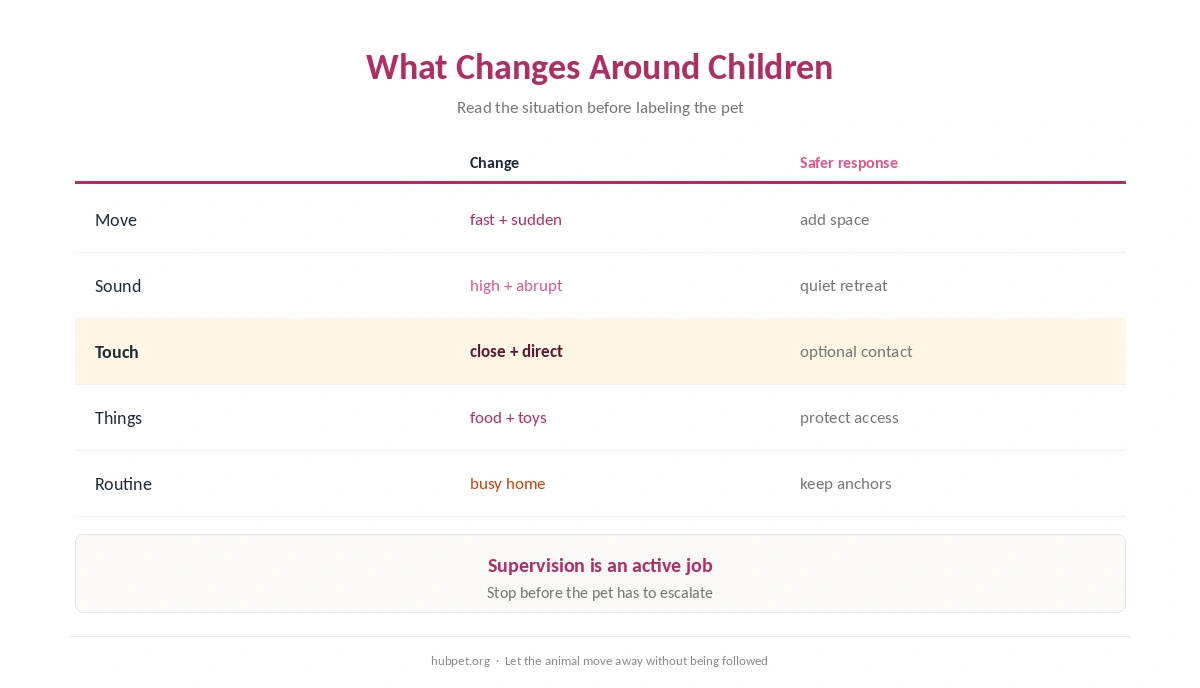
Why Pets Act Differently with Children Around Touch and Space
Children often need coaching on consent-like pet interactions. Instead of hugging or holding an animal in place, show them how to invite contact and pause. The handling-practice guide uses brief, voluntary steps and stopping when the animal shows discomfort.
Cats may choose height or distance when a room becomes busy. Therefore, protect hiding and climbing options rather than pulling a cat out for a greeting. The shy-cat guide shows how choice can support confidence without forcing contact.
Fearful dogs also need space before training. The fearful-dog confidence guide starts below the point where the dog cannot cope. Meanwhile, adults can teach children to stand still, turn sideways, and let the dog move away when needed.
- Supervise close interactions instead of asking a young child to manage the pet alone.
- Keep eating, chewing, sleeping, and high-value resting times child-free.
- Teach the child to pause when the animal turns away, freezes, hides, or leaves.
- Use barriers or distance during high-energy play if the pet becomes over-aroused.
- Reward calm pet behavior around children instead of demanding physical contact.
- Give the pet daily child-free time in a familiar retreat.
If a pet jumps, chases, paws, or grabs during excitement, redirect the situation before it escalates. The redirection guide focuses on management plus a clear alternative. Likewise, the spite myth guide explains why moral labels are less useful than observable triggers.
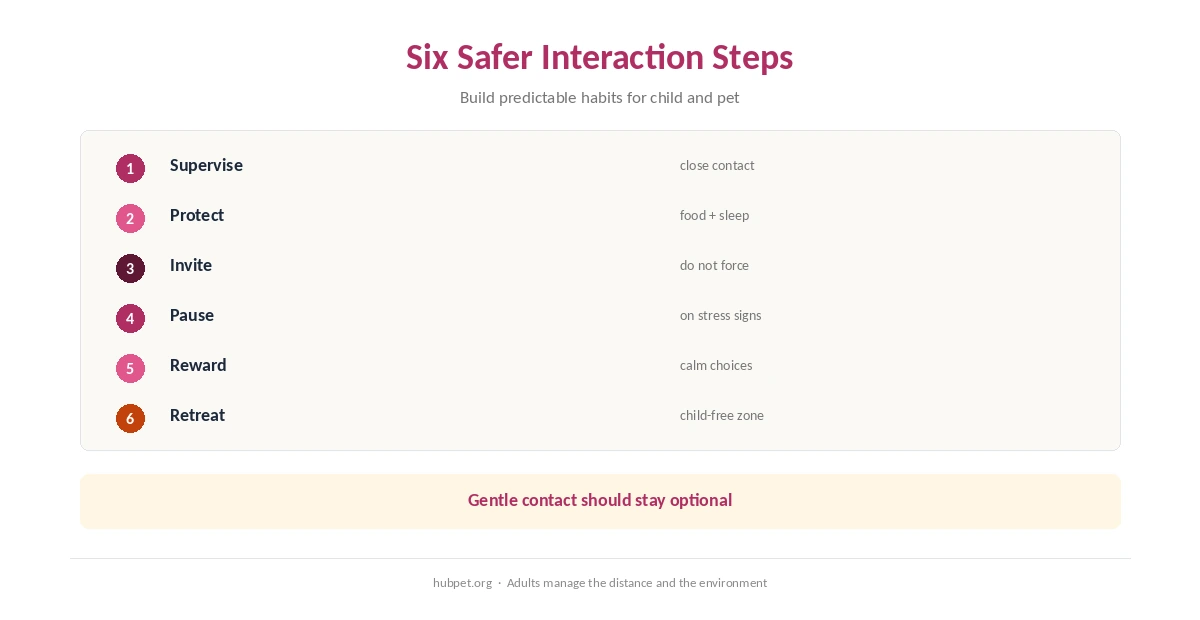
Manage Multi-Pet Homes and Busy Family Moments
A child can also change the social pattern between pets. For example, two animals may compete for proximity or retreat routes when family attention shifts. The multi-pet attention guide recommends predictable access instead of making pets compete for every interaction.
In addition, use the multi-pet household checklist to separate food, rest, and other important resources. If a holiday or party brings more children into the home, the holiday-stress guide can help plan doors, retreats, and quiet recovery time.
Small homes need the same safeguards. The apartment living checklist helps protect routes and rest areas when there is less room to spread out. Ultimately, why pets act differently with children matters less than whether the household gives the pet safe choices.
When to Get Professional Behavior Help
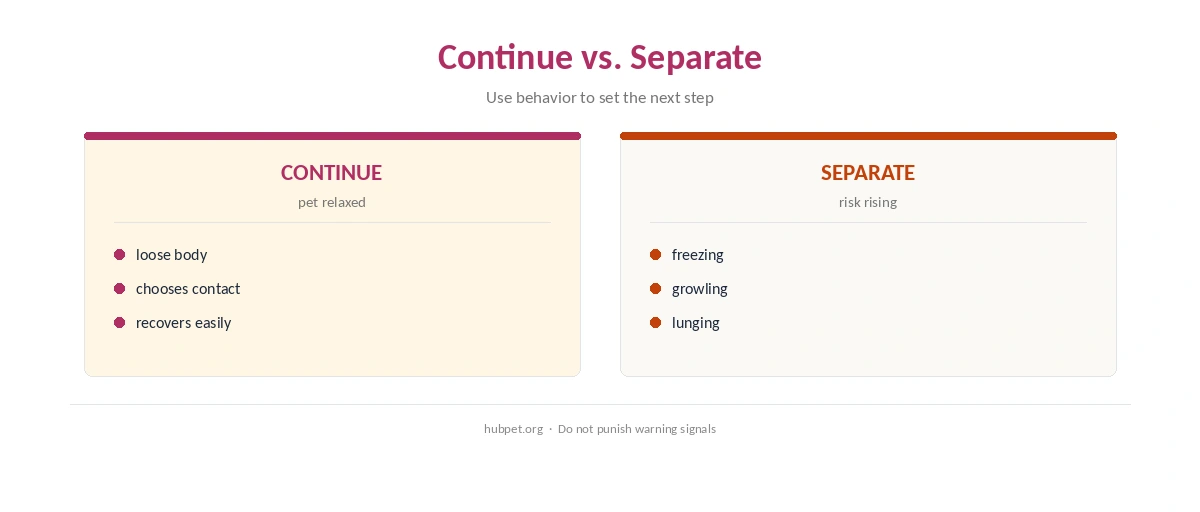
Get qualified behavior help if the pet repeatedly freezes, growls, lunges, snaps, stalks, or cannot recover around children. Do not test the pet by reducing distance. Instead, use physical separation and a controlled plan. For dogs, AVMA guidance treats adult supervision as a core safety measure around children.
If the behavior changes suddenly or the pet reacts during ordinary touch that was previously comfortable, contact your veterinarian. Physical discomfort can change tolerance. Keep children separated from the animal until the cause and a safe plan are clearer.
How We Research
HubPet reviewed these sources on October 11, 2026: the AVMA child-safety release dated April 9, 2026, the AVMA dog-bite prevention resource, and the RSPCA dogs-and-children guidance. Read more about our research process.
Adults may move, speak, and touch more predictably. The pet may also have more experience with adults.
Avoid forcing hugs. Let the animal choose contact, and stop when it turns away or leaves.
Often, yes. Use distance, predictable routines, rewards for calm behavior, and gradual exposure that stays comfortable.
No. Protect food, chews, sleep, and retreat areas from child access.
Separate them calmly. Do not punish the warning. Get qualified help before allowing close contact again.
The Bottom Line: Why Pets Act Differently with Children
Why pets act differently with children has no single explanation. Children can change movement, noise, touch, and routine all at once. Supervision, protected retreat space, gentle interaction, and gradual reward-based learning create a safer plan than forcing closeness.