
The useful cat nail clipper is the one that lets you see a claw clearly and make a small, controlled cut. Oversized tools can block your view, while dull blades may squeeze or split the nail. Your cat’s willingness to participate matters as much as the mechanism. Review the HubPet veterinary disclaimer before attempting a nail trim.
Cats use claws for climbing, scratching, gripping, and normal movement. The goal is not to remove claws or trim them as short as possible. Focus on preventing overgrowth when needed, protecting the quick, and maintaining a positive handling routine. Ask a veterinarian to examine any claw that curls into the pad, bleeds, or appears painful.
Start with a reason to trim, not a shopping list
Check the tips of your cat’s claws during calm handling. Some cats wear front and back claws differently, and scratching surfaces do not guarantee that every claw stays short. Older cats may need more monitoring if movement or scratching patterns change. A veterinarian can help determine an appropriate trim interval.
Do not buy a clipper to manage scratching behavior alone. Provide stable scratching posts and protect furniture without punishing the cat. The scratching-post training guide addresses the behavior itself, while the clipper addresses nail length.
Understand scissor-style and guillotine-style tools
Scissor-style trimmers bring two cutting edges together. Guillotine-style tools hold a nail through an opening while a blade moves across it. VCA notes that cats can tolerate more than one style of trimmer. Precise alignment and the handler’s confidence matter more than a universal winner.
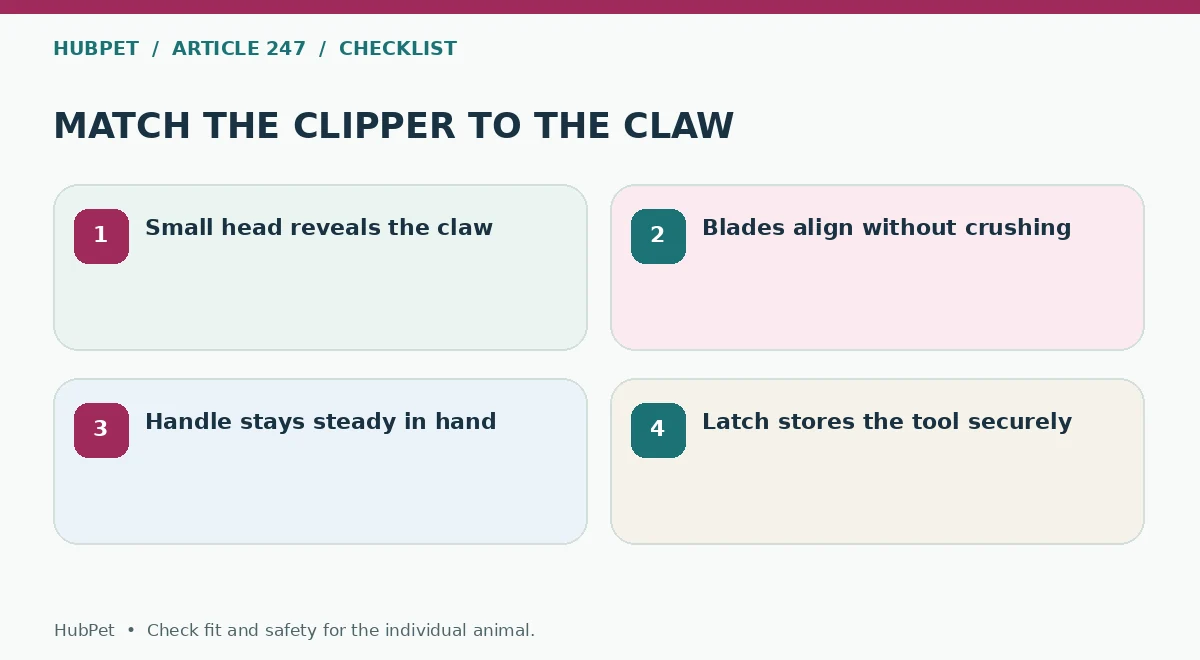
Test the tool with your hands before approaching a cat. Check that the opening fits a small claw without crushing it and that the cutting point remains visible. A bulky pivot or a latch in an awkward place may make careful positioning harder than necessary.
Prioritize visibility over built-in safety promises
A guard or light does not reveal the quick in every claw. On pale claws you may see a pink living area, but pigment and anatomy vary. Learn from a veterinary professional where to place the cutting edge on your own cat; do not rely on a marketing diagram alone.
Choose bright, even room lighting and extend one claw gently rather than exposing all claws at once. If the nail is dark or the quick seems impossible to judge, stop and request a demonstration. A small trim you can control is better than an ambitious cut.
Match hand size, grip, and blade action
Comfortable finger holes or handles should let you operate the trimmer without bending your wrist sharply. Look for smooth motion, stable blades, and secure closure. Sharp blades make a clean cut; dull edges may crush the nail and increase discomfort during handling.
Safety locks keep stored blades away from curious paws, but locks do not prevent injury during use. Inspect the mechanism before every session. If blades slip out of alignment or show rust, replace the tool rather than forcing it through a claw.
Prepare the cat for touch before showing the clipper
Begin with a relaxed cat and a brief touch near a shoulder or front leg. Reward acceptance, then finish. Over later sessions, work toward touching the paw and gently extending one claw. Make each step optional: pulling away, tail lashing, or ears rotating backward means you should stop.
The low-stress cat grooming guide offers the same principle for handling a sensitive animal. Do not pin the cat down to meet a trimming schedule. Skilled veterinary staff can teach a safer method if the cat remains distressed.
Use one controlled, conservative cut
Ask a professional to demonstrate how the blades should approach a claw and how much of the tip they can safely remove. Position the cutting edges to avoid splitting and check the quick before closing the handles. One small cut may finish that session.
Afterward, reward the cat and release the paw. If your hand shakes, your cat moves suddenly, or the angle is unclear, leave the claw untrimmed. VCA recommends several small cuts rather than one excessive trim; calm behavior remains the higher priority.

Think about household setup and claw function
Choose a quiet surface with good traction and allow the cat an escape route. Avoid trimming next to a doorway where another animal may intrude. Have treats ready before taking out the tool. Do not try to trim while the cat is climbing, playing, or defending a resting space.
Scratching posts, climbing furniture, and appropriate enrichment still matter after a trim. Removing the sharp tip does not stop the cat’s need to scratch. Our daily cat care checklist helps you spot changes to mobility and grooming habits.
Plan hygiene and storage from the beginning
Clean and dry the clipper according to the manufacturer’s directions. Do not leave hair, nail dust, or moisture around the pivot where blades can become harder to control. Keep the tool in a closed location beyond pets and children.
If you have multiple cats, inspect the tool and wash hands between handling sessions. A veterinarian should assess an injured or infected paw before shared grooming tools are used again. Keeping a separate, well-maintained pet clipper can simplify hygiene.
Know the red flags that change the task
A swollen toe, limping, bleeding nail, overgrown claw entering the pad, or clear pain is not a shopping problem. These signs call for veterinary assessment. A frightened cat that cannot tolerate gentle handling may also need professional support rather than stronger restraint.
After an accidental quick cut, stop trimming. Seek veterinary advice if bleeding persists or your cat seems unwell. Do not use household pain medicines or unapproved products to manage the incident. A professional can plan future low-stress care.

Make a quick purchase and practice checklist
Before buying, verify a small claw fits the opening, your fingers fit the handle, the pivot works smoothly, and the blades align. Confirm maintenance instructions and whether the maker offers replacement parts. Price is a secondary factor when a tool offers poor visibility or control.
Practice an unloaded open-close motion away from your cat, then put the tool down. Schedule a separate handling session with no cutting. This approach gives your cat a chance to learn and gives you time to learn safe anatomy before the tool reaches a claw.
How We Research
We checked this guide against the authoritative sources listed below on October 26, 2026. We reviewed practical differences, safety limits, and relevant home conditions rather than drawing conclusions from brand advertising. Specifications, warranty policies, and device capabilities change; check the manufacturer’s current manual. We did not purchase, laboratory-test, rank, or endorse individual products. Where a pet has pain, skin concerns, or fear, seek individual veterinary advice. See our approach at About HubPet.
Sources
VCA Animal Hospitals: How to Trim a Cat’s Nails. Accessed October 26, 2026.
VCA Animal Hospitals: Handling Exercises for Trimming Nails and Brushing Teeth. Accessed October 26, 2026.
ASPCA: Cat Care. Accessed October 26, 2026.
Either can work when it is sharp and correctly sized. Select the design that lets you clearly see the small claw and control the cutting edge.
Do not guess at a deep cut. Ask your veterinarian for a demonstration and limit home trims to portions you can identify safely.
No. Scratching is normal feline behavior. Provide appealing scratching surfaces and use reward-based guidance alongside any appropriate nail maintenance.
Build tolerance slowly with brief voluntary touches and rewards, then stop before distress. A veterinarian or trained groomer may be needed for nail care.
Replace the tool when blades are dull, misaligned, rusty, or damaged. The useful signal is cutting quality and safe control, not an arbitrary number of months.