
This article offers general grooming and household safety information, not veterinary diagnosis or treatment. Stop when a pet is frightened or in pain; contact a veterinarian about bleeding, swelling, embedded or torn claws, or sudden changes in movement. Read our veterinary disclaimer.
Senior cat nail care is not simply the kitten nail routine repeated on an older pet. Some aging cats become less active or scratch less often, and their claws can look thicker, curve more, or become easier to snag. VCA notes that older cats may need more nail-trimming help, but a sudden change in willingness to use a paw can also signal pain. This guide shows how to check visible tips, distinguish ordinary maintenance from a possible injury, and keep handling brief and voluntary. It does not replace a veterinary examination for a painful or embedded claw.
Observe walking, scratching, and snagging
Notice how the cat moves across ordinary rugs or climbs to familiar resting places. New snagging sounds, a claw that catches in a blanket, or reluctance to scratch at a favorite post may justify a closer look. Do not conclude that nail length causes every slow movement; joints, balance, and other health concerns can affect older cats. Look for changes compared with that cat’s normal behavior. Place a low, stable scratcher nearby if climbing to a tall post is difficult. If the cat limps, cries, or suddenly refuses to put weight on a paw, contact a veterinarian rather than testing nail flexibility yourself.
View the entire claw, including the curved tip
When your cat is calm, gently inspect the front paws and any visible back claws. The outer sheath may look layered, but this does not tell you how deep the living quick extends. Check whether a tip hooks sharply down, presses on a pad, or disappears into the fur between toes. Do not pry at layers with a metal tool or pull a sheath off. If the cat tolerates a brief paw touch, gentle pressure on the central pad may reveal a claw; stop if it resists. Take a clear photo instead of holding the paw for a long inspection. Curled or embedded nails require prompt professional assessment.

Understand why scratching may be less effective
Scratching helps cats manage the outer claw sheath, but it does not guarantee that every claw stays at a comfortable length. Older cats may scratch less because their activity, preferred surfaces, or ability to reach changes. Offer a stable horizontal scratcher and an easy-to-access vertical post without forcing either choice. Inspect the surfaces for wobbling, splinters, loose fibers, or materials that snag claws. Never assume furniture scratches mean that all claws are short. VCA advises regular inspections and notes that older cats may need direct nail care. Choose a setup that respects mobility, without making a cat jump to obtain a scratch surface.
Keep paw contact gentle and predictable
Choose a relaxed time, let the cat sniff your hand, and touch the shoulder or foreleg before moving toward the paw. Pause between brief contacts. If your cat pulls away, stiffens, flicks its tail, hisses, or withdraws, end the attempt. Do not force handling or tightly wrap a cat that wants to leave. An older cat may have painful joints, so keep the limb in its natural position. A familiar caregiver can offer a gentle reward if the cat welcomes it. Repeated low-stress checks are better than one long struggle that makes future handling more difficult. Ask your veterinarian about unexpected sensitivity.
Decide whether a home trim is appropriate
A straightforward sharp tip on a calm cat may be suitable for a tiny conservative trim by a caregiver who knows the anatomy. Thick, very dark, curved, or embedded claws are more difficult to judge. Never cut the quick, and a clipper guard cannot guarantee its location. If you cannot clearly isolate one nail without squeezing adjacent toes, pause. Have your veterinarian or experienced groomer demonstrate positioning. If there is bleeding, swelling, an unpleasant odor, or a visible wound near the pad, do not clip into the area. Do not use home grooming to investigate a possible infection or deep injury.

Compare free claw tips with pad contact
One useful drawing shows a claw tip clear of the pad, with enough space to examine it comfortably. The second shows a sharply curved claw contacting the pad. This is a veterinary concern, not a suggestion to cut deeper at home. Also note whether a claw has a split near the base, unusually swollen, or changes suddenly in color. The illustration cannot tell you whether pain, a tendon problem, or illness is involved. If your cat is limping or hiding the paw, ask for an examination. A routine trim schedule is not appropriate when a possible injury has already developed.
Coordinate grooming with senior-cat health visits
Keep a brief record of nail checks and bring it to routine veterinary appointments. Tell the clinician whether your cat scratches less, has new mobility difficulties, or has one claw that repeatedly snags. Ask whether a monthly check or a shorter interval makes sense for that individual cat. VCA describes a general two-to-four-week trim range for indoor cats, but the actual need varies. Do not force your older cat to hold a fixed pose to match a calendar date. A veterinarian can also check whether joint discomfort or other conditions limit comfortable handling. Use accessible resting places and nonslip paths to reduce unnecessary climbing.
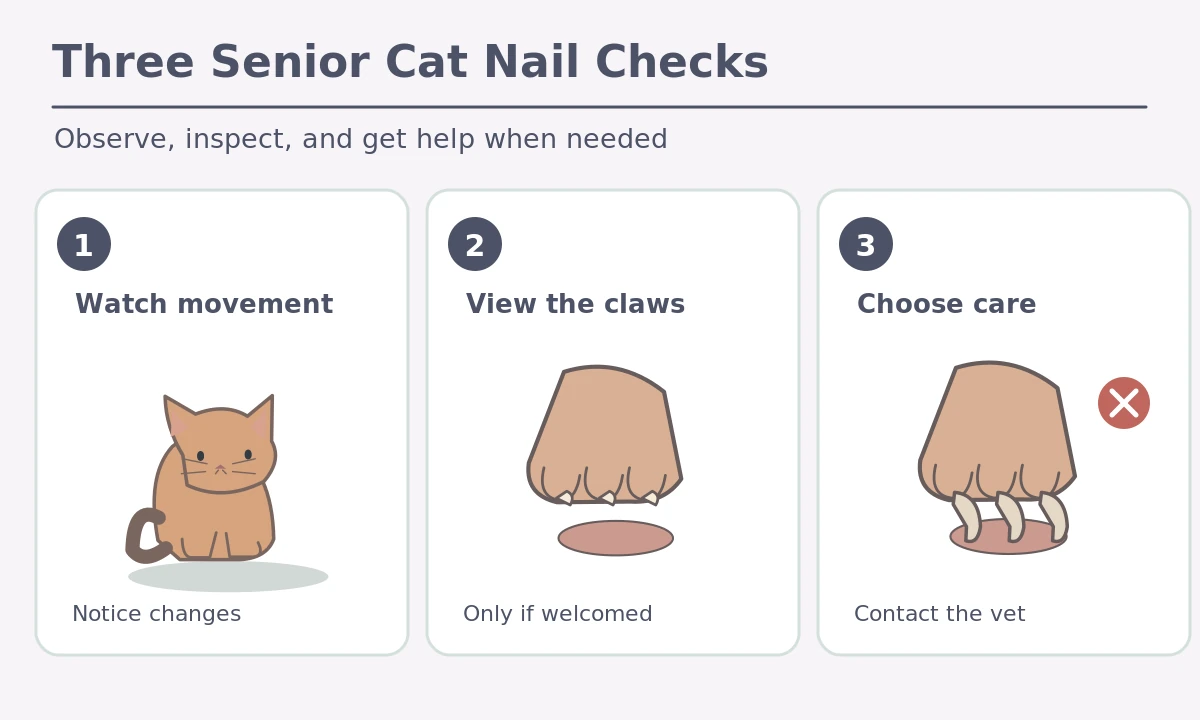
Follow a three-stage comfort-first check
First, watch your cat move across a familiar room and note any new snagging, limping, or reluctance to scratch. Second, offer a voluntary brief paw check in a supported natural position and look for sharply curved tips or pad contact. Third, choose safe next steps: continue ordinary observation for normal claws, request a demonstration for basic maintenance, or seek veterinary help for pain, damaged nails, or embedded tips. Do not leave a suspected problem for weeks merely because the cat dislikes handling. Keep your notes factual: which paw, what you saw, and when it changed. This makes clinical advice easier and reduces repeated stressful inspections.
How We Research
We compared original veterinary and animal-welfare information from VCA Animal Hospitals, ASPCA. We checked the difference between ordinary maintenance and signs requiring individual care, and focused on visible, repeatable checks rather than unverified product claims or fixed cut depths. The drawings are general explanations, not veterinary measurements or hands-on equipment tests. The instructions do not replace a veterinarian or experienced groomer showing the technique on your own pet. Learn more about our approach at About HubPet.
Sources
VCA Animal Hospitals, How to Trim a Cat’s Nails. Read the original guidance.
VCA Animal Hospitals, Handling Exercises for Trimming Nails and Brushing Teeth. Read the original guidance.
ASPCA, Cat Grooming Tips. Read the original guidance.
Safety note: An embedded or torn nail, significant bleeding, a painful or swollen toe, or marked changes in walking warrants veterinary help. Do not restrain a distressed animal to finish grooming or guess where the quick ends. A professional can demonstrate safe positioning and individual next steps.
Some do because activity and scratching habits may change. Inspect actual claw length and ask your veterinarian for an individual schedule.
Changes in activity and shedding of the outer claw layers can affect appearance. Sudden thickening, pain, or damage deserves a veterinary assessment.
Do not attempt to dig out an embedded nail. Contact a veterinarian promptly for safe treatment and assessment.
No. Do not pry or pull at claw layers. Provide accessible scratching surfaces and ask a professional about persistent buildup or snagging.
Stop rather than forcing the paw. Note what you can observe naturally and ask your veterinary team about cooperative handling or professional care.