
A cat nail grinder uses a rotating abrasive tip to shorten a claw gradually. That sounds controlled, yet the motor noise, vibration and potential heat can make the experience more difficult for some cats than a brief clip. The tool also cannot solve painful claws, a fearful response to restraint or uncertainty about the quick. Before buying, decide whether the cat needs nail shortening at all and whether the animal accepts gentle paw handling. This guide compares realistic use cases and limits; seek veterinary guidance for painful nails and review HubPet’s veterinary disclaimer.
Ask whether your cat needs a powered tool
A cat with suitable scratching surfaces may keep claws in good condition without frequent intervention, especially when active and able to climb. Instead, indoor cats and older cats may need periodic checks for snagging or overgrowth. A grinder is useful only if a trim is appropriate and the cat will tolerate the process. If a claw curves into a paw pad or appears split, inflamed or painful, do not experiment with a rotating tool at home. Ask a veterinarian to assess it. An ordinary small clipper may be faster for a clear sharp tip, so there is no reason to buy a motorized device by default.
Understand the trade-off between grinding and clipping
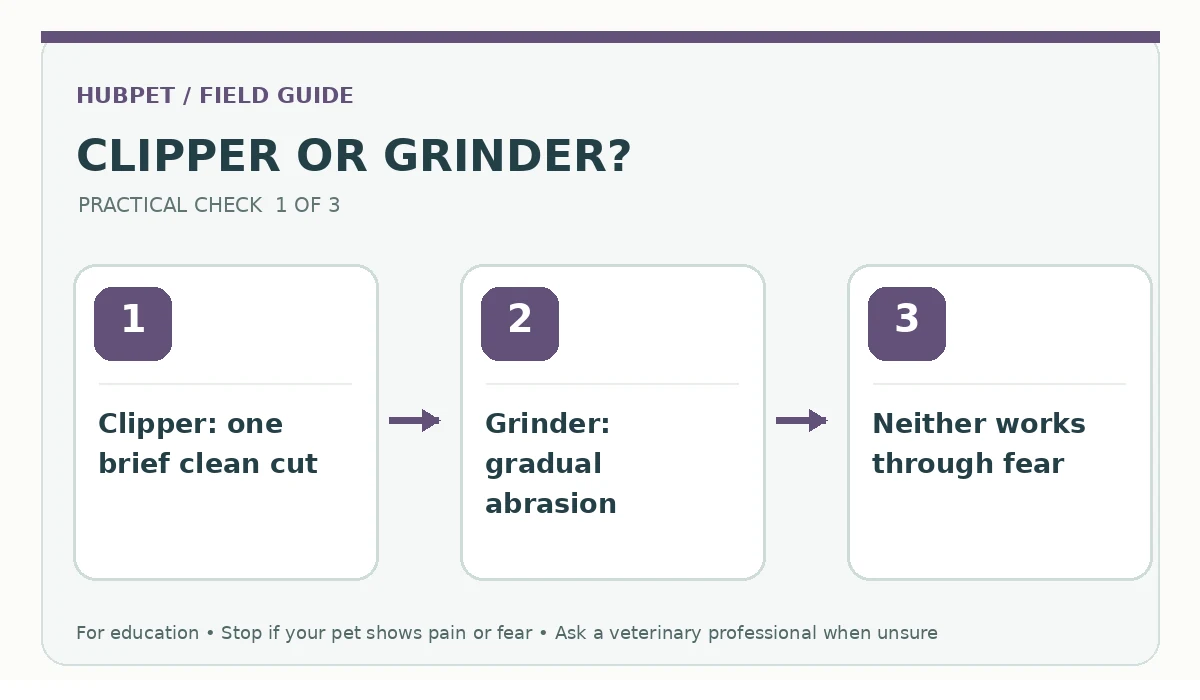
Clippers remove an outer tip with one closing motion, while a grinder removes material by abrasion over a longer contact period. Also, gradual removal can help a steady owner fine-tune an edge, but every additional second creates sound, sensation and the possibility of friction heat. Cats vary widely in tolerance; some accept a quiet clip and dislike any vibration. The grinder does not reveal the quick inside the claw or make cutting living tissue harmless. Pick a method according to the cat’s behavior and the clarity of the nail tip rather than the assumption that powered means gentle.
Inspect the tool before thinking about features
A compact body should fit comfortably in your hand without forcing an awkward grip around a small paw. Next, look for a stable abrasive head, a guard that does not trap a claw, straightforward cleaning and a motor you can stop instantly. Read the maker’s limits and replacement-part instructions. A lower-noise setting may help, but no seller can guarantee a cat will find a given sound acceptable. Avoid bulky models that obstruct your view. A portable battery is convenient only if the device can remain predictable and does not suddenly surge or slow during grooming. Price alone says little about welfare.
Manage fur and heat around moving parts
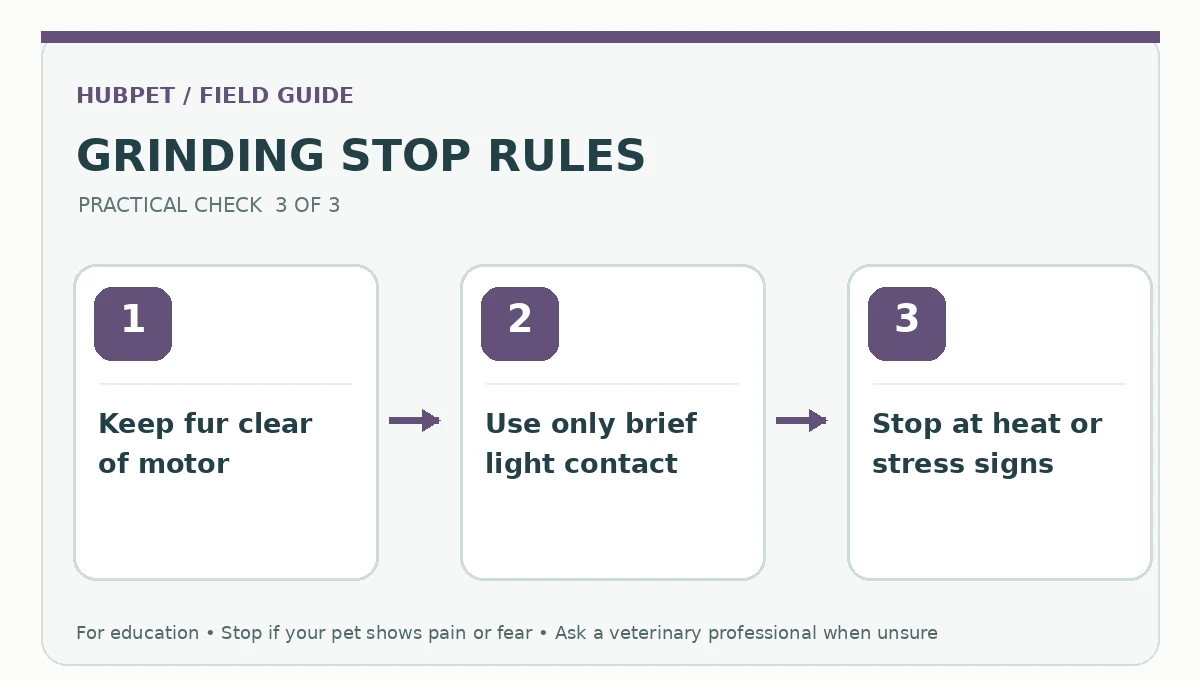
Long fur near the toes can catch in a spinning surface, so expose the claw carefully and keep loose hairs away before starting. As a result, never wrap fur around your fingers next to the moving head. Abrasive tips can also warm the nail during sustained pressure; use only very brief contact according to the device’s instructions and pause frequently. Do not press a claw hard against the grinder to speed up removal. Keep the device away from pads and sensitive skin. If you cannot isolate the nail safely without forcing the foot, stop and ask a professional to demonstrate another approach.
Introduce the unplugged device first
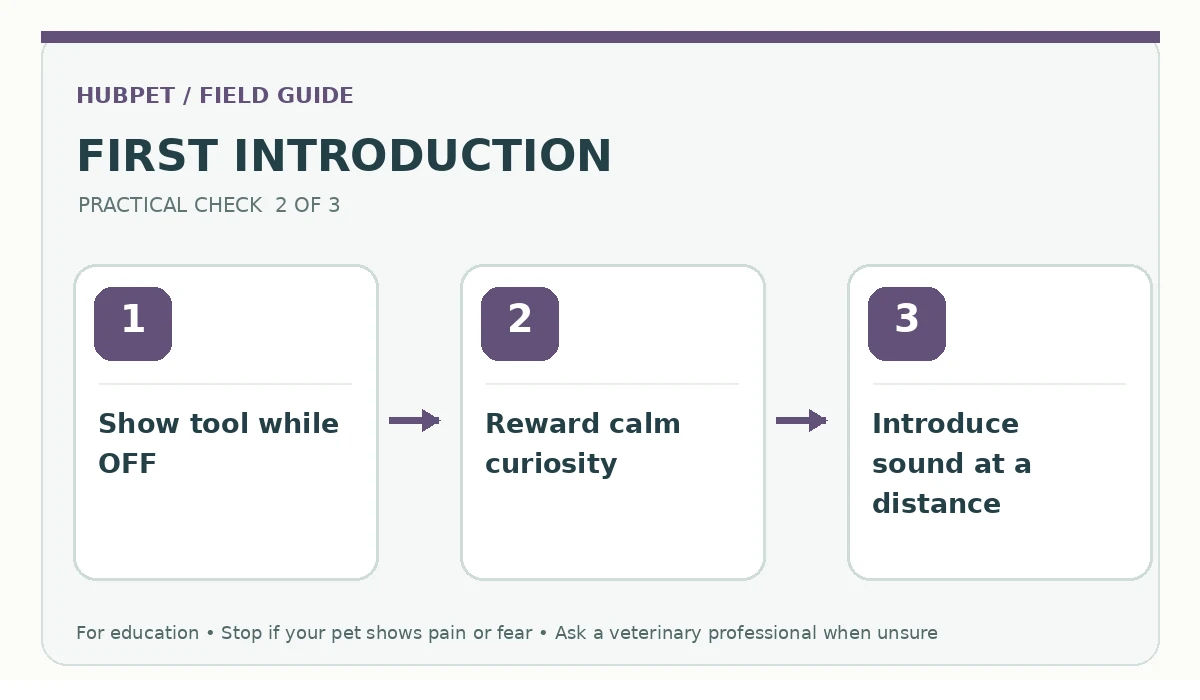
Place the inactive grinder at a distance where your cat remains curious rather than afraid, then offer a favorite reward. By contrast, put it away while the interaction is still relaxed. Repeat until the cat chooses to approach it without tension. In a later session, touch the inactive body gently near the shoulder or leg, not directly against a claw. Move to a brief motor sound from farther away only if the cat stays comfortable and can leave freely. No calendar determines readiness. Your cat’s body language matters more than how many days you have been practicing.
Pair sound and paw handling in separate steps
A cat may tolerate the motor across the room but dislike having a paw held, or accept paw contact while fearing vibration. Train these skills separately before combining them. Reward a one-second paw touch, then release. However, on another occasion, run the device briefly at a distance and reward. When both experiences feel routine, bring the inactive tool closer while supporting one paw naturally. Avoid combining restraint, sudden sound and grinding in the first trial. Watch for ears rotating backward, tail whipping, freezing or attempts to flee. These are reasons to back up a step, not to hold tighter.
If you try one claw, keep the goal tiny
When your cat voluntarily accepts the setup and you can identify an obvious outer claw tip, make a brief, light contact and stop. Reward immediately. You do not need a fully rounded nail or a perfect finish. If the tip is already short, there may be nothing useful to grind. Check that the cat has no soreness or irritation afterward. Meanwhile, never force the tool along the sides of the claw or toward the pink quick. A complete set of nails may take many short visits, and that is acceptable only while the cat remains comfortable. Professional help is preferable to escalating restraint.
Know when clippers or a vet make more sense
A sharp cat-specific clipper often provides faster control for the tiny hooked end of a healthy claw. In addition, your veterinarian or veterinary nurse can teach you to identify the quick and hold a paw without painful pressure. Owners with limited grip strength should evaluate which tool they can stop and position reliably. If the cat reacts strongly to the motor, switching to cooperative clipper practice can be kinder than persisting with the grinder. A painful, embedded or unusually thickened claw needs assessment, not a different accessory. Never use sedatives without explicit veterinary direction.
Clean and store the grinder safely
Follow the manufacturer’s cleaning instructions for abrasive heads, dust collection and battery handling. Meanwhile, remove accumulated nail dust when the device is off, and keep it dry unless the manual allows moisture. Replace worn tips that wobble or produce uneven abrasion. Store the tool where a curious cat cannot switch it on or chew a cable. Do not share unclean attachments between animals when skin or nail infection is a concern. Recheck your cat’s claw condition periodically even if grinding sessions are rare. The best long-term tool is the one you can use calmly, briefly and only when needed.
How We Research
Our editorial review compared veterinary and animal-welfare guidance on healthy claws, handling tolerance, tools, and reasons to seek professional help. Practical owner decisions took priority over product claims. We did not conduct controlled tool trials, test specific brands, or provide diagnoses. Guidance may vary by age, lifestyle, anatomy, and stress response; ask a veterinarian about individual needs. We last reviewed the sources on October 27, 2026. Read about our editorial process on the About HubPet page.
Sources
VCA Animal Hospitals: Handling exercises for nail trimming. Accessed October 27, 2026.
Cornell Feline Health Center: Choosing and caring for a new cat. Accessed October 27, 2026.
Cats Protection: Grooming your cat. Accessed October 27, 2026.
Not automatically. Gradual abrasion may help some owners, but noise, friction heat and cat stress can make grinding less suitable than a brief careful clip.
Possibly. Cats differ in their response to motor sounds and vibration. Start with an inactive tool and reward calm investigation before testing sound.
Only if the cat remains relaxed and the tips truly need shortening. For many cats, a single brief contact is a better training goal.
No. The quick remains inside the claw, and grinding too far can still injure it. Stop well before living tissue.
Seek professional care for a nail curling into the pad, bleeding, swelling, severe fear or any claw that appears painful or abnormal.