
This article is general information, not veterinary advice. If your pet seems unwell, is in pain or may have eaten something harmful, contact your vet or an animal poison control line right away. Read our vet disclaimer.
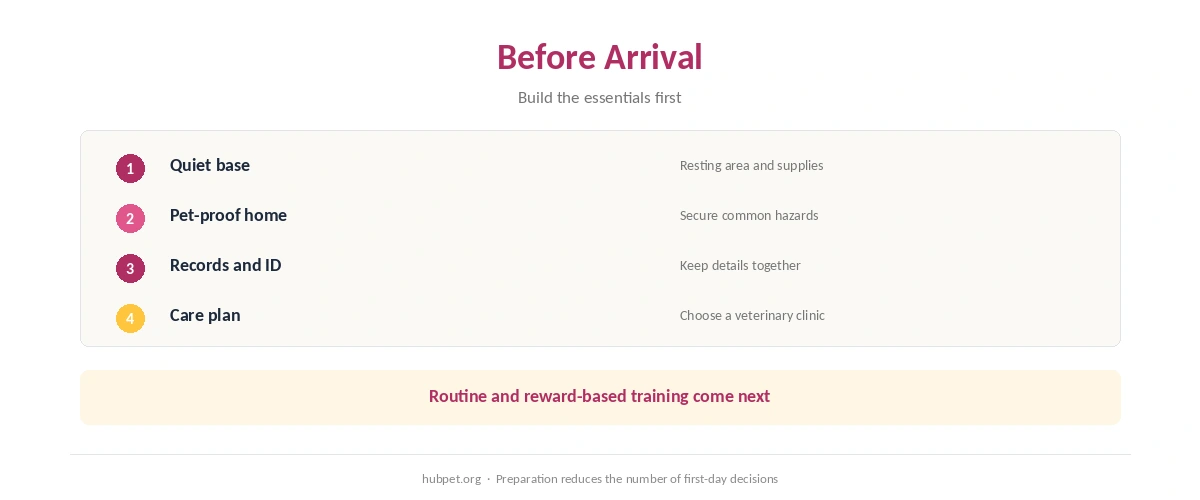
A new pet owner checklist should cover home safety, veterinary care, identification, daily setup, and first training habits. ASPCA recommends a quiet dedicated space and a pet-ready home before arrival (ASPCA, accessed 2026). It also recommends basic supplies and early veterinary setup. Therefore, prepare the essentials before you shop for optional extras.
New Pet Owner Checklist: Before the Pet Comes Home
Prepare the environment first because a new pet will explore unfamiliar spaces (ASPCA, 2021). In addition, ASPCA advises securing cords, windows, doors, medications, cleaners, trash, and toxic plants. A complete new pet owner checklist should handle those access risks before arrival.
- Create a quiet, dedicated resting area where the pet can decompress (ASPCA, accessed 2026).
- Pet-proof cords, windows, doors, medications, cleaners, trash, hazardous foods, and toxic plants (ASPCA, 2021).
- Set up food and water bowls plus species-appropriate toileting supplies before arrival (ASPCA, accessed 2026).
- Keep adoption, vaccination, medication, and prior medical records together for the veterinary team.
- Choose a veterinary clinic and arrange an early appointment after adoption (ASPCA, accessed 2026).
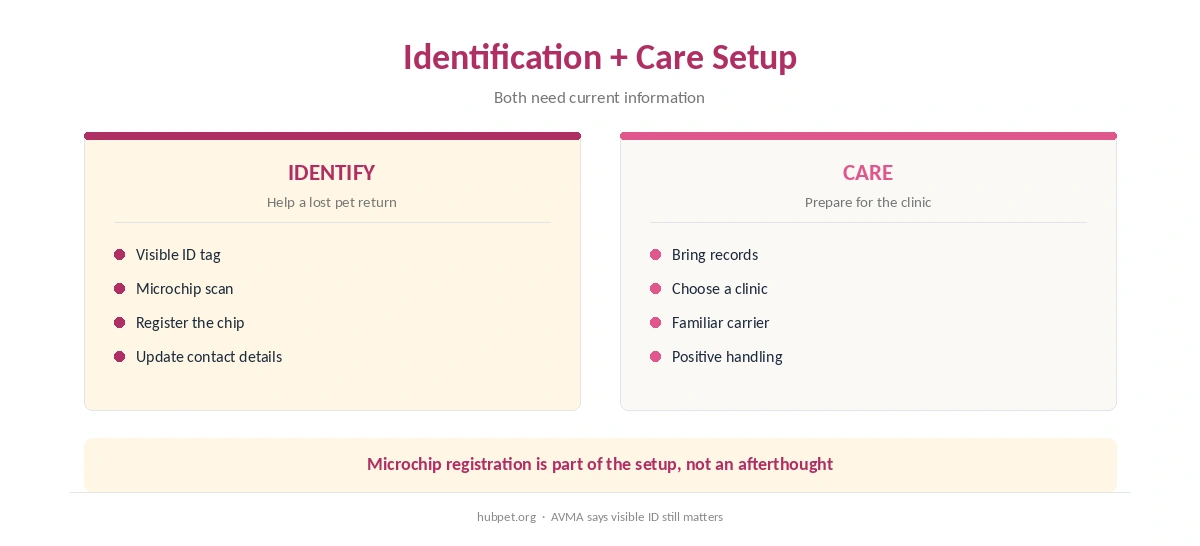
- Check for an existing microchip. Then register current contact details with the correct registry (AVMA, accessed 2026).
- Use a visible ID tag where appropriate. A microchip does not replace visible identification (AVMA, accessed 2026).
- Make the carrier or travel setup familiar before stressful trips (AAHA, 2026).
- Start a calm daily routine and allow voluntary interactions during adjustment (ASPCA, accessed 2026).
- Use reward-based training for household skills and boundaries (AVSAB, 2021).
New Pet Owner Checklist: The First Days at Home
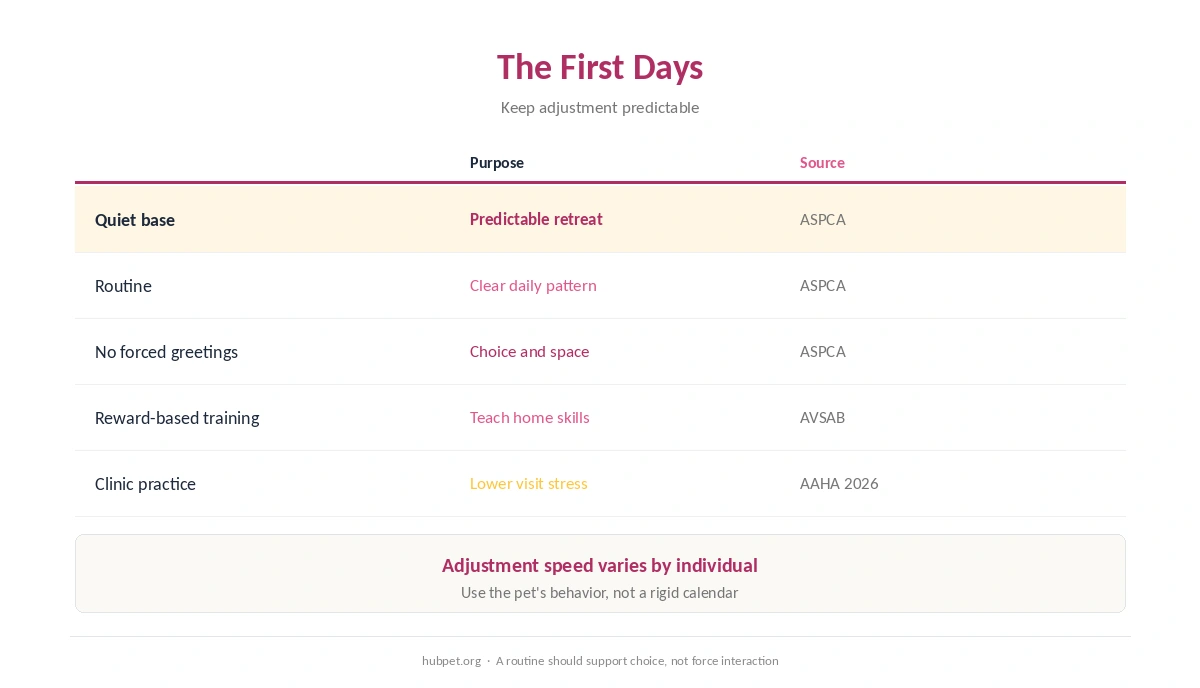
A new pet owner checklist should also protect the adjustment period from too much pressure. ASPCA advises patience, calm routines, time to observe, and no forced interactions (ASPCA, accessed 2026). Therefore, let the pet approach people and new spaces at an individual pace. Keep daily patterns predictable.
| First-days task | Why it matters | Source |
|---|---|---|
| Keep a quiet base | Gives the pet a predictable retreat | ASPCA 2026 access |
| Use a routine | Makes daily events more predictable | ASPCA 2026 access |
| Avoid forced greetings | Lets the pet choose distance while adjusting | ASPCA 2026 access |
| Use reward-based training | Reinforces desired household behavior | AVSAB 2021 / ASPCA 2026 access |
| Prepare for the clinic | Positive carrier and handling practice can reduce stress | AAHA 2026 |
Identification and Veterinary Setup
AVMA says a microchip works best when the owner registers it and keeps contact information current (AVMA, accessed 2026). Visible identification still matters because a microchip does not replace a collar tag (AVMA, accessed 2026). At the first clinic visit, bring the records from the shelter, rescue, breeder, or prior caregiver. Then the veterinary team can review history and plan preventive care.
AAHA recommends gradual, reward-based preparation for veterinary visits (AAHA, 2026). For cats, leave the carrier out and pair it with comfortable experiences. For dogs, use brief calm handling and positive travel practice. In addition, reward voluntary participation when possible.
When to Call Your Vet
Contact your veterinarian if the new pet seems ill, is in pain, or has a sudden major behavior change. Also call for repeated vomiting, inability to urinate, or suspected poisoning. Go now for trouble breathing, collapse, seizures, or other emergency red flags. The pet emergency signs guide explains those red flags.
How We Research
HubPet uses published veterinary and animal-welfare guidance rather than personal anecdotes. First, we read ASPCA adoption and first-week guidance. We also checked ASPCA new puppy and kitten safety guidance (2021). For clinic preparation, we read AAHA veterinary visit guidance (2026). Next, we checked AVMA microchipping guidance. Finally, we read AVSAB Humane Dog Training Position Statement (2021). HubPet read every source on October 11, 2026. See How We Research for our method.
New Pet Owner Checklist FAQ
Set up a quiet dedicated space and basic supplies. In addition, remove accessible hazards before arrival (ASPCA, accessed 2026).
ASPCA advises establishing care with a nearby veterinarian shortly after adoption. The clinic can then guide preventive and ongoing care.
No. AVMA says visible collar identification still matters, and the microchip registration also needs current contact information (AVMA, accessed 2026).
Not necessarily. ASPCA advises giving a new pet time and space and avoiding forced interactions while the animal adjusts (ASPCA, accessed 2026).
Use reward-based methods. AVSAB recommends reward-based training for dog training and advises against aversive methods (AVSAB, 2021).
The Bottom Line
A new pet owner checklist works best when it covers safety, identification, veterinary setup, routine, and humane training. Prepare a quiet base and pet-proof the home. Organize records, register the microchip, and arrange veterinary care. Finally, let the pet adjust at an individual pace. Use the new pet owner checklist as a setup tool, not a rigid timetable. A useful companion care page is how to Help a Pet Settle After Adoption.