
This article is general information, not veterinary advice. If your pet seems unwell, is in pain or may have eaten something harmful, contact your vet or an animal poison control line right away. Read our vet disclaimer.
How to help a pet settle after adoption starts with a small, predictable world and permission to adjust at the animal’s own pace. The ASPCA adoption guidance recommends a dedicated safe space, routine, patience, and avoiding forced interaction. ASPCA also presents a “3-3-3” guideline, but treat those numbers as a rough orientation rather than a biological deadline for every pet.
Meanwhile, the Dogs Trust rescue-dog guidance similarly recommends a quiet den, limited visitors at first, predictable routine, and letting the dog approach in their own time. For species-specific setup, combine this page with the first-week dog checklist or the first-week cat checklist.
How to Help a Pet Settle After Adoption: Prepare a Home Base
How to help a pet settle after adoption becomes easier when the first area is simple. Use the calm-space guide to create a quiet retreat with easy access to water, rest, and species-appropriate resources. Then use the pet-proofing guide before expanding access to more rooms.
Keep early choices boring in a good way. The predictable-routine guide can help anchor meals, walks, play, toileting, and bedtime. If feeding timing must change, the feeding-schedule guide shows how to make the routine clear without treating one exact clock time as mandatory.
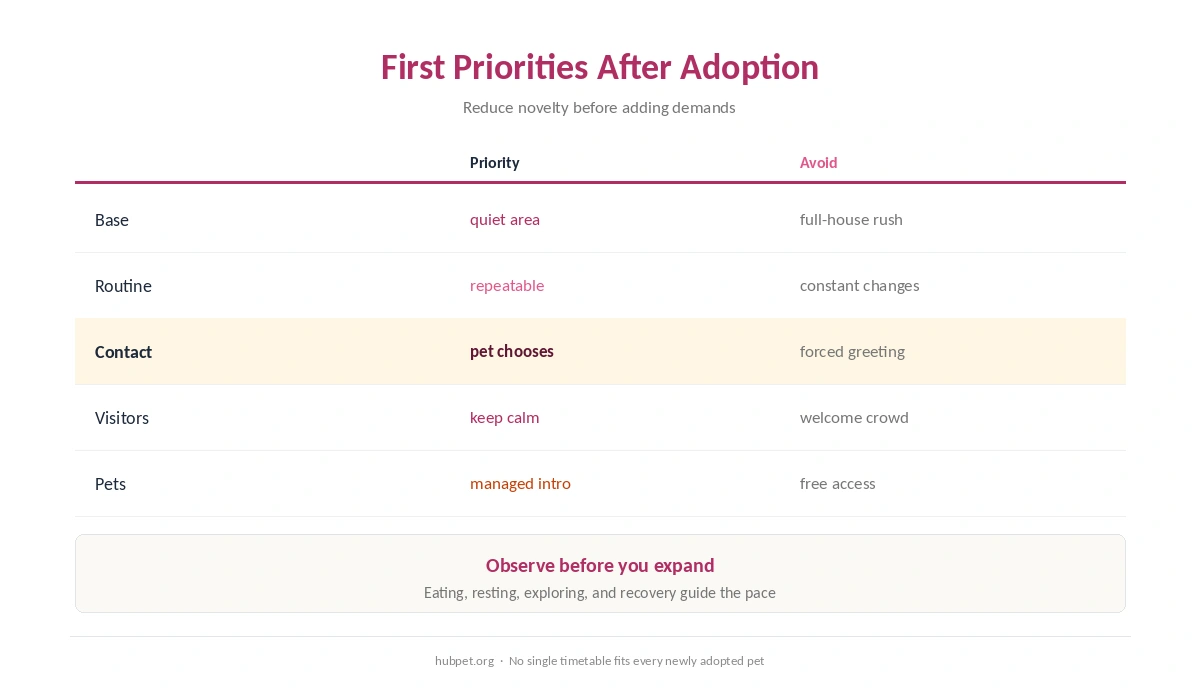
| Early priority | Useful setup | Avoid |
|---|---|---|
| Safe base | Quiet room, bed, crate, or den | Forcing full-house access |
| Routine | Repeatable meals, rest, toileting | Constant schedule changes |
| Contact | Let the pet approach | Crowding or repeated handling |
| Visitors | Keep the first days calm | Welcome-home gathering |
| Other pets | Slow, managed introduction | Immediate free access together |
| Observation | Track normal eating, rest, behavior | Assuming one timeline fits all |
How to Help a Pet Settle After Adoption Step by Step
If there are resident animals, do not make the first meeting carry the whole relationship. The new-pet introduction checklist organizes barriers, scent, distance, and supervision. For mixed species, use the dog-to-cat introduction guide; for cats, the two-cat introduction guide gives a slower sequence. In practice, how to help a pet settle after adoption means keeping introductions easier than the pet’s current limit.
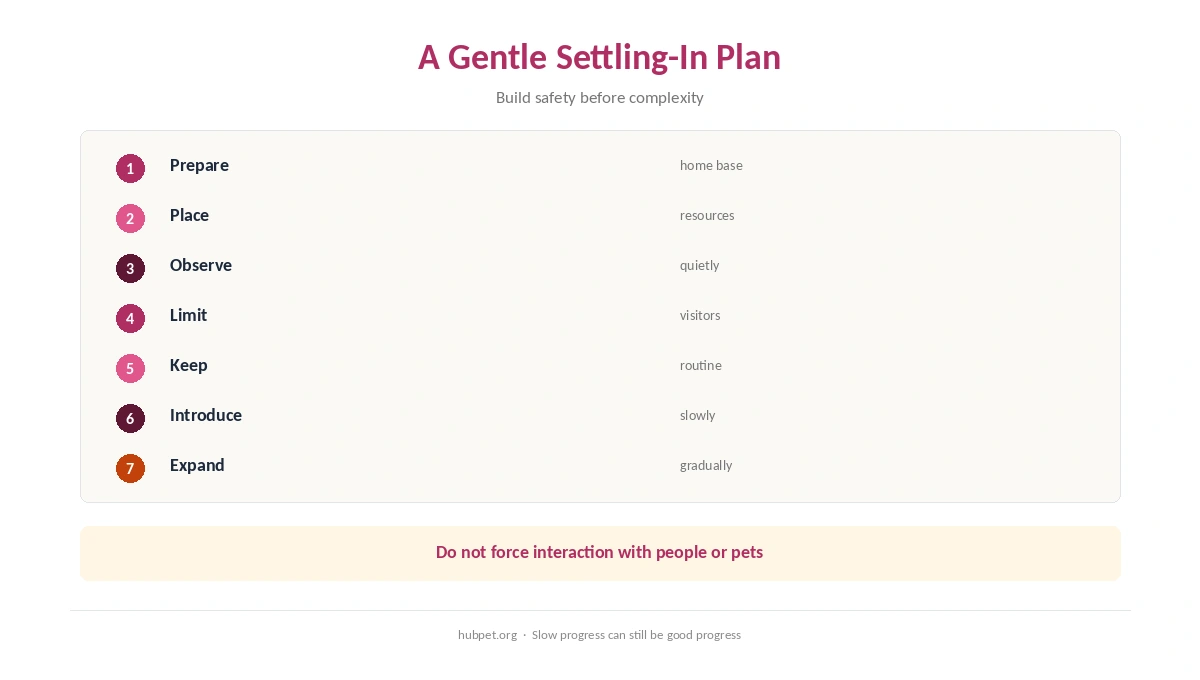
- Set up one quiet home base before the pet arrives.
- Keep food, water, toileting, rest, and safety resources easy to find.
- Let the pet observe before expecting social interaction.
- Limit visitors and major outings during the first adjustment period.
- Keep daily events reasonably predictable.
- Use barriers and distance for introductions to resident pets.
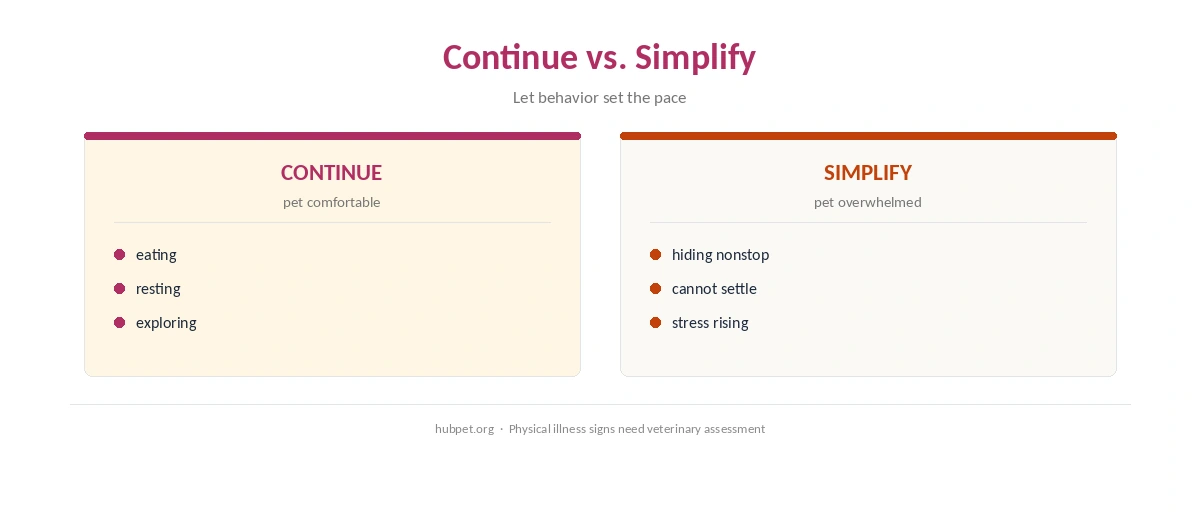
- Expand access to the home after the pet is moving, resting, eating, and exploring comfortably.
- Add training or handling in short, positive pieces instead of testing everything at once.
- Write down behavior, appetite, sleep, toileting, and triggers so changes are easier to notice.
What If Your Pet Does Not Settle After Adoption Quickly?
Slow adjustment is not failure. The new-home adjustment guide can help you reduce novelty further. At night, the night settling guide focuses on calm routine rather than forcing isolation before the pet is ready. For a closer look at this part of daily care, see how to Create a Safe Room for a New Pet.
If the pet avoids resident animals, return to managed separation. The multi-pet relationship guide is a better next step than allowing repeated tense encounters. If the new pet appears shy around people, the shy-cat guide or the fearful-dog guide can help preserve choice and distance.
When to Call Your Vet
Contact your veterinarian if the pet seems physically unwell, has a sudden or severe behavior change, or you are concerned about eating, drinking, toileting, breathing, persistent vomiting, marked lethargy, or pain. For urgent warning signs, use the pet emergency signs guide and seek veterinary care promptly.
How We Research
HubPet reviewed the ASPCA adoption tips and the Dogs Trust rescue-dog settling guide on October 11, 2026. Read more about our research process.
There is no reliable universal deadline. Some pets relax quickly, while others need weeks or longer. Use behavior and comfort rather than a fixed calendar.
Treat it as a simple orientation used in adoption guidance, not a validated timetable that every dog or cat must follow.
Keep the first days calm when possible and let the pet learn the home before adding social pressure.
A smaller safe area can make the first stage easier. Expand access gradually as the pet becomes comfortable.
Give safe hiding options, avoid pulling the pet out, keep resources accessible, and watch the whole behavior pattern rather than forcing contact.
The Bottom Line: How to Help a Pet Settle After Adoption
How to help a pet settle after adoption is mostly about reducing novelty: start with a safe base, keep the routine understandable, limit pressure, and expand the pet’s world from comfort rather than from a fixed timetable.