
This article is general information, not veterinary advice. If your pet seems unwell, is in pain or may have eaten something harmful, contact your vet or an animal poison control line right away. Read our vet disclaimer.
How to support pets during household changes starts with preserving familiar resources. Reduce how many things change at once. The AAHA cat-anxiety guidance lists moves, family changes, a new baby, a new or lost pet, and routine changes as possible stressors for cats. The broader AAHA behavior-management guidelines emphasize early recognition of anxiety and behavior change in dogs and cats. A useful companion behavior page is why Pets Act Out When Routines Change.
When the change is a move, the ASPCA moving guide recommends a home-base room and gradual access to the new space. The same principle fits many household transitions. Protect predictable anchors, then expand novelty in manageable pieces. The predictable-routine guide is a useful starting point.
How to Support Pets During Household Changes: Keep Familiar Anchors
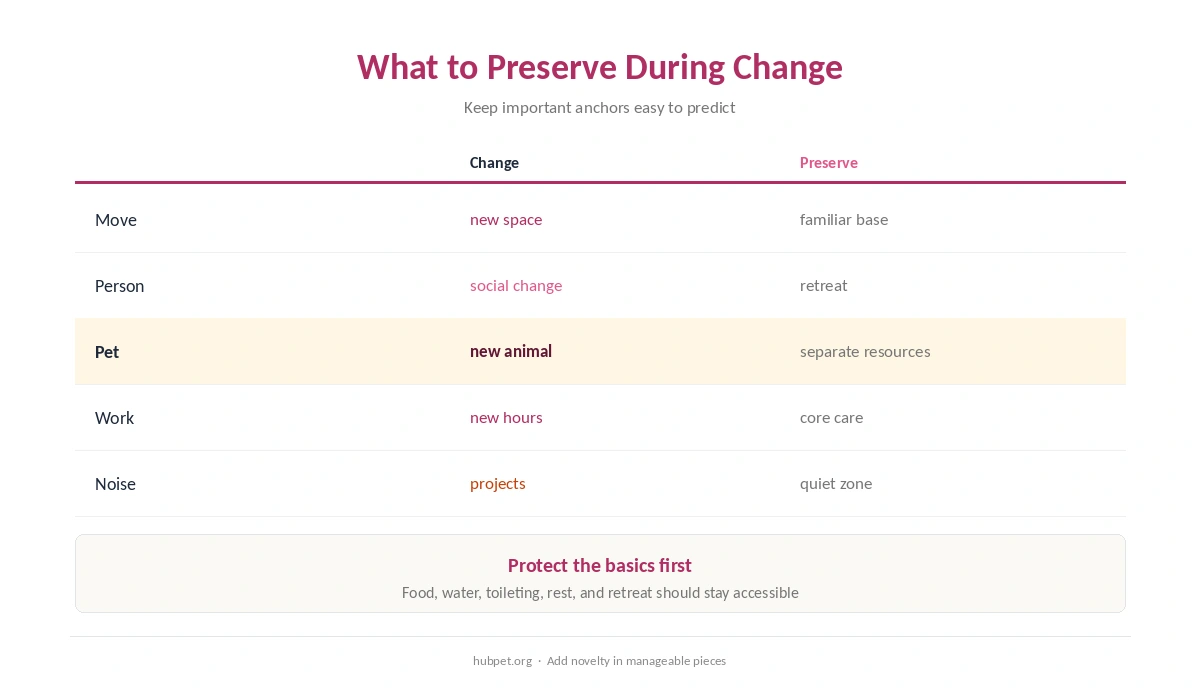
How to support pets during household changes is often about keeping important things stable. Preserve familiar beds, feeding areas, toileting routines, walking cues, and quiet spaces when possible. The calm-space guide can protect retreat while the rest of the home is busy.
If the household schedule changes, use the schedule-change guide to shift timing gradually. If a new person moves in, the new-person adjustment guide focuses on distance and choice rather than forced greetings.
| Household change | What to preserve | What to add gradually |
|---|---|---|
| Move | Bed, scent, food, toileting setup | Rooms and new sounds |
| New person | Safe retreat and routine | Low-pressure interaction |
| New pet | Separate resources | Managed introductions |
| Work schedule | Core care times | Longer absences or new walker |
| Renovation or holiday | Quiet zone | Noise and visitors |
| Loss in household | Routine and support | New activities only as tolerated |
How to Support Pets During Household Changes Step by Step
New animals need a separate plan. Use the new-pet introduction checklist instead of placing unfamiliar pets together and waiting for them to work it out. In multi-pet homes, the attention-balancing guide can help keep one pet from losing all access to familiar people and activities. For the related care topic, see how to Help a Pet Recover From Stressful Events.
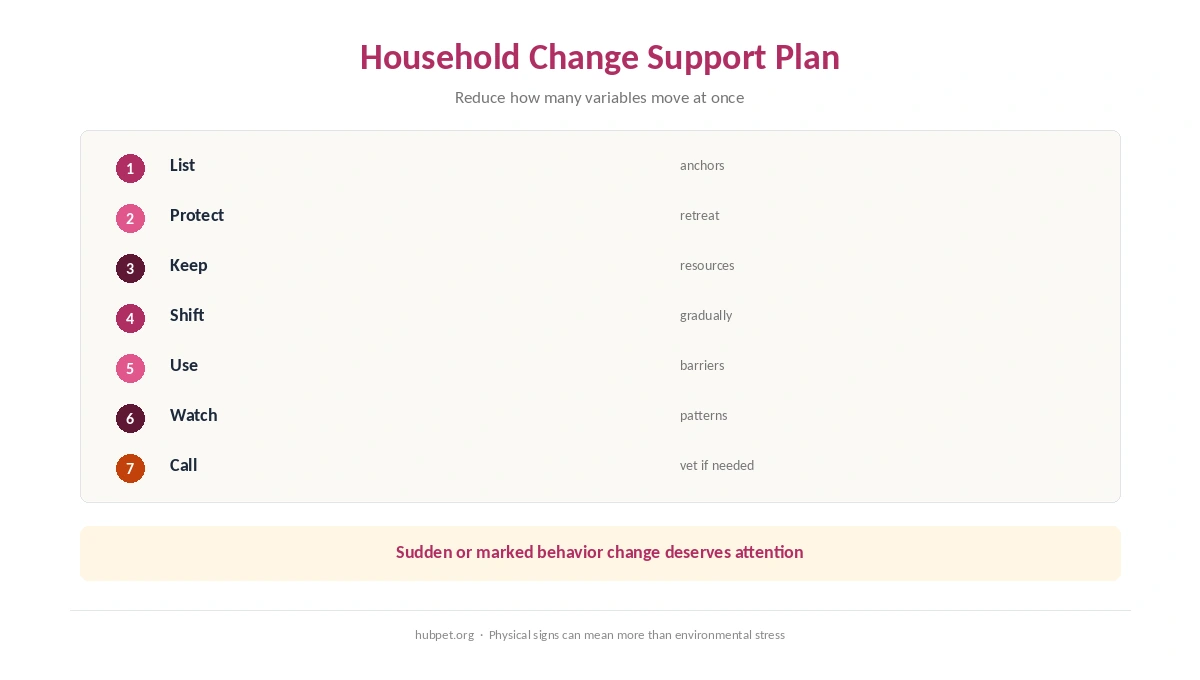
- List the parts of the day your pet already predicts reliably.
- Protect a quiet retreat before the household change starts.
- Keep food, water, toileting, rest, and exercise access consistent when possible.
- Change timing in small steps instead of shifting everything at once.
- Use barriers and distance for new people, animals, workers, or noisy activity.
- Keep enrichment familiar at first, then add new options gradually.
- Watch eating, drinking, toileting, sleep, activity, social behavior, and recovery.
- Lower exposure if stress signs cluster or intensify.
- Ask your veterinarian about sudden, marked, or persistent changes in behavior or basic functions.
How to Support Pets During Household Changes When Stress Builds
How to support pets during household changes also means planning around temporary disruption. For visitors, celebrations, or home projects, the holiday-stress guide can help you plan a quieter zone. When work hours change, the long-work-hours guide helps preserve care and enrichment. No single schedule suits every animal.
For cats, start with the cat-stress signs guide. The calming guide can then help you respond to clusters of behavior rather than one isolated action. For a dog distressed by household departures, the separation-anxiety guide explains when absence-related behavior needs a more specific plan.
When to Call Your Vet
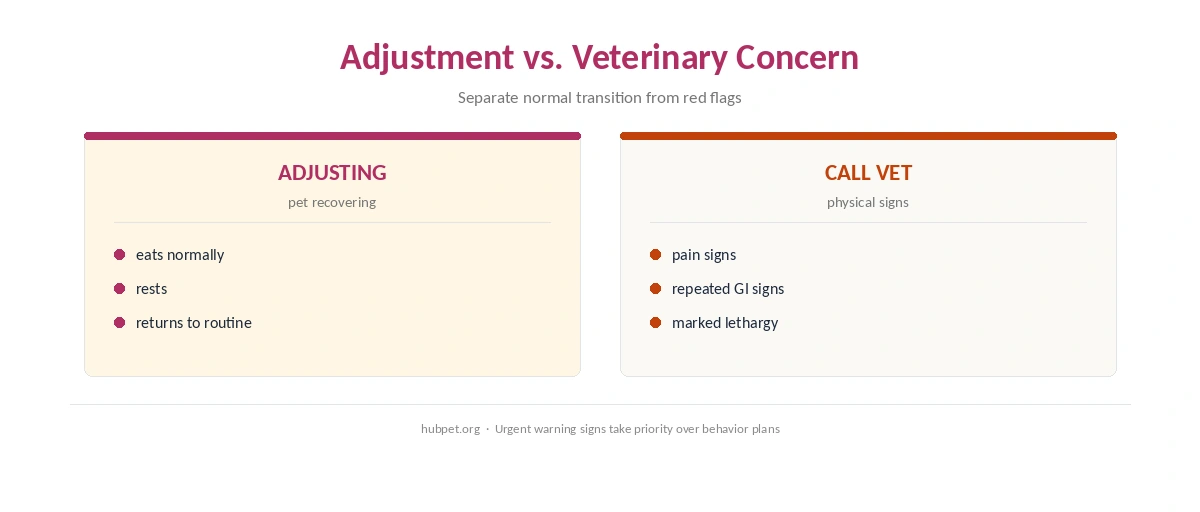
Contact your veterinarian for sudden or marked behavior change, persistent refusal to eat, repeated vomiting or diarrhea, changes in urination, significant lethargy, breathing difficulty, signs of pain, or any other concern that suggests the problem may be medical rather than simply environmental. For urgent warning signs, use the pet emergency signs guide and seek care promptly.
How We Research
HubPet reviewed the AAHA anxiety guidance, the AAHA canine and feline behavior-management guidelines, and the ASPCA moving guide on October 11, 2026. Read more about our research process.
Moves, new people, a new or lost pet, schedule changes, renovations, visitors, and changes in access to familiar resources can all alter a pet’s routine.
No. Aim to preserve key anchors such as rest, feeding, toileting, walks, and retreat while changing other parts gradually.
Start with a secure home-base room containing familiar resources, then expand access gradually as the cat becomes comfortable.
Shift timing gradually when possible, preserve exercise and toileting needs, and build a predictable plan for absences instead of changing the whole day at once.
Sudden or severe behavior change, changes in basic functions, pain, breathing trouble, repeated gastrointestinal signs, or other signs of illness warrant veterinary assessment.
The Bottom Line: How to Support Pets During Household Changes
How to support pets during household changes means preserving familiar resources, retreat, and routine while adding novelty in small pieces. Watch the whole behavior pattern. Involve your veterinarian when the change is sudden, severe, or mixed with physical signs.