
This is general cat-welfare information, not veterinary advice. Read our veterinary disclaimer. Follow the manufacturer’s instructions and seek qualified structural advice when a support system is uncertain.
A cat window sill perch uses the existing ledge rather than attaching suction cups directly to glass. That sounds simple, but sills vary greatly in depth, material, molding and window hardware. The right setup spreads load across intended contact points without pinching the sash or rocking under a cat. This guide helps you inspect the real sill and match it to a clamp-on or supported platform without guessing about universal dimensions.
Measure the ledge where the product actually sits
Measure the horizontal depth and usable width of the sill, not the entire distance between the curtains. Look for raised trim, rounded front edges, a projecting radiator, cords or a handle that can interfere with the bracket. Use a ruler or tape at more than one place because some older sills are uneven. Compare those measurements with the manufacturer’s minimum and maximum sill dimensions. Do not count decorative molding as structural support unless the design specifically permits it.
Understand the difference between a clamp and a resting shelf
Some window seats use screws that press against the underside of a ledge. Others depend on a wide rigid base or legs that reach the floor. A clamp should contact the intended solid surfaces without bending the window trim. A platform merely resting across a narrow rounded sill may slide when the cat jumps. Look for a clear illustrated installation manual and positive anti-tip support. A product advertised as “no drill” is not automatically safe for every sill or every cat.
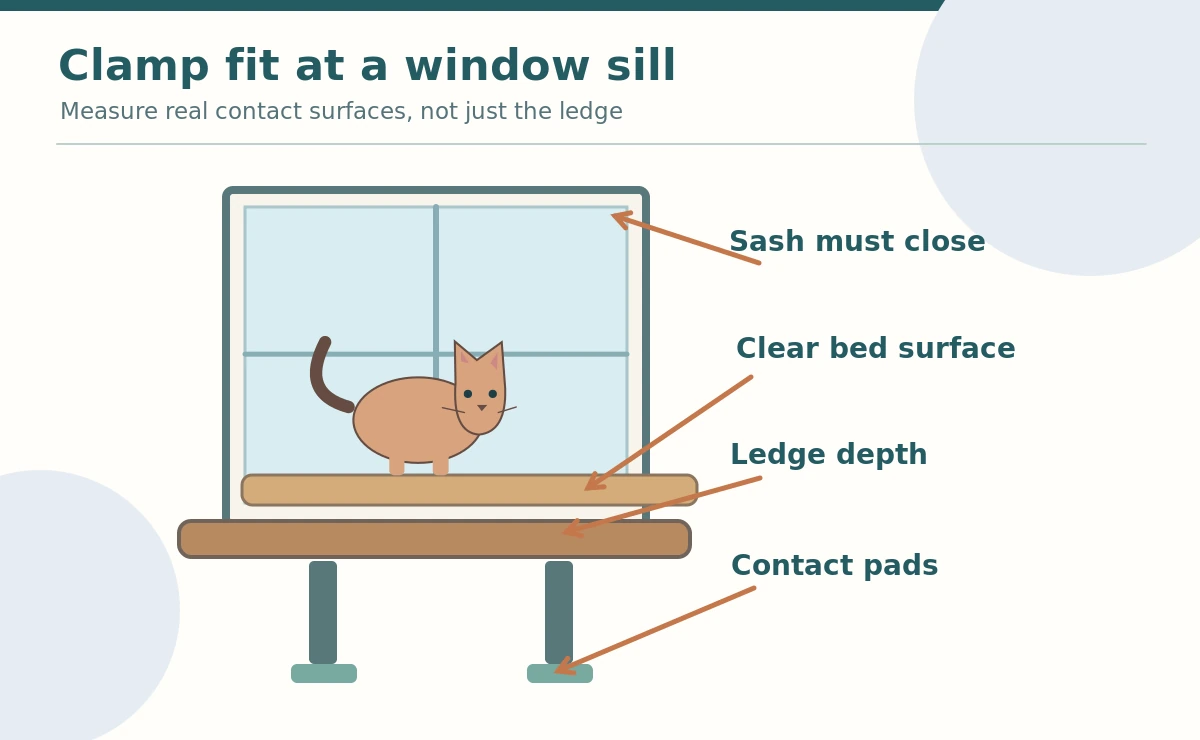
Inspect the contact pads and pressure points
Locate the pads, feet, screws and any anti-slip layer. Pads should sit flat and protect the sill material without falling apart or leaving a narrow pressure mark. Tighten parts only as the maker directs; extra force can crack brittle trim or strip threads. If a screw ends against hollow trim or a loose board, stop and choose a different setup. Never add a makeshift shim that moves under load. The safe contact path must be repeatable after cleaning or repositioning.
Check window clearance through its full operation
With the cat out of the room, verify that the window can still close and lock as intended. Do not route a supporting strap through a moving sash or trap a clamp in a locking mechanism. Keep the perch clear of tilted-window gaps and screens. If a window must stay open for the seat to fit, reconsider the installation. A perch should not compromise weather sealing, an emergency exit or independent cat-proof window protection.
Use the cat’s body to assess platform size
A generous advertised width may hide side arms that reduce usable space. Check the unobstructed sleeping area and turning room for your particular cat. A cat that always stretches may prefer a deeper flat pad rather than a narrow lip. Ensure the surface has traction, and remove loose tassels or loops that could catch a claw. Test whether a removable cover stays in place during an empty handling check. Comfort is a fitting issue, not simply the softness of a cushion.

Plan an easy approach without awkward leaps
The sill may be high above a sofa, desk or radiator. Choose a stable approach from a cat tree or purpose-built step, avoiding a narrow landing that forces the cat to twist in midair. Put the alternate landing somewhere the cat can use without jumping toward a closed pane. For kittens, senior cats or animals who hesitate at the edge, lower alternatives may be more suitable. A cat should be able to leave the spot freely if it becomes warm or crowded.
Verify the empty unit before allowing use
Install according to the exact instructions and check every clamp, pad and support joint from the side. Carefully press on the platform as the manufacturer directs while the cat is absent; do not invent a load test or hang weights from a ledge. Watch for rotation at the front edge, a lifting rear foot or any crack in the sill. If you hear creaking or see movement, remove the perch and investigate. A wobbling sill seat is not an acceptable “break-in” condition.
Keep heat and sunlight part of the decision
A window perch may sit directly over a heater or inside strong afternoon sun. Make sure the cat can move away and reach fresh water elsewhere. Avoid contact between fabric and hot vents, radiators or electrical equipment. Check that the sill is free of condensation, mold or peeling paint. A machine-washable cover is helpful only if its attachment remains secure after washing and drying. The preferred view should not come at the cost of a hot, slippery or damp resting surface.
Compare ledge seats with suction and floor-supported options
A fixed ledge seat makes hardware easy to inspect, but it can still fail on unsuitable trim. Glass suction models need compatible panes and routine seal checks. Freestanding cat trees use floor space without loading window trim. Wall-mounted shelves introduce separate anchor decisions. Pick the type whose supports you can confidently inspect and maintain, instead of ranking all seats by price or by the number of cats in advertising photos.

Reinspect after weather, cleaning and rearranging
Make a habit of checking the clamp position, protective pads, fasteners, cover and underside of the sill. Move the cat away before cleaning the window or operating nearby hardware. Recheck the setup after strong sun, humid weather, washing covers or moving a chair used as the approach route. Stop using it if screws loosen repeatedly. Manufacturer instructions and the construction of your home override generic online installation tips.
How We Research
Our research separates feline-welfare guidance from mounting claims. Published veterinary and animal-welfare recommendations establish the general needs; product-specific instructions establish attachment limits. HubPet does not test bracket loads or certify particular products. Sources reviewed October 28, 2026. Read How HubPet works.
Sources
AAFP and ISFM Feline Environmental Needs Guidelines. Read source.
ASPCA, High-Rise Syndrome: Lifesaving Tips for Cat Parents. Read source.
Cats Protection, Keeping Your Cat Safe in the Home. Read source.
Safety note: Do not allow access to a loose elevated surface or an unsecured window. Seek veterinary help if a cat shows signs of injury, new difficulty moving or discomfort.
There is no universal depth. Measure your actual ledge and use the minimum and maximum dimensions listed for the exact product.
Not necessarily. The clamp needs the solid contact surfaces shown in the manual; loose or fragile molding may not be suitable.
Do not rely on a small opening or ordinary screen to protect the cat. Keep the window secure and follow independent fall-prevention guidance.
Do not allow access. Remove it and check clamp position, contact pads, the sill itself and the maker’s instructions.
No. The structure must be stable and offer enough usable room for the cat to settle, turn and step off comfortably.