
A kitten digging tiny claws into a sofa arm is practicing normal scratching, not testing your authority. Kittens explore textures, learn routines quickly and may not yet have the balance or reach for an adult-size post. The easiest training window is often before the couch becomes the most rewarding place to stretch. This guide focuses on the first weeks of kitten ownership: setting up appropriate surfaces, supervising play and rewarding small successes without intimidating a young animal. It is not a general furniture buying guide or a substitute for veterinary care. Review HubPet’s veterinary disclaimer if you notice claw injuries or sudden behavior changes.
Start with two kitten-height scratching choices
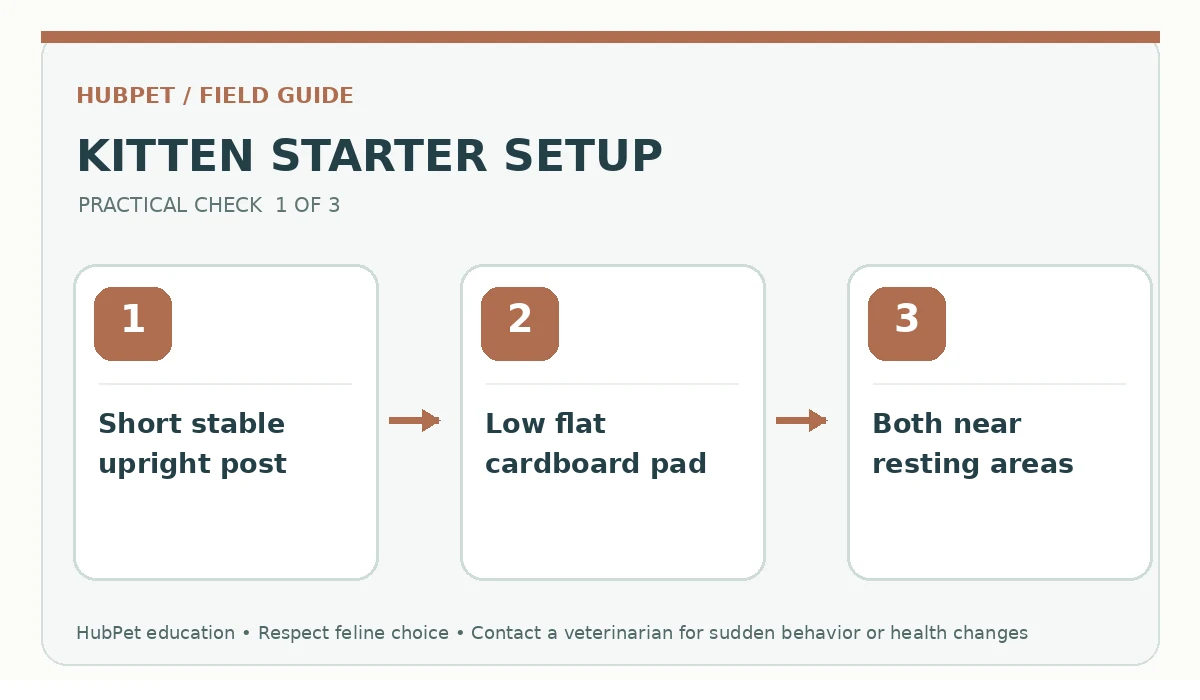
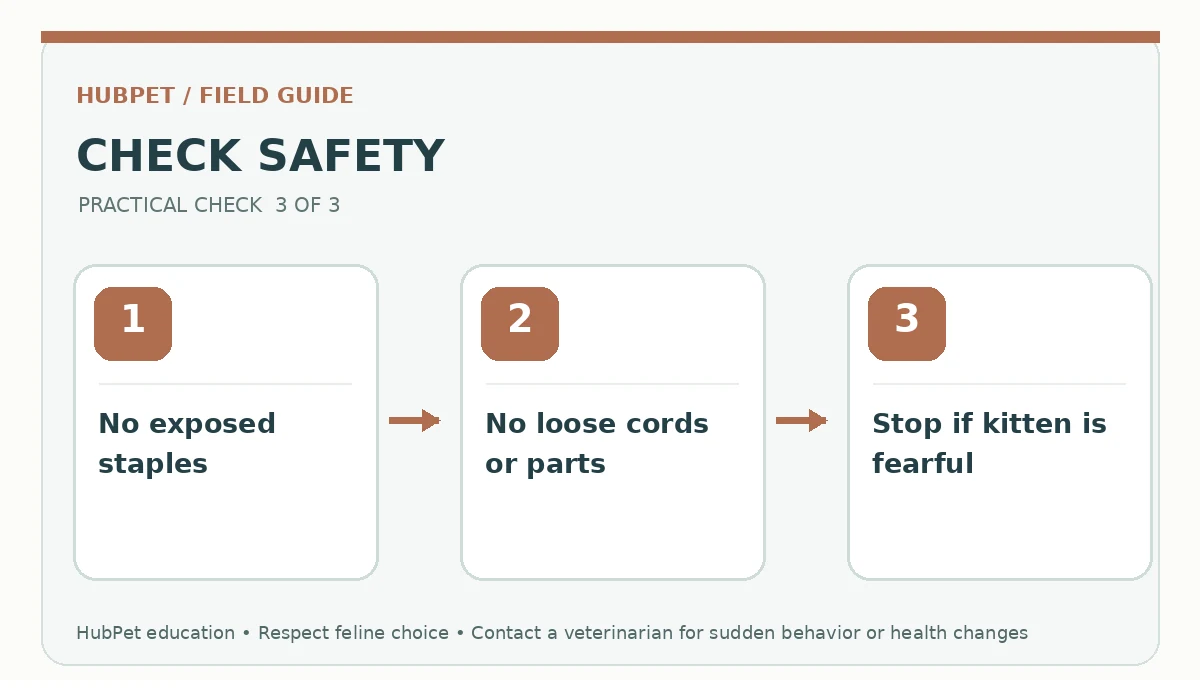
Set a low, sturdy horizontal cardboard pad and an upright scratcher the kitten can reach comfortably. A tall adult post is fine only if it remains stable and the kitten can use an accessible section. Look for unexposed staples, fraying ropes and attachments small enough to swallow. Place both choices where your kitten wakes, plays and meets family members. Kittens may test materials before developing a favorite. Avoid hiding every scratching option in a back corner simply to protect the room’s appearance. Aim to make normal claw movements easy and comfortable on the chosen surface.
Notice the moment scratching naturally occurs
Many cats stretch and scratch after waking or before active play. Watch for those moments and have a scratching pad within a short walk. A kitten that runs to a couch corner after a nap may be following a reliable routine. Move an acceptable scratcher near that spot instead of repeatedly carrying the kitten away. VCA emphasizes providing both vertical and horizontal surfaces and rewarding appropriate use. Consistency makes it easier for a young cat to learn the household pattern. Your job is to arrange the surroundings so the desired action is convenient.
Use a short play-and-reward sequence
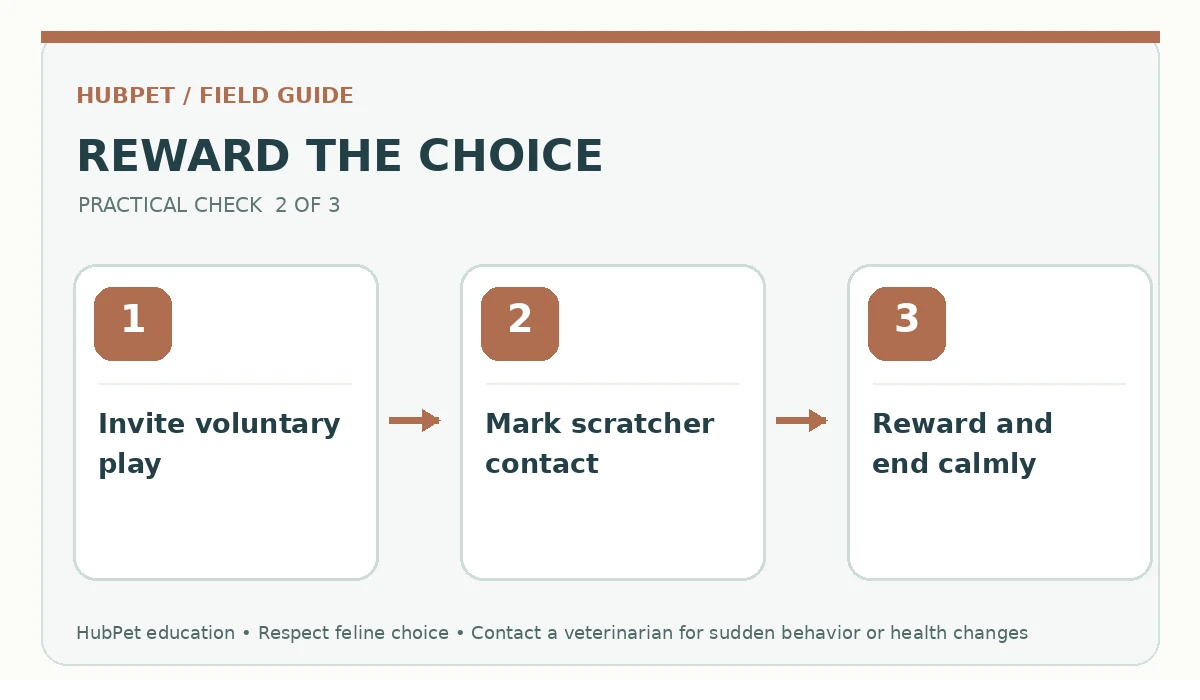
Move a safe supervised wand toy near the scratching surface and let the kitten approach voluntarily. If the kitten hooks claws into the post, offer a gentle verbal reward or a tiny appropriate treat. Use part of the daily food allowance when practical rather than adding many extra calories. Finish the session before the kitten becomes overexcited and starts grabbing hands. Keep sessions brief and repeat them during normal active periods. Never drag a paw down the post to demonstrate scratching; forced handling can make the object associated with discomfort rather than choice.
Keep hands and feet out of rough play
A kitten that uses claws on the couch may also grab moving fingers or toes. Avoid teaching that bare hands are toys, even when the kitten is very small. Use appropriate toys to direct chase and grab behavior away from skin and delicate furniture. If claws catch your clothing, stop moving briefly and free the fabric gently rather than pulling violently. Frightening, grabbing or physically restraining the kitten will not teach it a safe alternative. A predictable, calm play routine gives the kitten a better way to use energy and helps protect relationships with children.
Shield the favorite sofa corner temporarily
Protect one or two target locations with a smooth fitted cover or another material-safe guard. Test adhesives before placing tape on upholstery; some fabrics discolor or pull when tape comes off. Make sure the kitten cannot chew a plastic sheet or become tangled in one. Put the allowed scratcher immediately beside the covered corner so the kitten has a satisfying replacement. Check loose threads, buttons and damaged upholstery foam that the kitten might swallow. Temporary protection works best as part of training, not as a substitute for stable scratching surfaces.
Introduce a second texture if the first fails
Some kittens prefer corrugated cardboard while others choose sisal, carpet-like fabric or another rough, pet-safe material. Try an alternative before buying multiple identical posts. Assess stability and the movement the kitten makes rather than assuming the most decorative scratching tree will work. Replace shredded or unsafe products before pieces come loose. Position surfaces upright, sloped or flat based on observed choice. A kitten whose claws snag in a rough mat may avoid it; check the construction and switch to a safer texture. Give each option a fair chance during calm, supervised moments.
Make family responses consistent
Ask everyone to encourage scratching on the designated surfaces and avoid scolding when the kitten forgets. One person grabbing the kitten while another rewards sofa scratching with an exciting chase creates confusing signals. Instead, calmly move play toward a scratcher and praise voluntary use. Keep an approved toy accessible so family members can redirect a kitten without using their hands as bait. Children should watch under adult supervision and respect the kitten’s need to leave an interaction. Consistency is a household habit, not a command the kitten must obey immediately.
Practice gentle claw care separately
Routine claw checks and optional trimming can limit accidental snags, but a kitten still needs to scratch. Introduce handling slowly: touch a paw briefly, reward calm acceptance, then release. Never hold down a struggling kitten to finish a nail trim. Ask your veterinarian for a demonstration of identifying the quick and using appropriate clippers. Provide frequent breaks and stop when the kitten pulls away or shows fear. Scratchers help maintain the outer claw sheath and support stretching, while nail care manages sharp tips; these are complementary practices, not substitutes.
Measure whether the setup is working
For a week, observe where the kitten first stretches after naps and which scratching surface it selects during play. Keep the furniture guard in place while a new habit develops. Note whether the kitten can use the post without tipping it over and whether a different placement changes the outcome. A successful plan should leave the kitten willing to approach the scratching area. If the young cat becomes withdrawn, startled by family reactions or reluctant to play, change the plan rather than enforcing it harder. Progress is comfort plus appropriate scratching, not silent compliance.
Respond to problems that are not simple scratching
Sudden excessive clawing accompanied by skin irritation, damaged nails, limping or major behavior changes needs veterinary advice. Kittens may also chew dangling strings or swallow damaged scratcher pieces; remove hazards promptly and seek urgent advice if you suspect ingestion. If the kitten is persistently frightened of hands, cannot settle or reacts painfully to touch, work with a veterinarian or qualified behavior professional. General scratching guidance should not delay care for pain or illness. Young cats learn through safe, repeated experiences; protecting their welfare is more important than saving a particular sofa corner.
How We Research
Our editorial review compared veterinary and animal-welfare guidance on feline scratching behavior, scratching-surface preferences, safe environmental redirection, household stress signals, and gentle training. We used published feline guidance as the basis for practical behavior guidance and contrasted it with the limitations of quick-fix marketing claims. We did not run controlled behavior trials, conduct product tests or endorse brands. Surface preference, behavior and household arrangements vary by cat and home; ask a veterinarian about persistent behavior changes. We last reviewed the sources on October 27, 2026. Read about our editorial process on the About HubPet page.
Sources
VCA Animal Hospitals: How to stop a kitten from scratching furniture. Accessed October 27, 2026.
ASPCA: Destructive scratching. Accessed October 27, 2026.
Ohio State Indoor Pet Initiative: Scratching and suitable surfaces. Accessed October 27, 2026.
Cornell Feline Health Center: Destructive behavior in cats. Accessed October 27, 2026.
Begin as soon as the kitten settles into a safe home. Offer stable kitten-accessible options and reward voluntary exploration; no formal command is needed.
No. Let the kitten choose to touch and scratch it. Forced paw-rubbing can be unpleasant and may reduce interest in the post.
No. Scratching helps maintain claws and stretch muscles, but some cats still benefit from careful tip trims when needed and tolerated.
Providing both is a useful starting point because preferences vary. Watch which angle the kitten uses naturally and keep stable alternatives nearby.
Reduce hazards, protect vulnerable upholstery and leave safe scratchers near the target. Do not use unattended string toys or punishment devices to manage the behavior.