
Use calm, reward-based guidance only. Sudden behavior changes or signs of pain warrant a veterinarian’s advice. For medical concerns see the HubPet veterinary disclaimer.
Wondering how to stop my kitten from scratching furniture? Start with the exact sofa corner or chair leg the kitten chooses. Scratching is a normal feline stretch and scent-marking behavior, so a household wins by providing a better target, not by trying to ban claws. This guide focuses on a furniture layout: what kind of scratching surface matches the damage, where to put it, how to protect upholstery temporarily and how to reward a kitten for choosing the new object. For claws on human hands during play, use a different play-redirection approach.
Match the scratcher to the damaged furniture
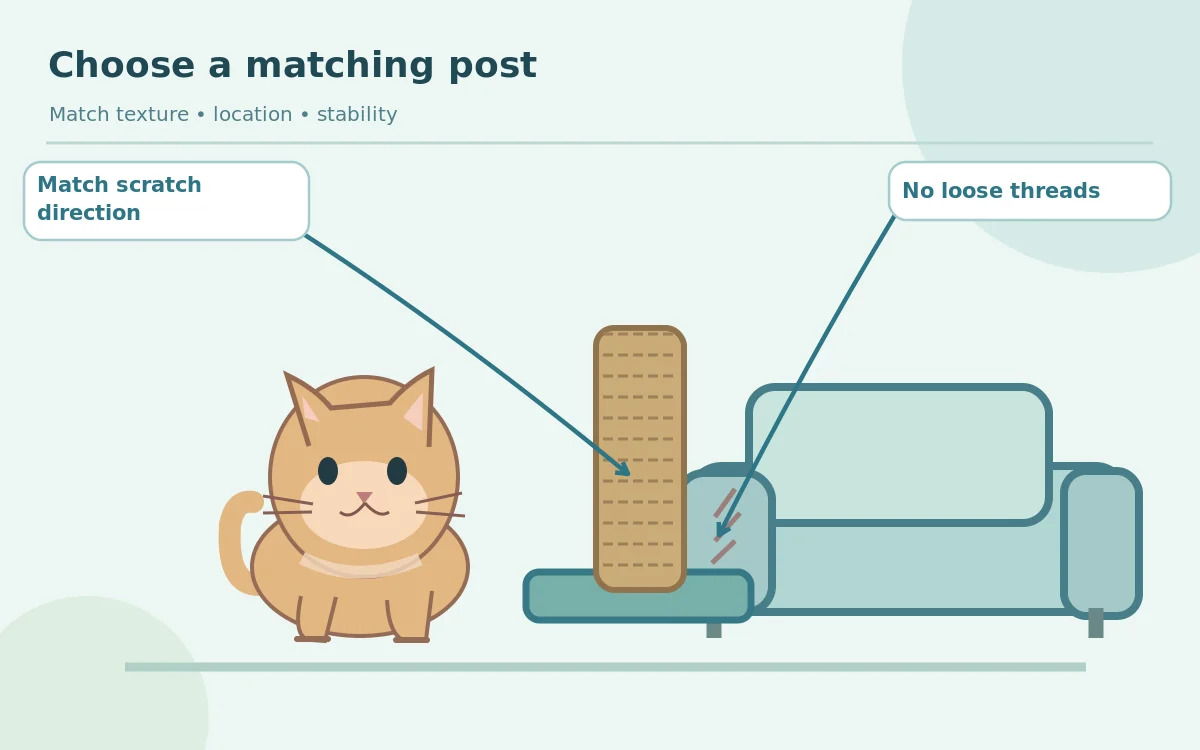
A kitten that reaches upright on a sofa arm may prefer a tall vertical surface; one clawing flat carpet may prefer a horizontal cardboard or sisal pad. Measure the height of the kitten’s full stretch and choose a stable post that does not wobble. Some cats need both textures because a tightly woven sofa and a loose rope post feel very different under the paws. Place the scratcher immediately beside the scratched corner at first, rather than hidden in a hallway.
Test the stability by pressing the base before allowing use: a kitten may avoid a post that tips afterward. Watch where the kitten sleeps; scratching often happens after waking. Cornell and VCA recommend providing preferred orientations, stable posts and rewarding the correct choice. Avoid hanging a tempting scratch panel on an unstable dresser that could topple onto the kitten.
| Furniture damage pattern | Better substitute | Home setup change |
|---|---|---|
| Vertical sofa arm | Tall, stable vertical post | Place against the sofa corner |
| Flat carpet patch | Horizontal scratch pad | Keep pad on the preferred route |
| Chair leg | Narrow anchored sisal surface | Shield the leg and add nearby post |
| After waking from nap | Scratch surface by resting spot | Reward first stretch at post |
| More scratching after change | Multiple stations and quiet space | Assess stress and resource access |
Make the sofa less rewarding while the habit changes
Cover the favorite sofa edge temporarily with a well-secured furniture protector approved for the upholstery material. You can also block the exact corner with the new post; the animal should still have an easy route around the room. Check adhesive products against the fabric care instructions and keep dangling edges, staples and exposed adhesive out of reach. For fabric already torn open, remove loose threads that a kitten might swallow and arrange repair if filling is accessible.
Do not use painful devices, startling sprays or frightening traps. Strong fragrances and essential oils are poor substitute strategies around cats and may carry safety concerns. Make the alternate scratcher pleasant with praise, a familiar toy passed over its surface or a treat placed nearby; do not forcibly rub a kitten’s paws against it. Keep the sofa covered until scratcher use is consistent, then remove protections gradually.
- Photograph and map the exact furniture locations scratched for three days.
- Choose vertical or horizontal scratchers that match the kitten’s preferred movement.
- Position a stable scratcher directly next to each main target; shield upholstery temporarily.
- Use toys and small rewards for voluntary scratching on the new surface.
- Review the weekly log; adjust one placement or texture at a time and seek veterinary advice if behavior changes abruptly.

Reward the exact behavior you want at the furniture corner
When the kitten approaches the couch, lure attention toward the adjacent post with a toy. As soon as claws make contact with the post, mark the moment with a calm word or click, then offer a tiny reward. Avoid praising only after the kitten has already scratched the sofa, as timing can accidentally reinforce the unwanted sequence. Rehearse near the actual furniture, not just in an unrelated room. Your scratching-post training guide explores how to build a comfortable association with a new surface.
For a kitten that scratches several rooms, create a small map: sofa arm, bedroom carpet, hallway chair, with one appropriate outlet near each hotspot. In multi-cat homes, place resources apart so an older cat does not guard the only scratching spot. Inspect posts weekly for stability and loose fibers; keeping a worn but safe favorite is often wiser than replacing it abruptly.
Decide if new scratching means stress or simply growth
Normal kitten play and stretching can suddenly increase as coordination improves. But abrupt persistent damage paired with hiding, appetite changes, tension between cats or unusual sensitivity deserves veterinary advice. Cats may scratch as territorial communication, so a new pet or blocked path could contribute; additional access and safe retreat areas may matter more than a new furniture cover.

Track the number of fresh sofa scratches and voluntary post uses over a week. Photograph damaged fabric rather than repeatedly startling the kitten at the site. As the preferred scratcher becomes part of the routine, move it only a small distance if the original position is inconvenient. Our existing sofa-protection article supplies wider home options; here the priority is a kitten-specific placement and reward sequence.
Furniture material matters. A slick protective sheet may be suitable on some upholstery but not on delicate leather or varnished wood; follow the furniture manufacturer’s directions. Avoid exposed adhesive and loose hanging plastic that could become a chewing hazard. Trim only the sharp claw tips if your veterinary team has shown you how, and do not declaw; declawing removes part of the toe and is not a training tool. Scratchers should remain available after the sofa improves because claw use is an ongoing normal need.
When to Call Your Vet
Consult a veterinarian if the behavior changes suddenly, an animal seems painful or fearful, or safe management is not working. For persistent distress, consult a credentialed reward-based behavior professional as appropriate.
How We Research
HubPet compared the linked veterinary, animal welfare and behavior resources with the exact search intent in this guide. We favor observable signals, a practical household decision chart and reward-based alternatives; we do not infer medical diagnoses from behavior or recommend punishment. Read our editorial approach for additional context.
Sources
VCA — Kitten Scratching Furniture — consulted for behavior, welfare and safety guidance.
Cornell Feline Health Center — Destructive Behavior — consulted for behavior, welfare and safety guidance.
PDSA — How to Stop My Cat Scratching — consulted for behavior, welfare and safety guidance.
That corner may provide a stable stretch, appealing texture and familiar scent marks. Put a suitable scratching post at the exact location.
No. Some kittens prefer horizontal pads or angled boards; match the direction of the scratch marks before buying another post.
Protection can prevent new damage, but kittens still need legal scratching outlets and rewards for choosing them.
Keep it next to the preferred corner at first. Move it gradually only after the kitten uses it reliably.
Ask for help if scratching changes suddenly or is paired with fear, pain, skin problems or major household stress.