
A spray advertised to stop cat scratching sounds easier than moving furniture and testing scratchers. But the phrase “cat scratching spray” can describe different products: unpleasant-scent deterrents, pheromone products or even sprays meant to attract a cat to a post. No method works for every cat, and “natural” on a label does not establish safety for cats. Before spraying a sofa or doorway, check the intended purpose, ingredients, surface compatibility and your cat’s available alternatives. This guide explains the limits of sprays and a practical no-spray plan. It does not recommend a particular brand, endorse an affiliate product or replace veterinary advice. See HubPet’s veterinary disclaimer.
Separate deterrents from attractants and pheromones
Products sold near the same shelf may have opposite goals. A deterrent attempts to make a surface less appealing; a scratcher attractant encourages exploration of an acceptable object; a feline pheromone product uses different scent signals. Read the product’s intended use and directions rather than assuming every spray is interchangeable. A vague claim about “behavior control” is not evidence that it prevents furniture damage. Even a scent that changes one cat’s behavior may be ignored by another. No topical product addresses poor scratcher placement or a cat that needs a sturdy vertical surface.
Why a scent-only strategy may fall short
Scratching helps cats stretch, condition claws and deposit scent marks on meaningful locations. A spray might temporarily make one target less desirable while leaving the motivation intact. The cat may shift to the opposite sofa arm, a door frame or the carpet. Research-backed welfare guidance instead emphasizes supplying stable scratching surfaces that match the cat’s angle and texture preferences. Measure success by a cat choosing a safe alternative, not merely avoiding one area. Persistent avoidance of an entire room, hiding or fear is not a desirable result.

Read the complete label before using anything
Only consider a product clearly labeled for the specific household surface and for use around cats. Follow application, drying and ventilation instructions exactly; do not improvise dilution or mix products. Avoid spraying the animal, food, water dishes, bedding or litter. Keep pets away while the surface dries when the label requires it. Review warnings for other animals in the home and for children. A product described as plant-based may still contain irritating fragrance compounds. Ask a veterinarian before using unfamiliar scent products near an animal with respiratory disease or sensitivity.
Do not substitute essential oils or homemade recipes
Concentrated essential oils and harsh homemade mixtures are not a safe shortcut just because they smell unpleasant to people. Cats can encounter residues through paws and grooming as well as through inhalation. Never apply essential oils directly to a cat or place a strong diffuser beside its resting area to deter scratching. Do not use bleach mixtures, ammonia, chili, alcohol or pepper as behavior tools. If a cat has been exposed to a suspected toxic product or shows breathing trouble, contact a veterinarian or animal poison-control service promptly. The safest experiment is often a better scratcher, not another scent.
Test the material without testing on the cat
A product could stain varnish, discolor leather, damage fabric backing or leave a sticky finish. Follow the label and patch-test the furniture in a hidden area before broader application. Do not spray an unapproved substance on a surface your cat might lick or rub against. Keep protective sheets secure so the cat cannot become tangled. If the material is valuable, a removable fitted guard may be preferable to chemical application. Owners should also avoid assuming the absence of an obvious stain means a chemical is appropriate for animal exposure.
Give an acceptable surface the same attention
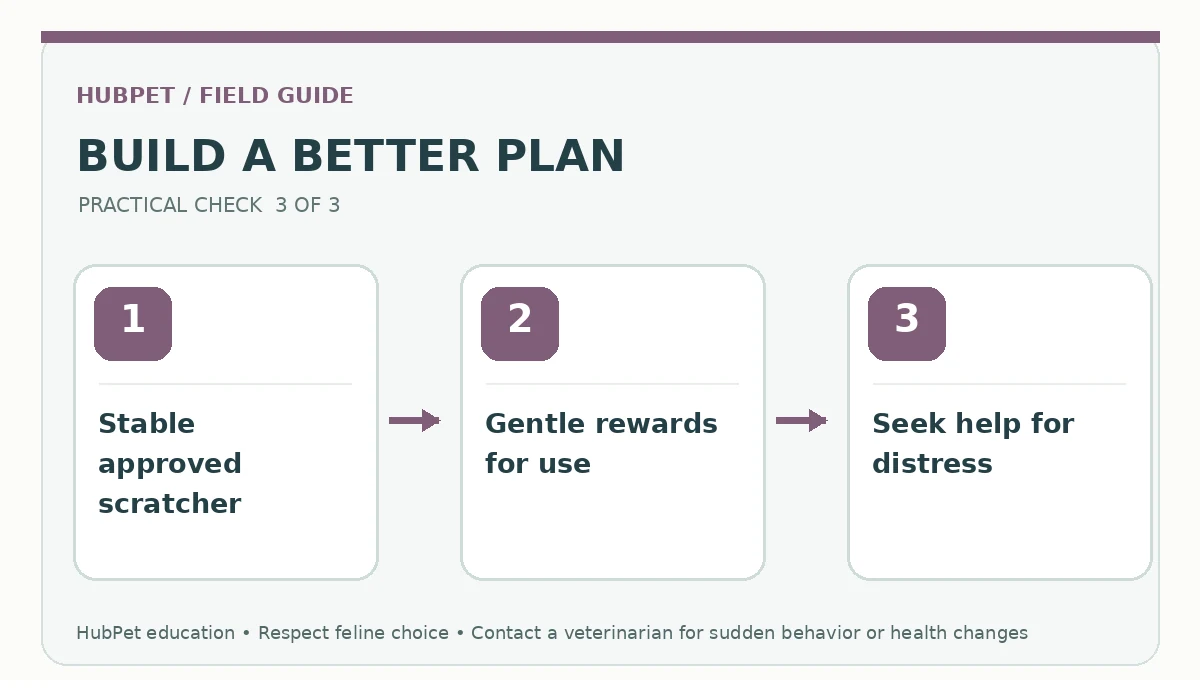
Position a tall stable scratching post directly beside an upright furniture target. A flat scratch pad works better for a cat that claws rugs. Keep the post visible along the cat’s ordinary routes; a hidden post may not compete with a high-traffic sofa corner. Reward voluntary use with calm attention, a suitable treat or a short play session. Catnip can encourage some cats to explore an approved scratcher, but its effects vary. The main intervention is arranging the environment for success, not making the cat fear ordinary household objects.

Consider physical protection before deterrent products
Smooth removable coverings may protect upholstery while the cat learns to choose a scratcher. Check that tape or adhesive will not damage furniture and that protective pieces cannot be ingested. Remove frayed fabric and exposed foam. Some cats avoid a slick cover even without any sprayed substance; others scratch the edge, so monitor results rather than leaving it unattended indefinitely. Place the approved scratching option alongside the protected section and remove guards gradually once the alternative receives regular use. The cat still needs an appropriate place to scratch every day.
Avoid punishment disguised as training
Water sprays, startling noises and harsh odors aimed directly at the cat are aversive methods, not positive teaching tools. They can make a cat wary of people or rooms without explaining where to scratch instead. Keep interactions predictable and reward desirable behavior when it happens. If you find damage after returning home, scolding cannot explain which earlier action upset you. A long-term plan identifies what the cat likes about the original location and offers a compatible safe replacement. A useful product should support that plan rather than replace it.
Make a comparison checklist before buying
First identify the exact scratching target and the type of surface the cat prefers. Next check whether your cat has a sturdy suitable scratcher in the same area. Then assess nonchemical protection and whether multiple cats need separate outlets. Only after those basics should you examine any labeled product for intended purpose, ingredients, surface compatibility and manufacturer directions. Treat promotional before-and-after photographs as marketing rather than independent proof. We did not conduct head-to-head product testing or verify commercial performance claims for this article.
Know when scratching suggests a bigger concern
A sudden surge in scratching with hiding, aggression, inappropriate elimination, pain or distress deserves veterinary advice. Do not add stronger scents in response to a struggling animal. A new cat, blocked doorway or conflict over resting areas may change where marking occurs. Ask a veterinarian or qualified feline behavior professional to help if practical environmental changes do not improve the situation. The goal is an animal that feels comfortable using acceptable surfaces, not a cat that freezes or avoids the home because it smells frightening. Revisit welfare before purchasing another spray.
How We Research
Our editorial review compared veterinary and animal-welfare guidance on feline scratching behavior, scratching-surface preferences, safe environmental redirection, household stress signals, and gentle training. We used published feline guidance as the basis for practical behavior guidance and contrasted it with the limitations of quick-fix marketing claims. We did not run controlled behavior trials, conduct product tests or endorse brands. Surface preference, behavior and household arrangements vary by cat and home; ask a veterinarian about persistent behavior changes. We last reviewed the sources on October 27, 2026. Read about our editorial process on the About HubPet page.
Sources
ASPCA: Destructive scratching. Accessed October 27, 2026.
Ohio State Indoor Pet Initiative: Scratching and suitable surfaces. Accessed October 27, 2026.
San Francisco SPCA: Scratching posts and preferences. Accessed October 27, 2026.
Humane World for Animals: Helping your cat scratch in the right places. Accessed October 27, 2026.
Results vary by product and cat, and marketing claims do not guarantee an outcome. Matching nearby scratchers to your cat’s preferences is the more important long-term strategy.
Avoid homemade essential-oil mixtures around cats. Concentrated oils can create exposure risks through skin contact, grooming and inhalation; consult a veterinarian about safe alternatives.
No. They serve different intended purposes and have different instructions. Read the label carefully rather than treating all feline scent products as interchangeable.
No. You want approved scratching surfaces to stay appealing. Place the post near the damaged spot and encourage voluntary use with play and rewards.
Stop using the product, move the cat away from exposure if safe and contact your veterinarian promptly for individualized advice; seek urgent care for breathing difficulty.